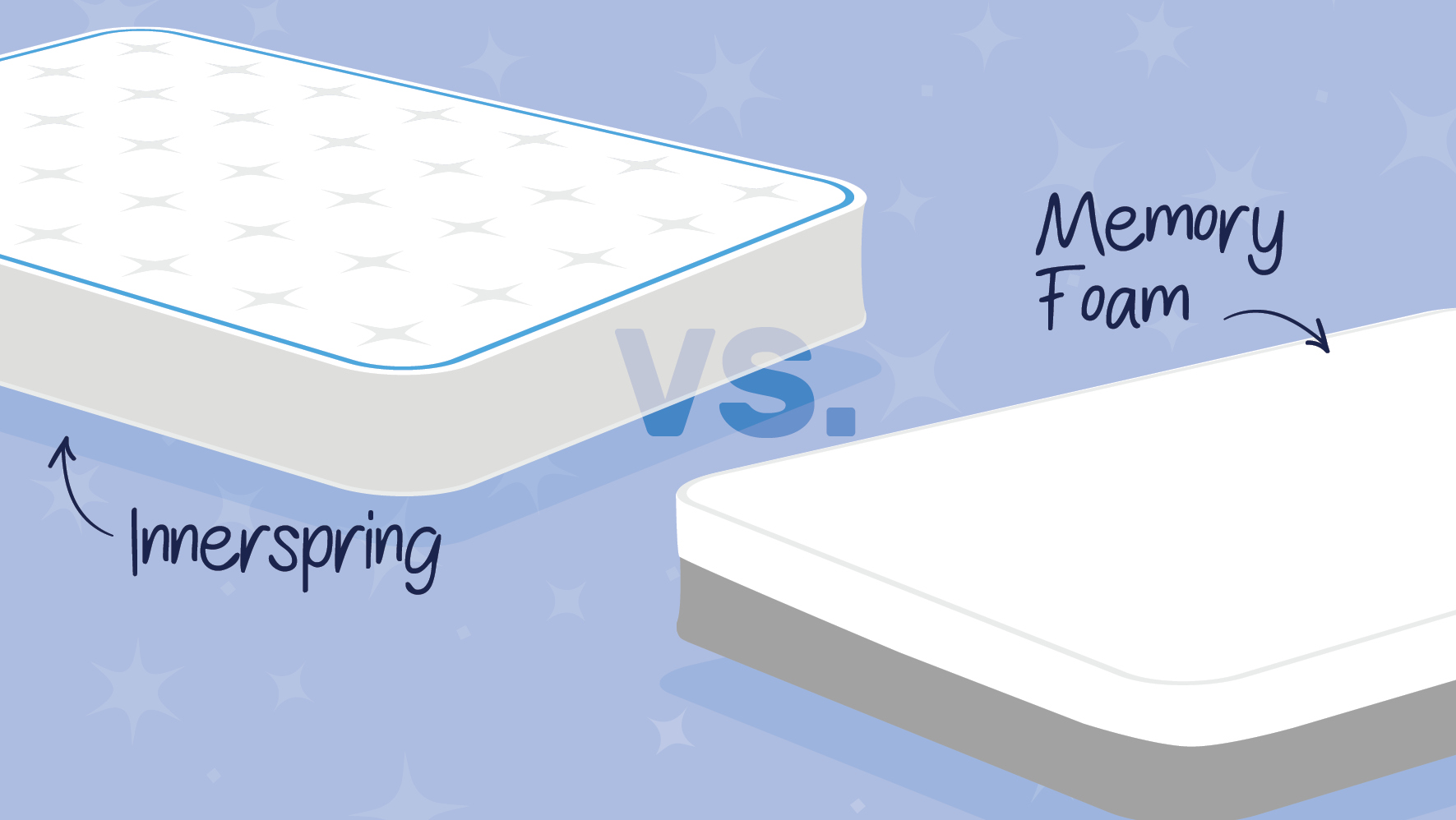
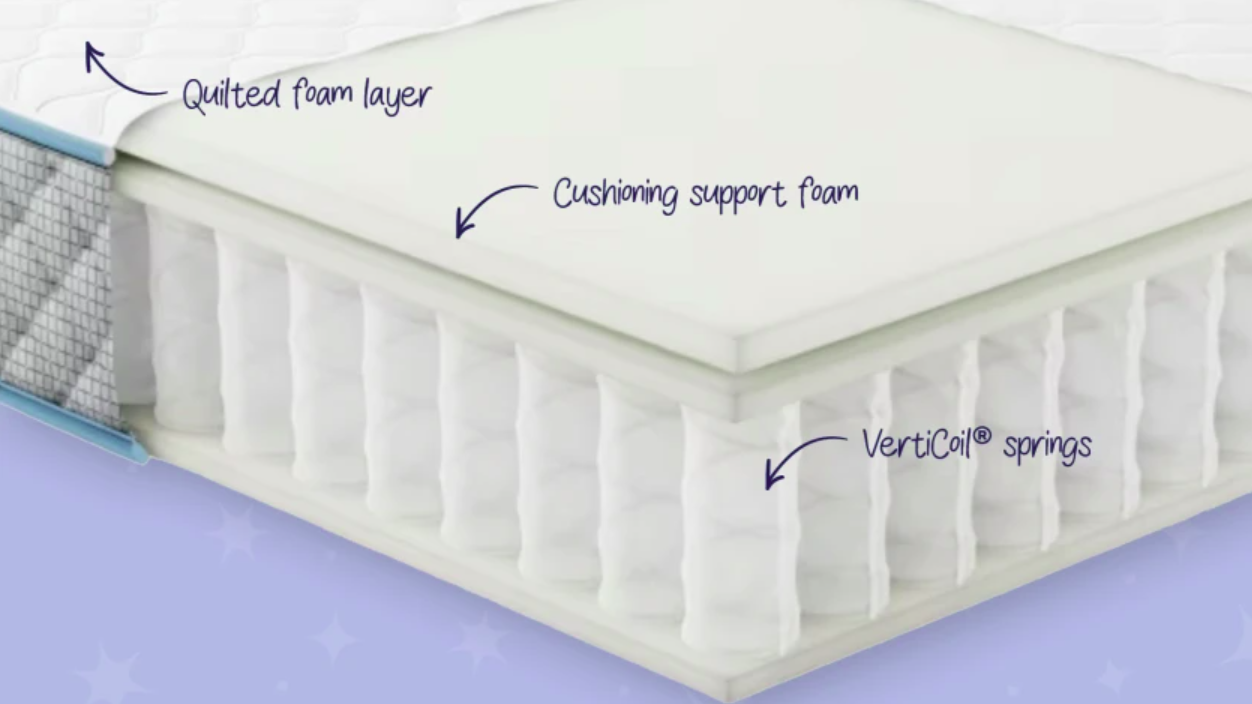
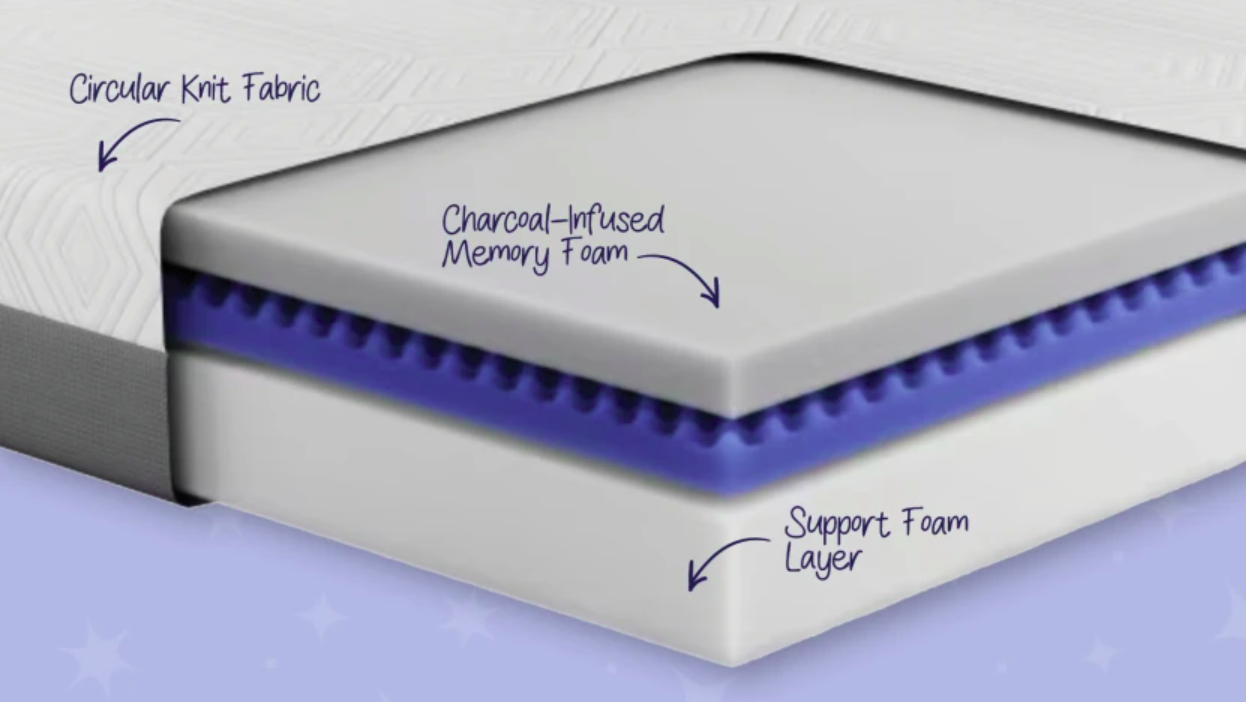
There are similarities—and quite a few differences—between memory foam and innerspring beds. Let’s take a look at some of them:
Feel
The feel of a bed refers to its level of firmness. And when it comes to feeling soft, medium or firm, innerspring and memory foam beds aren’t that different from each other. The key is finding the level of firmness that’s right for you.
There’s a big difference, however, in the way a memory foam mattress feels. The top layer contours to your body as soon as you lie down. This comforting feeling has been described as a bit of “squish” or “sink” into the bed surface.
It’s that squish or sink which ultimately leads to a memory foam’s greatest benefits—relieving pressure on painful joints and reducing the feeling of your partner’s movements throughout the night. More on those in a bit.
Comfort & Support
These are two critical components of choosing a bed that’s right for you. The feel or comfort level are terms that describe how soft or firm it is. And a bed’s comfort helps set the stage for your total sleep experience. Stephanie has this advice for your mattress-buying journey: “It’s important not to confuse the way a bed feels with support. When you choose a new mattress, it’s paramount to choose one that’s best for the position you sleep in while still giving the support your body needs.”
Support is critical because that is what distributes your weight across the bed surface and keeps your body resting comfortably. Proper support also places and keeps your spine aligned in the optimal position for rest. “When you stand up straight and then get that same spinal alignment when lying on a bed—that’s the level of support you’re after,” Andersen says. “And you can get great support from both innerspring and memory foam beds.”
Without proper support, your body has to work overtime to adjust itself to get into a comfortable position—and keep it there—at a time when you should be catching zzz’s. And if your body is working instead of resting, any aches and pains you deal with could be magnified.
Pressure Relief
Soft and medium innerspring beds provide pressure relief for shoulders, hips, lower back and knees. However, this is where memory foam beds excel. Instead of depressing the surface of an innerspring mattress, those critical joints ease into layers of memory foam, helping reduce discomfort. Stephanie agrees. “Memory foam beds are designed to be superior when it comes to relieving pressure on sensitive parts of the body when compared to a standard innerspring mattress,” she said.
Responsiveness
Spring beds have more bounce. You found that out as a child when you discovered your parent’s bed could double as a trampoline. While lack of responsiveness was a big disadvantage of memory foam beds when they first came out, things have improved. Today’s memory foam beds respond to body movements in a way that is similar—but not identical—to innersprings. Hybrid mattresses featuring both innersprings and memory foam can get you close to the feeling of a traditional spring bed.
Cost
Most often, memory foam beds are more expensive than their innerspring counterparts. With so many options available, if you have your heart set on buying a memory foam bed, you’re sure to find one in your price range.
Durability & Lifespan
Better innerspring mattresses should provide many years of great zzz’s. Seven to eight years is common. Memory foam beds improve on that—lasting about 10 years. However, there are ways to help extend the life of both mattress types. Perhaps the most important is the use of a quality mattress protector. Using one will prevent stains and spills from reaching the top fabric. Plus, a mattress protector can also prevent the buildup of bacteria and help stop mites and dust from entering the bed, which can limit the life of the materials.