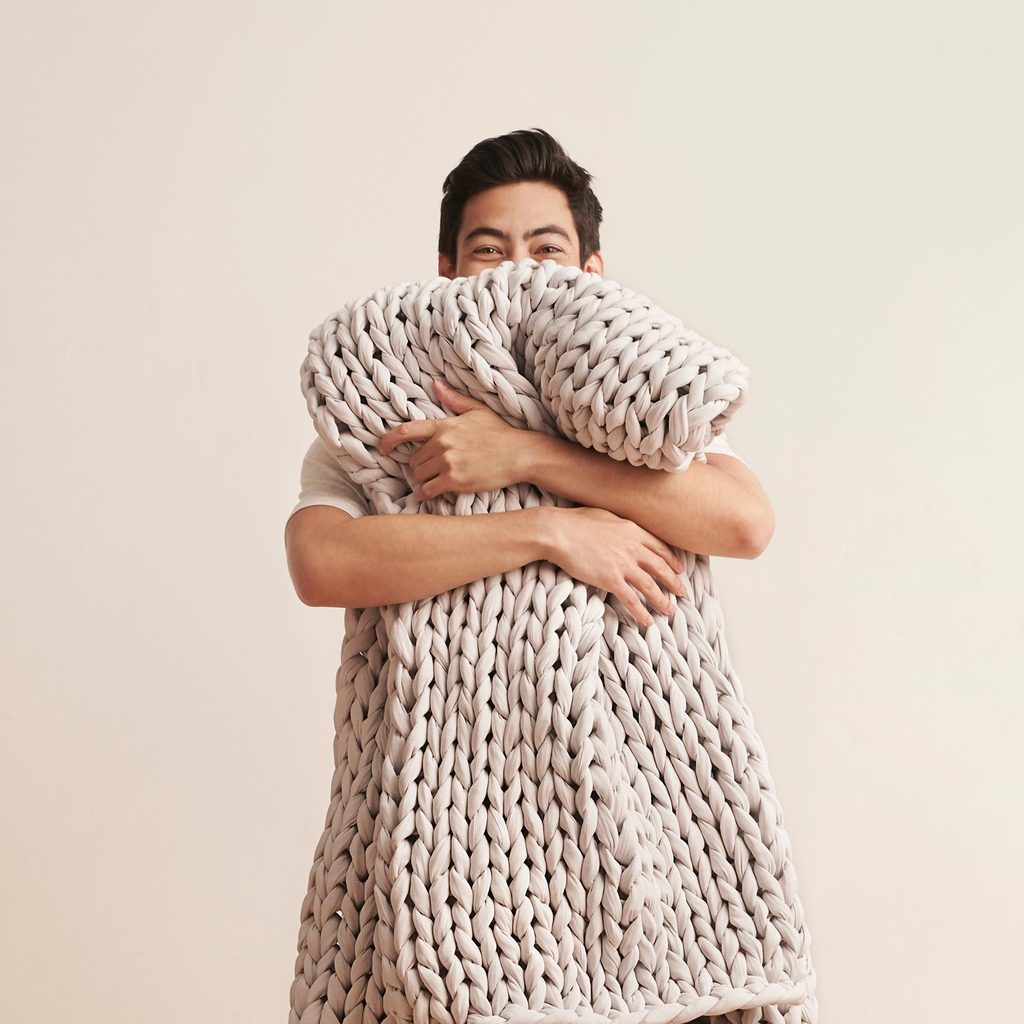
1. Offers relaxation and comfort for easier sleep
A weighted blanket offers comfort, which relaxes users as they prepare to fall asleep. Licensed clinical psychologist Shelby Harris, Psy.D., author of “The Women’s Guide to Overcoming Insomnia,” compares weighted blankets to deep pressure stimulation. An overarching benefit, she suggests, might be to “quiet, calm, and relax the nervous system.”
“When somebody is more comfortable, they're probably more likely to sleep a bit better or fall asleep a little bit easier,” observes Dr. W. Chris Winter, Sleep.com Advisor, neurologist and author of “The Rested Child.”
A 2015 study of participants ages 20-66 with insomnia found that objectively they tossed and turned less under weighted blankets, resulting in a calmer night’s sleep. Subjectively, they reported sleeping more peacefully.
2. May reduce insomnia and daytime fatigue
A 2020 randomized, controlled study looked at 120 adults with clinical insomnia (along with bipolar disorder, attention deficit hyperactivity disorder, generalized anxiety disorder, or depression) who used weighted blankets for four weeks. Compared with the control group, those who used the weighted blanket experienced:
- less insomnia
- longer sleep
- higher daytime energy levels and moods
The same study also notes that weighted blankets may also ease the cognitive problems, tiredness, and emotional disturbances.
3. May help children with ADHD and autism to fall sleep
While 2014 study concluded that the pressure of the weighted blanket did not improve the sleep of children with autism, both the participating children and their parents reportedly appreciated the weighted blankets.
Another 2021 study however found that children with ADHD as well as those on the autism spectrum did fall asleep more easily and stay asleep longer when using weighted blankets.
It seems that weighted blankets can be perceived as calming and, for some, be clinically effective in reducing insomnia.
4. May help calm and decrease anxiety
A 2021 study evaluated the consequences of weighted blanket use by 122 in-crisis patients in an inpatient psych ward. Compared to those in the control group, participants using a weighted blanket or lap pad for 20-minute sessions experienced:
- drop in pulse rate
- reduced heart rate
- statistically lowered anxiety
Researchers also concluded that weighted blankets may be a safe alternative to sedation or physical restraints for those experiencing anxiety.
Weighted blankets may also help during stressful events. Among patients having their wisdom teeth pulled, weighted blankets were shown to calm the fight-or-flight reaction. Similarly, a randomized controlled study of cancer patients found that those using medical-grade weighted blankets experienced less anxiety than those who did not.
5. Helps release oxytocin for relaxation
The autonomic nervous system controls digestion, body temperature, and the body’s response to stress. According to Penn Medicine, weighted blankets help to switch this system into “rest mode,” which results in:
- the release of oxytocin, a hormone important for relaxation
- awakening of the autonomic nervous system, lowering feelings of stress
- reducing the sympathetic arousal that drives the “fight or flight” reaction
6. May help ease chronic pain
Winter observes that weighted blankets “can be particularly helpful for people who have restless leg syndrome…If somebody would rather not take medication, then I would suggest they think about a weighted blanket.”
This randomized-controlled trial found that deep pressure may help individuals have a reduced reaction to pain. Of the 94 adult participants, all with chronic pain, those who used a heavier, 15-lb blanket experienced a greater lessening of pain than those who used a 5-lb weighted blanket. The most anxious participants experienced the greatest benefits from the pressure.
The researchers suggested deep pressure helps people organize and calm their reactions to pain and that weighted blankets may be an effective drug-free tool in pain management.