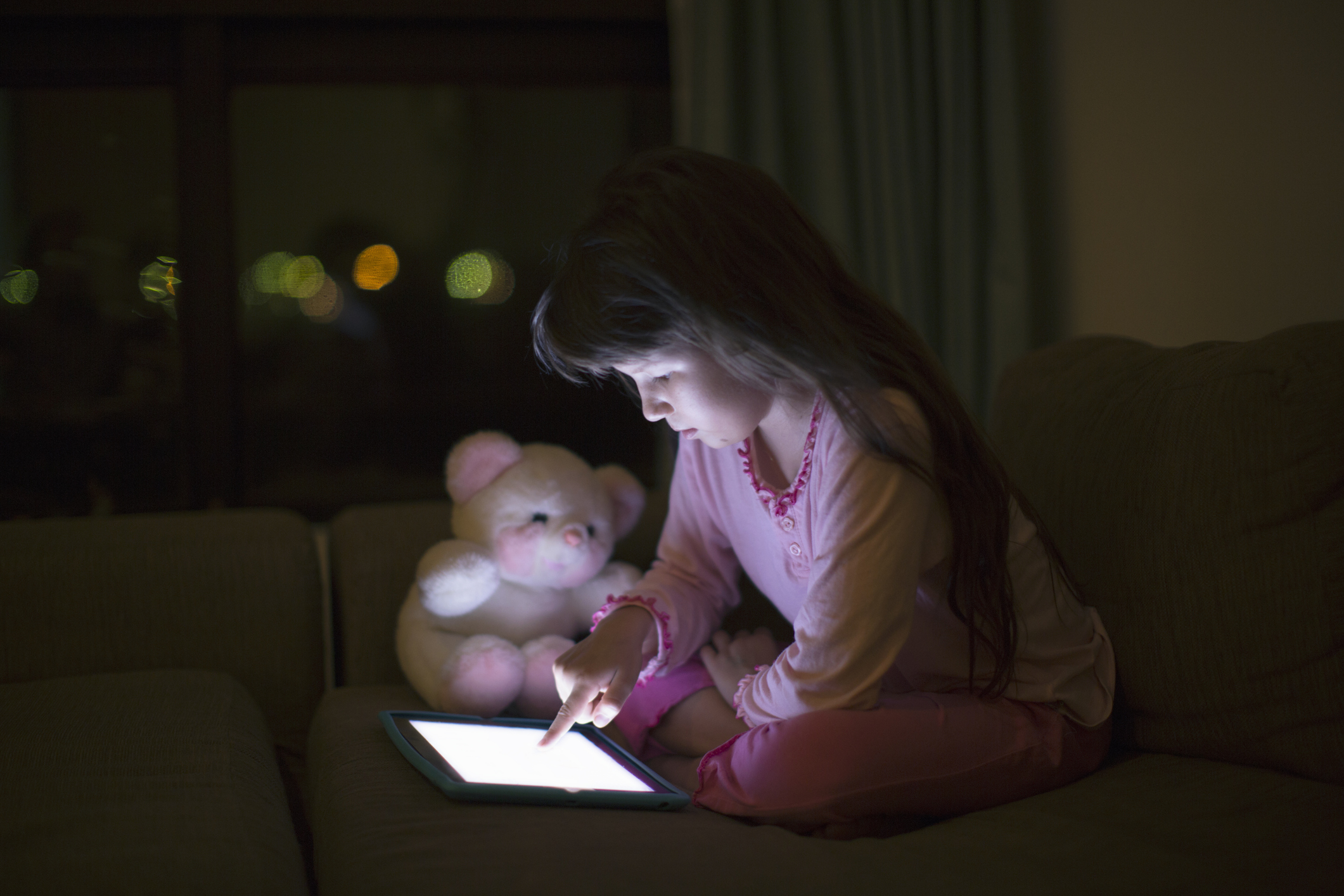
Let’s be honest: Many parents rely on screen time in the evenings, and the idea of turning our homes into caves every night sounds completely impractical. But there’s no need to fret. Winter says there are a few sleep habits parents can do to keep our kids’ natural circadian rhythms in check.
Save screen time for the morning
While it’s important to limit screen time in the evenings, exposing your kids to light in the morning is just fine, and even helpful for regulating their circadian clocks’ well-being, Winter says. If your child is unhappy about nighttime limits, Winter suggests letting them go all-out in the morning the next day.
Use low-intensity lights in your sleep environment
Dimming lights is important, but so is the type of light you are using. Winter notes that purchasing lights that don’t have a lot of blue-green wavelengths is a smart idea. This may mean decreasing the use of fluorescent light bulbs and certain LED lights at night. Instead, consider warmer gold-hued lights or dim red nightlights, both of which produce less blue light.
Change your family’s screen time routines
To stick to a screen-free evening plan, you need to create routines that limit screen time at night, making especially sure that no one brings their phone, video game handheld or iPad into their bedroom.
Winter’s family does just that. “If you look in our kitchen at night, there are five phones in this little cubby,” he shares. “Everybody’s got their own charging cord, all right there. You can access your phone whenever you want; you just have to come downstairs and check your messages.” Fill the time you might otherwise be watching TV with analog activities like board games and books.
Model screen time limits
Let’s face it: Parents are just as guilty of indulging in not-so-healthy sleep habits like extended screen time at night as our kids are. “I think it’s important for parents to model it,” says Winter. “So, if you can have a rule that nobody has their phones in their bedrooms, that includes the parents.”
Try blue light glasses
Blue light in particular can disrupt circadian rhythms. Winter suggests blue-light-filtering glasses—and kids can use them too! “A lot of kids have them on their bedside tables,” he says. “When it’s time to go to bed, they just put their little blue-blocker glasses on, and that way the light of the computer’s not affecting them as much.”
Some of these things are easier said than done, for sure, and it’s a bummer to find out that kids are even more sensitive to light exposure than we might have realized. It’s also important to keep in mind that you should contact a pediatrician if your child continues to struggle with the amount of sleep or wake-up times despite trying these good sleep habits. But parents aren’t powerless here. Just a few tweaks to our kids’ bedtime routines can help promote better sleep. And we parents deserve at least a few quiet hours to ourselves each night, don’t we?