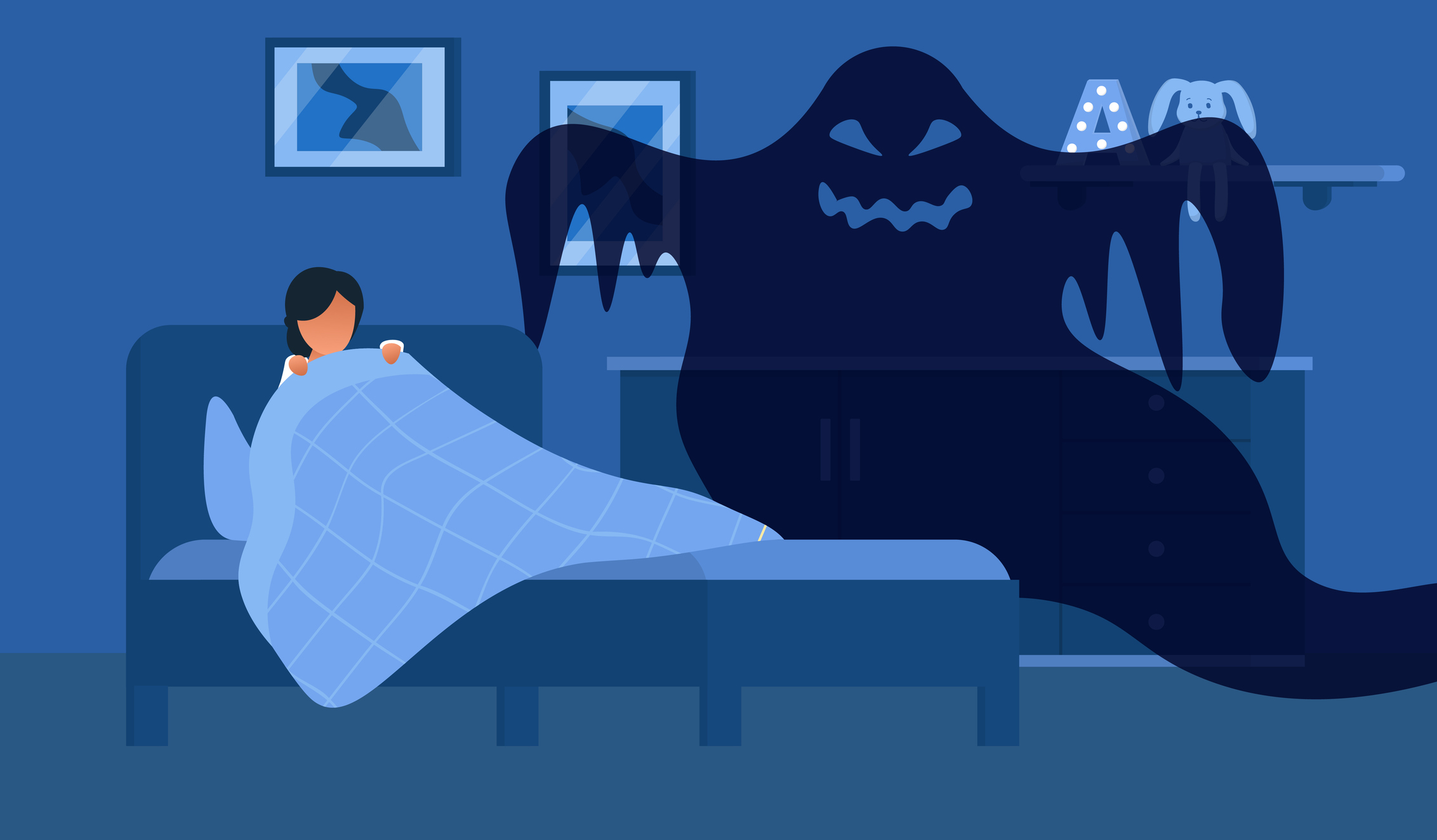
We’re all prone to visual, auditory and sensory hallucinations, both when we’re falling asleep and when we’re waking up. When it comes to symptoms of sleep paralysis, this can include a sense that an intruder is near you—a hallucination.
Hypnagogic hallucinations occur when we’re slipping into the first phase of sleep, which is non-REM (NREM). You might see a kaleidoscope of colors or patterns, for example, or you might experience a sense of falling and then accidentally jerk yourself awake, a phenomenon called hypnic jerks. Hypnopompic hallucinations, on the other hand, occur when we’re waking up and transitioning out of REM sleep; they are often continuations of dreams.
A sleep paralysis demon is a hypnopompic hallucination. The demons often take the shape of childhood fairytale villains, such as witches, ghosts, beasts or other ominous creatures.
Though more research is needed to understand exactly why people so commonly hallucinate seeing demons, researchers theorize that people see a humanoid figure over them because of a momentary lapse in how the brain processes bodily perception. When we’re awake, the parietal lobe sends us information about our body parts and their positions and movements. This info helps us understand where we are in relation to objects, so we don’t constantly bump into doorframes or coffee tables, for example. During sleep paralysis hallucinations, that valuable info called proprioception and other sensory input gets muddled, and we see a highly distorted projection of our brain’s stored body image. It’s like we’re looking into a mirror but seeing a monster.
Fear gets amplified in this state. The intense terror likely occurs because the amygdala, known as the fear center of the brain, is highly activated during REM sleep. The hyperactivity of the amygdala is why dreams can be so intense. Throughout the waking day, if you encounter a potential threat, you can quickly assess whether the threat is legitimate and react accordingly, thanks to your brain’s logic-regulating abilities of the prefrontal cortex, which is dormant while you sleep. But during REM sleep, your brain lacks the information to correctly assess whether a threat is real. So, during a “visit” from a sleep paralysis demon, nothing reassures you that it’s only a dream.