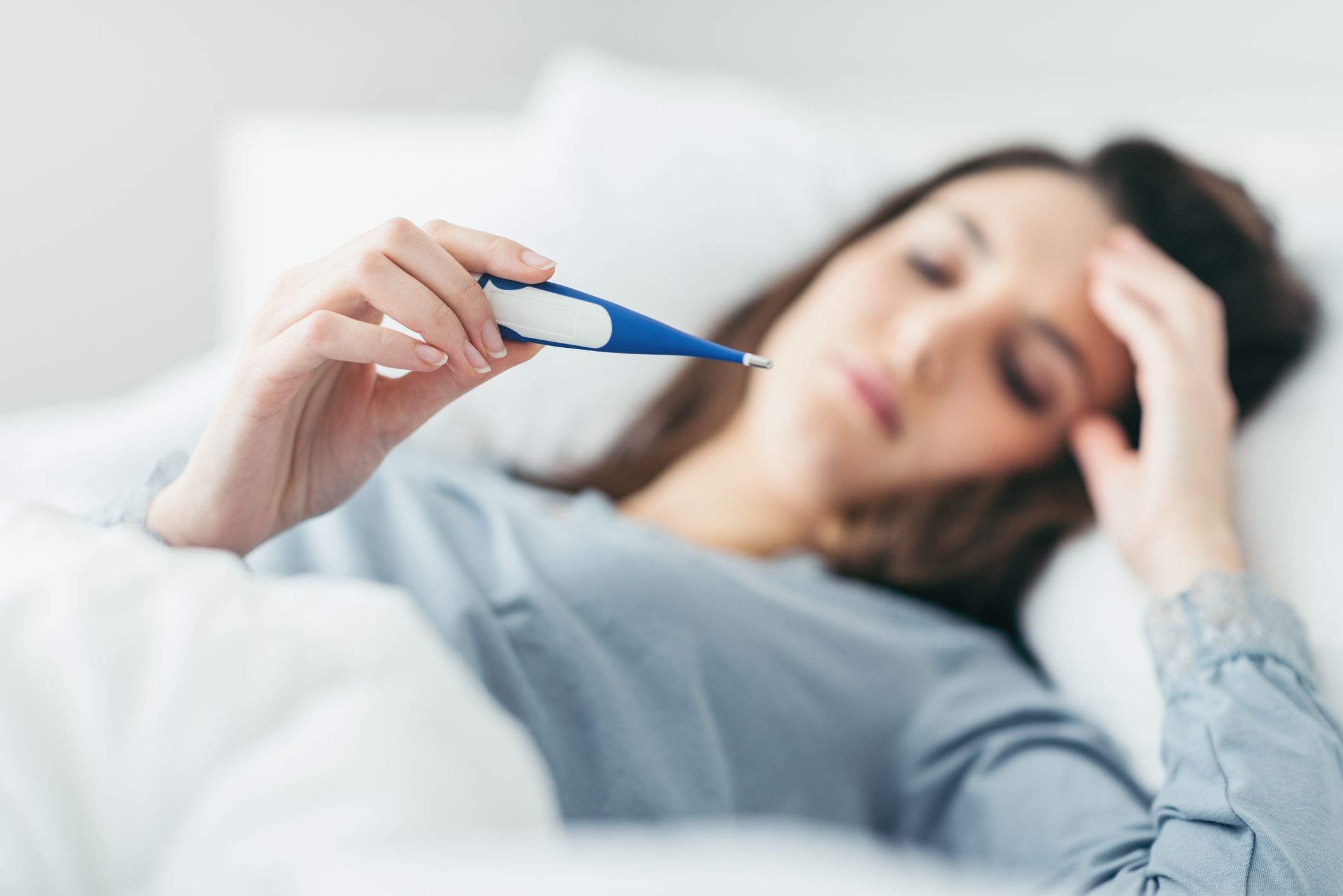
Sleep helps your immune system fight infection more effectively and supports faster recovery when you’re sick. This feeling of tiredness and overall sluggishness is a not-so-subtle clue that you need to slow down in order to get better. Sleeping when sick allows your body to channel all its resources toward breaking a fever, fighting pathogens and recovering from a virus, rather than helping you power through a typical active day.
“Sleep is the only time of anyone’s day or night where we have restoration processes happening. It’s the only time when we replenish our energy sources, which are exhausted when you’re sick,” explains Allison Brager, Ph.D., a neurobiologist with expertise in sleep and circadian rhythms.
But sleeping when sick is even more important than simply resting on the couch while binge-watching your favorite reality shows. There’s a close connection between sleep and the immune system that can impact your recovery from an illness.
“When you’re fatigued and run down from being sick, your immune system needs to ramp up and fight the infection,” says Patel.
As you sleep, your body releases proteins called cytokines, some of which communicate with cells in the immune system to help knock out a viral infection. Interestingly, some cytokines help promote sleep. Giving in to those feelings of fatigue and sleeping when sick helps the body make more cytokines and fast-track your recovery.
“If you’re not sleeping well, the body doesn’t produce cytokines as productively,” notes Julia Kogan, a health psychologist who focuses on behavioral sleep medicine at the U.S. Department of Veterans Affairs. “The lack of sleep sets you up to potentially be more sick and makes it harder for your immune system to fight things off.”
Sleep also has an impact on the cells the body uses to fight off viruses, which could impact how well you recover from a sickness. Research suggests that sleep helps T cells (a type of white blood cell) more easily stick to infected cells and destroy them. Sleep also releases certain hormones that help steer T cells into lymph nodes to make the immune response even more effective, according to a 2024 study.
What’s more, slow-wave sleep (also known as delta sleep, our deepest stage of sleep) and the circadian rhythm induce hormonal changes that help send T cells to the lymph nodes and stimulate an immune response against a pathogen.
Sleeping when sick may be important for the functioning of natural killer cells, another type of immune cell that can attack cells that have been infected by a virus. Research shows that even modest amounts of sleep loss (like restricting sleep time to just four hours in a night) cause natural killer cell activity to drop significantly. Chronic sleep problems like insomnia have also been linked to broader immune disruptions, suggesting that poor sleep doesn’t just slow recovery from a cold—it can throw the whole immune system off balance. That could mean feeling sicker for longer in the short term, and increasing your risk factors for autoimmune issues and other serious diseases, too.
More research is needed to figure out exactly why these virus-fighting immune responses occur during sleep, but experts say it may be because the body doesn’t have the same demands on its resources as it does when we’re awake.
“Being awake is extremely stressful for the body,” explains Brager. “When you’re sleeping, it can instead focus on keeping the immune system healthy.”
Kogan adds: “Sleeping gives the immune system an opportunity to function at its best.”