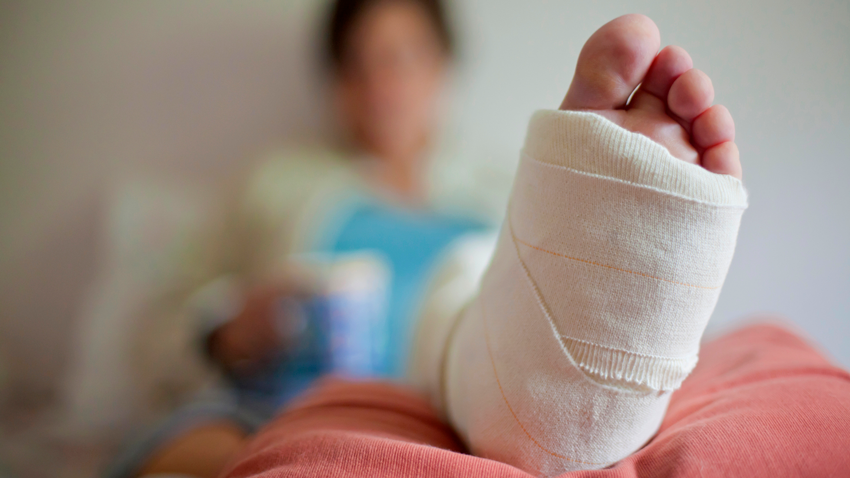
Depending on the type of broken bone you have, getting comfortable enough to get good sleep can be difficult.
Be sure to follow the instructions your healthcare provider gives you based on your specific break. Use ice and pain medication as directed. If you were instructed to use a splint, immobilizer or sling—use it as directed and wear it appropriately.
Finding a comfortable position isn’t one-size-fits-all. Not everyone can get comfortable the same way, but it is important to avoid things that cause more pain or swelling. Failing to elevate your limb or avoiding your sling could prolong or hinder your recovery.
How To Sleep Comfortably With a Broken Collarbone
The collarbone, or clavicle, is one of the most commonly broken bones. The collarbone curves from the chest to the shoulder just below the neck. Its position makes it susceptible to breaks during falls or force to the upper arm or shoulder.
A broken collarbone can be painful, causing swelling and a possible deformity of the area. A break there may make it difficult to move your arm without increasing pain.
A broken collarbone can take up to six weeks to heal in children and six to 12 weeks in adults, which is why it’s important to find a way to sleep as comfortably as possible for this extended time.
Many people with this break find sitting up or slightly reclined the most comfortable way to sleep. Using an adjustable base or a wedge can help you lie elevated on your back, which McSorley states “helps reduce swelling and pain.”
Many doctors recommend that you sleep with a sling in place. Check with your doctor to see if they recommend that your sling remain in place continuously or if it’s okay to take it off for sleep.
How To Sleep With Fractured Ribs
Getting comfortable with broken ribs can be challenging. Broken ribs are painful and can take at least six weeks to heal. Ribs move with every breath and movement of your upper body, making the breaks noticeable every few seconds, which can make recovery tricky.
Broken ribs may not require treatment like other broken bones. Previous treatments like splinting aren’t used anymore. Your healthcare provider will determine the best treatment plan for your type of broken ribs.
To help reduce pain, use ice and pain medications as directed. Sleeping in an upright or reclined position can make sleeping more comfortable. An adjustable bed or wedge can be helpful here. You may also find sleeping on the opposite side of the break more comfortable. Use pillows to prop your front and back to help keep yourself from rolling.
“Sleeping on your stomach should be avoided with fractured ribs. It causes additional strain on the injured area and may result in further pain or discomfort,” says McSorley.
Best Sleep Positions for Broken Legs
Sleeping with a broken leg can be uncomfortable, and sleep recommendations can depend on where your leg is broken.
There are two bones in your lower leg: the tibia and fibula. Sleeping on your back is recommended, and the leg should be elevated. If you have an adjustable bed, this is easy, but you can also elevate the lower leg on pillows, a bolster or a cushion. You have more freedom with your upper body with this break, and even the ability to sleep on your side with your leg elevated.
Having a broken femur (thigh bone) can make sleeping much more challenging. This bone is the strongest in your body. Though hard to break, when it is broken, it can be very painful, and the type of break will determine how healthcare providers treat it. Sometimes, equipment that holds the bone in place is needed. This is called traction, and when this is the case, you will be required to lie flat on your back until the bone is repaired.
Surgery is typically needed for a femur break. Depending on your treatment, you may have equipment attached to the bone, like rods and screws on the outside of the leg. Again, this will require you to stay on your back with limited movement. For breaks not in need of surgery, a leg cast or splint will be applied from hip to foot, preventing all movement of your leg and keeping you flat.
Your leg will be slightly elevated to decrease swelling and pain. You can adjust pillows under your head and shoulders, but the rest of your body will remain flat until your providers permit you to move, roll or get out of bed.
Best Sleep Positions for a Broken Arm
A broken arm may allow for the most flexibility after the first couple of weeks. Initially, it is recommended to sleep sitting up or reclined with a pillow under the arm for support. If your healthcare provider gave you a sling, you may need to wear it while sleeping, too. A pillow under your elbow at your side will help immobilize and elevate your arm.
Once swelling decreases and pain eases, you will have more freedom to rest more comfortably for the remaining weeks. This could mean sleeping on your side or back, as stomach sleeping isn’t ideal for isolating the broken limb, particularly if the fracture is higher in your arm. You may be advised not to lift or elevate your shoulder.