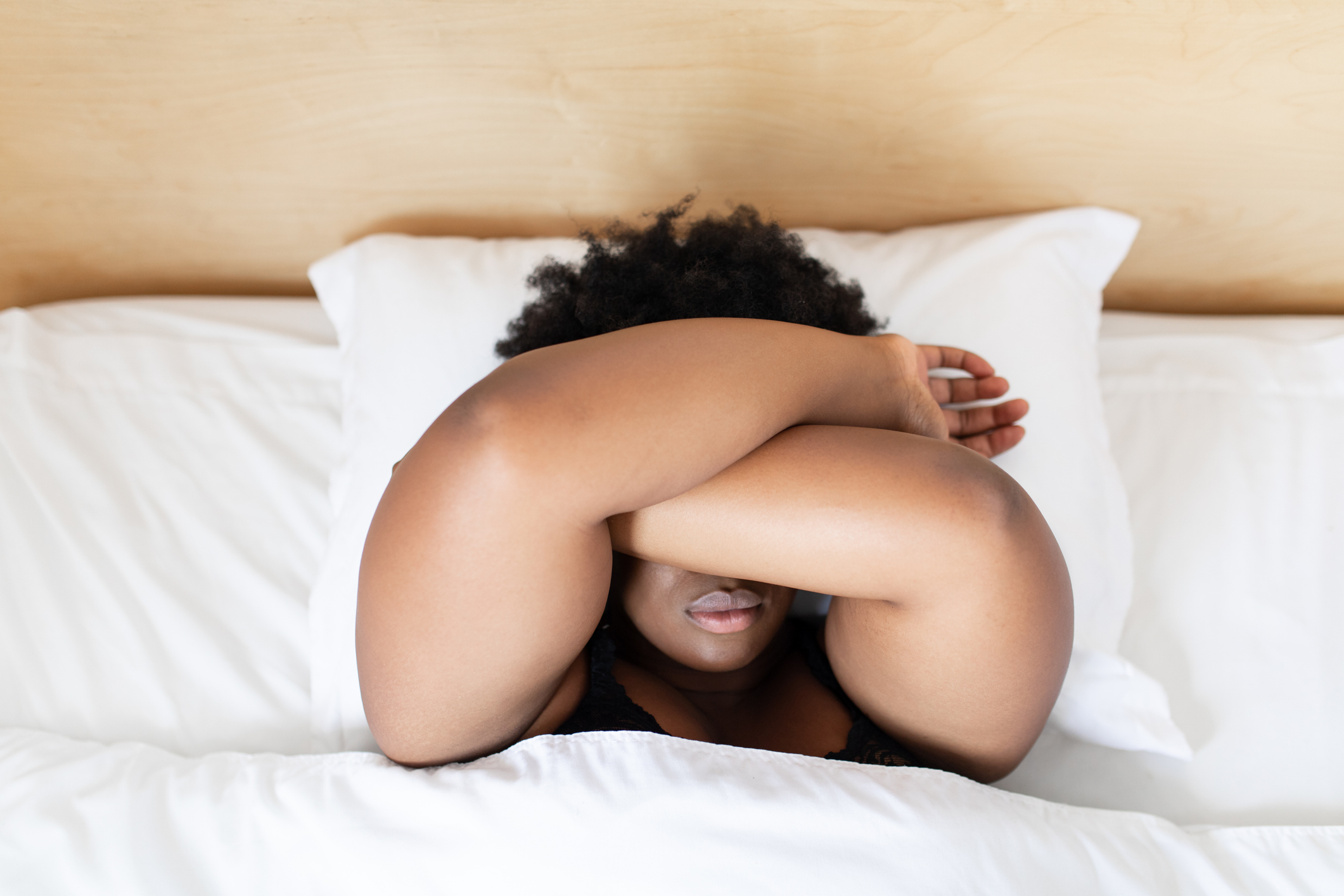
Pain often wakes you up at night because prolonged pressure and tension make the body more sensitive during sleep. Focusing on the frustration of pain can turn into a cyclical series of anxiety and racing thoughts at night. Research notes that pain is not always an indicator that you’ll get bad sleep, but bad sleep can make pain worse. The theory is that sleep deprivation lowers dopamine and opioid receptors and increases negative moods, which makes people more sensitive to pain.
How Do Anxiety and Sleep Pressure Make Your Nighttime Pain Worse?
Knowing that sleep can help mitigate pain can either help or hurt the situation. Some may find that knowledge to be the motivation they need to focus on sleep. But for others, it might increase anxiety about the importance and elusiveness of sleep, causing an even greater challenge to get a good night’s rest. Whichever camp you’re in, we have tips and strategies for breaking up this complicated relationship between pain and sleep.
Anyone with chronic pain can tell you that feeling zingers, aka sudden flashes of pain, in bed while constantly shifting around to avoid pressure on certain spots can certainly make it a struggle to drift off. This tension can create mental barriers that get harder to break down over time. That’s why fully understanding the impact and link between chronic pain and insomnia can help.
“Pain can make someone toss and turn, but it can also become a psychological dysfunction because you know you won’t be able to sleep, so you start to fear it,” says Dr. Jyoti Matta, medical director at the Center for Sleep Disorders at RWJBarnabas Health.
Worrying about how you’ll sleep can also create a type of performance anxiety that leads to bad sleep as well, according to Dr. Chris Winter, president of Charlottesville Neurology and Sleep Medicine, author of “The Sleep Solution” and sleep advisor to Sleep.com.
“The way we feel about our sleep is often reflected in how we perform. You might not even notice a bit of back pain throughout the day, but when it’s time to go to bed, it creates tension and doubt that you’ll be able to go to sleep,” Winter says.
How Are Pain, Insomnia and Mental Health Connected?
There are also other mental health aspects to consider. Pain, insomnia and depression, which often occur together, can feed into each other, making each of the three conditions worse. The same goes for anxiety and substance-use disorders, which people with chronic pain are more likely to experience, hence why a multi-pronged approach might be required to break the cycle.
“Frustration with sleep can be amplified in pain patients. They hear that sleeping better will help with pain, and they feel like they must get eight hours or else, and that makes it hard to sleep,” says Winter. “We don’t want a fear-based model of sleep in anybody’s life.”
As frustrating as fatigue is, remember to be gentle with yourself around your sleeping habits. Winter recommends focusing on the next best thing: rest.
“If you’re in a comfortable position and your mind is in a good place and meditative, that’s quite restorative. If you sleep, that’s awesome, but if not, that’s OK too. You’re still succeeding by resting,” he says.
Common Pain Conditions That Disrupt Sleep
Knowing specifically where your pain comes from—or how much of the pain is physical or emotional—helps you formulate a more effective pain-management plan for short- and long-term pain. Even after healing from acute pain, which lasts up to six months, your sleep schedule may remain disrupted.
Certain conditions and disorders, however, are known culprits for poor sleep and insomnia, such as:
Remember that completely eliminating pain or achieving full sleep every night isn't a realistic metric for success. Winter advises resetting your expectations, which can go a long way toward reducing sleep anxiety.
“Don’t judge success or failure in bed in terms of consciousness. That’s where a lot of people get hung up,” Winter says.