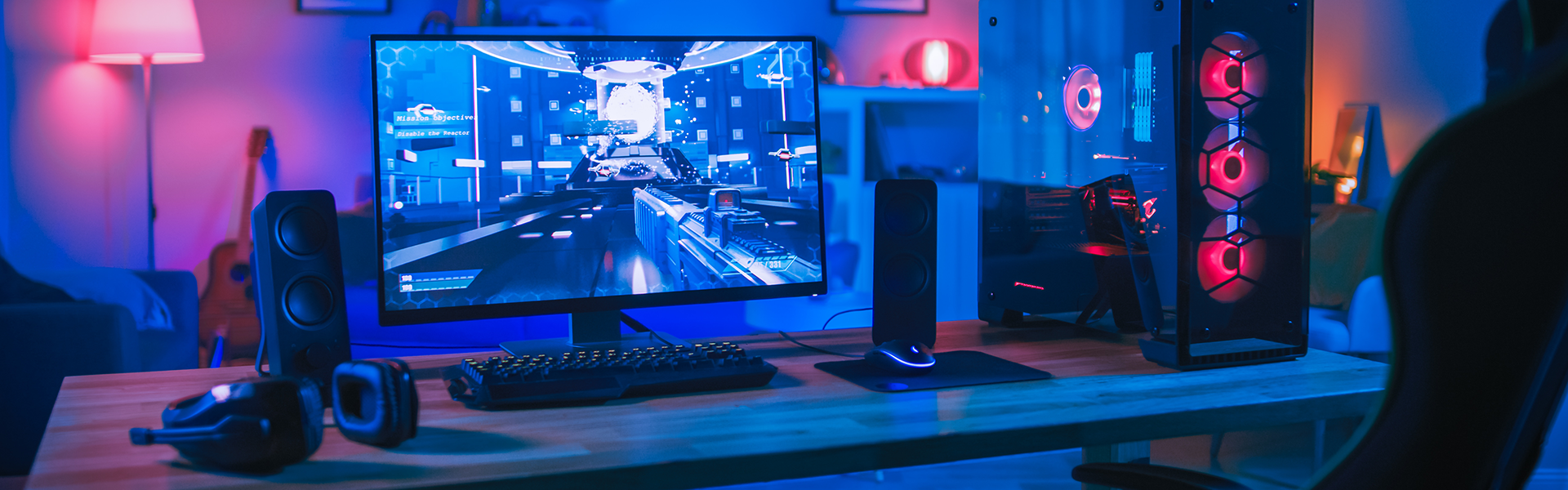
Role-playing games (RPGs) put us in charge of a character. We’re responsible for their well-being, and this usually involves making sure they’re well-rested. In an RPG, you might make your character a cozy bed and ensure that their bedroom is serene for comfort and safety. But video games have a remarkable ability to make us lose track of time in real life and sacrifice our own sleep. We make sure our character is well-rested, but whether we’re focused on the game, engaged with other players, or simply looking to unwind for a bit longer, we sometimes fail to recognize that it’s past our desired bedtime, and well past time to put ourselves to bed. Gaming for prolonged stretches also exposes us to blue light, a common enemy of sleep.
Jade Wu, Ph.D., sleep psychologist, Sleep Advisor to Mattress Firm and researcher at Duke University School of Medicine, points out that not getting enough sleep can negatively impact our performance in everyday life, especially if we’re gaming. “I would think gamers would especially want to be well-rested because even a millisecond can make a difference in a game,” she says.
Wu is referencing how a lack of sleep can slow our reaction times, something that can make or break you while gaming. She also mentions that a gamer who isn’t well-rested could struggle with making decisions, assessing risk and regulating emotions.
A recent study released by University of California, Irvine’s Sleep and Cognition Lab used the video game Minecraft to help determine the impact of quality sleep on spatial memory performance. The two-part study found that players could better remember specific locations in the games after a night of quality rest.
Our bodies follow a sleep-wake cycle, the circadian rhythm. It’s an internal clock that sends signals about when it’s time to head to bed and when it’s time to rise in the morning. But gaming, with its adrenaline-inducing elements, paired with the indoor setting and sometimes long hours spent staring at blue light, can throw off our circadian rhythm.
“The only way for our brains to know if it’s day or night is through the window, which is the eyes. If there's no light coming into your eyes, or if there’s light coming into your eyes 24/7, then the circadian clock becomes very confused, and it doesn't know when it's nighttime. The result can be that it doesn't make you as sharp when you're awake, and doesn't let you sleep as well when you're sleeping.”
Further, time spent seated, whether on a sofa playing on a TV, at your computer, or on your phone, can cause muscle aches and back pains.
Abiding by best practices for your circadian rhythm, blocking out blue light and giving yourself the right muscle and spinal support can be a game-changer for gamers. Here’s how to make that happen.