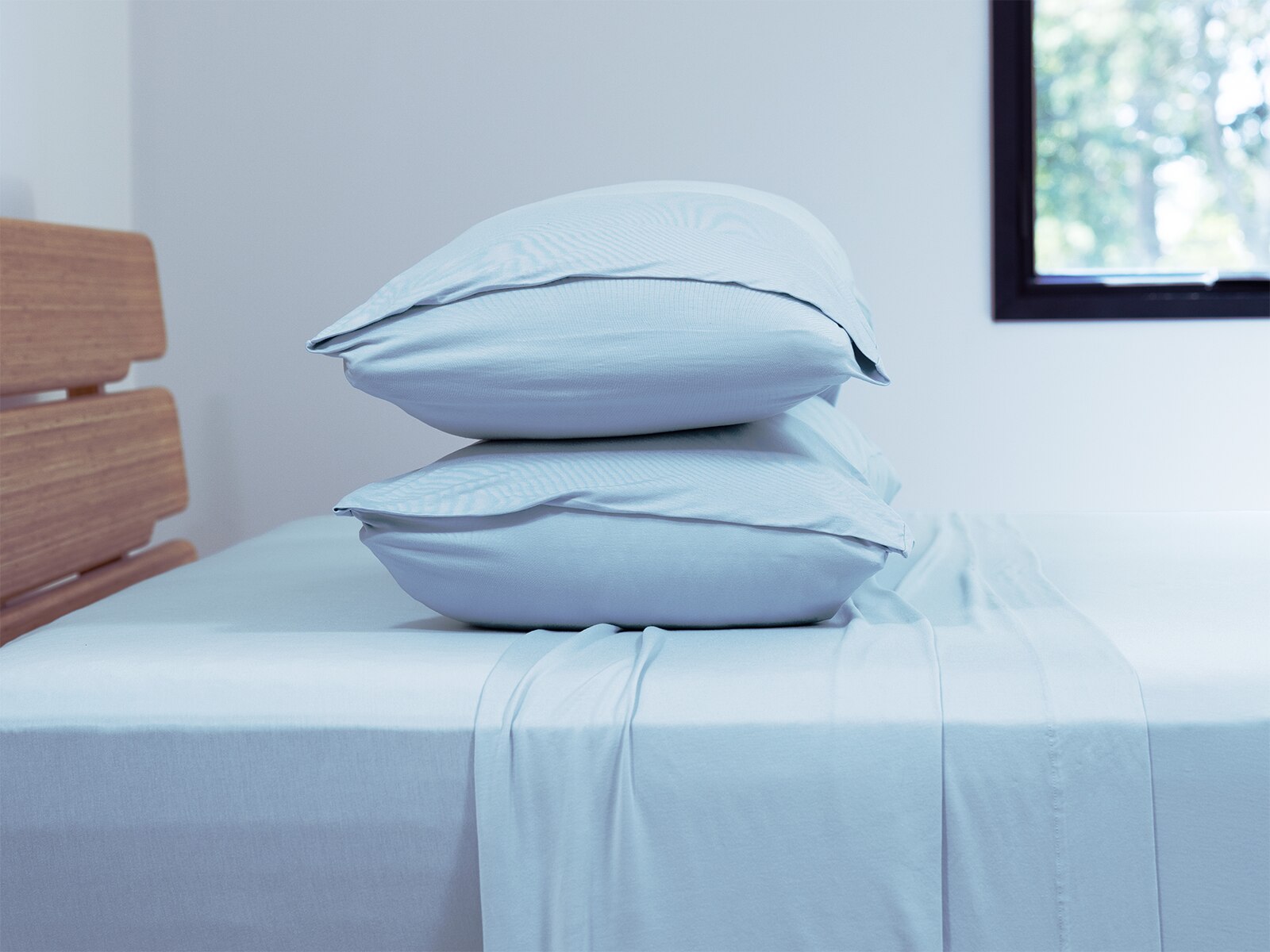
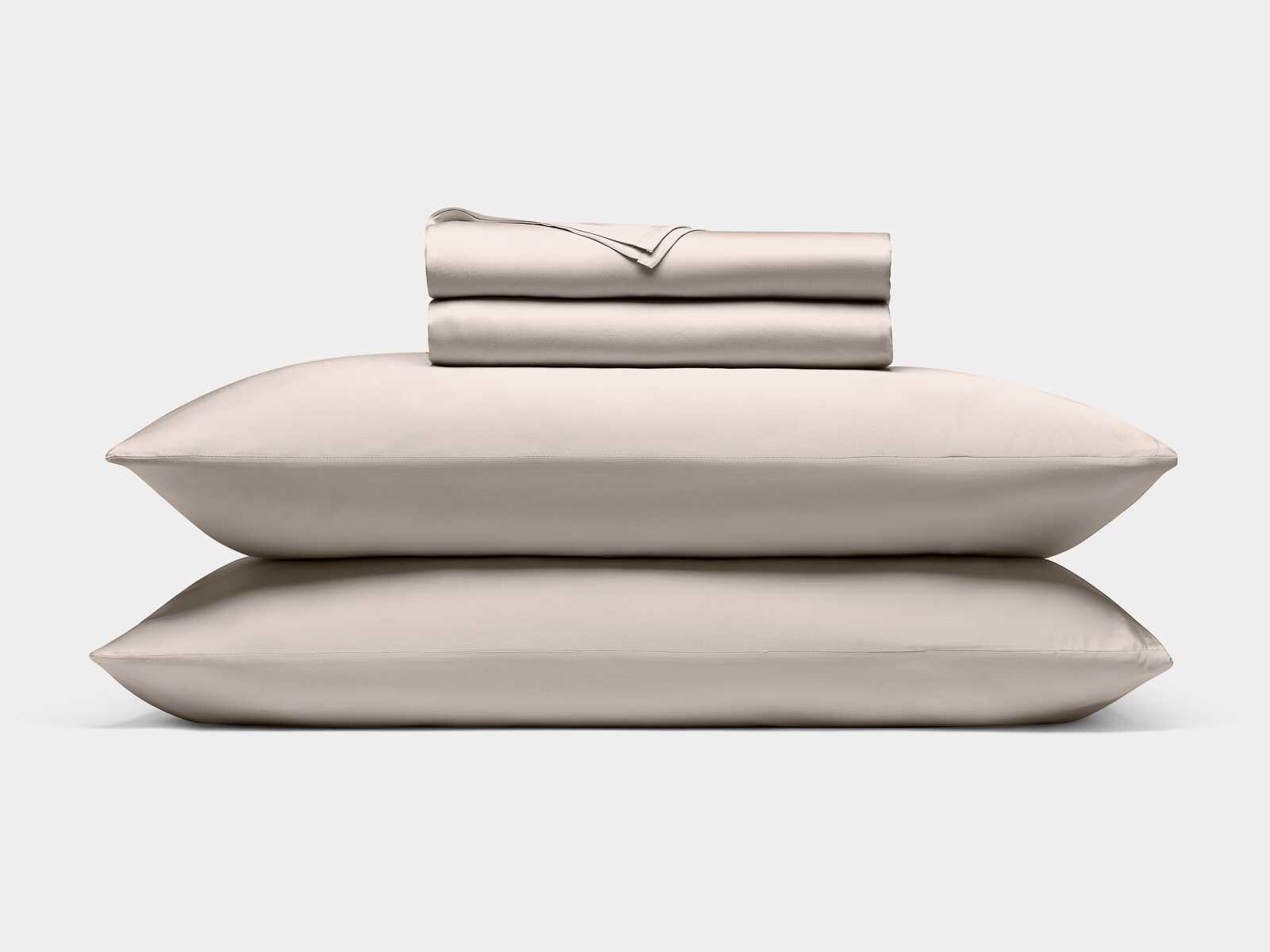
Bedroom sheet sets bring together the bedding that sits closest to your skin, usually pairing a fitted sheet and a flat sheet with one or two pillowcases. The exact contents vary by set and bed size, so checking what is included helps you create a coordinated bed without overlooking a pillowcase or assuming a flat sheet is part of the package. Fabric makes a noticeable difference in how sheets feel, drape and hold up to repeated washing. Cotton is a familiar choice for its breathability and softness, with different weaves creating distinct textures. Cotton percale has a crisp, matte finish that appeals to sleepers who like the feel of a freshly made hotel bed. Cotton sateen has a smoother surface, a subtle sheen and a more fluid drape. Linen, made from flax fibers, has a relaxed texture and often becomes softer with use and proper care; its natural creasing is part of its appearance rather than a sign that the bed needs attention. Microfiber sheets, commonly made from finely spun polyester fibers, generally offer a smooth, lightweight feel and resist wrinkling, though breathability and moisture handling vary by construction. Sheets labeled as bamboo often use rayon made from bamboo rather than untreated bamboo fibers, making the fiber-content label more informative than the name alone. Lyocell is another cellulose-based fabric that can offer a smooth feel and absorb moisture, with performance depending on the finished textile. Blends combine fibers to balance qualities such as softness, strength and ease of care. Thread count describes the number of threads woven into a square inch of fabric, but it does not establish quality on its own. Fiber quality, yarn construction, weave and finishing all influence the result, and a higher count does not automatically mean a softer or more durable sheet. For everyday use, the most useful distinction is often tactile: a crisp sheet that holds a little structure, a silky surface that drapes closely or a softly textured fabric that looks comfortably relaxed.
A good fit lets those fabric qualities come through without the distraction of corners slipping loose or excess material gathering beneath you. Bedroom sheet sets are sized for mattresses such as twin, Twin XL, full, queen, king and California King, but the size name is only part of the fit. King and California King mattresses have different proportions, and a twin sheet is not interchangeable with Twin XL. Mattress depth matters, too, especially when a pillow top, mattress topper or other bedding layer adds height. The fitted sheet’s stated pocket depth should accommodate the full height it needs to cover, not just the mattress measurement printed on an old receipt. An elasticized edge helps hold the sheet in place, but it cannot compensate for a pocket that is too shallow or a sheet cut for a different mattress size. A properly fitted sheet lies smoothly across the surface while leaving enough fabric to tuck securely beneath the corners. Flat-sheet dimensions also deserve attention if you prefer generous coverage along the sides or enough length for a firm tuck at the foot. Pillowcase sizing is a separate consideration: standard, queen and king pillows may need different case dimensions, and oversized pillows can feel compressed inside cases that are too small. Once the measurements are settled, color and pattern help establish the room’s character. White or ivory sheets create a clean backdrop for a textured quilt, while gray, muted blue or a restrained pattern can coordinate with upholstered furniture and existing bedding. A matching set creates a consistent foundation even when the comforter or blanket changes. In a child’s room, easy-care fabric and secure corners can simplify frequent bedding changes. In a guest bedroom, a familiar fabric feel and correctly sized pillowcases help make the bed welcoming. For a shared bed, a texture both sleepers enjoy is often more useful than choosing by appearance alone.
Care requirements are worth considering before sheets become part of the regular laundry routine. The care label is the best reference for washing settings, drying methods and whether particular laundry additives are appropriate. Cotton, linen, microfiber and cellulose-based fabrics do not all respond the same way to washing and drying, and decorative trim or special finishes may require additional attention. Giving sheets room to move in the washer helps them rinse thoroughly, while avoiding an overloaded dryer can reduce twisting and uneven drying. Excess detergent may leave residue, so using the amount recommended for the load and machine is generally more helpful than adding extra. Bleach, fabric softener and dryer sheets should be used only when compatible with the fabric’s care instructions. Removing sheets promptly after drying can limit deep wrinkles, and bedding should be fully dry before it is folded and stored. Durability depends on both construction and treatment: neatly finished seams, secure elastic and fabric suited to frequent laundering are practical details to consider. Some fabrics may pill where repeated rubbing occurs, while others show wear first at seams or fitted corners. Keeping a second set allows the bed to be remade while the first is being washed and distributes use across both sets. Folded sheets stored together with their matching pillowcases also make the next change easier, especially when several beds need different sizes. As a gift, a sheet set can be useful for a housewarming, a wedding or someone setting up a first apartment, provided the mattress size, pillow dimensions and fabric preferences are known. A neutral color can fit readily into an established bedroom, but the recipient’s laundry setup matters as much as the look. Browsing
Best Bed Sheet Sets with those practical details in mind helps focus the choice on how the bedding will actually be used. The right set brings together a pleasing texture, dependable fit and manageable care, creating a bed that feels inviting when the covers are pulled back.