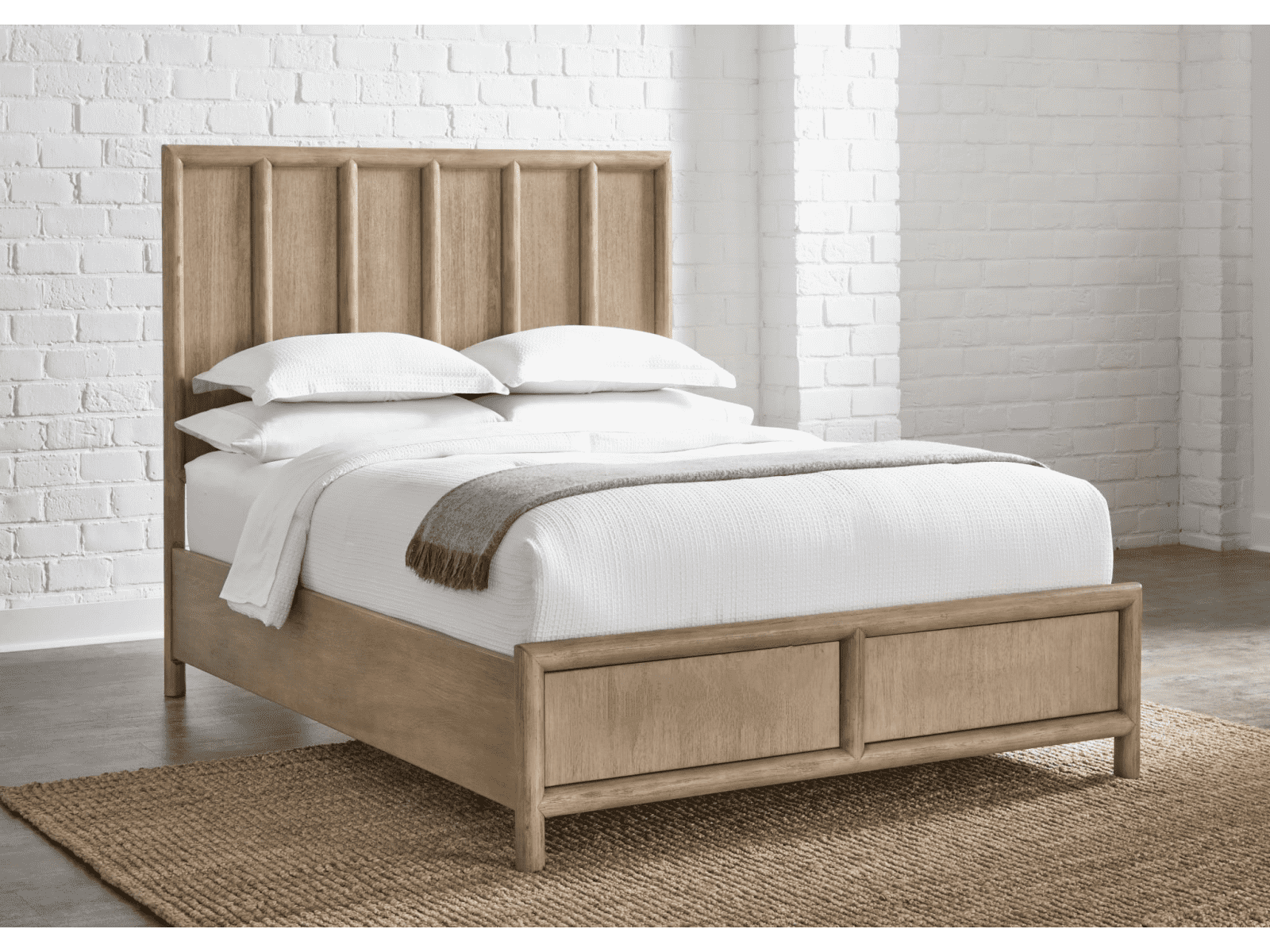
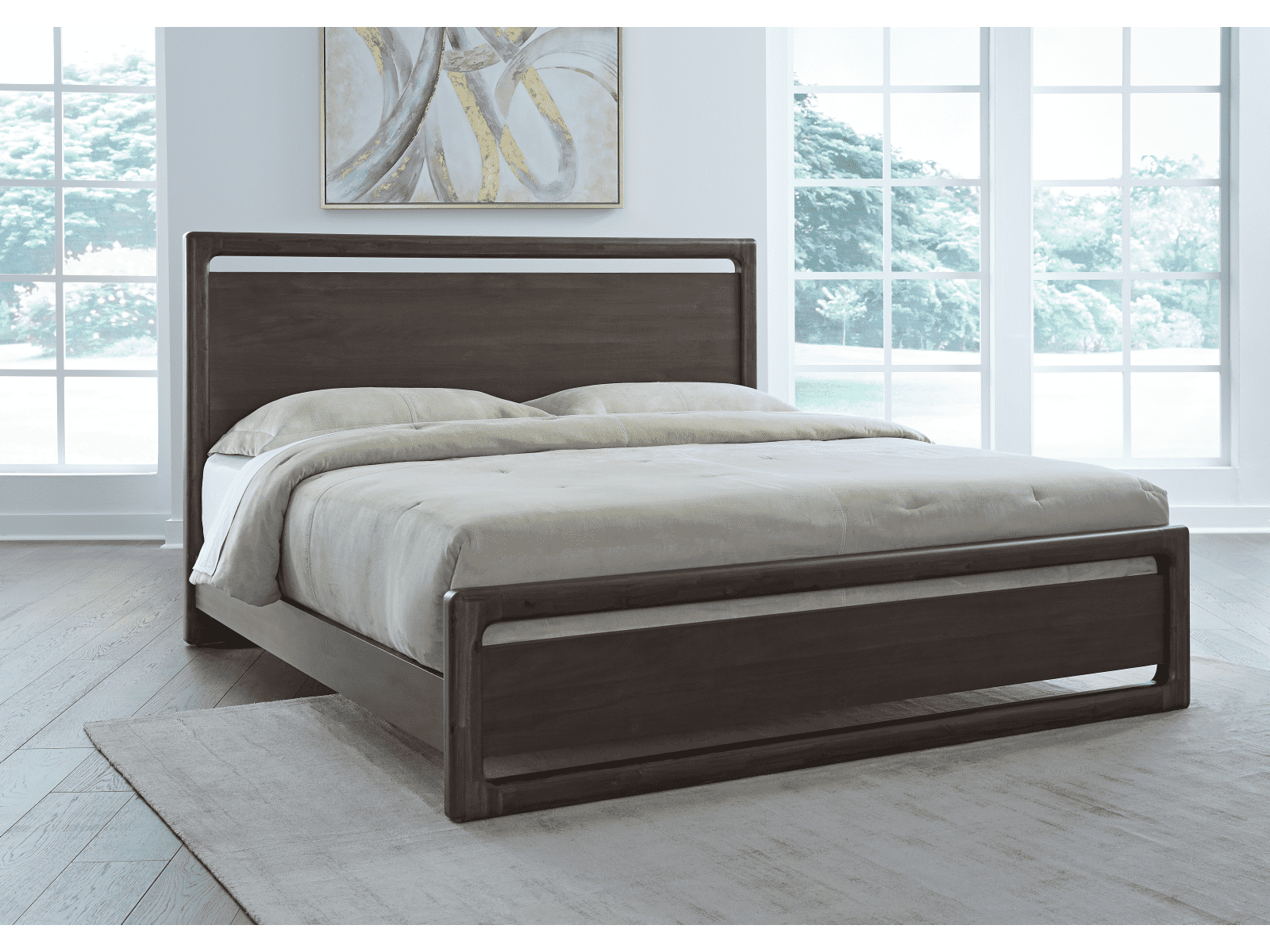
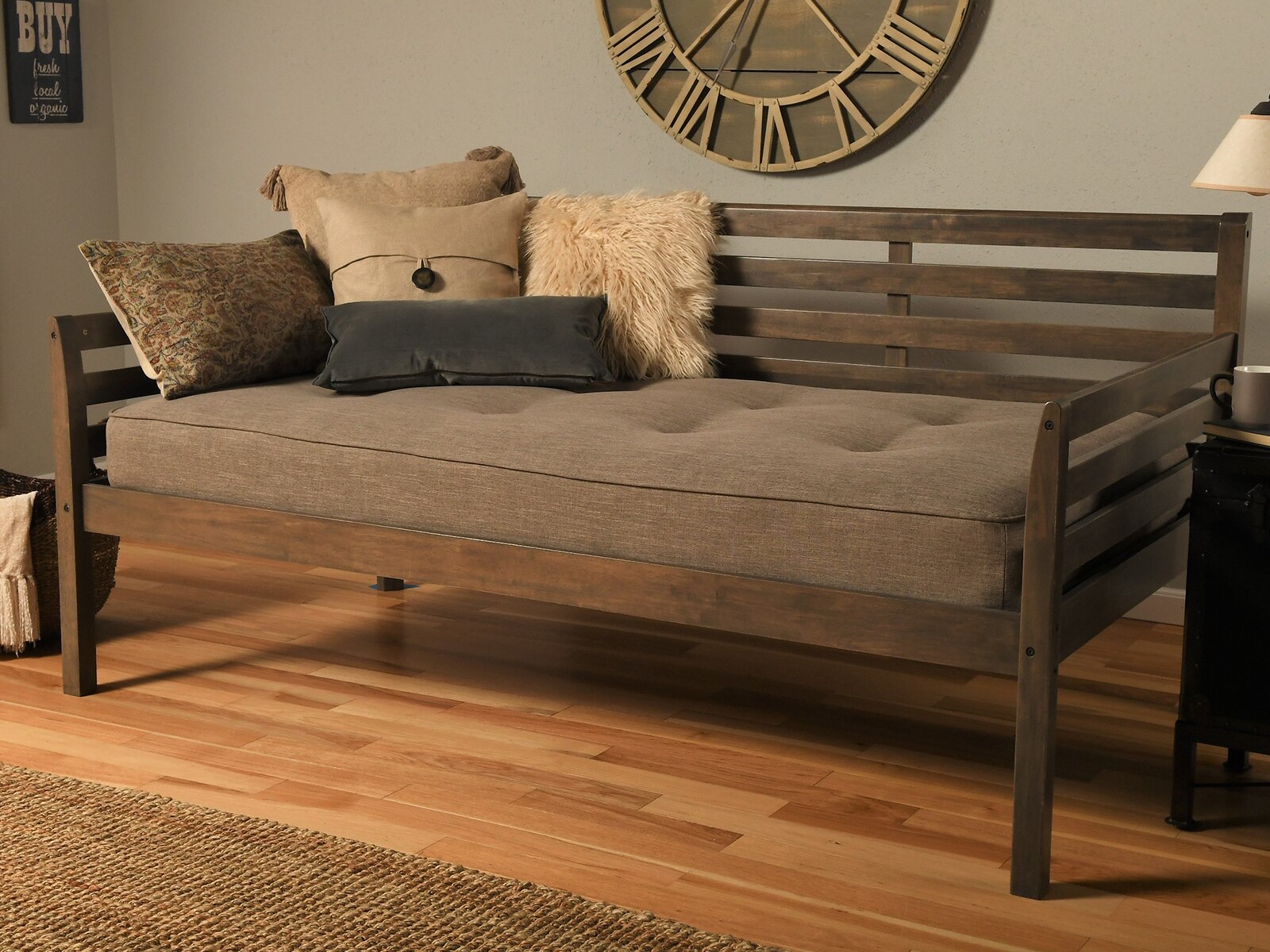
Classic wood beds bring the texture and character of wood into a bedroom through familiar shapes, balanced proportions and details that remain easy to live with. The category includes panel beds with broad, framed headboards, spindle beds with an airy profile, turned-post designs with rounded decorative details and Shaker-inspired frames with simple lines. Sleigh beds have curved headboards and footboards that create a more substantial silhouette, while four-poster beds draw the eye upward and give the sleeping area a defined presence. These differences affect more than appearance: an open spindle headboard lets a wall color show through, while a tall panel headboard creates a solid backdrop for stacked pillows. A low footboard can keep the end of the bed feeling less enclosed, especially in a bedroom where the bed faces the doorway. Wood species, construction and finish also shape the overall look. Oak often displays a pronounced grain, maple tends to have a finer texture and walnut is known for its rich brown tones. Cherry can deepen in color with age and light exposure. Pine generally has a softer surface than many hardwoods, so everyday contact may leave marks more readily. Solid wood construction highlights the material throughout individual components, while wood veneer places a thin layer of real wood over a supporting core. Well-made veneered components can provide attractive grain patterns and dimensional stability; the quality of the core, connections and finish matters alongside the surface material. Neither construction method alone determines how well a bed will perform. Secure hardware, properly fitted joints and a support system suited to the mattress are equally important. Natural finishes emphasize grain variation, darker stains create a more formal impression and painted finishes can soften the visual weight of a substantial frame. Matching every bedroom piece is not necessary. A wood bed can sit comfortably beside painted nightstands, upholstered seating or a dresser with a complementary finish, giving the room a collected look rather than making every surface compete for attention.
The right fit for a classic wood bed depends on both mattress dimensions and the space surrounding the frame. A standard queen mattress measures 60 inches wide by 80 inches long, but the outside dimensions of a queen bed frame are larger and vary with its design. Thick posts, curved footboards and projecting rails can add meaningful width or length. For bedrooms intended for two sleepers,
Queen Wood Beds offer a familiar size to consider alongside nightstands, walking space and other furniture. A smaller frame may suit a compact guest room or a bedroom that also holds a desk, while a larger frame needs enough surrounding clearance for comfortable movement. The useful measurement is not simply whether the bed fits between two walls; dresser drawers still need to open, closet doors need room to swing and the route from the doorway should remain practical. Headboard height deserves similar attention. A thick mattress and foundation can conceal much of a decorative panel, while a lower mattress may reveal more of the headboard than expected. Window placement, wall-mounted lighting and sloped ceilings can also influence which silhouette feels proportionate. Mattress support requirements vary by frame. Some platform beds include a slat system designed to support a compatible mattress without a separate foundation. Other wood frames require a foundation, and the presence of slats alone does not establish compatibility. Slat spacing, center supports, weight limits and the mattress manufacturer’s requirements all matter. Wider frames often depend on center rails or support legs to distribute weight properly. An adjustable base may work within some wood bed frames, but interior dimensions, removable supports and clearance for moving parts must be verified rather than assumed. Underbed space adds another practical consideration. Open clearance can accommodate suitable storage containers and make cleaning easier, while low rails create a more grounded appearance. Beds with built-in drawers need room beside or beyond the frame for those drawers to extend. These details help connect a traditional appearance with the way a bedroom is actually used each day.
Classic wood beds can serve as the everyday centerpiece of a primary bedroom, a welcoming anchor in a guest room or a lasting part of a child’s bedroom when the frame is appropriate for the child’s age and use. Their decorative range makes them adaptable: a restrained panel frame can work with patterned bedding, while a spindle design pairs naturally with simple linens that leave its shape visible. In a shared bedroom, a smooth finish and modestly sized posts may be more practical than broad ledges that extend into a narrow walkway. For someone who sits up to read, the headboard’s shape matters as much as its appearance; upright spindles and carved edges feel different behind pillows than a broad, flat panel. Long-term durability depends on proper assembly and routine attention as well as the wood itself. Hardware should be installed according to the frame’s instructions, support legs should meet the floor as intended and connections should be checked periodically for loosening. A new creak or noticeable movement can signal that a connection or support needs inspection. Moving the bed by lifting appropriate sections, rather than dragging it across the floor, helps avoid unnecessary stress on rails and joints. Everyday care is usually straightforward, but the finish determines which cleaning methods are suitable. A soft cloth removes dust, and a lightly dampened cloth followed by drying may be appropriate when the manufacturer permits it. Standing moisture, harsh cleaners and abrasive pads can damage finished surfaces. Direct sunlight can change wood color unevenly, and substantial changes in indoor humidity can affect natural wood movement. Protective pads beneath objects resting on broad headboard ledges can help limit scratches. Small variations in grain and color are part of wood’s character, not necessarily signs of a defect. With suitable mattress support, careful handling and finish-appropriate care, a classic wood bed can remain a familiar part of the room even as bedding, wall colors and surrounding furniture change.