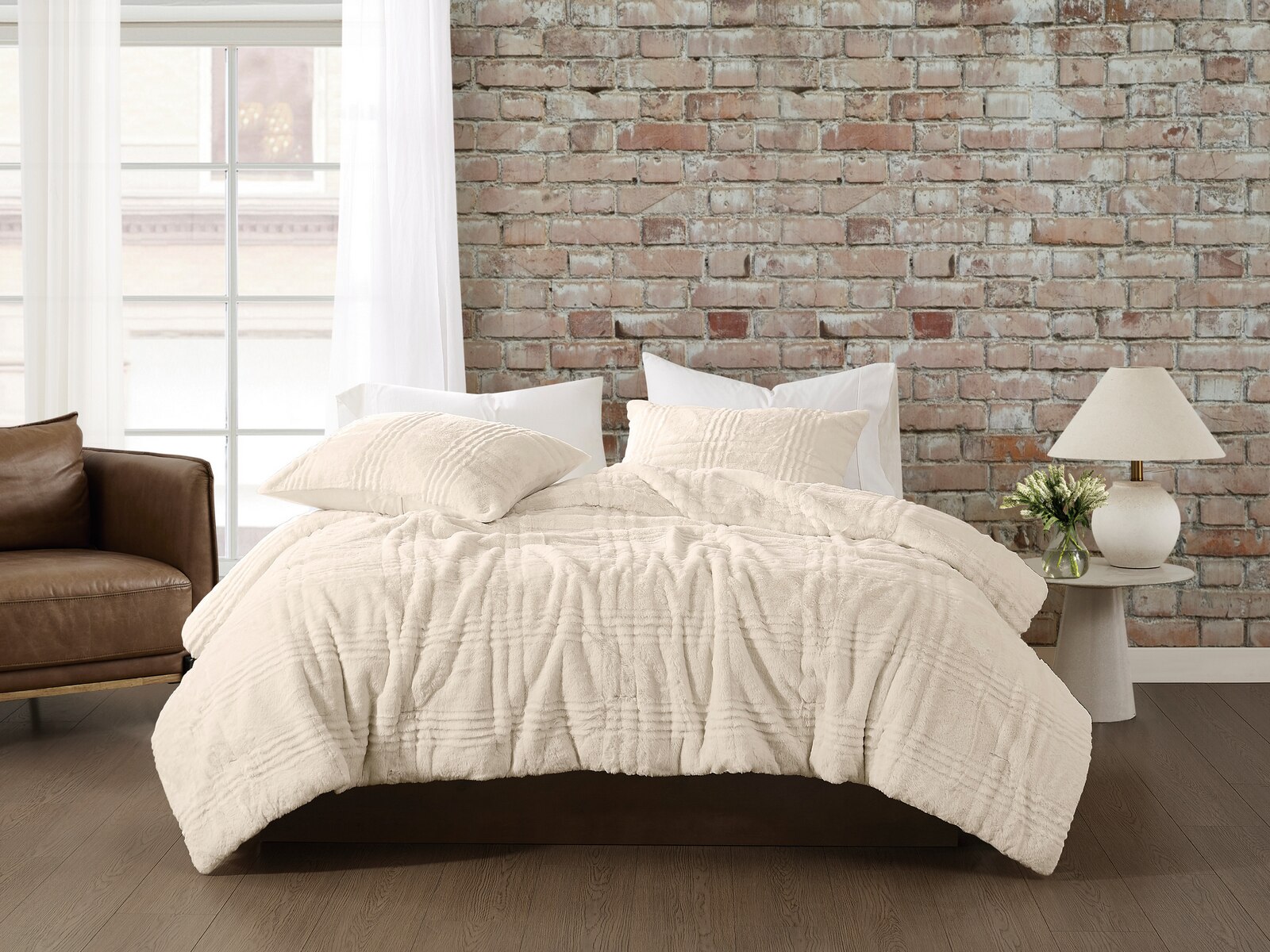
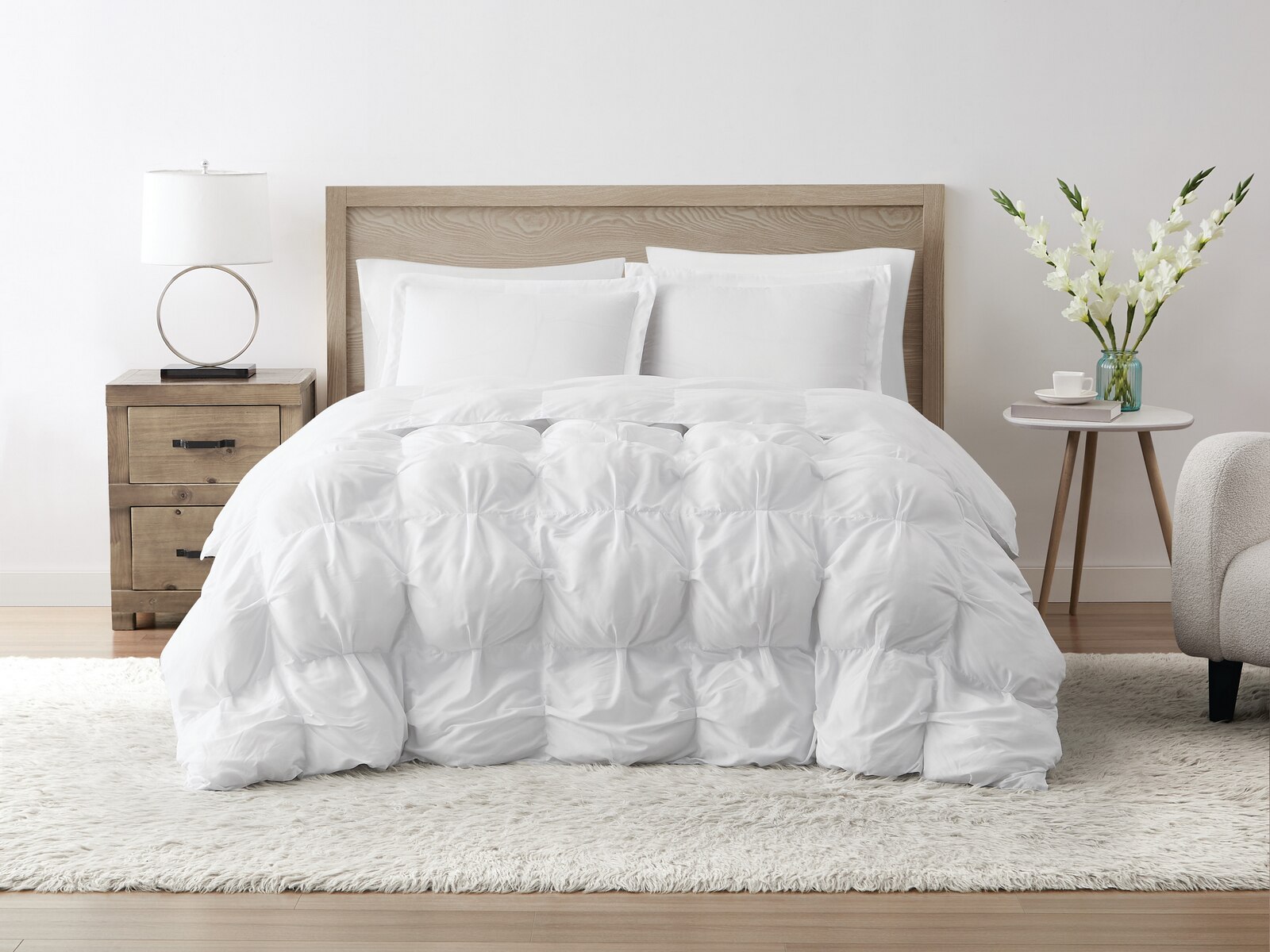
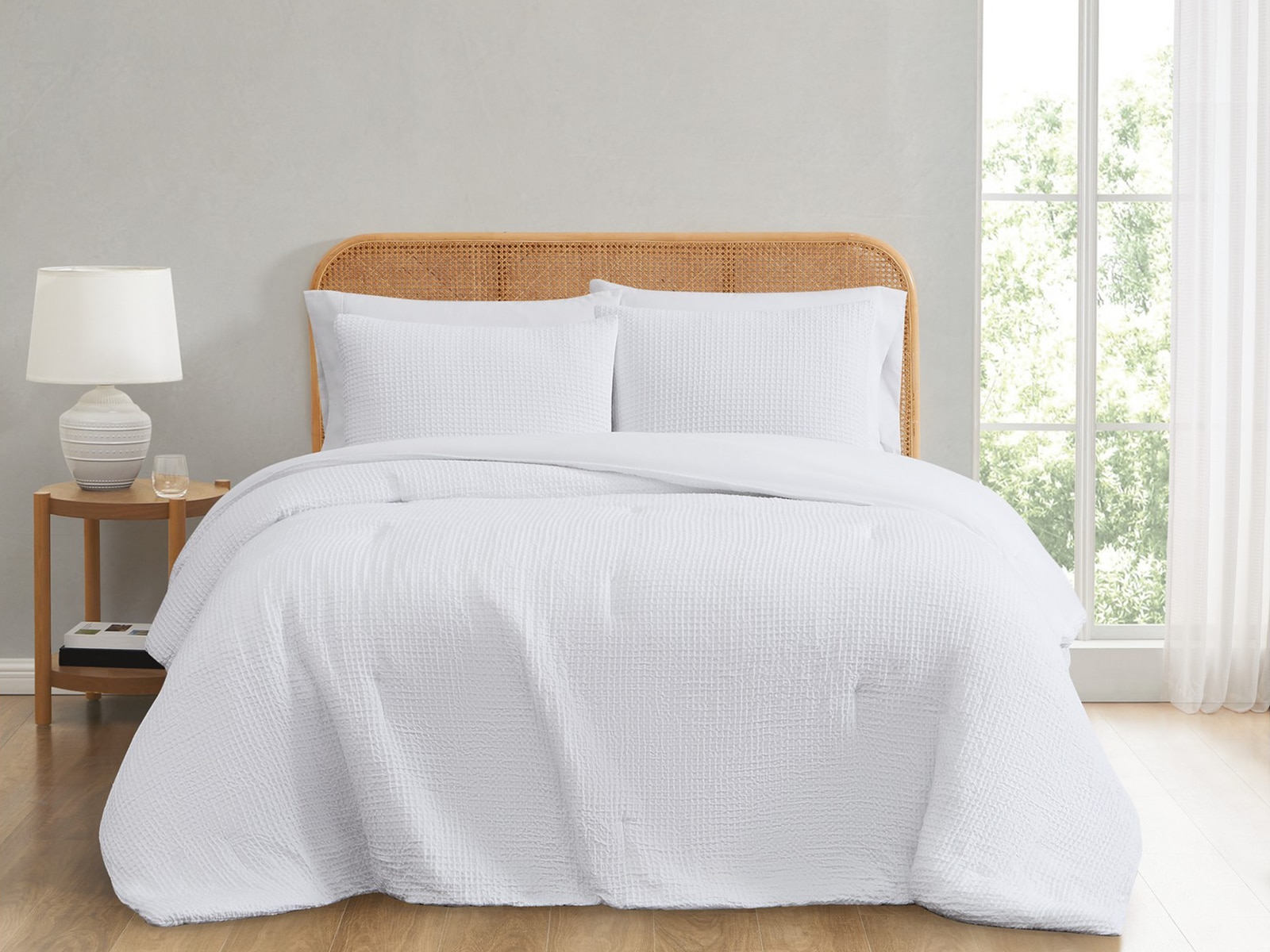
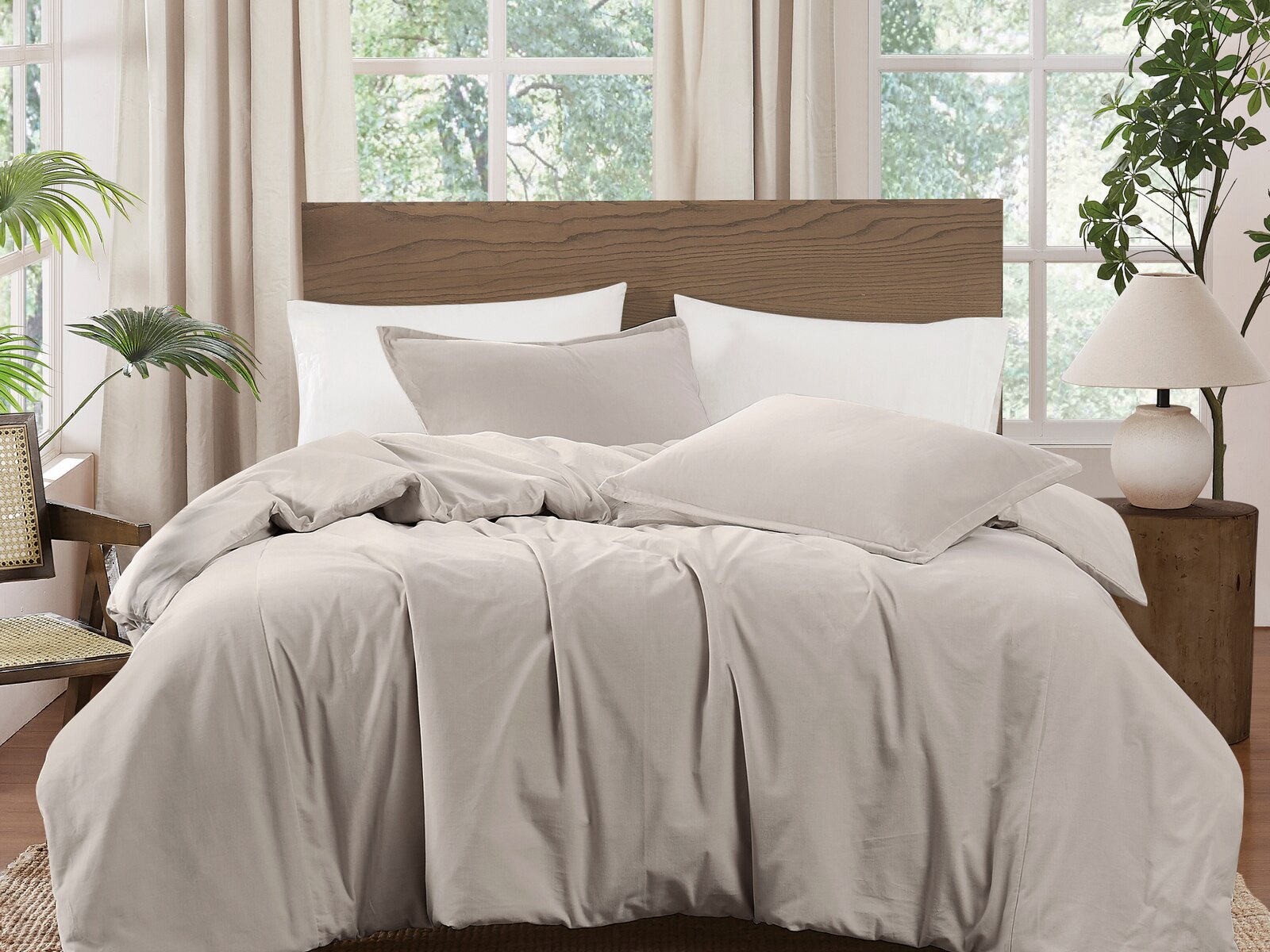
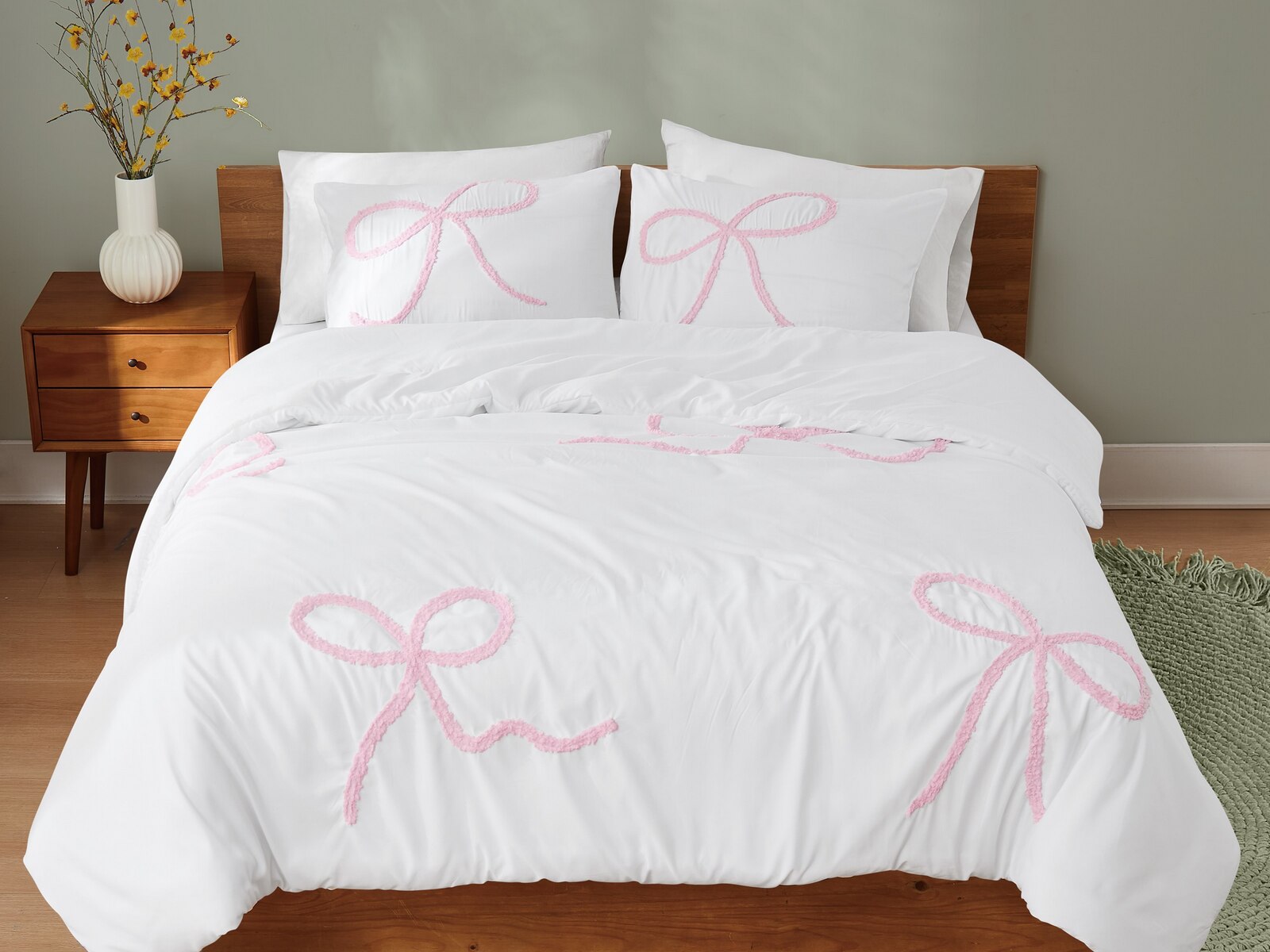
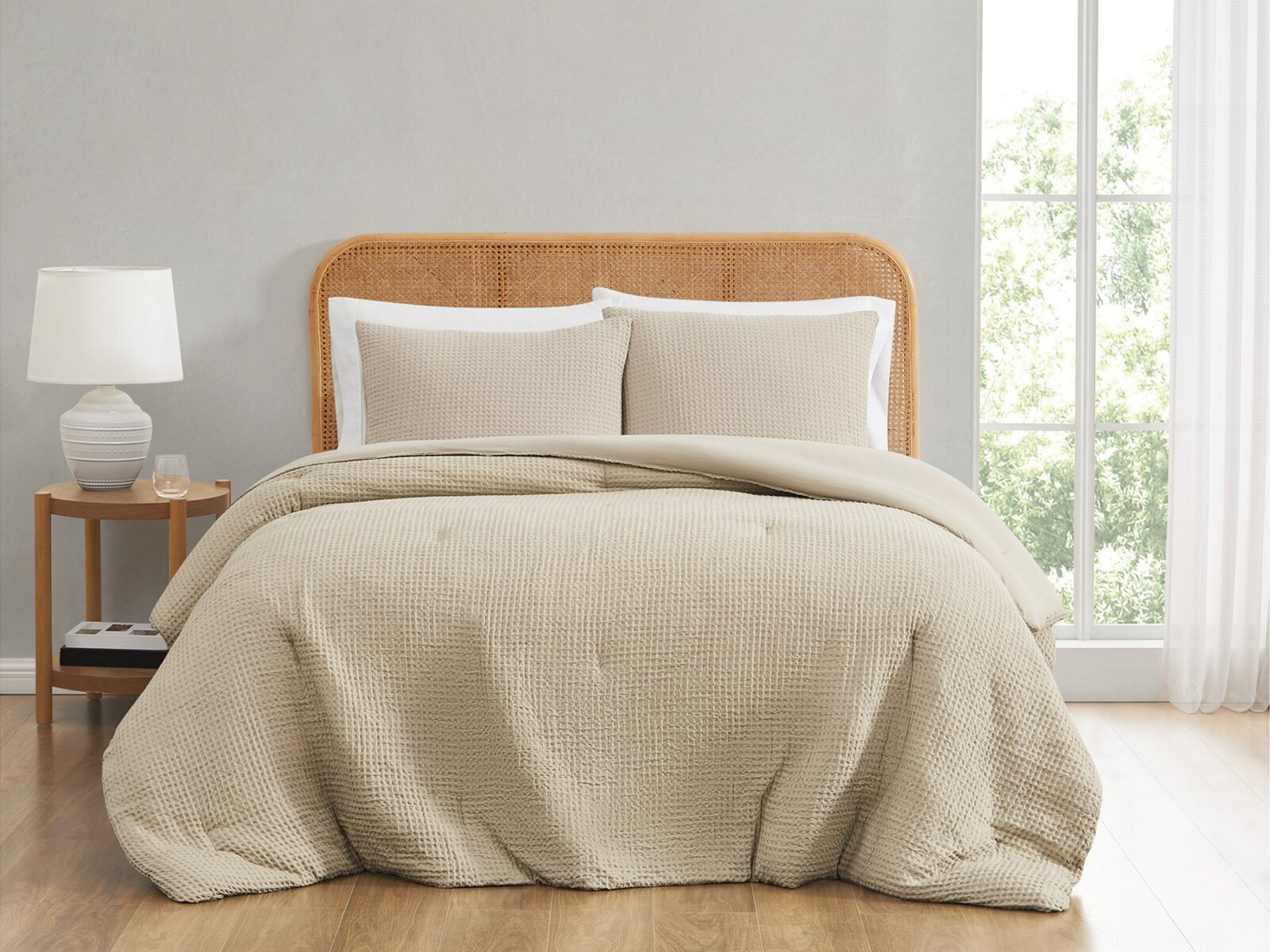
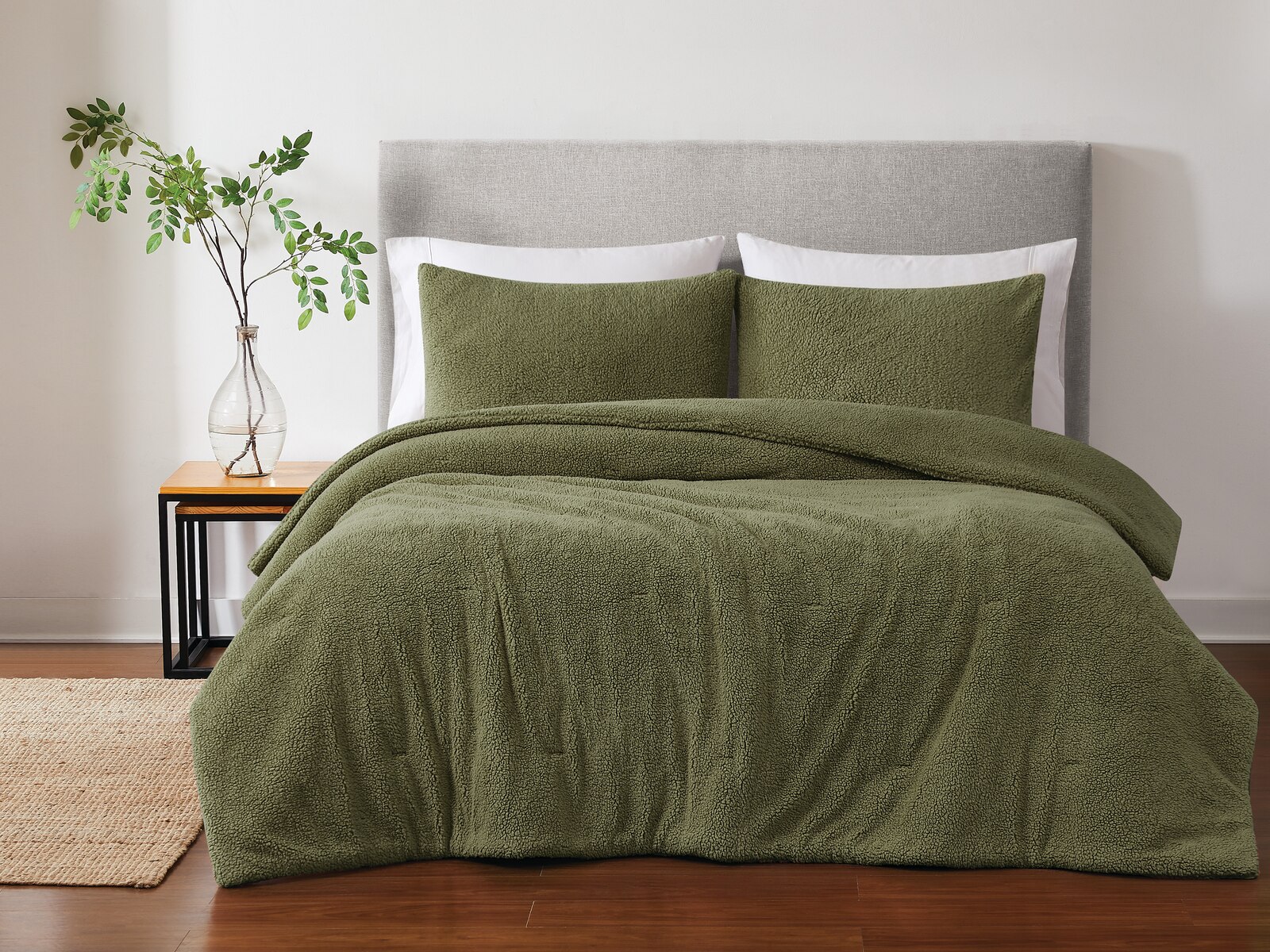
Decorative comforters are padded bed coverings that bring color, pattern and texture to a bedroom while providing a soft, finished layer for everyday rest. Unlike a duvet insert, which is designed to sit inside a separate cover, a comforter typically has a finished outer shell intended to be seen. That combination of practical bedding and visible design makes decorative comforters an easy way to give a bed a distinct personality without changing the furniture around it. A small floral print can soften the look of a simple wood headboard, while broad stripes can give a room a more tailored feel. Solid colors offer a quieter backdrop for patterned pillows or an upholstered bed, and textured surfaces add dimension without introducing another print. Quilted stitching, pintuck details and woven patterns each create a different effect: some look crisp and structured, while others have a relaxed, gently rumpled appearance. The scale of a design matters as much as its color. A large repeating motif becomes a focal point across the bed, while a fine pattern often reads more subtly from the doorway. In a room with patterned curtains or a detailed rug, a restrained comforter can help the space feel cohesive rather than crowded. In a bedroom with plain walls and minimal accessories, a more expressive design can carry most of the visual interest. Decorative comforter sets may include coordinating pillow shams or other accessories, but the contents vary, so the set description matters. Shams are primarily decorative covers and may not replace the pillowcases used for sleeping. Matching pieces create a coordinated starting point, while a solid fitted sheet, familiar pillowcases and a contrasting throw can keep the arrangement personal. For an everyday bedroom, the most useful decorative bedding looks inviting even when the bed is made simply, with the comforter pulled smooth and the pillows arranged without elaborate layering.
The feel of a decorative comforter depends on both its outer fabric and its fill, so appearance tells only part of the story. Cotton shells are often appreciated for their breathable feel, while polyester fabrics can offer a smooth or brushed surface with straightforward care requirements. Cotton blends combine fibers in varying proportions, making the actual fabric content more informative than a broad description such as “soft.” Weave and finishing also affect the experience: a crisp woven surface feels different against the hands than a brushed finish, even when both comforters have a similar appearance. Inside, down, feather blends and down alternative fills create different levels of loft, weight and compressibility. Down alternative describes a type of fill rather than one universal construction, and its feel can vary considerably. A full-looking comforter is not necessarily heavy, just as a flatter profile does not automatically mean less comfort. For someone who prefers a bed covering that drapes close to the body, flexibility and overall weight may matter more than a lofty appearance. Someone who enjoys a cloudlike look may prefer a fuller profile that retains its shape after gentle fluffing. Stitching helps divide the fill into sections and can reduce shifting, although construction quality and care still influence how evenly the comforter rests across the bed. Dense decorative seams may create a more sculpted surface, while larger stitched sections allow broader areas of loft. Raised embroidery, fringe and other dimensional details add character but can also be more vulnerable to snagging from jewelry or pet claws. A smooth, securely stitched surface may be more practical for a frequently used bed. For people with sensitivities, checking the precise shell and fill materials is more useful than assuming a particular fabric or fill will suit everyone. The right combination supports the intended use, whether that means nightly bedding, a welcoming guest bed or a decorative top layer that is folded back before sleep.
Fit determines whether the finished bed looks balanced and whether the comforter provides comfortable coverage. Size labels are a starting point, but the listed width and length are especially important because comforter dimensions can differ within the same mattress size category. A deep mattress, a substantial foundation or an elevated bed frame can change how much fabric is needed along the sides. Measuring the mattress surface and considering the desired drop helps avoid a comforter that barely reaches the edges or hangs farther down than intended. A low platform bed often looks balanced with a shorter drop, while a taller bed may need more generous dimensions to cover the mattress sides. For shared beds, adequate width also leaves more fabric for each sleeper without relying on a perfectly centered arrangement.
Decorative King Comforter Sets offer a coordinated approach for a larger bed, with measurements remaining important to the final fit. A standard king and a California King mattress have different proportions, and a Twin XL mattress needs more length than a standard twin. Care requirements deserve the same attention as dimensions, particularly when the comforter will be used every night. Some constructions are machine washable, while others require professional cleaning; the sewn-in care label should determine the cleaning method. A comforter also needs enough room in the washer to move freely, rather than being packed tightly into the drum. Thorough drying according to the label helps prevent damp areas from remaining inside the fill, and any repairs to loose seams are best addressed before another wash. For bedding with decorative stitching or delicate trim, gentle handling can help preserve the details that make it distinctive. Washable designs can be practical for guest rooms, first apartments and households where bedding needs frequent refreshing. Decorative comforters can also make thoughtful housewarming or wedding gifts when the recipient’s mattress dimensions, preferred colors and care needs are known. A well-considered choice brings together an appealing design, a pleasing feel and upkeep that fits naturally into everyday life.