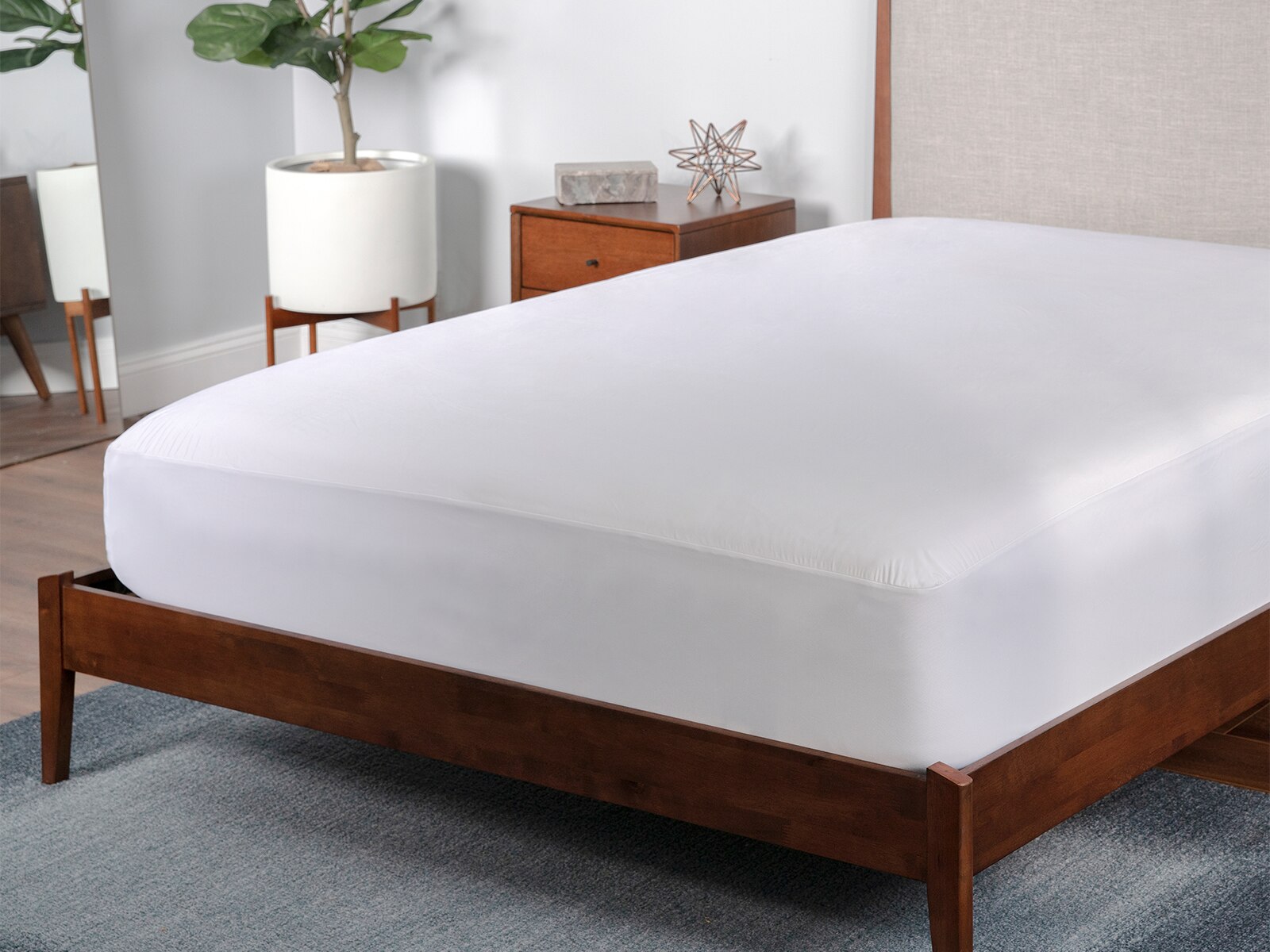
King mattress protectors for deep mattresses are designed to cover a king-size sleep surface while accommodating the extra height of a thick mattress, pillow top or mattress-and-topper combination. Deep-pocket designs often fit mattress profiles around 18 to 22 inches, although the maximum supported depth varies by construction and should always be checked against the stated dimensions. A standard king mattress typically measures 76 by 80 inches, so both the surface dimensions and the pocket depth matter when choosing a protector. A California King has a different shape and requires its own size rather than a standard king cover with extra stretch. For a deep mattress, a well-fitting protector reaches around the corners and tucks securely beneath the bottom edge without pulling the top panel tight. Stretch-knit sidewalls and elastic edging can help accommodate substantial mattress profiles while keeping the protective surface smooth beneath a fitted sheet. This becomes especially noticeable on a tall pillow-top mattress, where shallow corners can slip upward as someone turns over or changes the bedding. The depth measurement should account for a topper if the protector will cover both layers, but not for sheets or blankets. Extra pocket depth alone does not guarantee a better fit: a cover that is much larger than the mattress may leave loose fabric that gathers beneath the sheet. The goal is a secure fit with enough flexibility to follow the mattress contours, not a stretched surface that compresses the cushioning. Fitted protectors generally cover the top and sides, while fully zippered encasements surround the entire mattress. These constructions serve different needs, and a fitted waterproof top should not be mistaken for complete protection on every side. For adjustable bases, compatibility with mattress movement is another useful consideration, particularly where the head or foot rises and the bedding needs to flex without lifting away from the corners.
Materials influence how a deep-pocket king mattress protector feels, how it handles moisture and how noticeable it is beneath the sheet. Cotton surfaces can offer a soft, familiar feel, while polyester and blended fabrics may provide stretch, a smooth finish or easier drying, depending on their construction. A terry surface has small loops that can absorb moisture at the top; a smooth-knit surface generally feels flatter. Waterproof protectors pair a fabric surface with a barrier designed to help keep liquids from reaching the mattress. Water-resistant fabric, by contrast, may slow moisture penetration without providing the same level of protection, so the distinction matters for households managing drink spills, perspiration or occasional nighttime accidents. Protection also depends on where that barrier extends: some covers protect only the sleeping surface, leaving the fabric sidewalls without a waterproof layer. A thin, flexible barrier can help preserve the feel of the mattress, while a thicker or quilted surface may add a more noticeable layer between the sleeper and the cushioning below. A mattress protector is primarily a protective cover, not a substitute for a topper intended to change firmness or add substantial cushioning. For couples sharing a king bed, softness, airflow and low fabric noise can be just as relevant as liquid protection. A cover that rustles whenever someone shifts may be distracting, especially for a light sleeper. Families with young children may value a washable barrier during an early-morning cuddle, while people who share the bed with a pet may appreciate an extra layer between the mattress and muddy paws. No fabric cover should be assumed to resist sharp claws or chewing. People concerned about dust mites should check for specific allergen-barrier construction rather than assuming that any mattress protector provides it. Likewise, bed bug protection requires an encasement specifically designed and labeled for that purpose, including an appropriate zipper closure; deep pockets alone do not provide that function.
Everyday care plays an important role in how well a king mattress protector continues to fit and perform. Many fabric protectors are machine washable, but washing and drying instructions vary with the face fabric, elastic and protective backing. Following the care label helps reduce the risk of shrinkage, weakened stretch or damage to a waterproof layer. Bleach, fabric softener, ironing and high dryer heat may be unsuitable for some constructions, even when the outer fabric looks similar to ordinary bedding. A king-size cover also needs enough room in the washer to move freely and rinse thoroughly; an overloaded drum can leave detergent behind or prevent effective cleaning. Complete drying before remaking the bed helps avoid trapping moisture between the protector and mattress. For busy households, ease of removal matters nearly as much as washability. An elasticized fitted style can be simpler to lift off for routine laundering, while a full encasement requires access around the mattress and more handling when it needs cleaning. Durable stitching, securely attached elastic and a flexible backing are useful details to consider for repeated bedding changes. Over time, thinning corners, loose seams, peeling backing or elastic that no longer holds its shape can signal that the cover needs closer inspection. Keeping a second protector in the bedding rotation can make it easier to maintain coverage while one is being washed and dried. For a more comfort-focused comparison,
King Mattress Protectors For Luxury Comfort offers a related category to explore alongside depth and coverage needs. Whether the bed belongs to a couple, a single sleeper who enjoys extra space or a guest room with a substantial mattress, the most suitable protector balances secure dimensions, the desired moisture barrier and a surface that feels unobtrusive under the sheets. A smooth fit and manageable care routine help make mattress protection a lasting part of everyday bedding without taking attention away from the comfort underneath.