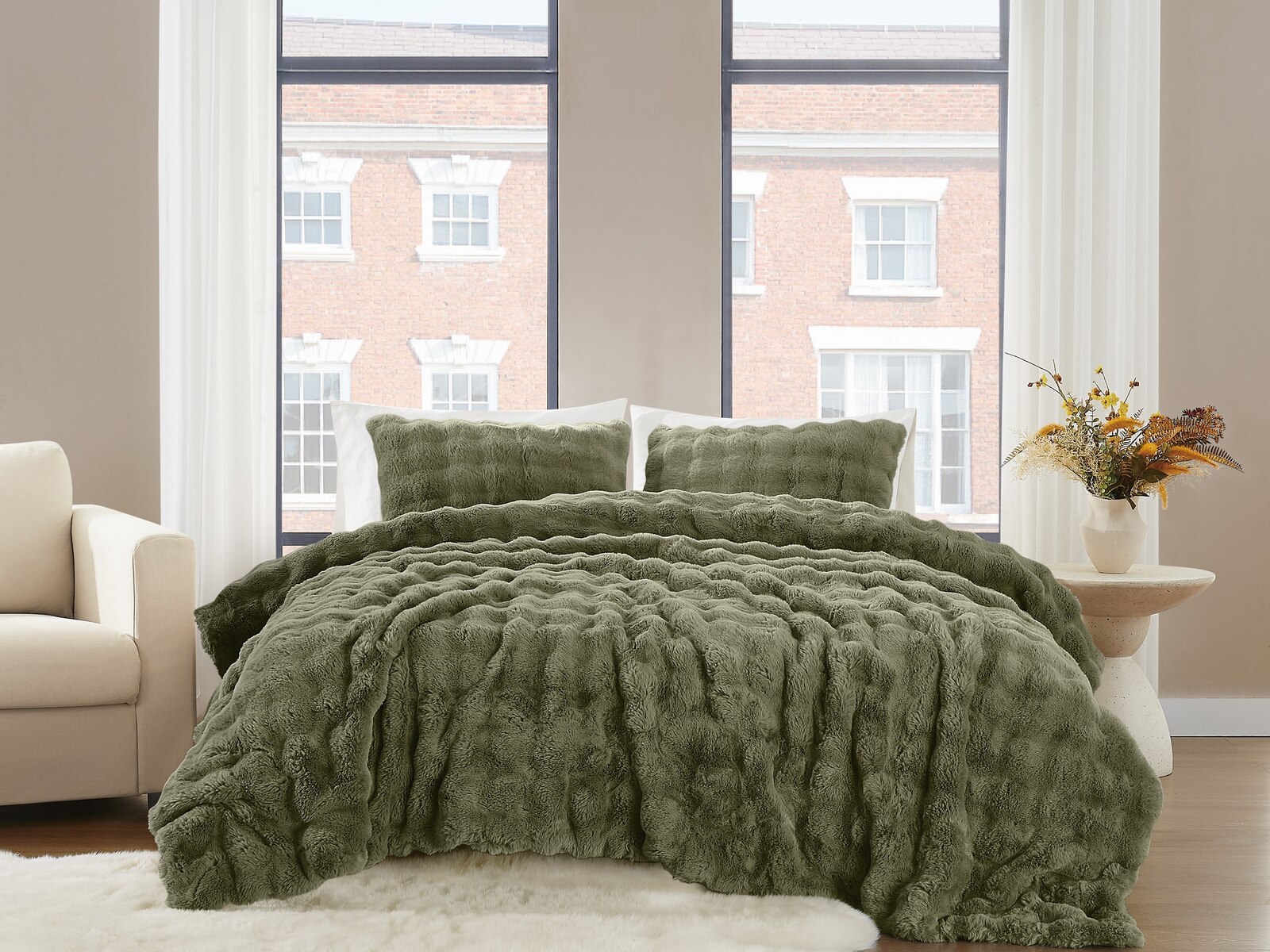
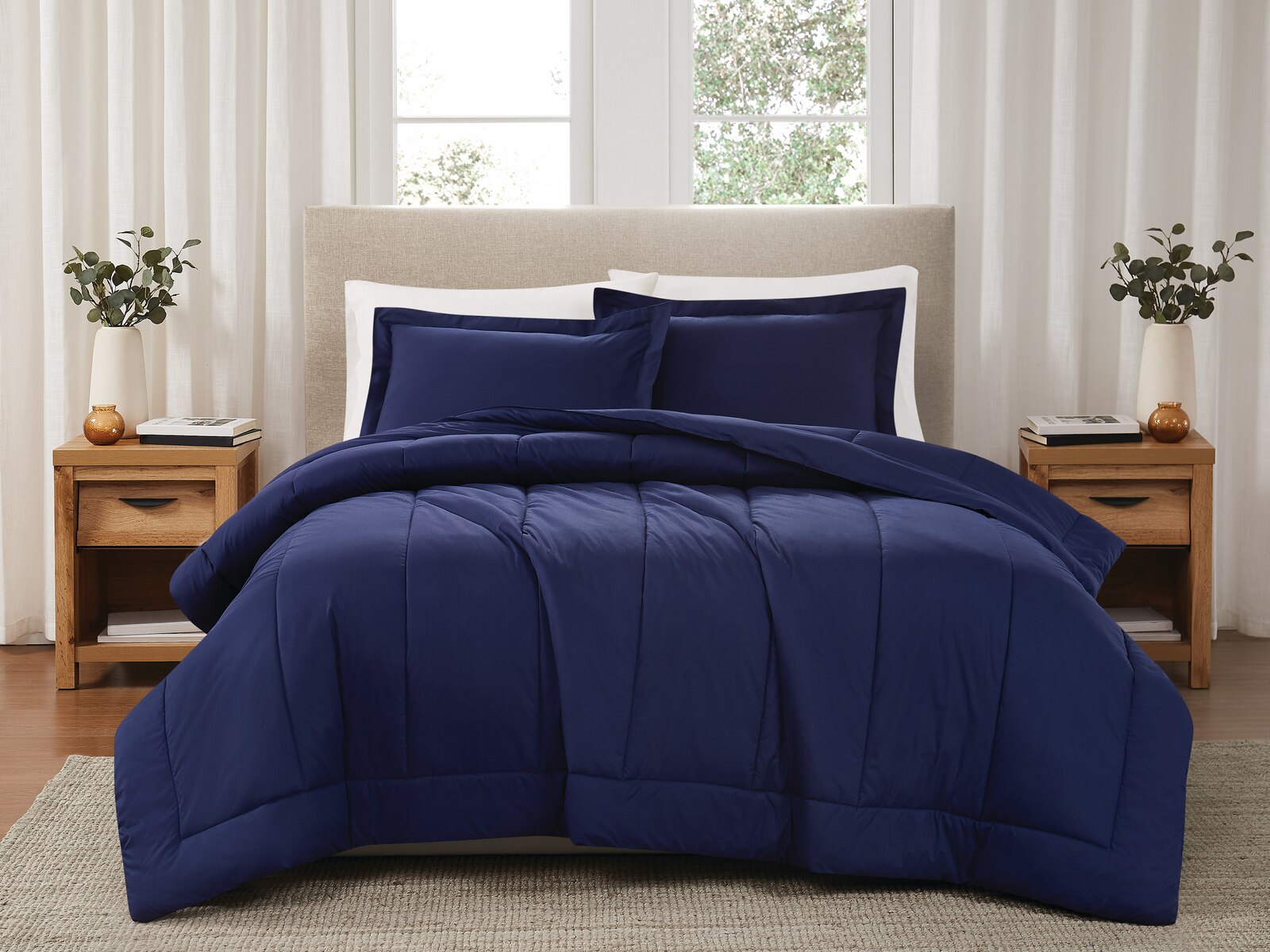
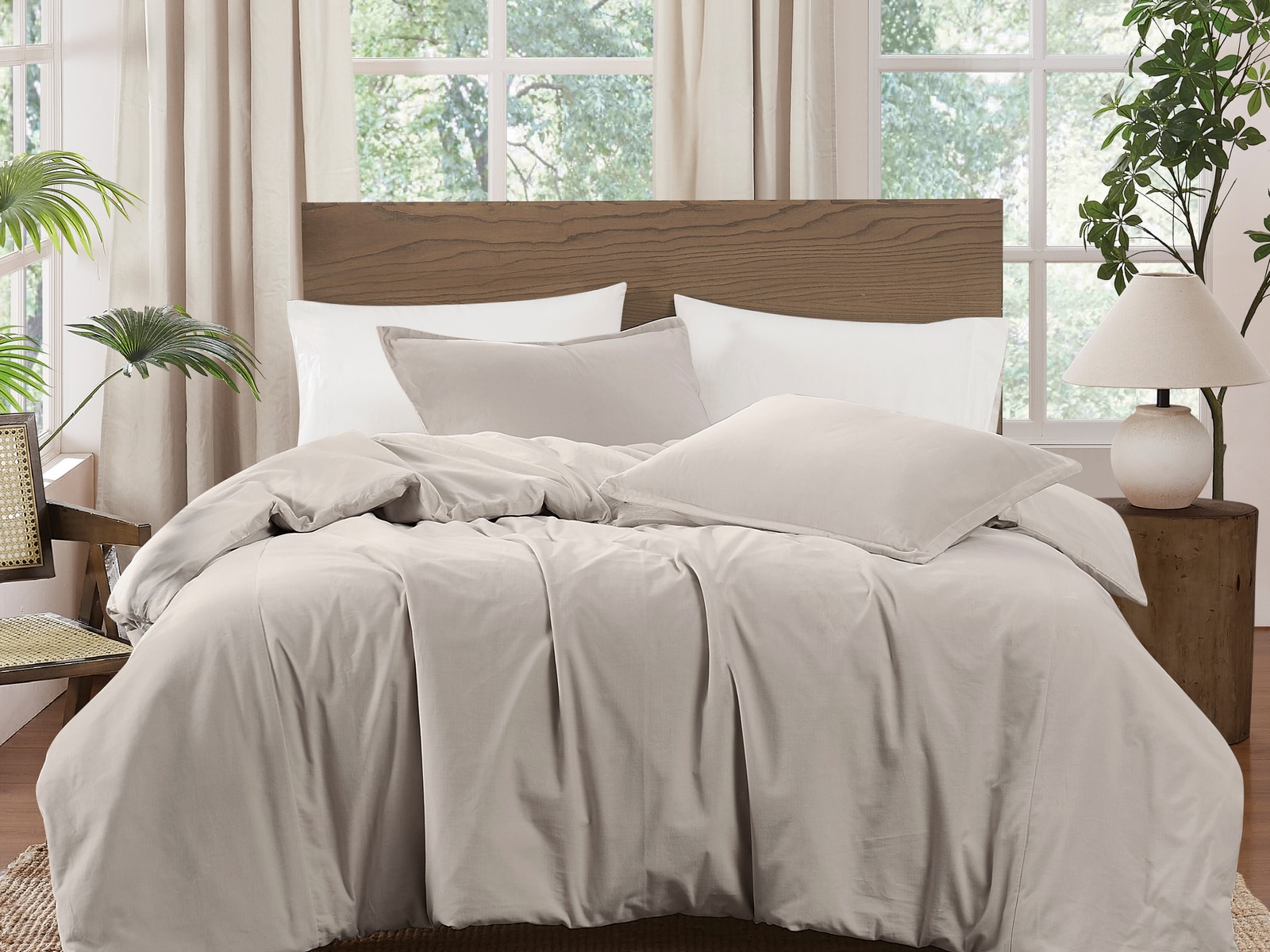
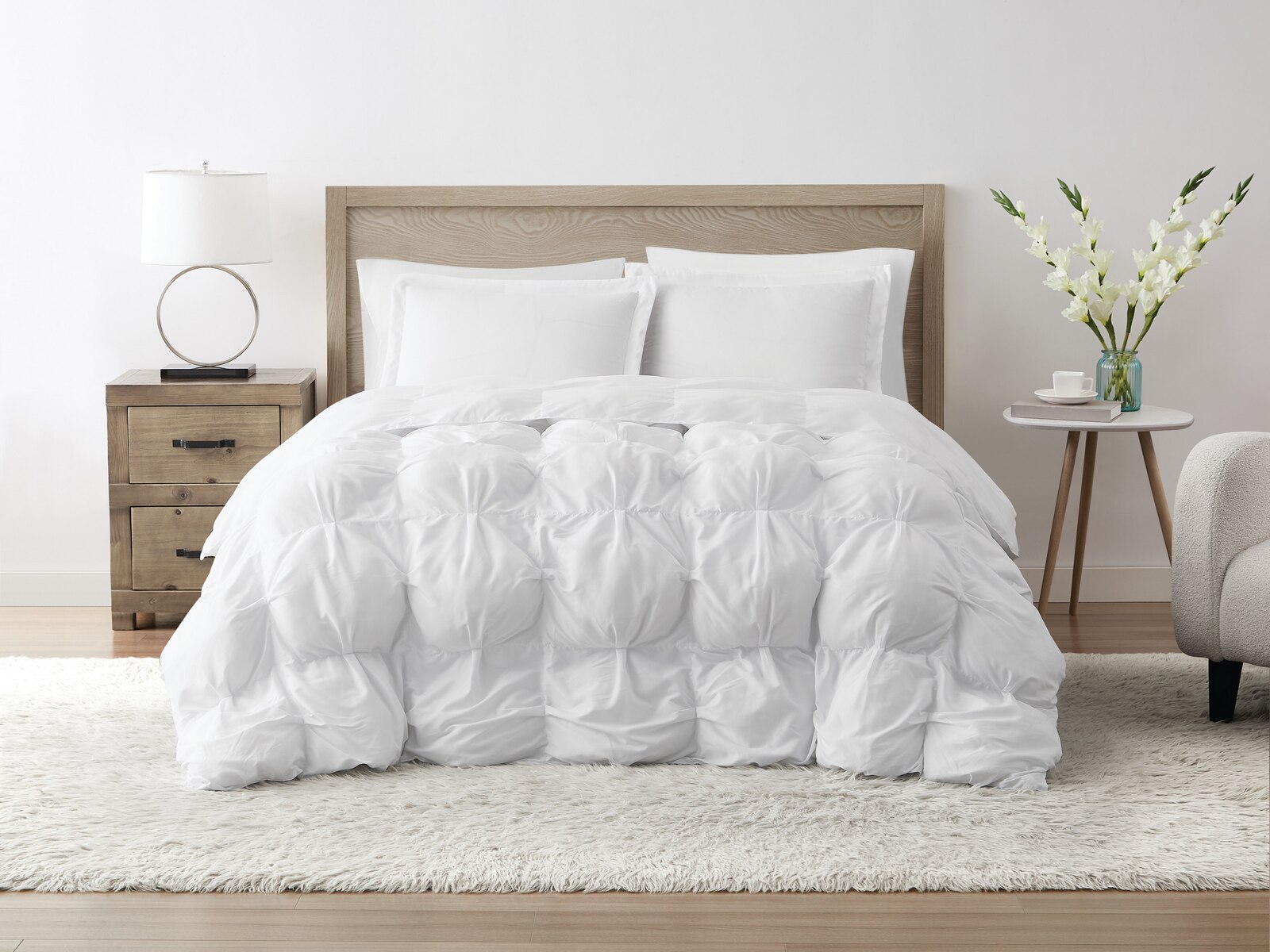
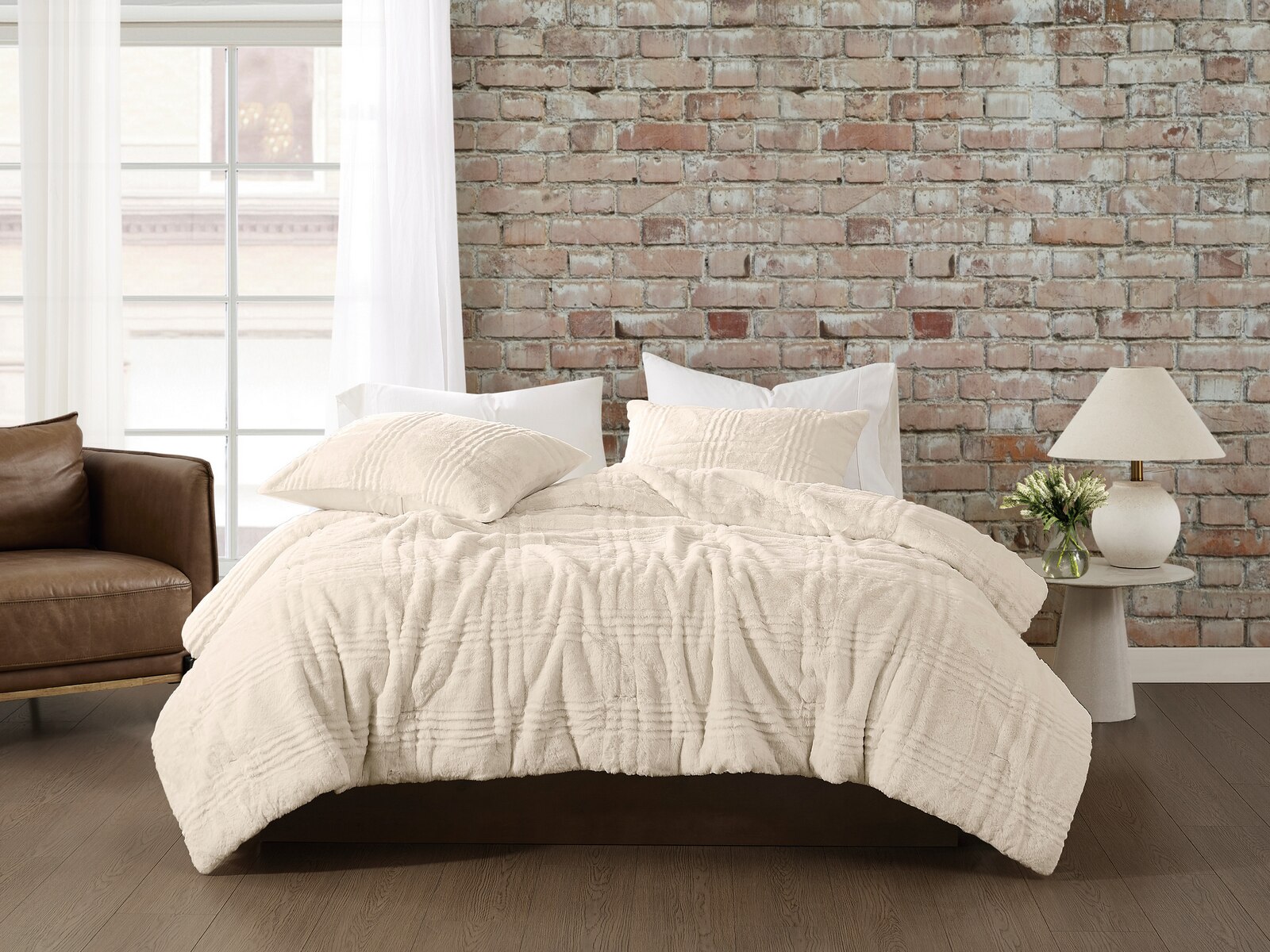
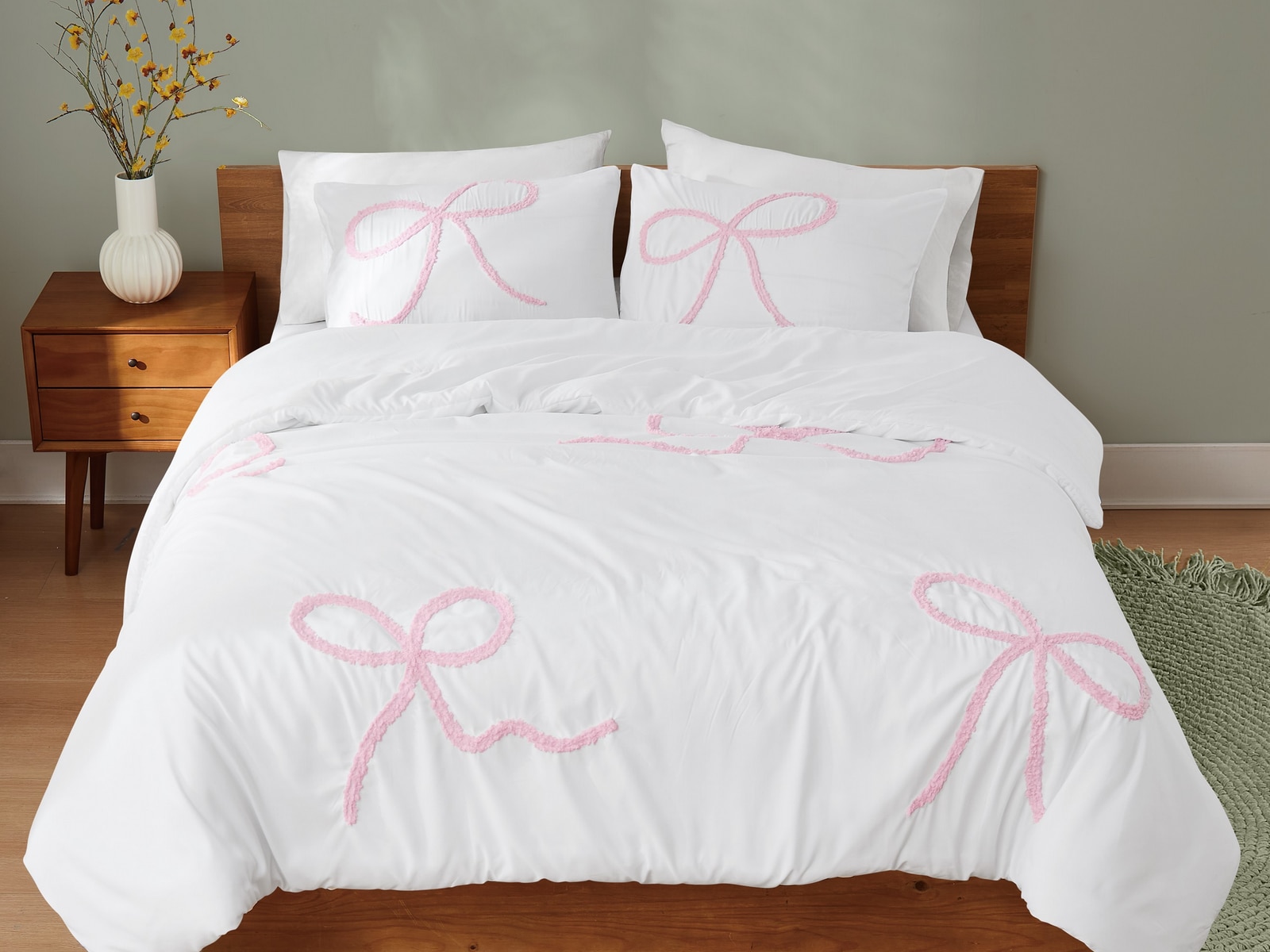
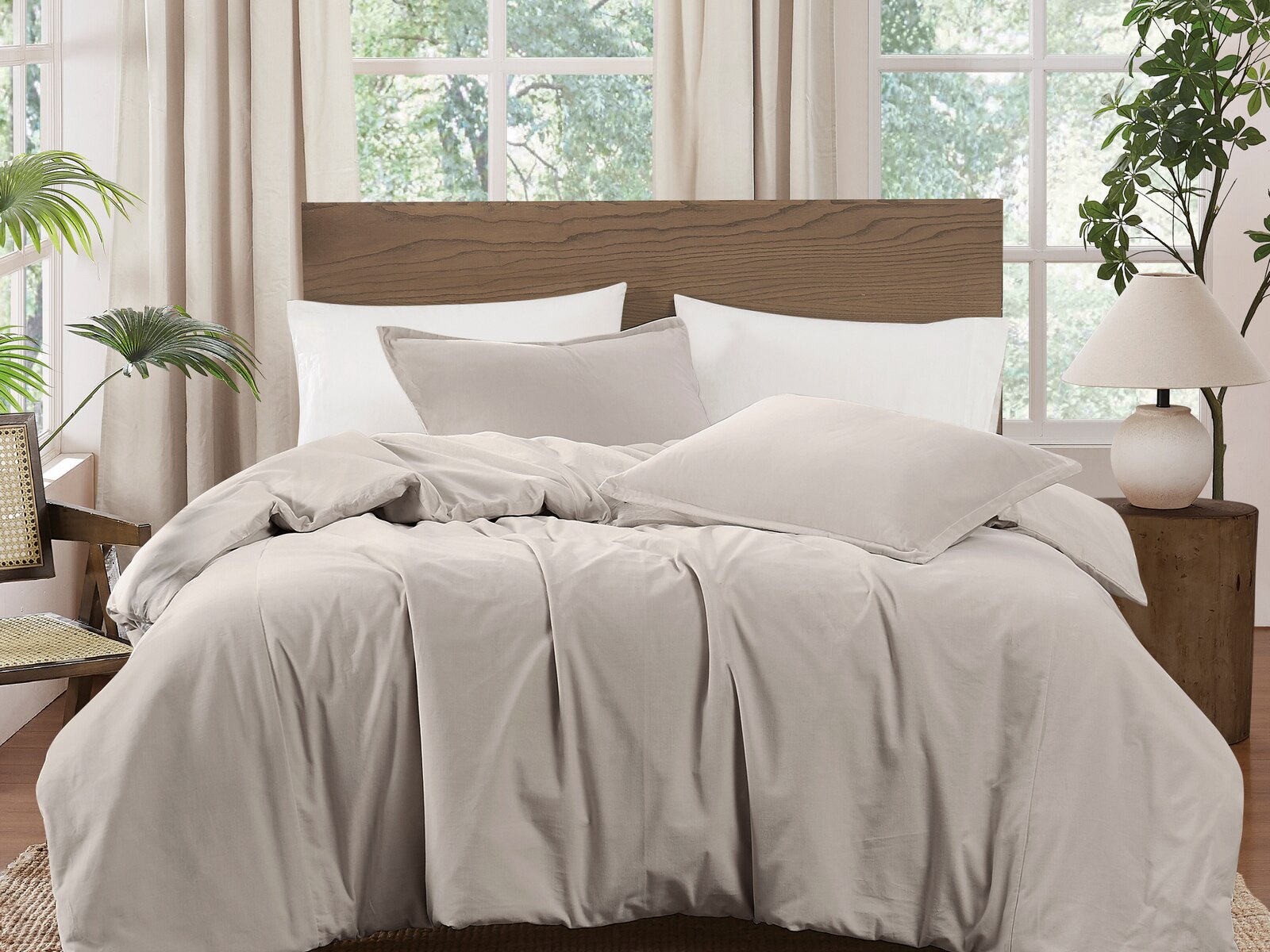
Luxury plush comforter sets bring a soft, richly textured finish to the bed, pairing a filled comforter with coordinating pieces for a pulled-together look. Their defining feature is the fabric’s plush surface: it may have the long, flowing pile of faux fur, the dense softness of sherpa-style fleece or the smooth nap of velvet. Each creates a different experience against the hand and a different effect across the bed. Faux fur adds dimension and a relaxed, enveloping appearance, while velvet catches the light with a subtle sheen. Sherpa-style fabrics have a curled, wool-like texture, though many are made from polyester rather than wool. Microfiber can provide a smooth reverse that feels different from the decorative face, making the comforter comfortable to pull close without placing a deeply textured surface against the skin. The outer fabric and interior fill work together, but they serve different purposes. The shell determines much of the surface feel, while the fill contributes loft, cushioning and weight. Polyester fill is common in plush bedding, including many down-alternative constructions; down and feather blends create another type of loft, with proportions and care requirements that vary. A thicker appearance does not automatically mean a heavier comforter, and a dense plush face can add substantial weight even when the filling is relatively light. For someone who enjoys a substantial layer across the bed, that weight may be part of the appeal. Someone who prefers bedding that is easy to lift and rearrange may appreciate a less dense construction. Luxury is not defined by texture alone. Even stitching, neatly finished edges and fill that stays reasonably distributed all contribute to how a comforter looks and feels after repeated use. A plush comforter is generally a finished bedding layer rather than an insert that requires a separate duvet cover, so its face fabric becomes both a practical consideration and a central part of the room’s design.
Fit makes a noticeable difference in how luxury plush comforter sets sit on the bed. Mattress size is a starting point, but the comforter’s actual measurements determine its coverage. Two sets labeled queen can have different widths and lengths, and a deep mattress or an added topper uses more of the fabric before it reaches the sides of the bed. A generous drape can soften the profile of a tall mattress, while a shorter drop leaves more of the bed frame visible. Measuring from the top of the mattress to the desired stopping point gives a clearer picture than relying on the size name alone. On a shared bed, extra width may also leave more fabric for each sleeper, though oversized bedding still needs to fit the bed and the equipment used to clean it. Set contents deserve the same attention as dimensions. A comforter and matching pillow shams form a simple coordinated arrangement; other configurations may include decorative cushions, a bed skirt or additional accessories. Sheets and sleeping pillows are not necessarily included. Sham dimensions should suit the pillows inside them so the finished corners look full rather than loose or strained. Visually, plush bedding already supplies plenty of texture, which makes it easy to pair with smooth sheets, simple pillowcases and a lightly patterned rug. Ivory, taupe and charcoal create different moods without requiring elaborate styling, while deeper jewel tones can make velvet’s shifting sheen more pronounced. A reversible design may offer a contrasting color or smoother surface, giving the bed another look without adding a separate layer. When considering
Luxury Bedroom Comforter Sets, the balance between softness, proportion and everyday practicality matters just as much as the finished appearance. A comforter that clears the floor, leaves drawers accessible and folds comfortably at the foot of the bed is easier to enjoy than one chosen for appearance alone.
Care requirements help determine whether a plush comforter set suits the household’s routine. Some constructions are machine washable, while others require professional cleaning or special handling, and decorative pieces within the same set may have different instructions. The sewn-in care label is the best reference for washing method, water settings and drying restrictions. Size matters here as well: a comforter needs enough room to move through the wash and dry thoroughly, rather than being packed tightly into a drum. Even a washable set may need larger-capacity equipment than a household has at home. High heat can damage certain synthetic fibers, flatten textured surfaces or affect decorative finishes, so a familiar routine for sheets may not suit plush bedding. Thorough drying before storage helps prevent trapped moisture, and a clean, dry storage space protects bedding between uses. Day-to-day durability also depends on how the room is used. Long-pile fabrics can catch crumbs and pet hair, while smooth reverse fabrics may be easier to keep tidy. Raised textures can show wear differently from flat weaves, especially where someone sits along the edge of the bed. For a frequently used bedroom, secure seams, practical cleaning requirements and a texture that tolerates regular handling are particularly useful qualities. In a guest room, a coordinated set can make the bed feel thoughtfully prepared without a large arrangement of decorative pillows. For someone who reads in bed or enjoys a soft layer while settling in, the comforter’s reverse fabric and manageable weight may matter more than elaborate embellishment. These sets can also make thoughtful wedding or housewarming gifts when the recipient’s mattress dimensions, preferred colors and care preferences are known. A set that suits those everyday details is more personal than one selected by appearance alone. The most satisfying choice brings the inviting feel of plush fabric together with coverage, construction and care that fit the way the bedroom is actually used.