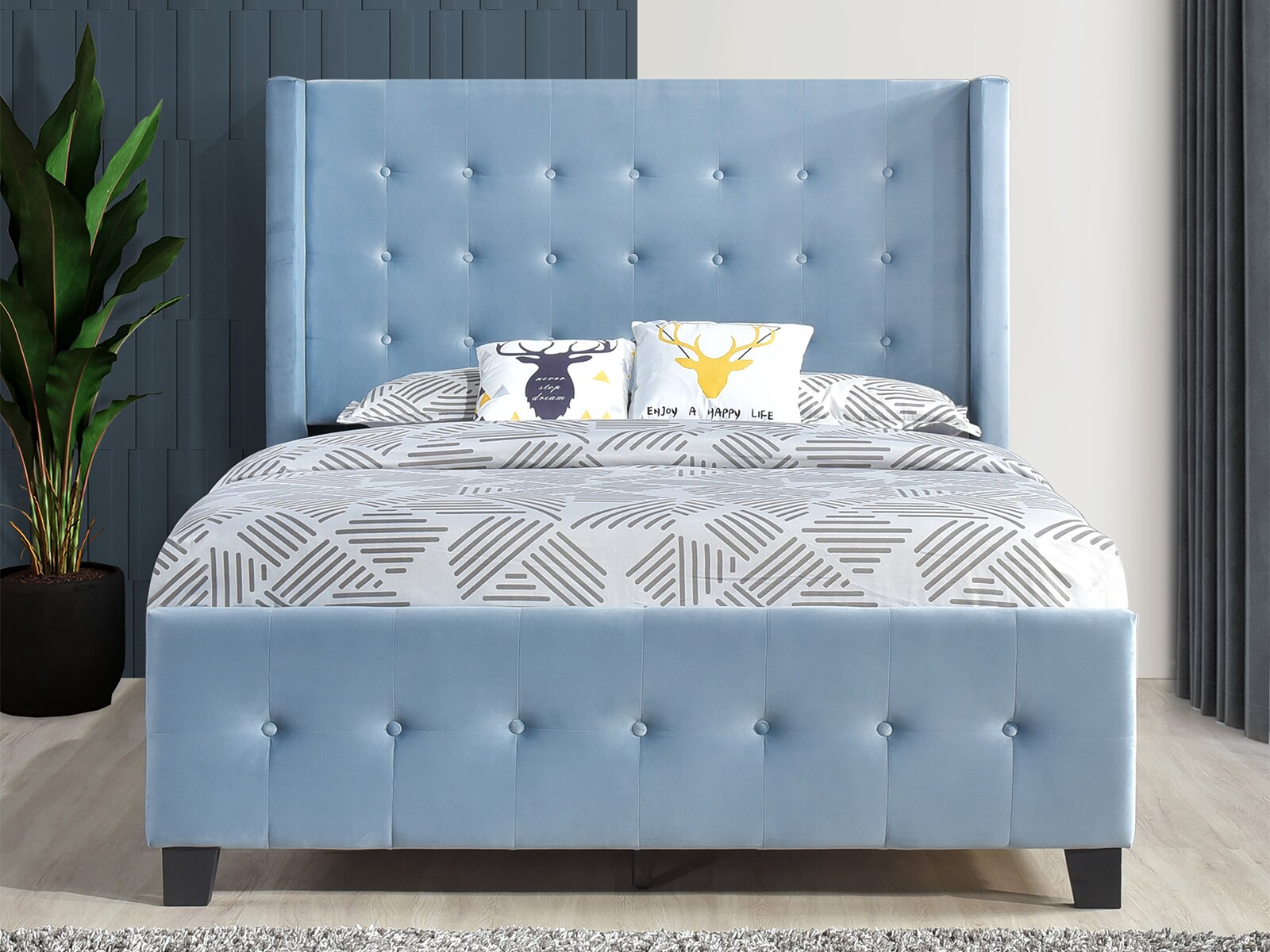
Tufted king headboards give master suites a softly upholstered focal point, pairing the generous scale of a king bed with the texture and depth of decorative tufting. Buttons, folds or stitched sections draw the upholstery inward, creating patterns that range from traditional diamonds to orderly squares and broad channels. The result can feel tailored and understated or plush and dramatic, depending on the fabric, padding and silhouette. A rectangular profile brings clean lines to a room with substantial dressers and nightstands, while an arched top adds a softer outline above neatly layered pillows. Wingback shapes extend along the sides, creating a more enclosed appearance and adding dimension when the bed sits against a wide, uninterrupted wall. For people who read or unwind in bed, a padded headboard can provide a more comfortable backdrop than an exposed wall, though pillows remain useful for supporting an upright position. Upholstery also changes how the bed relates to the rest of the suite. A finely woven fabric in ivory, taupe or gray creates a quiet foundation for patterned bedding; velvet introduces a richer surface that catches light differently across its pile. Linen-look weaves bring visible texture, while smooth fabrics keep attention on the tufting itself. Fiber content matters as much as appearance, since similar-looking fabrics can have different cleaning requirements and resistance to everyday wear. Polyester blends, cotton blends and other upholstery materials each deserve a closer look at the care label rather than assumptions based on texture alone. In a shared bedroom, a headboard often works best as a visual bridge between two sets of preferences: a simple outline can balance elaborate bedding, and a textured neutral can complement furniture that does not match exactly. The most cohesive effect comes from a few repeated details, such as the curve of a lamp base or the warm tone of nearby wood, rather than making every surface look alike.
Fit involves more than choosing a headboard labeled king. A standard king mattress typically measures 76 inches wide by 80 inches long, while a California King typically measures 72 inches wide by 84 inches long. Those proportions do not establish headboard compatibility on their own; the mounting points, supporting frame and overall dimensions still matter. Some designs extend beyond the mattress on either side, giving the bed a broader presence, while others stay closer to its width. In a master suite with narrow bedside clearances, those extra inches can affect how comfortably a nightstand, reading lamp or nearby door fits into the arrangement. Headboard height deserves the same attention. A tall mattress and foundation can conceal much of a shorter upholstered panel, including the lower rows of tufting. A lower platform can expose more of the design, making the same headboard appear taller and more prominent. Considering the assembled bed height helps establish how much upholstery will remain visible above the pillows. Wall art, windows and sloped ceilings also influence the proportions, especially when a tall wingback silhouette becomes the room’s main feature. Attachment methods vary: frame-mounted headboards require compatible brackets or bolt positions, and wall-mounted designs need appropriate hardware and secure attachment suited to the wall construction. Upholstered pieces can be substantial, so their weight and installation requirements are practical considerations before bringing them into an upstairs suite or through a tight hallway. An adjustable base adds another compatibility check, including whether separate brackets are needed and whether moving sections have sufficient clearance. The headboard should remain securely supported without depending on the mattress to hold it in place. Details such as access to outlets, room for charging cords and clearance around nearby switches also matter in daily use. A well-proportioned arrangement leaves the bed looking settled in the room without making routine tasks, from changing sheets to reaching a bedside drawer, unnecessarily awkward.
Everyday durability comes from the combination of upholstery, padding, internal construction and secure mounting. A sturdy wood or metal support structure provides the foundation, while securely finished seams and well-attached tufting help the upholstered surface maintain its shape. Deep button tufting creates pronounced texture, but its folds also give dust and lint places to collect. Shallower stitched patterns offer a flatter surface with fewer recessed areas, which may suit a household that prefers a simpler cleaning routine. Fabric choice can reflect how the room is actually used: someone who reads against the headboard every evening may place more emphasis on upholstery suited to frequent contact, while a household with pets may pay closer attention to weave, snagging potential and how readily hair can be removed. No upholstery is immune to wear, and a performance description should be considered alongside the manufacturer’s specific care guidance. Routine maintenance generally begins with gentle dust removal using an upholstery attachment when permitted by the care instructions. Spot treatment depends on the fabric’s cleaning code; adding water or a household cleaner without checking it can leave marks or affect the finish. Velvet may show shading as its pile changes direction, which is distinct from a stain, and brushing or cleaning methods should follow the fabric’s recommendations. Pillows can help limit direct contact with hair products and skin oils, while careful placement away from prolonged direct sunlight can help reduce uneven fading. These practical details make tufted king headboards appealing for couples furnishing a shared suite, readers who enjoy a padded backdrop and anyone updating a bedroom without replacing every piece of furniture. Coordinating another bedroom does not require repeating the same scale or silhouette;
Tufted Headboards For Guest Rooms offers a related direction for carrying upholstered texture into a separate space. In the master suite, balanced proportions, compatible mounting and manageable fabric care help the headboard remain a comfortable, considered part of the room through everyday use.