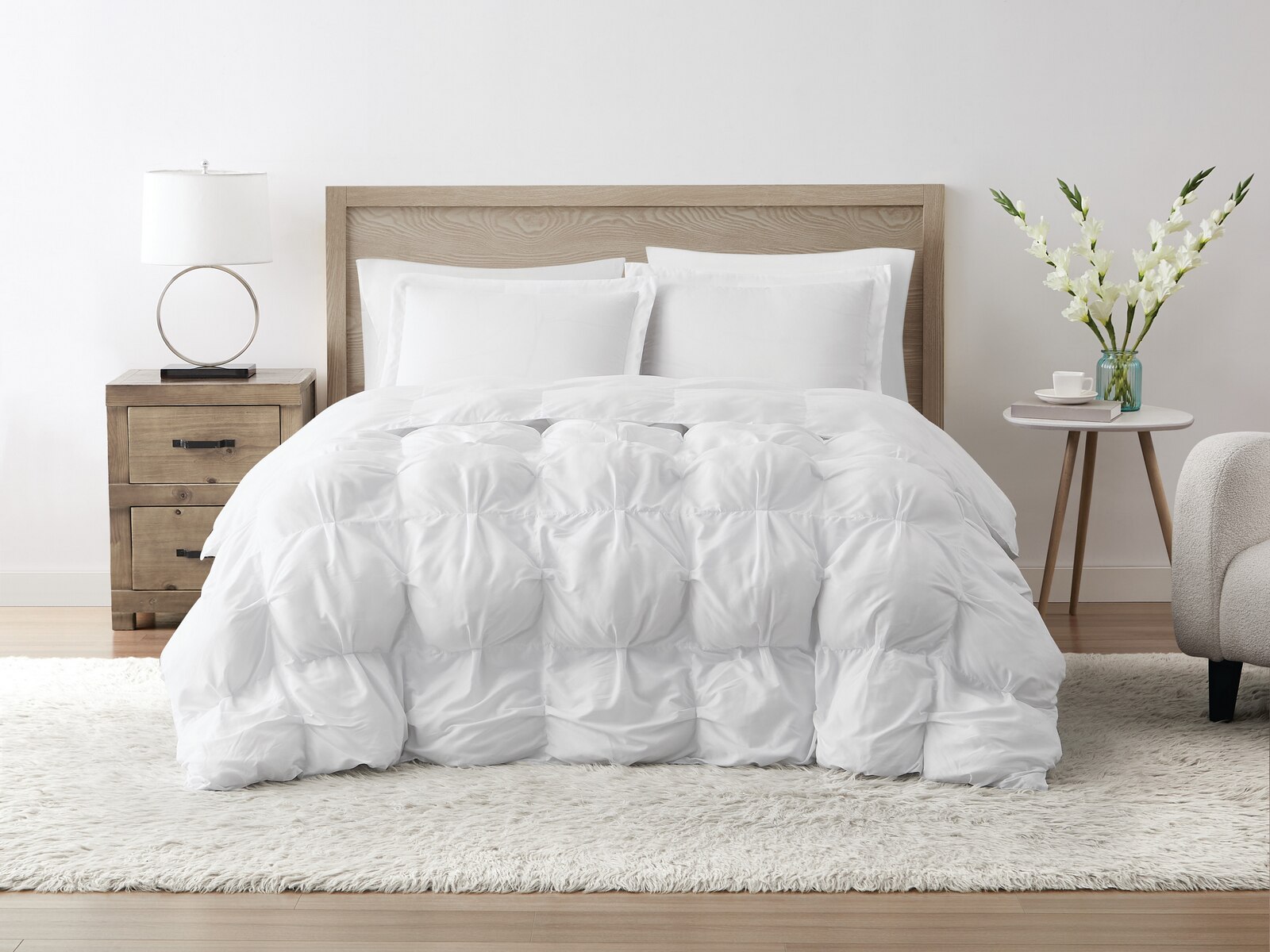
White bedding gives a bedroom a clean, timeless look, with a light, uncluttered appearance that works just as well in a relaxed everyday space as it does in a hotel-inspired room. The category includes sheets, pillowcases, duvet covers, comforters and other bed layers in shades ranging from crisp white to softer ivory. That simple palette makes fabric and texture especially noticeable: a smooth sheet, a gently rumpled linen cover or a quilted surface can each give the same bed a different character. For a coordinated look, pay attention to undertones rather than assuming every white will match. A bright white can appear noticeably different beside a creamy shade, especially against a white headboard or painted wall. Similar undertones create a more uniform arrangement, while deliberately mixing shades adds depth without introducing a strong color contrast. White also provides a flexible foundation for patterned pillows, natural wood furniture, upholstered headboards and colorful artwork. For a softer variation on an all-white bed,
Neutral Color Bedding offers a related palette to consider alongside shades of white. Texture can do much of the decorating when the color stays consistent. A folded coverlet at the foot of the bed, a subtle stitched pattern or a slightly raised weave gives the surface dimension without making the room feel busy. In a small bedroom, fewer contrasting bed layers can help the overall arrangement feel less visually crowded. In a shared bedroom, white can bridge different decorating preferences and make it easier to change accent colors later. It is also a familiar choice for guest spaces, where a neatly made bed helps create a welcoming setting without relying on a particular decorating theme. The appeal is visual and practical, but white fabric is not inherently cleaner than another color; regular laundering and appropriate care matter more than the shade.
The feel of white bedding depends on its fiber, weave and construction, not its color. Cotton is a common choice for sheets and covers because it is absorbent and comes in a range of finishes. Percale typically has a matte appearance and a crisp, lightly structured feel, while sateen has a smoother surface, a subtle sheen and a more fluid drape. Linen brings visible texture and a relaxed look, including the natural creasing that is part of its character. Microfiber often feels smooth and may resist wrinkling, although its feel and care requirements vary by construction. Blended fabrics can combine different qualities, so the fiber label is more useful than appearance alone when comparing options. Thread count is one detail to consider, but it does not tell the whole story about softness or durability. Yarn quality, weave, stitching and finishing all contribute to how bedding feels and holds up to repeated use. Someone who likes a freshly pressed appearance may prefer a smooth finish, while someone who would rather make the bed without smoothing every crease may appreciate a more textured surface. Fit deserves just as much attention as fabric. A fitted sheet should accommodate the mattress depth, including any topper that sits beneath it, without pulling tightly at the corners or leaving excess fabric across the sleeping surface. Check measurements rather than relying only on a size name, particularly with deep mattresses or adjustable bases. Twin XL and California King have distinct dimensions, and similarly named covers or inserts may not share identical measurements. For a duvet cover, compare its dimensions with the insert and look for construction details that help keep the two aligned, such as interior ties and a secure closure. Pillowcase dimensions should also match the pillows underneath. A close but comfortable fit creates a tidier appearance and avoids the empty fabric or compressed edges that can make an otherwise well-made bed feel unfinished.
Caring for white bedding starts with the instructions on each piece, since the same washing routine will not suit every fiber, fill or decorative finish. Separating whites from dark or strongly colored fabrics helps reduce the chance of dye transfer, and leaving enough room in the washer allows bedding to move and rinse properly. Measure detergent according to its directions and the load rather than adding extra in the hope of a brighter result; residue can affect both appearance and feel. Treat spills and visible marks promptly with a method suitable for the fabric, testing any treatment in an inconspicuous area when recommended. White does not automatically mean bleach-safe, and chlorine bleach may damage certain fibers, finishes or elastic components. Any whitening treatment should be compatible with the care label. Bedding should be thoroughly dry before it is folded or placed back on the bed, and clean layers are best stored in a dry space away from direct light. Day-to-day habits also help preserve the appearance of white fabric. Let body lotion dry before getting into bed, check whether personal care products carry fabric warnings and consider a washable top layer if a pet regularly rests on the bedding. An extra sheet set makes it easier to remake the bed while another set is being washed, particularly in a frequently used guest room or a household with a busy laundry routine. Reinforced seams, secure hems and well-attached closures are worth checking when choosing pieces intended for frequent use. White bedding can also make a thoughtful wedding, housewarming or first-apartment gift when the recipient’s mattress size and fabric preferences are known. For everyday use or gifting, the most useful choice brings together a pleasing texture, dependable fit and a care routine that feels manageable. A bed does not need elaborate layering to look finished; properly fitted sheets, comfortable pillows and a neatly arranged top layer can give white bedding its enduring, inviting appeal.