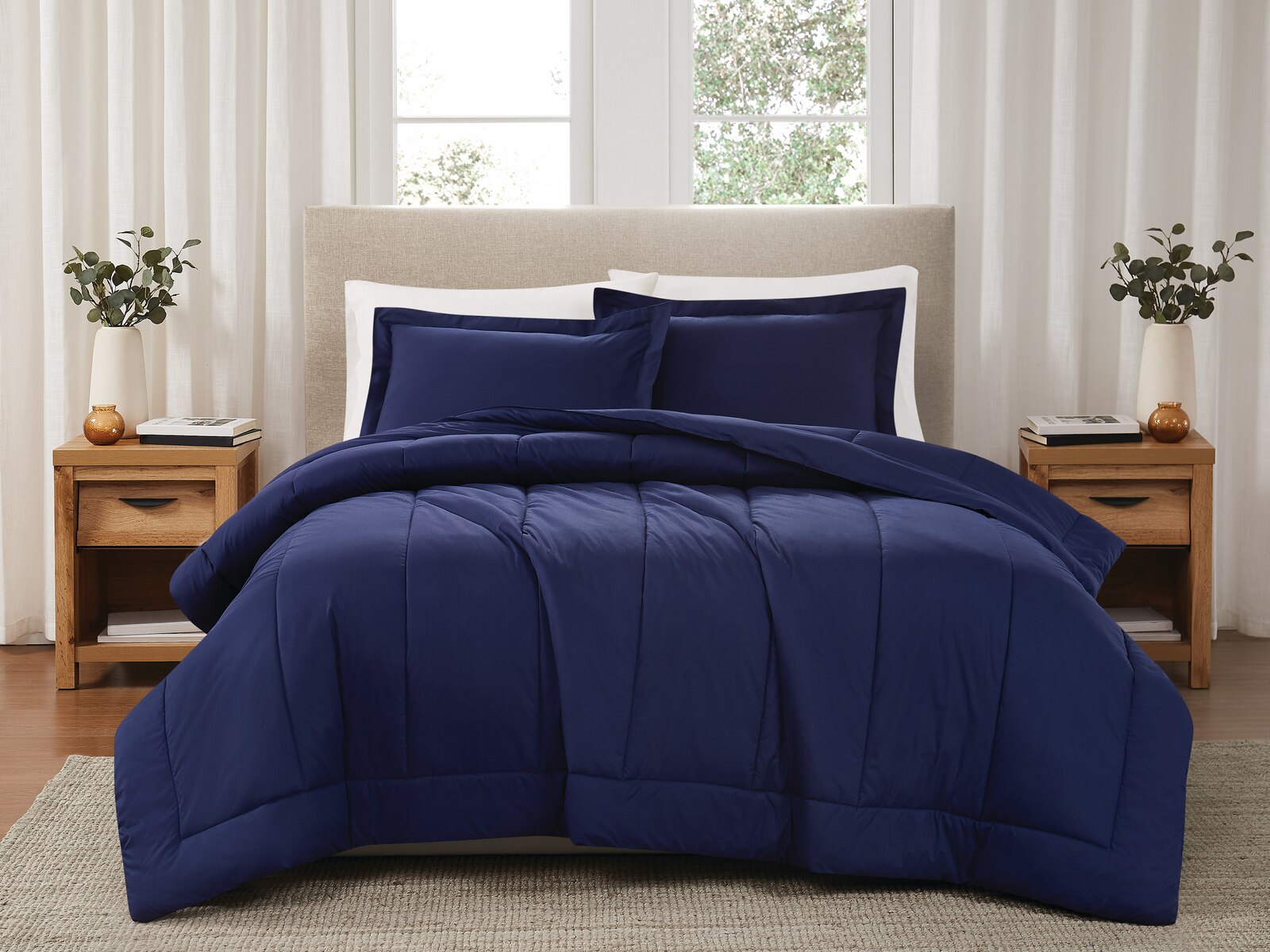
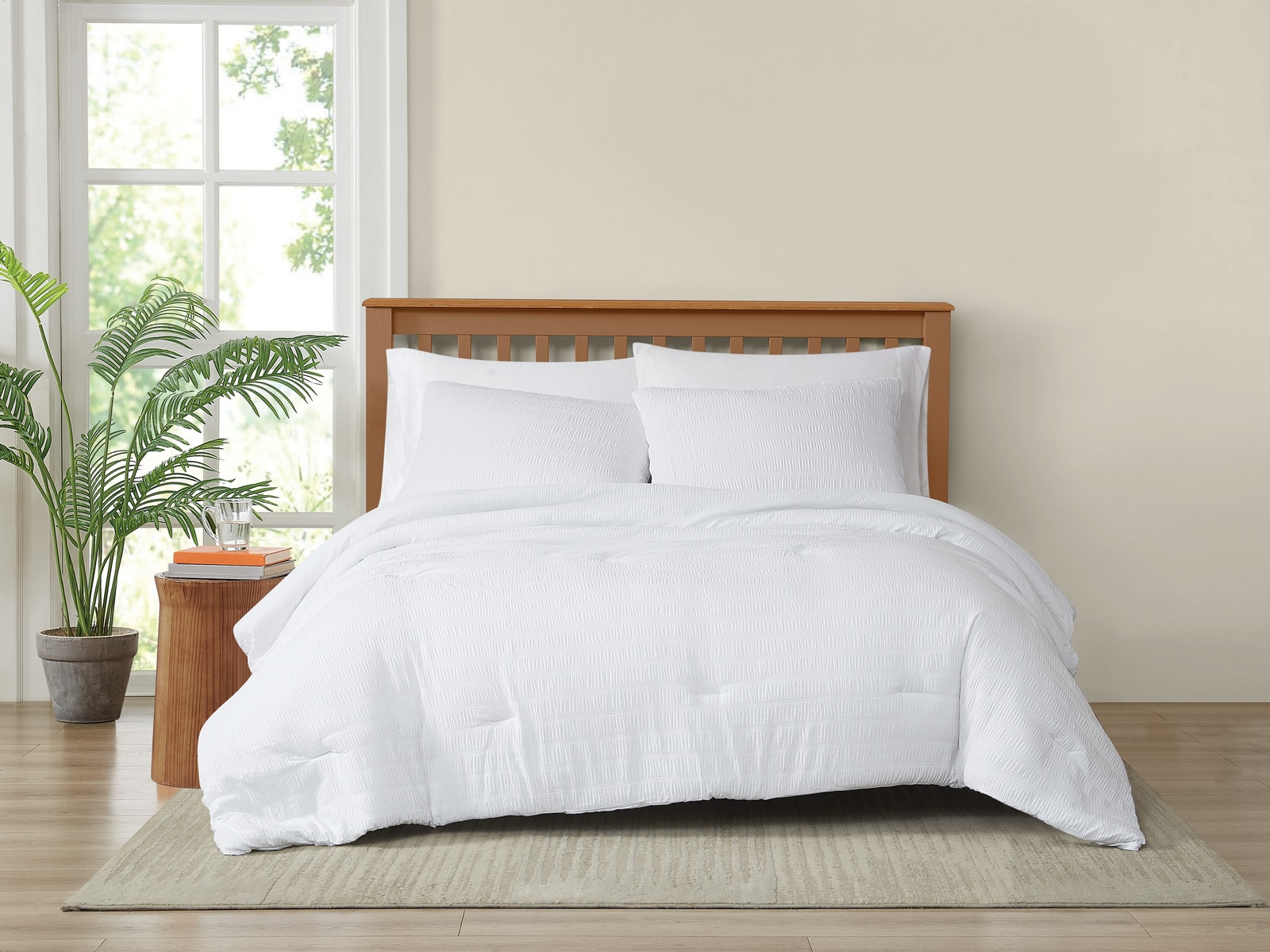
White comforter sets for seasonal updates create a fresh foundation for a bedroom without requiring every layer to change. A white comforter can look light and relaxed with smooth sheets and a loosely folded blanket, then feel more substantial with a textured coverlet and a soft throw across the foot of the bed. That flexibility makes white bedding useful in primary bedrooms, guest rooms and spaces where accent colors change throughout the year. The shade of white matters, too: a bright white has a crisp appearance, while a warmer white can sit more comfortably beside cream upholstery, natural wood and muted wall colors. Against dark furniture, white bedding creates contrast; beside pale finishes, it gives texture and stitching more room to stand out. Surface details help set the mood without tying the room to one season. A smooth shell looks understated, subtle stripes add dimension and raised stitching brings a more tactile finish. Cotton shells can offer a breathable feel, though the weave and finishing affect their texture. Percale typically feels crisp and matte, while sateen usually has a smoother surface with a slight sheen. Polyester microfiber often feels soft and resists wrinkling, but its feel and breathability vary with fabric construction. Neither the fiber name nor the appearance alone tells the full story of comfort. A tightly woven shell, the amount of fill and the layers underneath all influence how a comforter feels overnight. For seasonal styling, white leaves room for small, deliberate changes: a cinnamon-colored throw and woven pillow cover suggest fall, while deep blue accents and a substantial quilt bring a cozy winter look. Lighter blankets and simpler pillow arrangements can give the same bedding a more open appearance for spring or summer. The result is a bed that can change character through a few supporting pieces while keeping its main layer familiar.
Comforter weight and construction deserve as much attention as appearance, especially when the same set will stay on the bed across several seasons. A fuller comforter is not automatically warmer than a flatter one; fill type, fill amount, shell fabric and construction all contribute to insulation. Down fill provides loft and warmth with relatively little weight, while down-alternative fill commonly uses synthetic fibers to create cushioning and volume. The appropriate choice depends on personal preferences, care requirements and how much warmth feels comfortable at bedtime. Someone who tends to feel warm may prefer a lighter comforter with a separate blanket that can be folded back, while someone who gets cold may appreciate a more insulating layer. In a shared bed, an extra blanket on one side can accommodate different comfort preferences without changing the entire bedding arrangement. Stitched channels or boxes help keep fill distributed, although the exact construction varies. Evenly spaced stitching and securely finished edges are useful details to consider for bedding that will be handled and washed regularly. Fit also changes both the look and function of a comforter set. Size names are a starting point, but the listed dimensions provide a better picture of coverage. A queen mattress with a deep profile may need more side coverage than a shallower mattress of the same size, particularly when a thick topper adds height. Measuring the mattress width, length and overall depth helps clarify how far the comforter will extend. For king and California King beds, checking both dimensions is especially important because the mattresses have different proportions. Set contents also vary. Some comforter sets include coordinating shams, while others contain additional bedding pieces; the description should identify each component. Sham dimensions matter as much as their appearance, since standard, king and square decorative formats require corresponding pillows. A coordinated set can simplify the main layers, while separate sheets and accent textiles leave room to adjust the bed for personal comfort.
Care requirements help determine how comfortably white bedding fits into everyday life. A washable comforter can be practical for a frequently used bedroom, but it still needs enough room in the washer to move freely and rinse thoroughly. Larger comforters may require a high-capacity machine, and some constructions call for professional cleaning instead. The care label should guide water temperature, detergent choice and drying method. White fabric does not automatically tolerate chlorine bleach, especially when it includes delicate trim, specialty fibers or particular finishes. Addressing a small spill promptly according to the care instructions can be easier than treating a stain after it has set. Thorough drying is particularly important for filled bedding, since damp areas can remain inside even when the shell feels dry. Regularly straightening the comforter and redistributing the fill, where the construction allows, can help maintain an even appearance. A washable sheet between the sleeper and the comforter can also reduce direct contact with body oils and lotions. For homes with pets, a removable throw across a favorite resting spot provides another washable layer, while a smooth surface may be more practical than loose loops or delicate embellishments that could catch on claws. Seasonal storage deserves similar attention: bedding should be clean and fully dry before being placed in a dry location, with storage suited to its fiber and fill. For an autumn-focused bedroom, explore
Crisp White Comforter Sets For Fall and consider the contrast of white bedding with rust-colored textiles, warm wood or a softly patterned rug. A white comforter set can also be a thoughtful housewarming or wedding gift when the recipient’s mattress size, preferred warmth and laundry setup are known. In a guest room, its neutral appearance leaves room for personal touches without making the bed feel visually busy. Well-chosen fabric, suitable coverage and manageable care make the set a useful foundation for seasonal changes that feel considered rather than complicated.