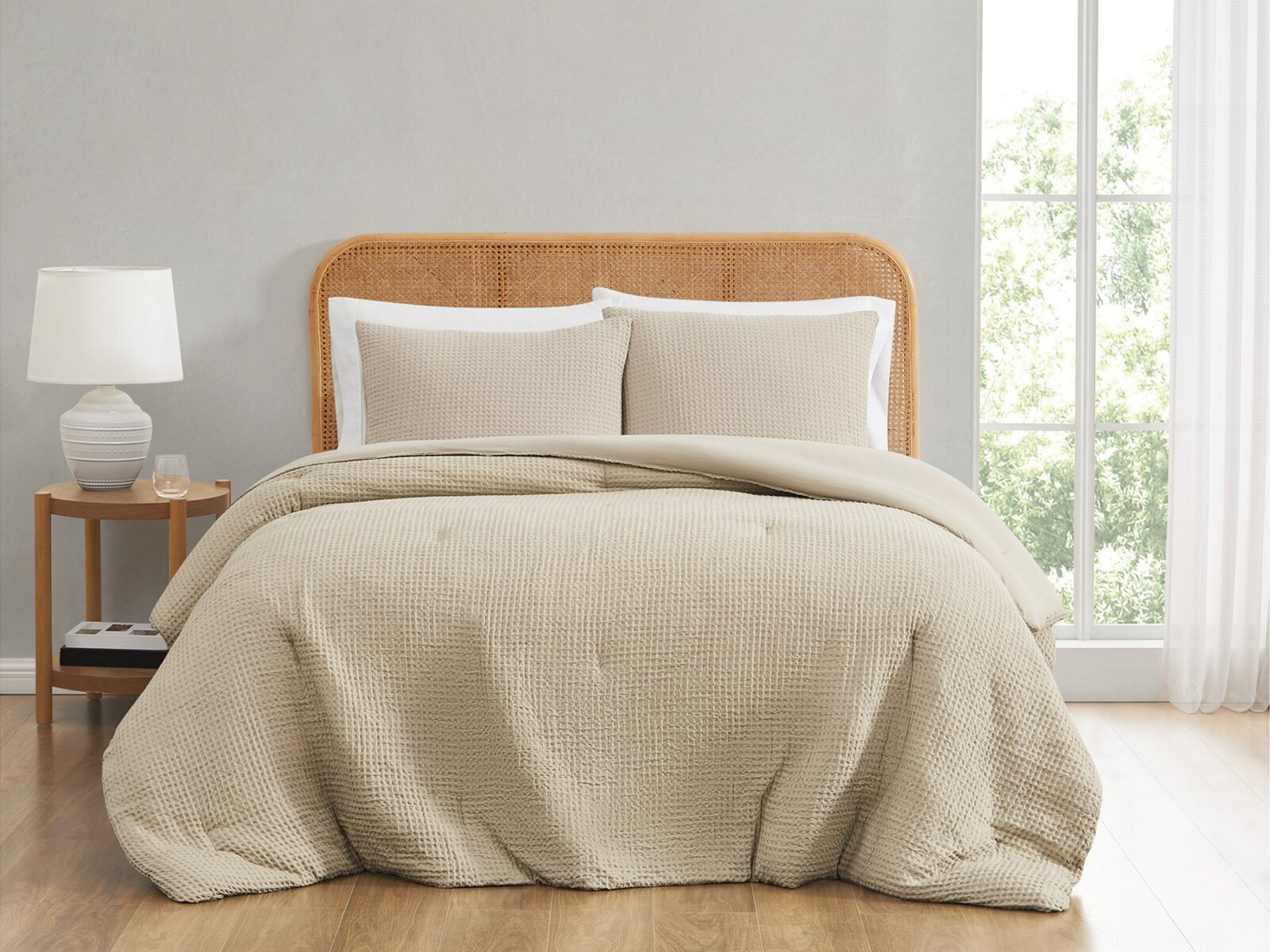
Beige full beds pair a versatile neutral finish with a bed size that works well for many smaller bedrooms, guest rooms and rooms for teens or young adults. A standard full mattress measures approximately 54 inches wide by 75 inches long, while the bed frame extends beyond those dimensions according to its construction. Beige describes the frame’s upholstery or finish, not the mattress itself, and the shade can range from pale ivory-beige to deeper sand or taupe. Those subtle differences give the same general color a distinct character: a light, woven headboard can feel relaxed beside oak furniture, while a smooth, tailored beige frame can look more structured against dark nightstands. Upholstered designs add a softer-looking surface around the bed, while painted or finished frames offer a more defined outline. A full bed generally gives one sleeper more room to stretch out than a twin without taking up as much floor space as a queen. That balance can be useful in a bedroom that also needs a desk, dresser or reading chair. For two adults, a full mattress offers a closer fit, so sleeping habits and personal space preferences matter as much as the room’s dimensions. The bed’s overall proportions also shape how it feels in the space. A tall headboard draws attention to the wall behind the mattress, while a lower profile leaves more of that wall visible. Rounded corners, square edges, channel stitching and a simple fabric panel each create a different impression without moving away from the neutral palette. Beige also gives bedding room to stand out. White sheets and a textured coverlet create a quiet, layered look; navy, rust or charcoal accents add contrast. For a guest bedroom, that flexibility makes it easier to coordinate the bed with existing furniture rather than replacing everything at once. The result can feel considered and comfortable without requiring every wood tone, fabric or accessory to match exactly.
Construction matters just as much as color when comparing beige full beds. Upholstered frames typically combine a structural frame with padding and a fabric covering, though the materials and assembly vary. Woven fabrics can bring visible texture to a plain wall, while a smoother surface emphasizes the shape of the headboard and rails. Linen-look upholstery has a casual appearance, but the look alone does not identify the fiber content; polyester, cotton and blended fabrics can have different care needs and performance characteristics. In a frequently used bedroom, tightly woven upholstery and neatly finished seams are practical details to consider, especially where bedding or clothing regularly brushes against the side rails. Wood and metal components contribute to the bed’s structure, and secure joints, appropriate center support and properly installed hardware help the frame remain stable with everyday use. The mattress support system deserves particular attention. Some platform beds use slats or a solid surface to support a mattress without a separate foundation, while other frames require a compatible foundation. Slat spacing, weight limits and mattress requirements should work together; the word “platform” alone does not establish compatibility with every mattress. An adjustable base may also need clearance inside the frame and a design that permits its movement. Mattress thickness affects both appearance and use. A thicker mattress can cover more of a low headboard, while adding a foundation may raise the sleeping surface substantially. For someone who likes to sit against the headboard while reading, enough exposed height above the pillows can make a noticeable difference. The total height should also feel manageable when getting into and out of bed. Storage drawers or open space underneath may be useful for extra linens, but drawers need room to extend and low side rails can limit access. These details determine how naturally a bed fits into daily routines, beyond how it looks in a photograph.
The most useful room measurements account for the complete bed frame, not only the full mattress. Upholstered side rails, a projecting footboard or a winged headboard can add width and length, and those extra inches matter beside a closet door or a narrow walkway. Space for a nightstand, an open dresser drawer and an unobstructed doorway helps a smaller bedroom remain comfortable to use. For households comparing sleeping space,
beige queen beds offer another size to consider: a standard queen mattress measures approximately 60 inches wide by 80 inches long, although its frame also requires additional room. Staying with a full bed can leave more space for other furniture, while moving to a queen provides more mattress width and length. Either way, beige is easiest to coordinate when its undertone is considered alongside flooring, wall color and bedding. A yellow-toned beige may look richer next to cream, while a gray-toned beige can sit comfortably beside slate or black accents. Room lighting can change how the fabric appears, so a swatch, when provided, offers a useful point of comparison. Everyday care helps preserve that appearance. Upholstery generally benefits from gentle vacuuming with an appropriate attachment, especially along seams and the lower rails where dust collects. Spills call for prompt attention using the manufacturer’s recommended method; rubbing or saturating fabric can spread a mark or affect the padding underneath. Removable upholstery should only be washed when its care instructions permit it. Finished wood and metal surfaces need care suited to their coatings, and abrasive cleaners may damage the finish. Keeping hardware secure, following assembly directions and checking connections after moving the bed can support long-term stability. In rooms shared with pets, fabric texture, easy access for cleaning and washable bedding are especially useful considerations. Thoughtful sizing, compatible mattress support and realistic care expectations help a beige full bed serve as a dependable centerpiece for everyday sleep, visiting family or a bedroom that needs to handle several roles.