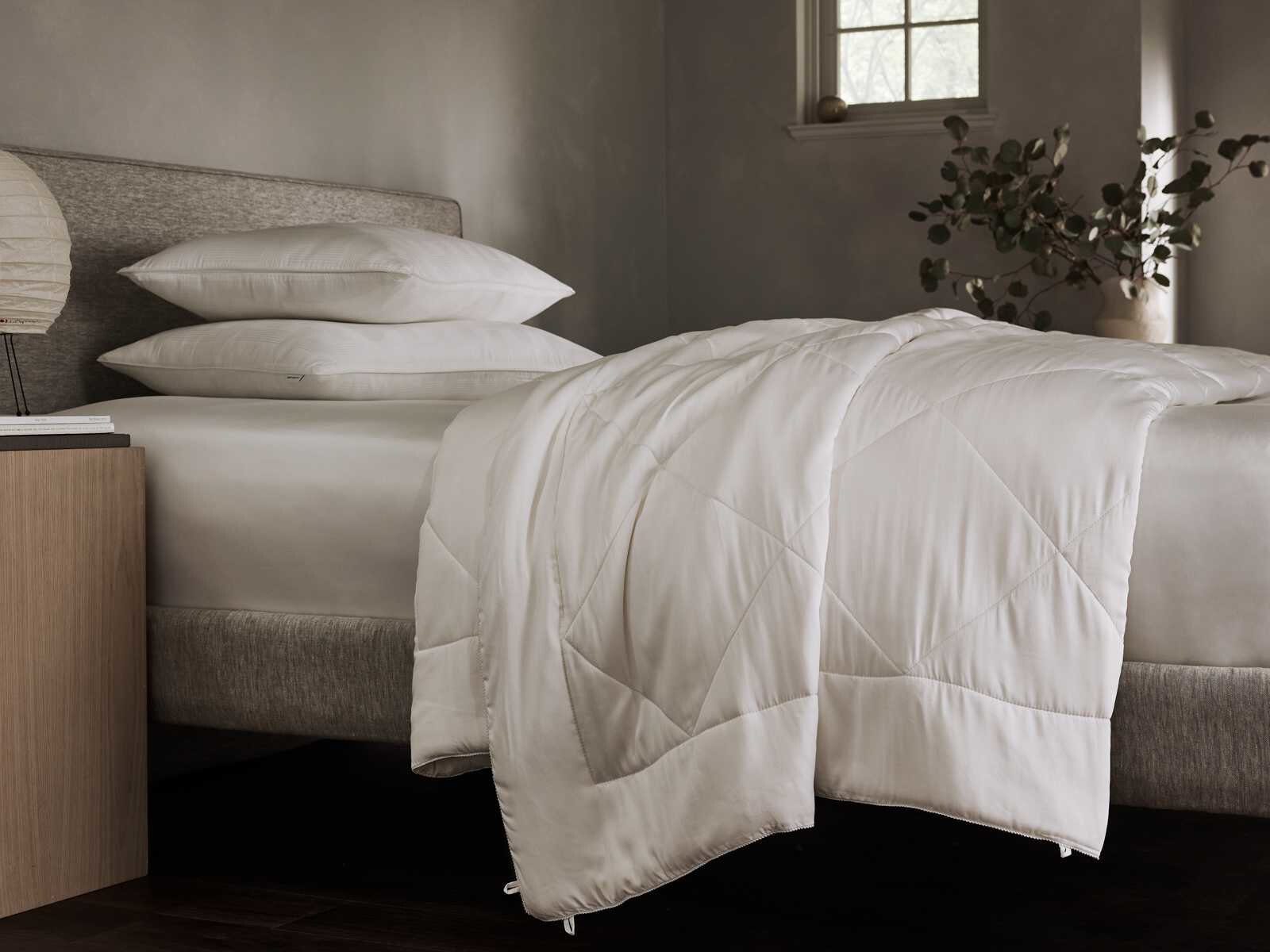
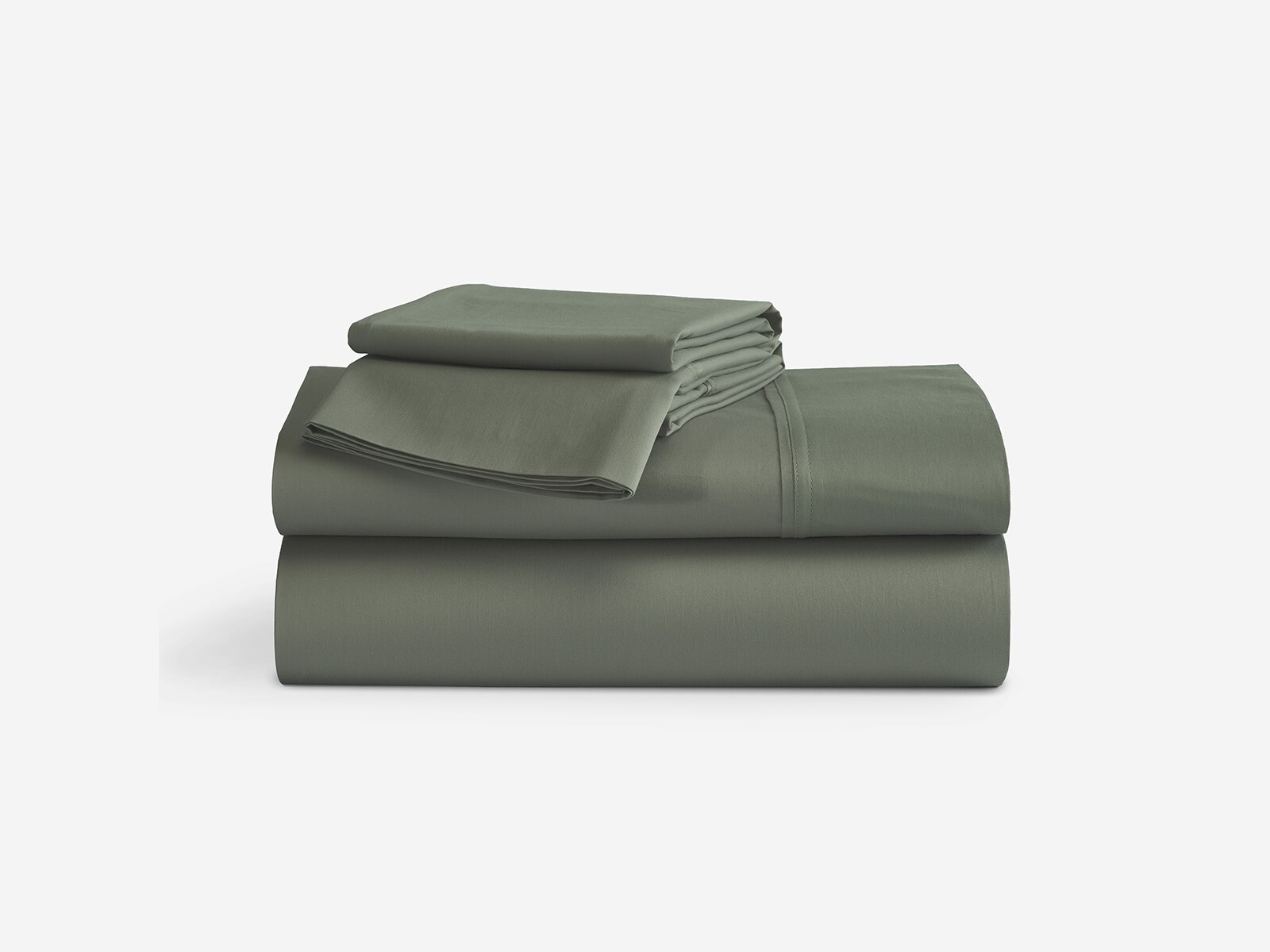
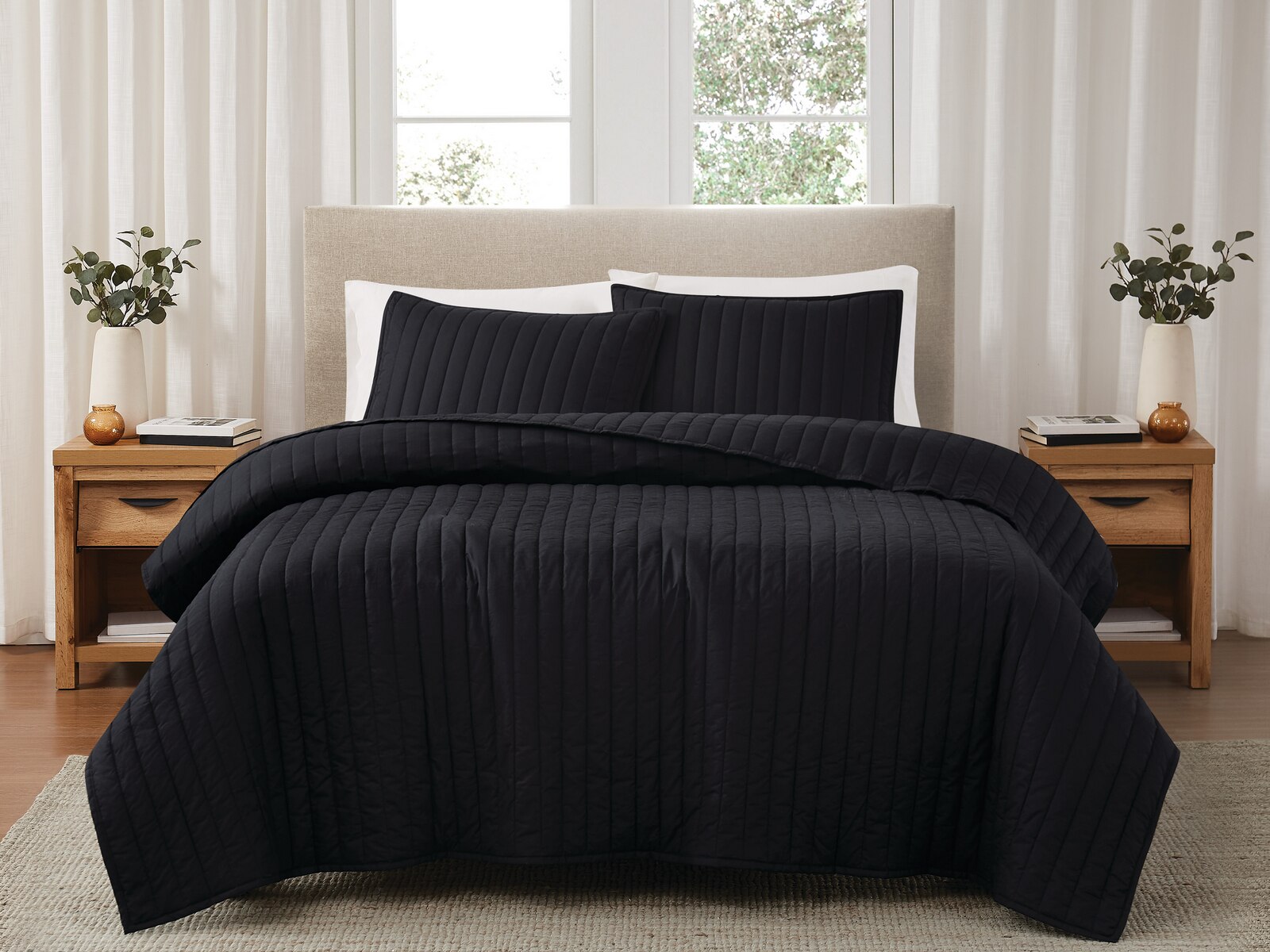
Breathable comforter sets combine a filled bed covering with coordinating pieces, often pillow shams, in materials and constructions that let air and moisture vapor move through the bedding. That airflow can help limit the close, stuffy feeling that sometimes develops beneath a thick or densely constructed comforter. For people who tend to feel warm in bed, breathability depends on more than the fabric touching the skin: the outer shell, interior fill, overall weight and bedding underneath all contribute to comfort. Cotton is a familiar choice for its soft feel and ability to absorb moisture, though absorbed moisture still needs time and airflow to dry. A cotton percale shell often has a crisp hand, while cotton sateen generally feels smoother and more fluid. Neither weave alone determines how breathable the finished comforter will be. Linen can offer an airy, textured feel, while lyocell and viscose fabrics, including viscose derived from bamboo, often have a smooth surface and relaxed drape. The finished fabric matters more than the source name alone, so fiber content is best considered alongside fabric density and construction. Synthetic shells and blends vary considerably; some are lightweight and designed to move moisture, while others have a denser feel. A cool initial touch is a separate characteristic from breathability and does not necessarily mean a comforter will stay comfortable throughout the night. Inside the shell, down and down-alternative fills create loft by trapping air, which also provides insulation. A lofty comforter can therefore feel quite warm even when its shell allows airflow. Lower fill weight may suit someone who prefers less coverage, but thinness by itself is not proof of breathability. Quilted channels or stitched boxes help keep filling distributed, reducing the bunching that can leave one area bulky and another nearly flat. The most useful combination is a shell that feels pleasant against the body, an appropriate amount of fill and construction that keeps that fill evenly spread.
Fit makes a noticeable difference in how a breathable comforter set looks and feels once the bed is made. Size labels are a starting point, but the comforter’s listed dimensions provide a clearer picture of coverage. A deep mattress, a substantial topper or a tall bed frame can change how far the edges hang, even when the comforter and mattress carry the same size name. Someone who likes a neat edge just below the mattress may prefer a different drape from someone who wants generous side coverage. On a shared bed, enough width helps both sleepers stay covered without pulling the comforter tightly across the mattress. Extra width can be useful, although excessive length may gather at the foot of a lower bed or brush the floor. Full and queen combinations deserve particular attention because a single size designation may cover beds with different widths. With
breathable comforter and sheet sets for full beds, the comforter’s dimensions and the fitted sheet’s pocket depth are separate fit considerations. A fitted sheet needs enough depth for the mattress and any topper, while pillow shams should match the pillows intended to fill them. Set contents also vary: a comforter and shams do not necessarily include sheets, pillowcases or decorative cushions. Coordinated pieces can give a bedroom a finished look without requiring every fabric to have the same texture. A softly rumpled shell, subtle stitched pattern or reversible design can add interest while keeping the bed easy to style. Breathable bedding can be especially appealing for people who dislike heavy covers, couples with different comfort preferences or anyone furnishing a frequently used guest room. It can also make a thoughtful housewarming or wedding gift when the recipient’s bed size, preferred colors and care routine are known. Neutral shades can be easier to coordinate, but a familiar texture and manageable washing requirements often matter more than matching a particular room photograph.
Everyday care plays an important role in keeping a breathable comforter comfortable and evenly filled. The care label should guide washing, drying and any professional cleaning, since a washable shell does not automatically mean the entire comforter can be cleaned the same way. Some constructions tolerate home laundering, while others need equipment with more capacity or a different cleaning method. A comforter should have room to move freely in the washer rather than being compressed into a tightly packed load. Appropriate detergent and thorough rinsing help prevent residue from building up in the fabric, and fabric softener may interfere with moisture-management finishes when the manufacturer advises against it. Drying deserves just as much attention as washing. Damp filling can clump, develop odors and make the comforter feel uneven, so the interior needs to dry completely before the bed is remade or the comforter is stored. When the care instructions allow tumble drying, pausing to redistribute the filling can help it dry more evenly. Routine shaking and smoothing can also restore a balanced appearance between washes. Durability comes from the whole construction, not simply a high thread count or a particularly soft first impression. Secure seams, consistent quilting and a shell suited to regular handling help a comforter hold its shape through repeated use. Very delicate surface details may require more attention in a home where pets regularly jump onto the bed, while elaborate quilting can take longer to dry than a simpler construction. Sheets matter, too: a dense fitted sheet, heavy top sheet and extra blanket can change the feel of an otherwise airy comforter. For someone who wakes feeling overly covered, reducing an unnecessary layer may be more useful than choosing by fabric name alone. Breathable comforter sets work best as part of a bedding combination that balances airflow, softness and coverage with a realistic care routine. The result is a bed that feels inviting when the covers are turned back and remains practical to use night after night.