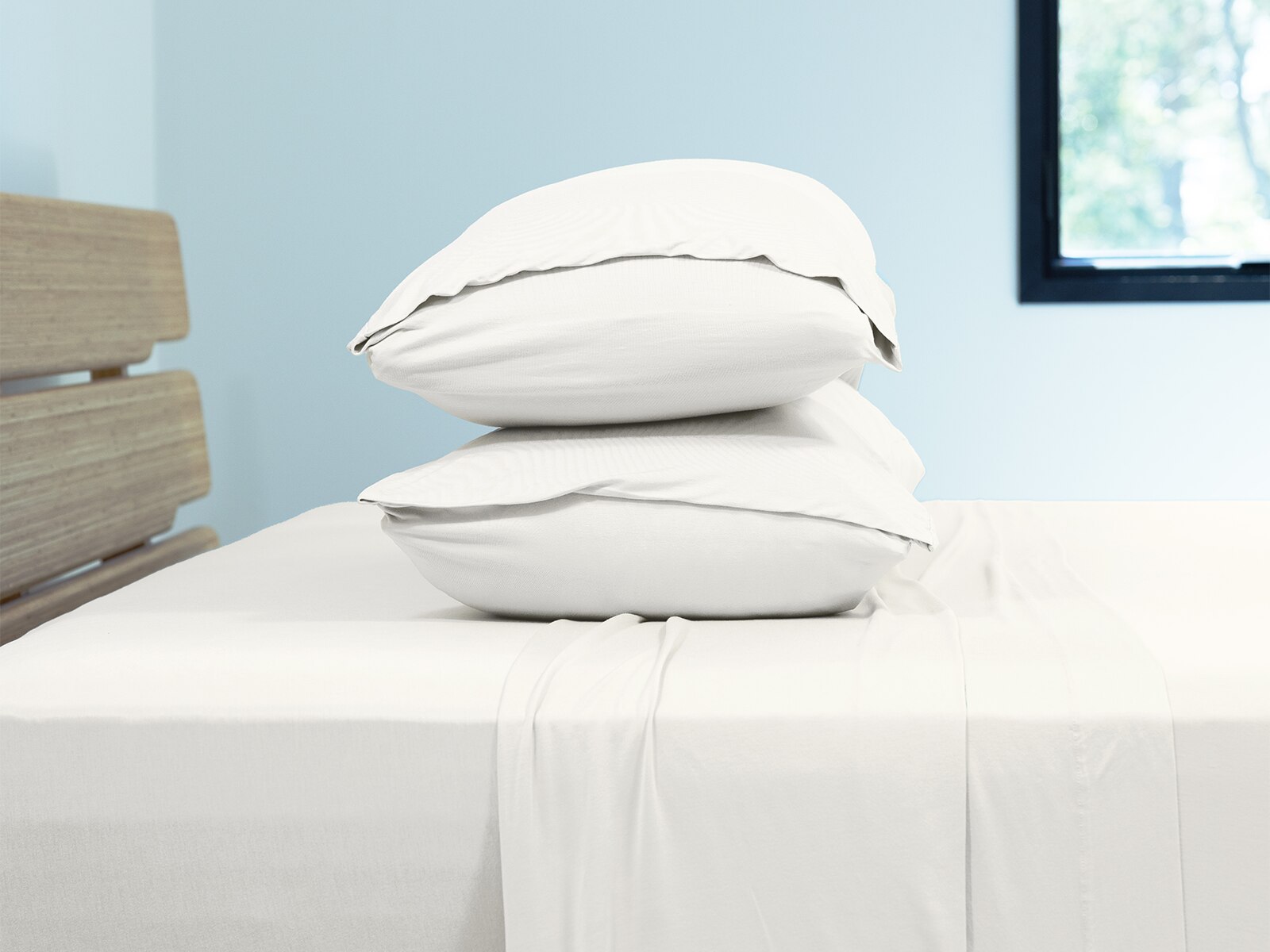
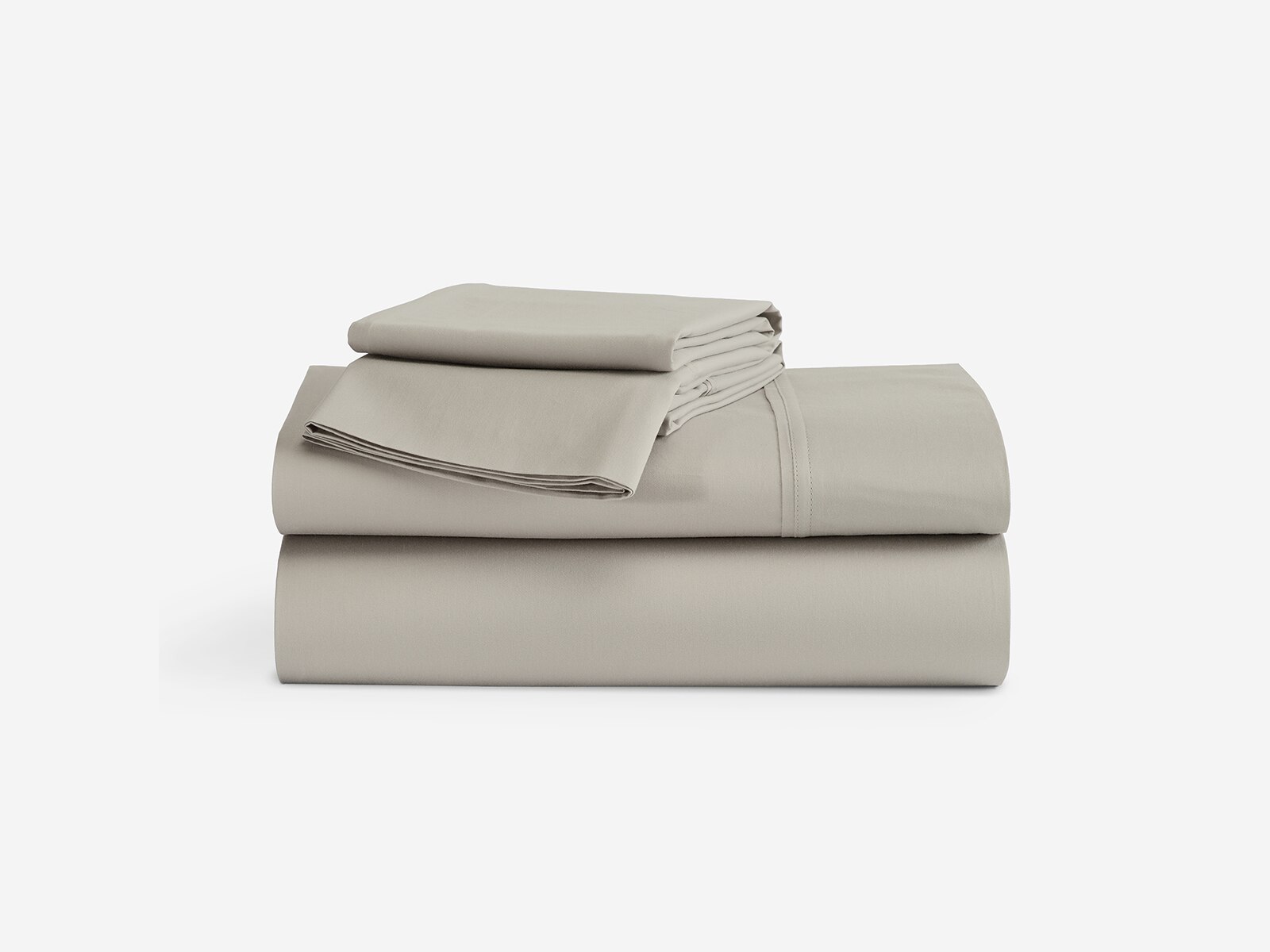
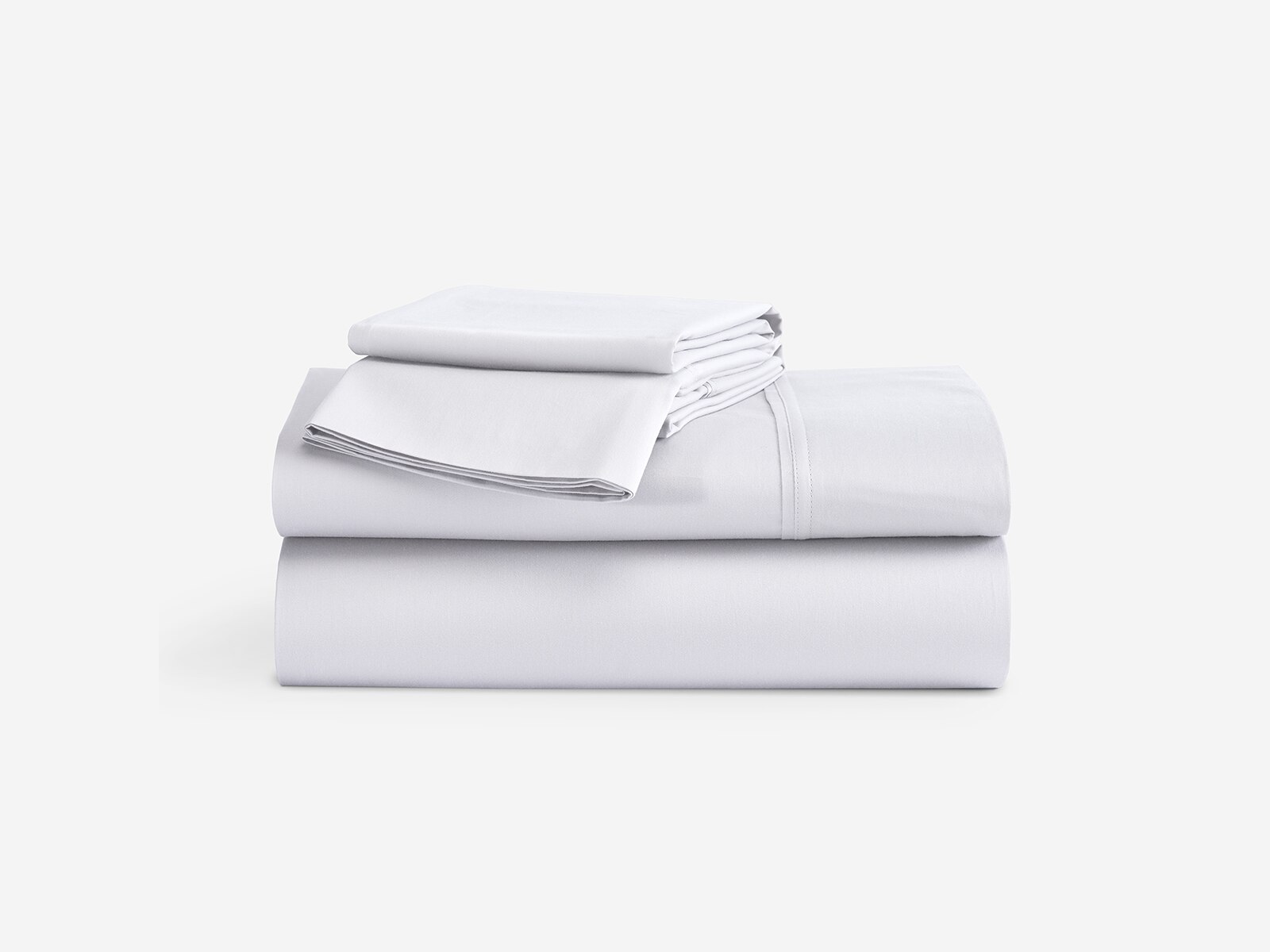
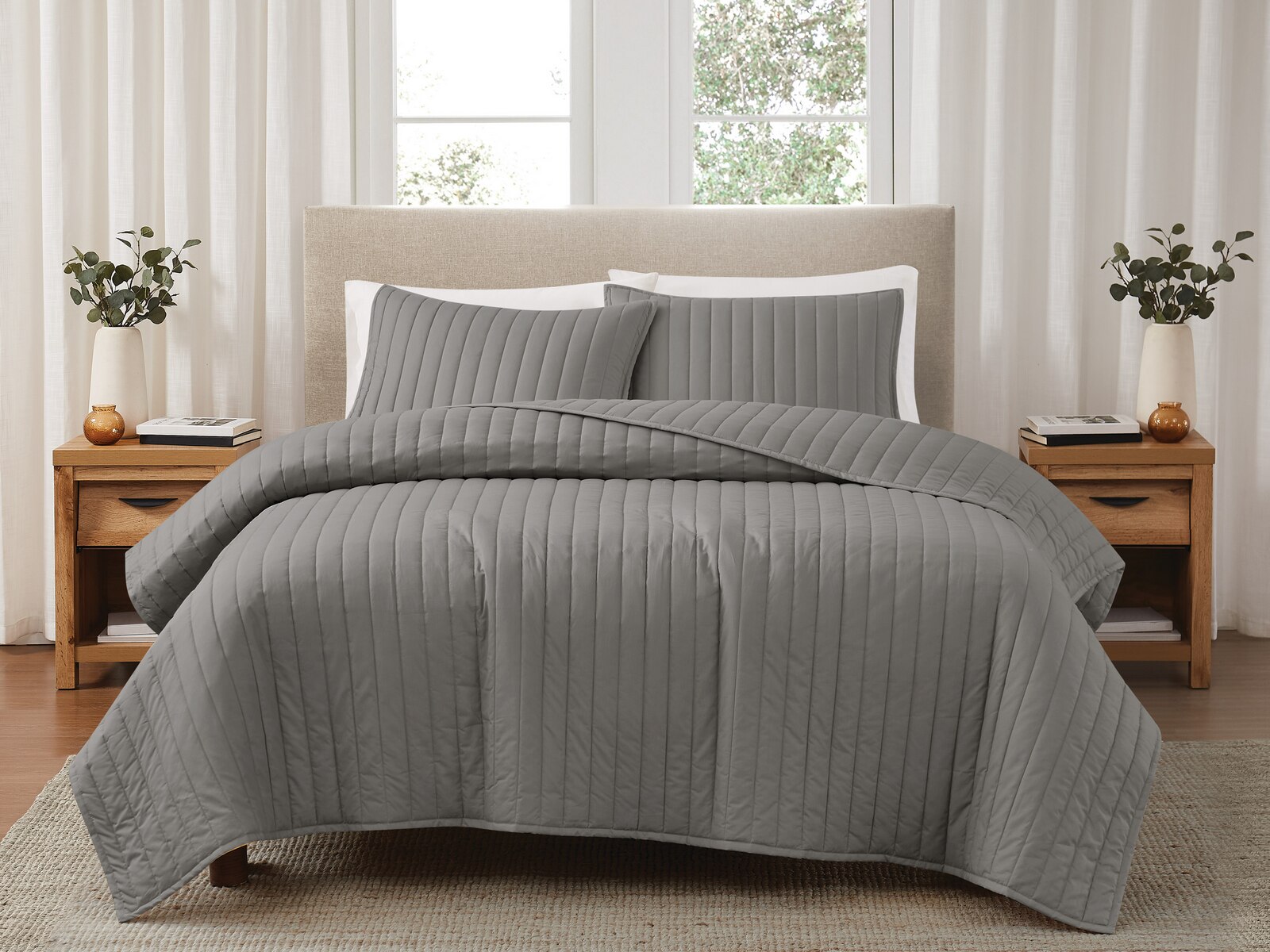
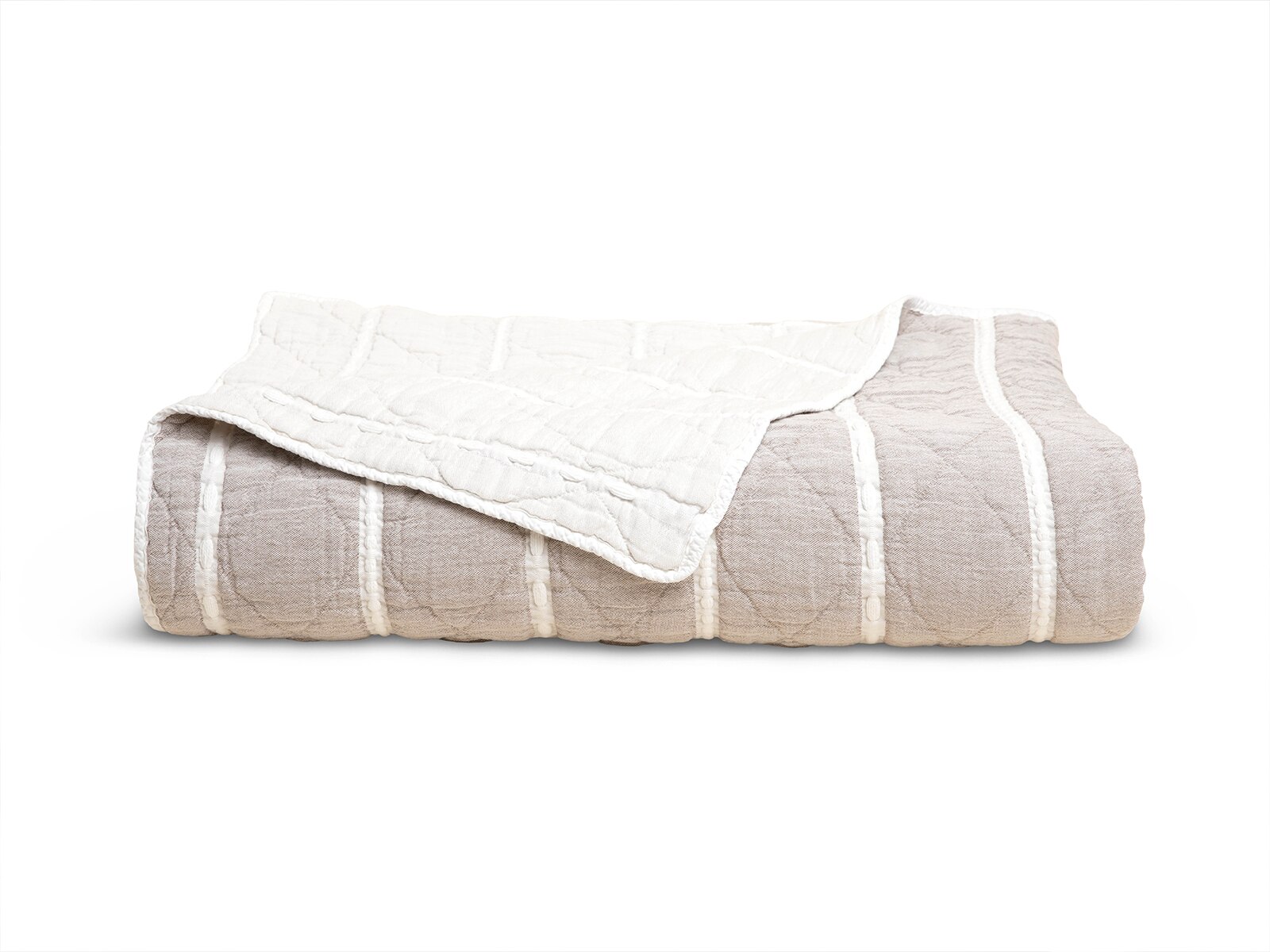
Cotton bedding includes sheets, pillowcases, duvet covers and other bed linens made from cotton or cotton blends. It is valued for softness, breathability and the ability to absorb moisture, while its weave, fiber quality and fabric weight influence how it feels and wears. Those differences become noticeable in everyday use: a sheet that feels crisp when folded may settle lightly around the body, while a smoother fabric may drape more closely over the mattress. Cotton percale uses a balanced, one-over, one-under weave that typically produces a matte surface and a crisp hand. Cotton sateen exposes more yarn across the surface, creating a smoother feel, a subtle sheen and a fluid drape. Cotton jersey is knitted rather than woven, giving it a familiar T-shirt softness and some natural stretch. None of these constructions is universally better; the right texture depends on whether a sleeper prefers a freshly pressed feel, a silky surface or something relaxed and flexible. Fiber length also matters. Longer cotton fibers can be spun into smoother yarns with fewer exposed ends, which may help reduce pilling when the fabric is well made and properly cared for. Thread count describes the number of threads in a square inch of woven fabric, but it does not tell the whole story. Yarn quality, weave and finishing can matter as much as the number on a label, and a higher thread count does not automatically mean softer or more durable bedding. Fabric weight is another useful distinction: two cotton fabrics can have a similar thread count yet feel noticeably different in the hand. All-cotton fabric and cotton blends can also behave differently. Added fibers may affect stretch, wrinkle resistance, drying time and texture, so the fiber-content label provides a more useful comparison than appearance alone. When comparing cotton bedding with
cotton feel bedding, that distinction is especially helpful: a cotton-like feel describes a texture, not necessarily an all-cotton composition.
A comfortable bed also depends on how well each layer fits. For fitted cotton sheets, mattress width and length are only part of the measurement; mattress depth matters just as much. A topper or thick mattress pad adds height, so measuring the full surface being covered helps prevent corners from pulling loose. Pocket depth should accommodate that combined measurement, with enough fabric to reach securely beneath the mattress. Too little depth can strain seams and elastic, while excessive fabric may bunch along the sides. Size names deserve attention, too: twin and Twin XL sheets differ in length, and king and California King mattresses have different proportions. A flat sheet needs enough width for the preferred amount of overhang and tucking, particularly when two people share the bed. Pillowcases should match both pillow dimensions and fullness; a tight case can compress a lofty pillow, while an oversized case can leave loose fabric around a smaller one. Envelope closures can help keep pillow ends covered without an exposed opening. For cotton duvet covers, matching the cover dimensions to the insert helps create an even layer rather than empty edges or a crowded center. Interior ties, when present, help hold a compatible insert in position, and secure closures make routine changes easier. Beyond fit, cotton bedding offers plenty of room for personal style. A matte surface can give solid colors a relaxed appearance, while a slight sheen adds definition to folds and stitched details. Small patterns can bring interest to a simple bed, and coordinated pillowcases can connect different layers without requiring every piece to match. In a shared bedroom, the most useful combination often balances each sleeper’s texture preferences with practical needs such as secure corners and easy laundering. For a guest room, familiar-feeling cotton linens create a welcoming surface without making the bed complicated to maintain. Children, teens and adults can all use cotton bedding, with sizing, closures and care requirements helping determine the best match for each space.
Cotton bedding is made for repeated use, but thoughtful care helps preserve its feel, color and fit. The care label should set the routine because dyes, finishes, trims and blended fibers may require different treatment. Separating light and dark fabrics helps limit color transfer, and washing bedding apart from rough towels or clothing with exposed fasteners can reduce friction and snagging. A suitable amount of mild detergent is usually more useful than extra detergent, which can leave residue if it does not rinse away completely. Stains are generally easier to address before they set, using a treatment compatible with the fabric and its care instructions. The washer also needs enough room for sheets and covers to move freely; a tightly packed load may not wash or rinse evenly. Cotton can shrink, especially when exposed to more heat than the care label recommends, so washing and drying settings matter. If machine drying is permitted, removing bedding promptly can reduce deep creases, and straightening hems before folding helps keep edges neat. Some wrinkling is a normal characteristic of cotton rather than a sign of poor quality. For a smoother finish, ironing is an option only when permitted by the label. Bedding should be fully dry before it goes into a linen closet, where a clean, dry storage space helps prevent musty odors. Rotating between sets spreads repeated washing and wear across more than one set and leaves a fresh change ready when needed. Over time, secure stitching, intact elastic and fabric that remains smooth without thinning are useful signs of lasting construction. Cotton bedding can also make a thoughtful housewarming, wedding or graduation gift, particularly when the recipient’s mattress size and laundry preferences are known. A neutral color and a familiar texture may be easier to coordinate than a bold pattern chosen without context. Whether refreshing an everyday bed or preparing a welcoming place for overnight guests, well-fitting cotton linens bring together tactile comfort, practical care and a finished look that feels personal.