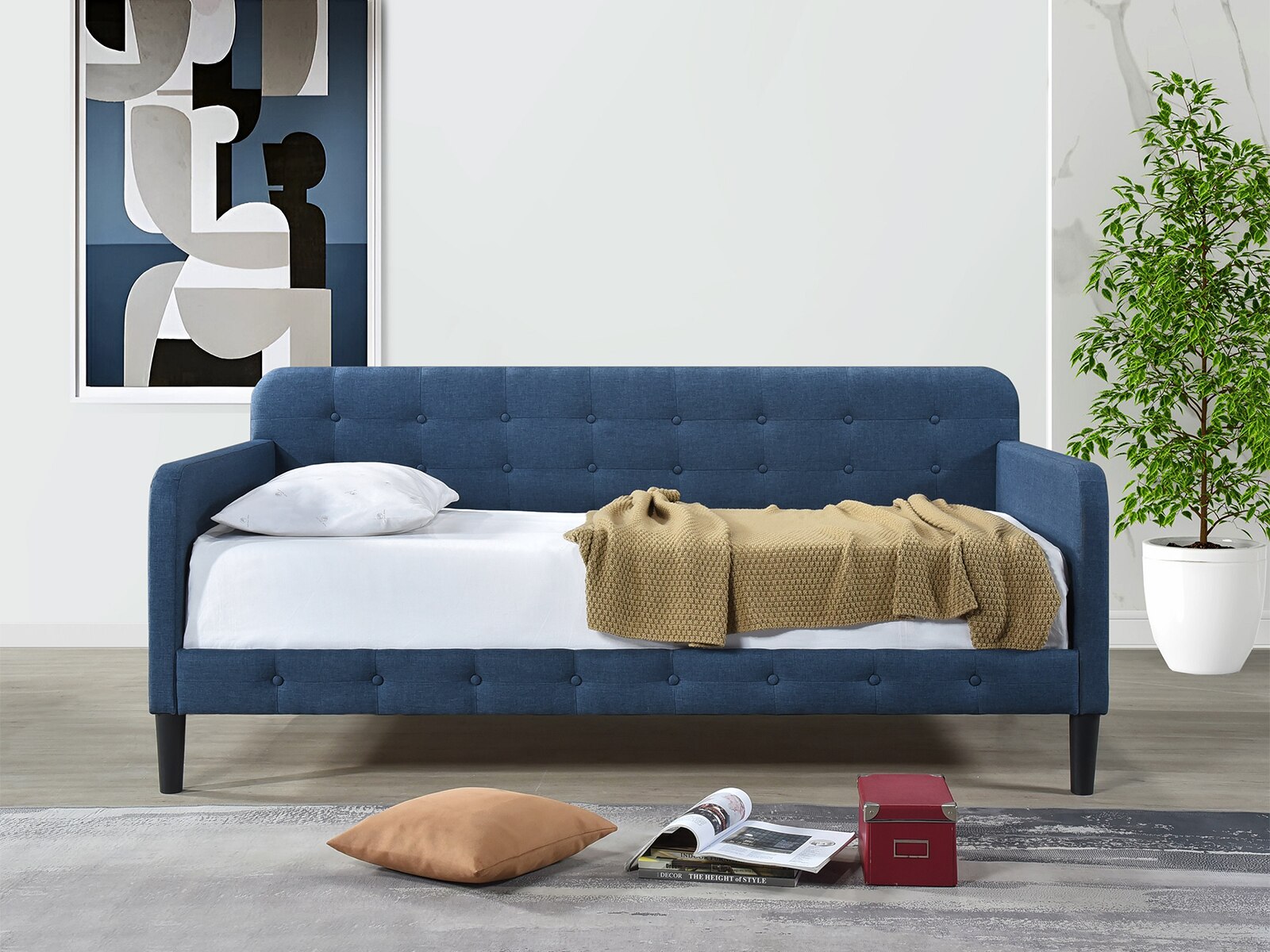
Daybeds with lift-up trundles combine a sofa-style seating area, a main sleeping surface and a second bed that stores underneath. The lower frame rolls out and rises on a lifting mechanism, bringing the extra mattress closer to the height of the main mattress. Unlike a low trundle that remains near the floor, a lift-up or pop-up trundle can provide a more elevated sleeping position. Depending on the frame design, the two beds may stand separately or sit alongside each other to create a wider sleeping surface. Side-by-side placement does not automatically create a standard king bed: two standard twin mattresses typically measure about 76 inches wide by 75 inches long together, while a standard king measures about 76 inches wide by 80 inches long. Compatible mattress heights and the manufacturer’s instructions determine how the surfaces line up and whether the frames can be connected. This flexibility makes the category useful for guest rooms, studio apartments and rooms that serve more than one purpose. A daybed against a wall can provide a comfortable spot for reading or conversation, then accommodate an overnight visitor without requiring a permanently expanded bed. In a home office, it can preserve open floor space for a desk while keeping a second sleeping surface tucked away. The fit depends on more than the daybed’s closed dimensions. The lower bed needs enough room to roll completely out, and the lifting mechanism needs clearance to operate as intended. Nearby nightstands, chair legs, rugs and doors can affect that space. A room layout that leaves a clear path around both sleeping surfaces is easier to use, especially when guests need to get up at night. Back and side rails also add to the overall footprint, so the outside frame measurements matter just as much as the mattress size when fitting a daybed into an alcove or along a narrow wall.
Frame materials influence both the appearance of a daybed with a lift-up trundle and how it feels during everyday use. Metal frames often have slender rails and an open profile that keeps the furniture visually light. Wood frames can offer a more substantial outline, with finishes that coordinate with dressers, desks or other bedroom furniture. Designs may combine solid wood, engineered wood, metal supports and upholstered panels, so the construction details are more informative than the surface finish alone. Upholstery adds a softer backdrop for sitting and reading, while exposed wood or metal generally provides surfaces that are straightforward to wipe clean. In a frequently used guest room, secure joints, stable legs and properly supported mattress platforms matter more than decorative details that do not affect function. Related options in
Daybeds With Sturdy Trundles provide another way to compare frame construction and support features. For lift-up designs, particular attention belongs to the mechanism beneath the lower mattress. Some frames use folding legs or spring-assisted components, and operating methods vary. Clearly stated instructions, secure support in the raised position and accessible handles can make the transition between stored and extended positions more manageable. Weight limits should be checked for each sleeping platform rather than assumed to apply equally to both. A frame suitable for occasional overnight visits may have different specifications from one intended for regular use. Manufacturer guidance also determines whether the raised trundle can sit apart from the main bed or must remain in a particular position. Moving components need clearance from fingers, bedding and nearby furniture, and children should not operate the mechanism without appropriate adult supervision. On carpet, the lower frame’s wheels may move differently than they do on a smooth floor, making wheel design and floor clearance practical considerations for the room where the daybed will be used.
Mattress fit is especially important because a lift-up trundle has to work in both its stored and raised positions. The lower mattress must stay within the frame’s specified length, width and maximum thickness so it can slide underneath without rubbing against the upper bed or interfering with the mechanism. A thicker mattress is not automatically a better choice if it prevents the trundle from closing correctly. The upper platform may have its own mattress requirements, including limits related to rail height and support spacing. Foam, innerspring and hybrid mattresses can each offer different comfort characteristics, but compatibility with the frame comes first. Some platforms are designed to support a mattress directly, while others have additional requirements; a foundation should not be added unless the manufacturer calls for one. When two sleeping surfaces are positioned together, similar mattress heights help reduce an uneven transition, although a seam between separate mattresses will remain. For separate sleepers, individual fitted sheets and blankets let each person settle in comfortably without sharing covers. During the day, a fitted cover and supportive back cushions can give the main mattress a more finished seating arrangement. Washable covers are useful in spaces shared by visiting family, children or pets, provided they fit without obstructing the moving parts. Routine care includes vacuuming beneath the frame, removing dust from accessible supports and cleaning upholstery according to its care label. Spills on wood or metal should be addressed with a method suited to the finish, rather than a harsh cleaner that could damage it. Periodic checks for loose fasteners, worn wheels or changes in the lifting action can help identify maintenance needs before the next overnight visit. Bedding should stay clear of hinges and wheels, and the lower mattress should have an opportunity to air out after use before being stored. With the right dimensions, compatible mattresses and a frame suited to the expected sleepers, a daybed with a lift-up trundle can make one room comfortable for sitting, resting and welcoming guests.