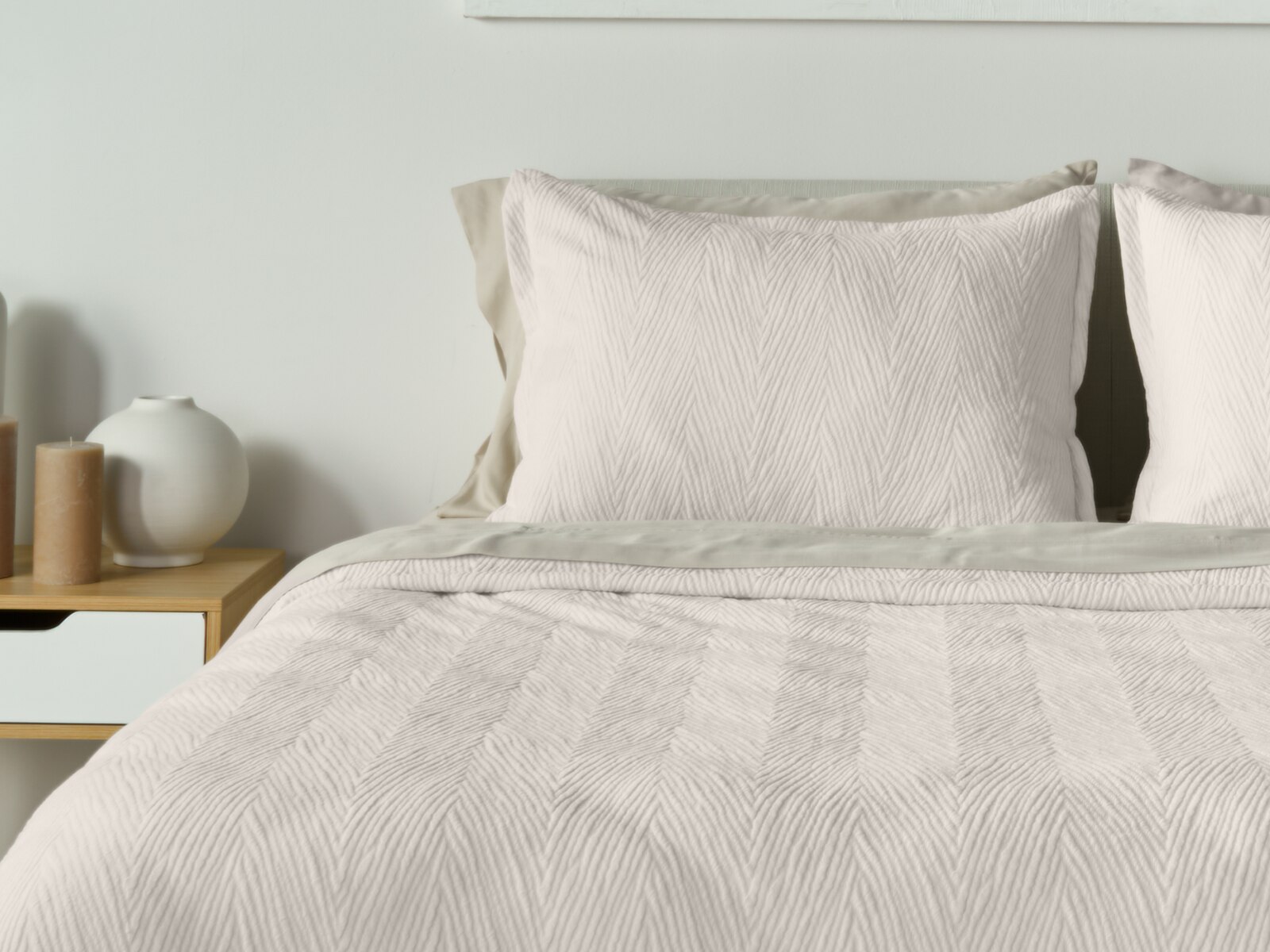
A duvet cover is a removable fabric shell that encloses and protects a duvet insert, much like a pillowcase protects a pillow. The insert provides loft, while the cover provides the surface you see and feel. Together, they create a layered bed with an outer covering that can be removed for laundering or changed to refresh the room. Duvet covers are distinct from comforters, which typically have their fill stitched inside a finished outer fabric. Some comforters can fit inside a duvet cover, but compatible measurements and attachment points help the two pieces work together. Because the cover sits close to the body, fabric deserves as much attention as color or pattern. Cotton is a familiar choice for its softness and breathability, though its feel varies with the weave and finishing. Cotton percale has a crisp, matte surface, while cotton sateen generally feels smoother and has a subtle sheen. Linen brings visible texture and a relaxed drape, with natural creases that suit a less structured bed. It often becomes softer with repeated washing when cared for according to its label. Microfiber covers typically have a smooth, fine-textured surface, with care requirements that depend on the fabric and construction. Lyocell and other cellulosic fibers can also create a fluid drape; the fiber content label gives a clearer picture than a descriptive fabric name alone. Blends combine fibers in different proportions, so two covers with similar descriptions may feel noticeably different. Thread count can provide context for certain woven fabrics, but it does not tell the whole story. Fiber quality, weave, finishing and stitching all contribute to how a cover feels and wears. For someone who likes the crisp finish of a freshly made bed, percale may be appealing. Someone who prefers a softer-looking surface with a little luster may gravitate toward sateen. Texture is personal, and the most suitable cover is one that feels inviting night after night.
Fit determines whether a duvet cover looks neatly filled or leaves excess fabric at the edges. Size names are a useful starting point, but the actual width and length of both the cover and insert matter more. A queen cover from one bedding collection may not share the exact dimensions of another, and king and California King measurements should not be treated as interchangeable. The same attention helps with twin and Twin XL bedding, especially when extra length is important. A close dimensional match generally supports an even appearance, while a noticeably oversized cover can allow the insert to shift or collect toward one side. An insert that is too large can bunch inside the cover or make the edges difficult to smooth. Mattress depth and bed height also influence the finished look: a deeper mattress may leave less fabric hanging over the sides, even when the cover fits its insert correctly. For a shared bed, enough side coverage helps each person keep a comfortable portion of the bedding without relying on an oversized cover alone. When comparing
Luxury Duvets, consider insert measurements alongside the cover’s dimensions so the layers work together. Construction details make a difference in everyday use, too. Interior corner ties or other attachment points help secure a compatible insert, reducing the need to redistribute the filling after movement during sleep. Buttons create a familiar closure, while a zipper can offer a continuous fastening along the opening. A concealed closure keeps hardware less visible and helps maintain a finished edge. Reinforced stitching around ties, seams and openings is worth attention because these areas receive repeated handling during cover changes. A generously sized opening can make a bulky insert easier to position. For someone who regularly changes bedding alone, accessible fastenings and clearly placed corner ties can matter just as much as the fabric’s appearance. These practical details support a bed that stays comfortable without constant adjustment.
Care requirements help determine how well a duvet cover fits into everyday routines. A removable cover can simplify bedding upkeep, but it does not eliminate the need to clean the insert according to its own instructions. Always check the cover’s care label for washing, drying and ironing guidance, particularly for textured fabrics, decorative trim or blended fibers. Follow any instructions to close fasteners, turn the cover inside out or wash with similar colors. Enough room in the washer allows fabric to move, and thorough drying before the bed is remade helps prevent lingering dampness in seams and corners. A large cover may need more washer and dryer capacity than smaller bedding, making dimensions relevant beyond the bed itself. Washing frequency depends on use, including whether the cover touches the body directly, whether a top sheet is used and whether pets share the bed. Smooth fabrics with fewer exposed embellishments may be easier to manage in a household where claws or jewelry can catch on delicate details. For a polished appearance, smoothing the cover soon after drying can help, although linen’s natural creasing may be part of its appeal. Design choices then bring function and personal style together. A solid cover lets a textured blanket or patterned pillows stand out, while stripes, checks or other patterns can become the room’s main visual feature. Matching shams create a coordinated finish when included, but set contents should be checked rather than assumed. In a guest room, straightforward closures and manageable care requirements make preparing the bed between visits less complicated. For a first apartment or a newly shared bedroom, a duvet cover offers a way to establish a personal style while keeping the insert as a separate layer. It can also be a thoughtful housewarming or wedding gift when the recipient’s bedding dimensions, fabric preferences and care routine are known. The strongest choice balances an appealing look with the fit, feel and upkeep that make sense for the person using it.