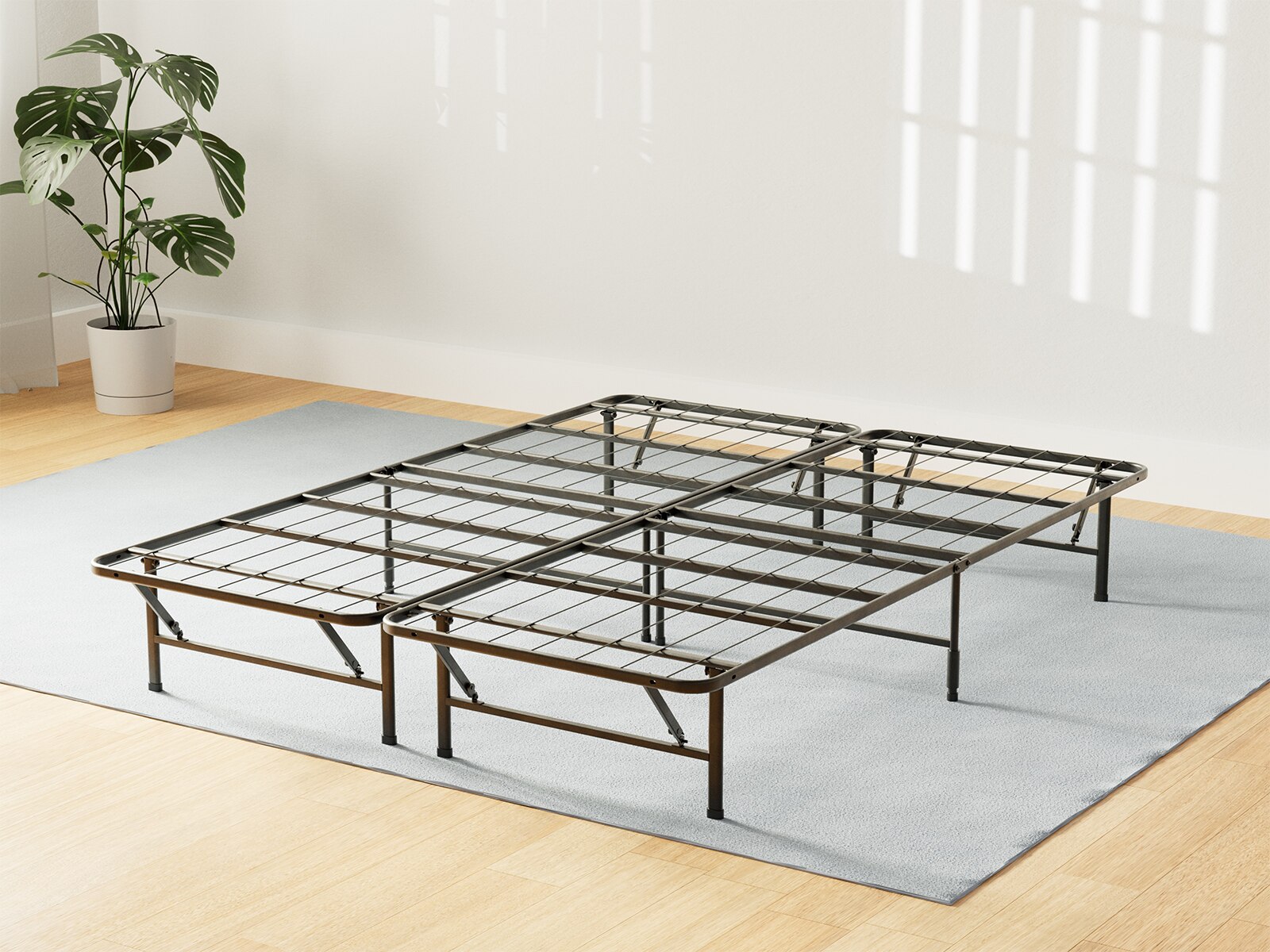
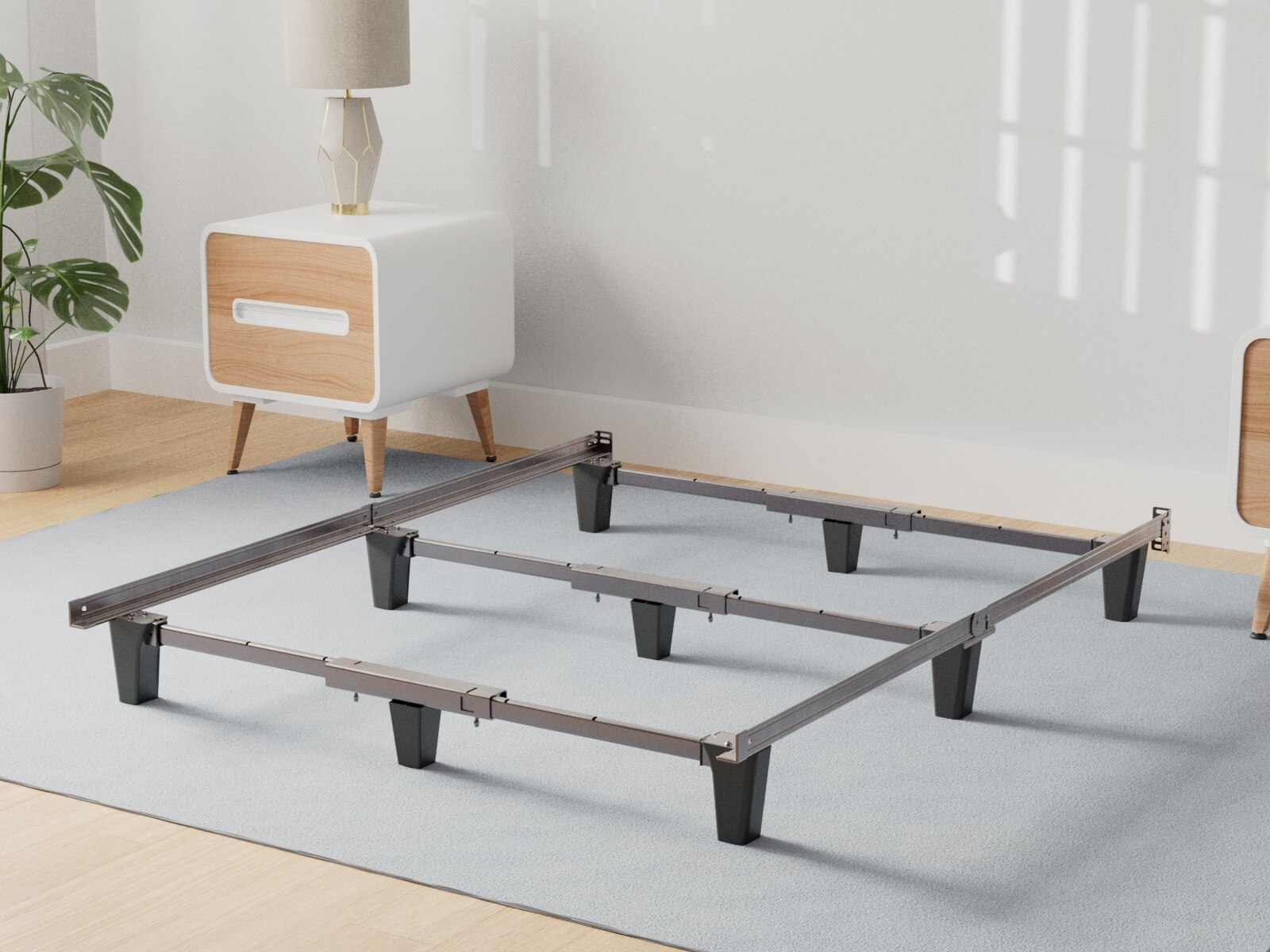
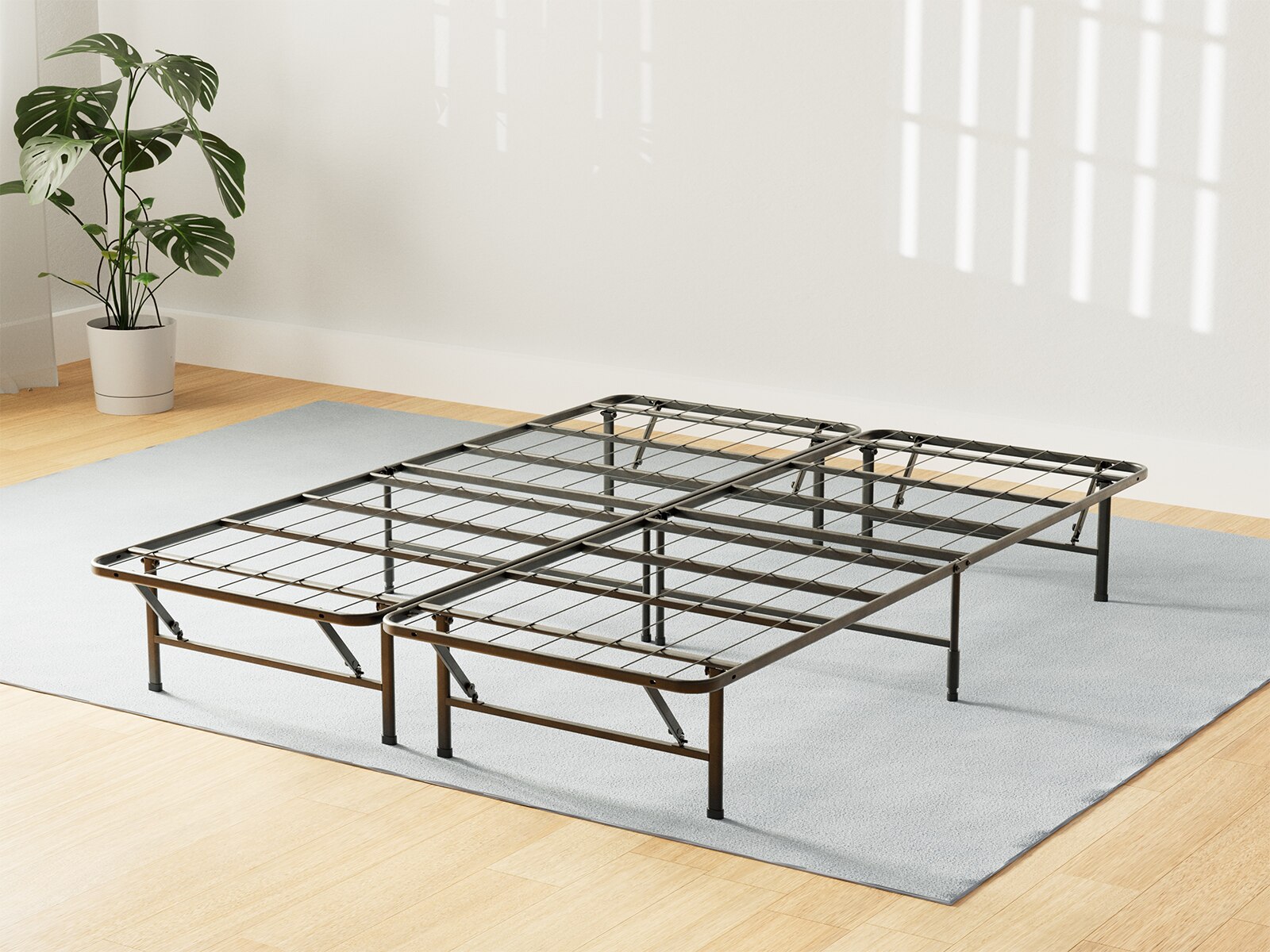
A high metal bed frame raises the mattress above the floor, creating useful under-bed storage space while providing a sturdy foundation for sleep. Many high metal platform frames support a mattress without a box spring, although the frame’s design and the mattress manufacturer’s requirements determine whether a separate foundation is needed. That combination of height, support and open space makes this style especially practical in bedrooms where every square foot matters. Low-profile bins can hold extra sheets, folded blankets or shoes, leaving closets and dresser drawers free for everyday essentials. The most useful measurement for storage is the clearance beneath the frame, not its overall height: side rails, crossbars and center legs can reduce the space available for a container. A bin that fits beneath the side rail may still need room to slide past a support leg, and drawers or lids need enough space to open. The height of the finished sleeping surface matters just as much. A tall frame paired with a thick mattress can create a noticeably elevated bed, while a thinner mattress produces a different sitting and standing height. A comfortable fit allows the person using the bed to sit near the edge with feet supported on the floor rather than needing to climb up or slide down. Visually, metal offers plenty of flexibility. Slender legs and simple rails can keep a compact room from feeling crowded, while a taller headboard or more substantial framework gives the bed a stronger presence. Dark finishes can define the bed against light bedding, and lighter finishes can blend into a softer room palette. An open frame also leaves the floor visible, which can make the area around the bed feel less enclosed. Whether the goal is a streamlined primary bedroom or a hardworking guest space, an elevated metal base brings structure to the room without requiring a bulky storage bed.
The construction beneath the mattress is what turns that open design into dependable everyday support. Steel is a common material for metal bed frames, but metal alone does not determine strength; rail thickness, connection points, slat design and the placement of support legs all contribute. Welded sections and securely fastened joints can help limit movement, while center supports distribute weight across a wider sleeping surface. Published weight limits deserve attention because they may include the mattress, foundation and sleepers together rather than sleepers alone. Support requirements also vary by mattress type. Foam, latex and hybrid mattresses may need closely spaced slats or a particular support surface to meet the manufacturer’s specifications, so a platform design is not automatically suitable for every mattress. A traditional metal frame with an open center generally needs a compatible foundation instead of a mattress placed directly on its rails. Matching the frame to the mattress size is equally important, including the distinction between twin and Twin XL or between king and California King. The frame’s outer dimensions may extend beyond the mattress footprint, especially when a headboard or footboard is part of the design. In a narrow bedroom, that extra width or length can affect the path between the bed, dresser and doorway. Headboard attachment points also vary, and a freestanding headboard does not connect to every base without the appropriate hardware. For shared bedrooms, a well-supported frame with secure connections can help reduce frame movement and related noise, though the mattress and floor also influence how the bed feels. On uneven flooring, a frame may need manufacturer-approved leveling adjustments to sit securely. Protective pads suitable for the flooring can help prevent scratches, provided they do not interfere with stability. These details are less visible than the finish or silhouette, but they shape how a high metal bed frame performs through nightly use, changing bedding and the occasional rearrangement of the room. A higher profile also leaves more of the structure exposed, making smooth edges, thoughtfully positioned legs and secure fasteners meaningful features.
High metal bed frames suit a wide range of living spaces, from a first apartment with limited closet space to a guest room that doubles as a home office. In a smaller bedroom, the space below the mattress can hold belongings that would otherwise require another cabinet, keeping more floor area open for a desk or reading chair. For a single sleeper,
Metal Twin Bed Frames offer a narrower footprint while retaining the practical character of a metal base. In any size, the arrangement works best when frequently used belongings remain easy to reach and stored containers do not press against the mattress or interfere with the frame’s supports. A high frame is not the same as a loft bed, and under-bed clearance is intended for appropriate storage rather than an occupied space. Households choosing a frame for a child, an older adult or anyone who finds a high sleeping surface difficult to access benefit from considering the complete bed height and the manufacturer’s intended use. For everyday care, a soft cloth removes dust from exposed rails, and a lightly dampened cloth can handle ordinary marks when the finish permits it. Drying the metal afterward helps protect the surface; abrasive pads and harsh cleaners can damage coatings. Open space beneath the bed makes floor cleaning easier when containers can be moved out of the way, though center legs may affect access for a vacuum. Occasional checks for loose hardware help maintain a secure assembly, especially after moving the bed. Repositioning a frame according to its instructions, rather than dragging it across the floor, helps protect joints and flooring. With a mattress-compatible support system, a practical height and a finish that fits the room, a high metal bed frame can serve as a durable, straightforward foundation that makes everyday bedroom space more useful.