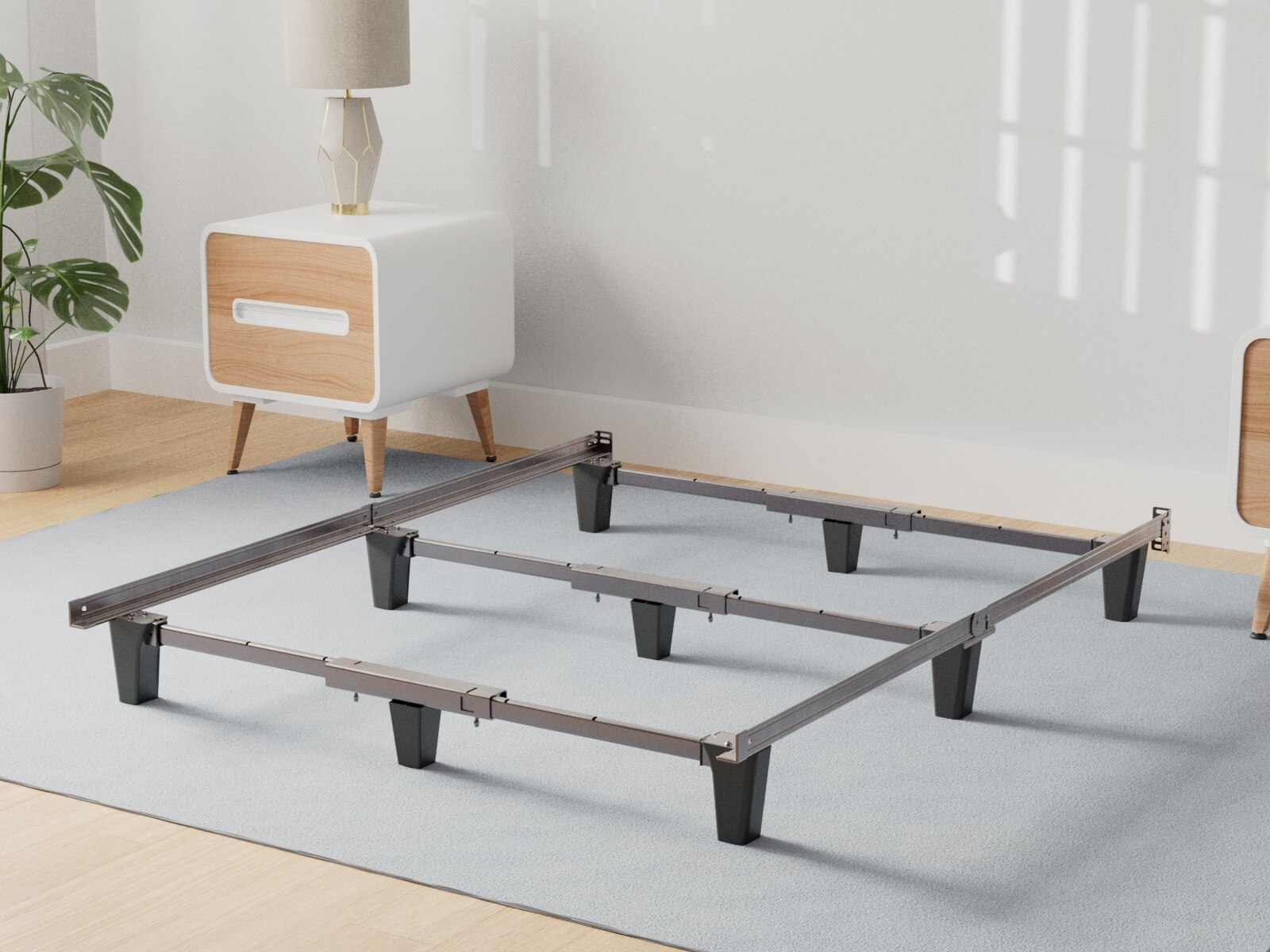
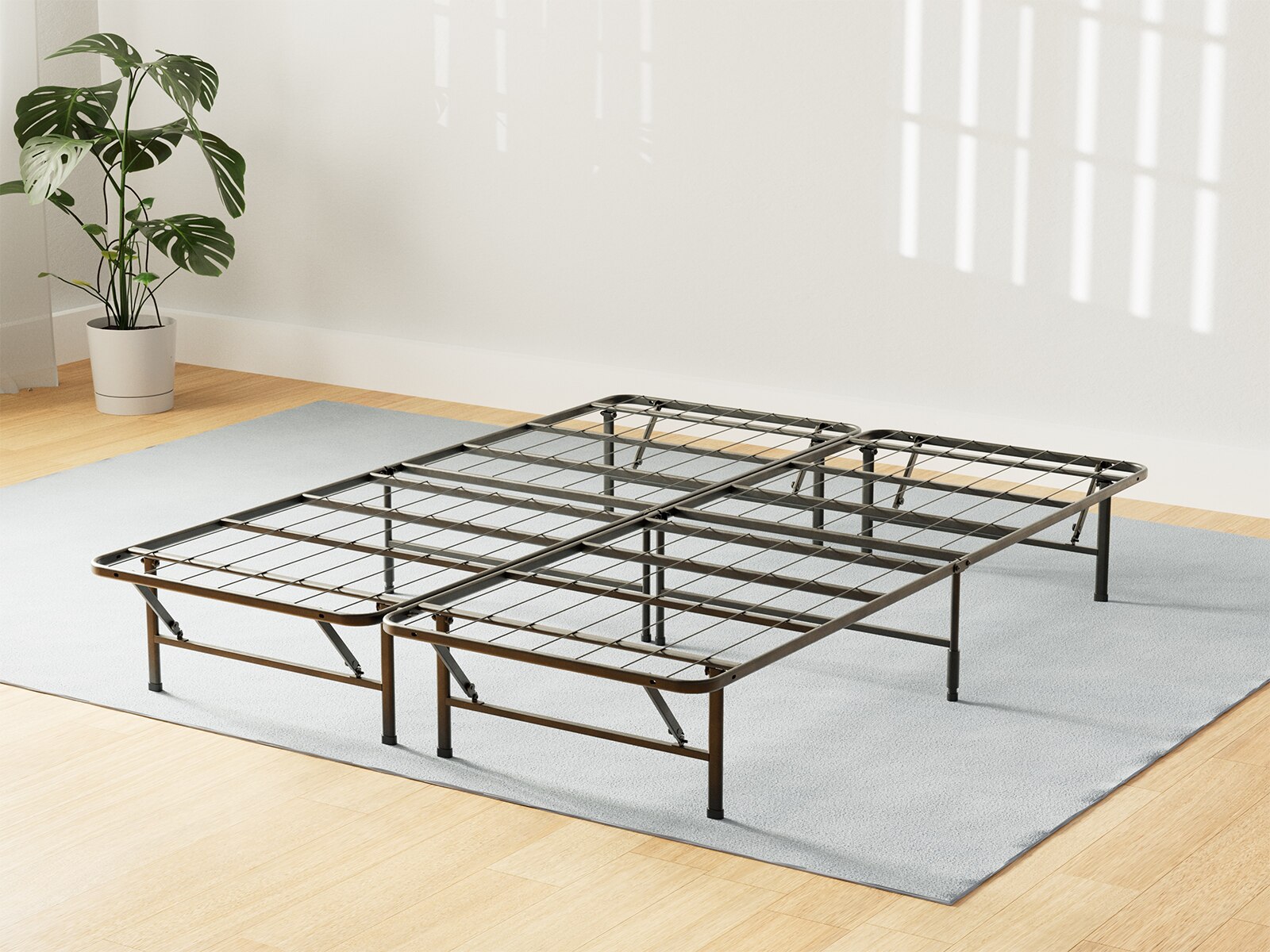
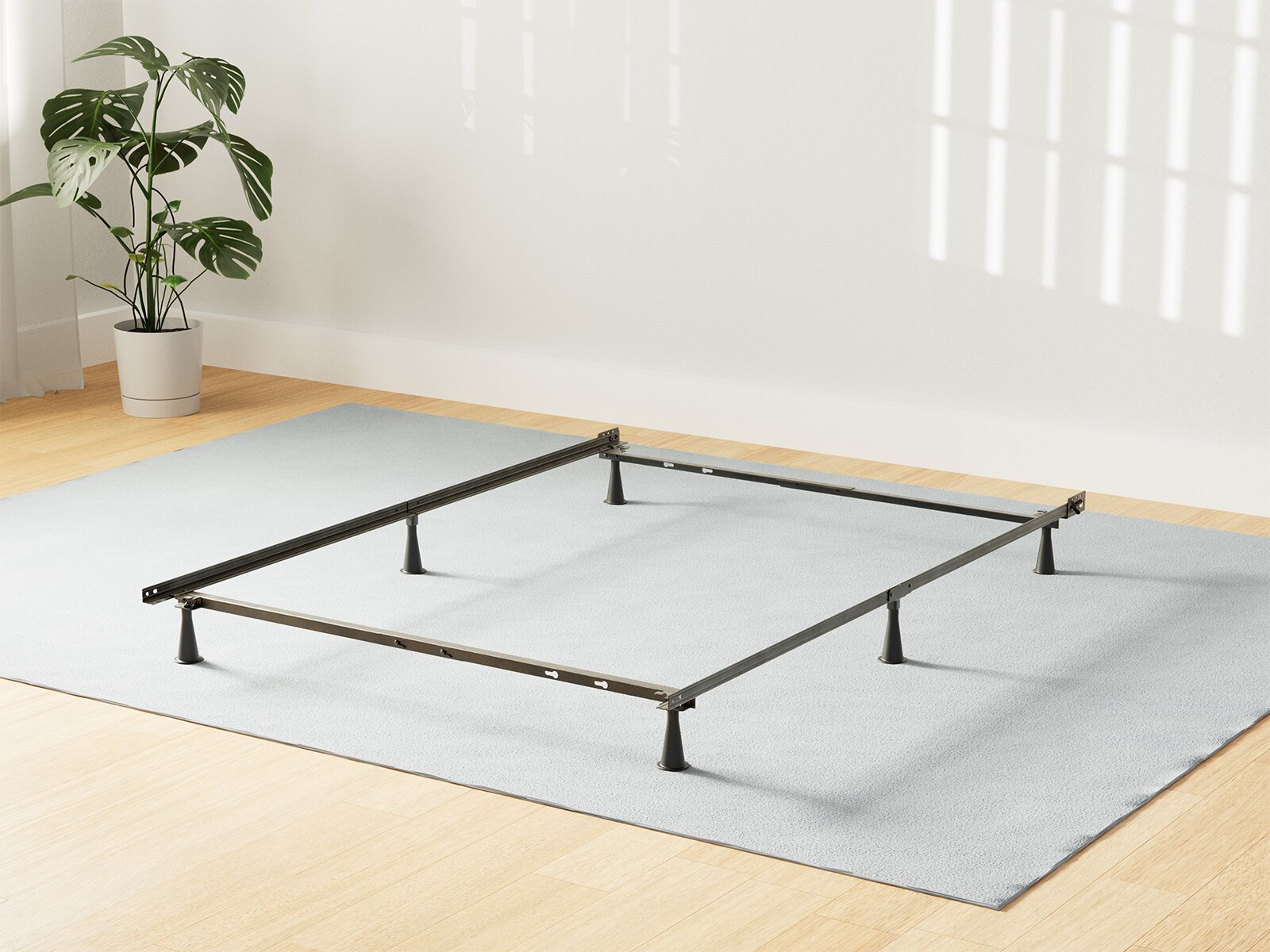
A sturdy metal bed frame provides a stable base for a compatible mattress and foundation, with strength that comes from its construction rather than its appearance alone. Steel rails, well-fitted joints, secure hardware and appropriately placed support legs all contribute to a frame that feels steady during everyday use. Metal bed frames range from low-profile structures designed to hold a separate foundation to platform designs with slats or a support deck built into the frame. That distinction matters: a traditional rail frame generally needs a compatible box spring or foundation, while a metal platform frame may support a mattress directly if its surface and slat spacing meet the mattress manufacturer’s requirements. Neither style is automatically stronger than the other. The quality of the connections, the span between supports and the design of the center rail help determine how effectively the frame carries weight. Steel is commonly used for its strength, and a powder-coated finish can help protect the surface from everyday scuffs and corrosion, although damaged coatings still need attention. Tubular and angle-steel components can both provide dependable support when properly engineered; thicker-looking pieces do not, by themselves, establish a higher weight capacity. A frame’s stated capacity should be checked for the selected size, including whether that limit accounts for the mattress, foundation and sleepers together. This is especially relevant for couples, heavier mattresses and households where a child occasionally climbs into bed beside a parent. Larger frames often rely on center supports to reduce unsupported spans, but the exact number and placement of legs vary by design. Noise control also depends on construction. Padded contact points, snug connections and hardware that stays properly secured can reduce movement where metal components meet. No frame can promise silence under every condition, but a well-supported, correctly assembled structure is less likely to shift or rattle during ordinary changes in sleeping position.
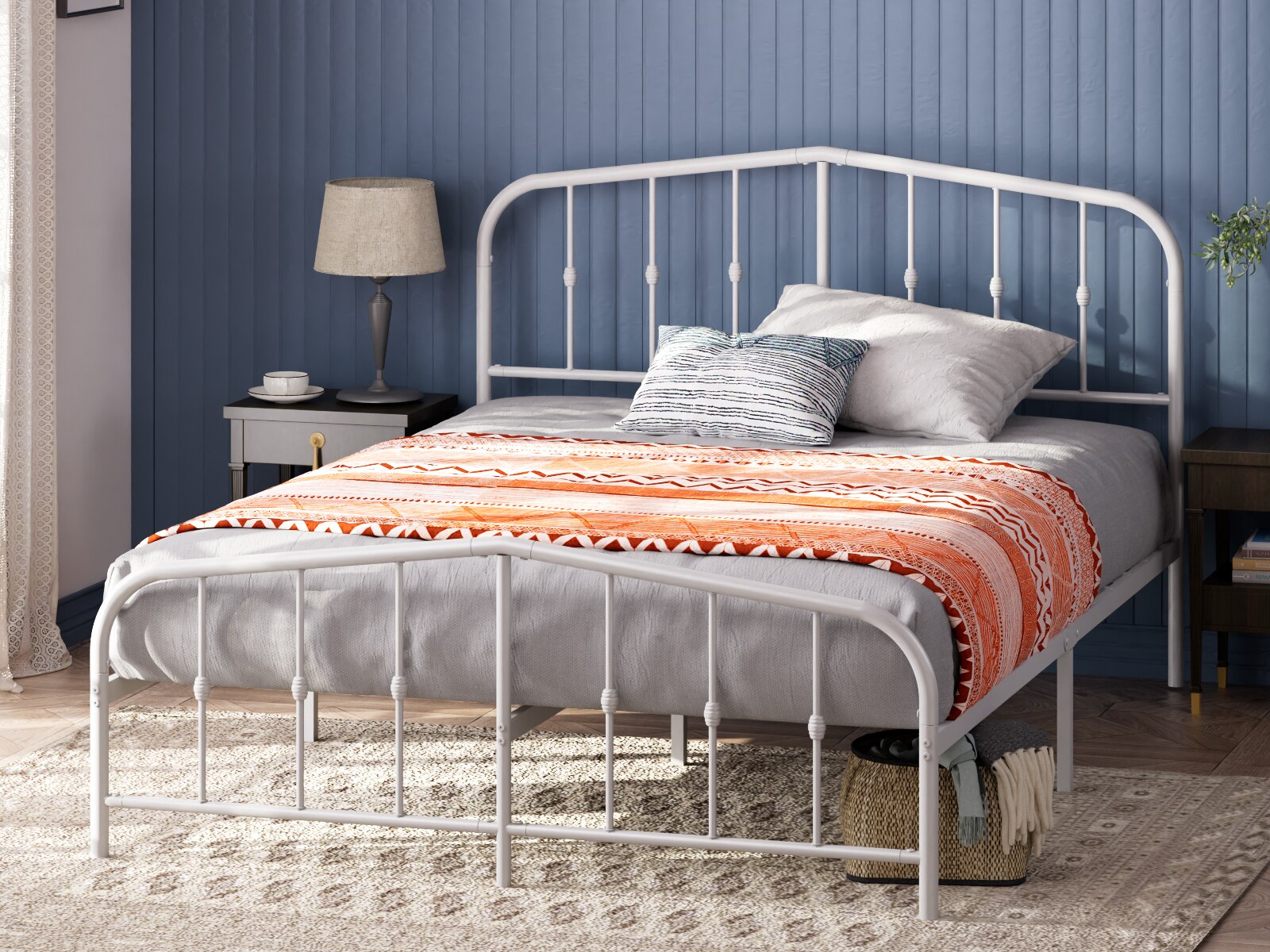
Fit involves more than matching the size printed on the mattress label. A frame intended for a queen mattress needs the correct interior dimensions, while its outer footprint may extend beyond the mattress because of rails, a headboard or a footboard. That extra space matters in a narrow bedroom, where a projecting corner can interrupt the path between the bed and a dresser. Twin and Twin XL frames suit different mattress lengths, and king and California King frames are not interchangeable. Adjustable-width rail frames may accommodate more than one mattress size, but their supported configurations and foundation requirements still need to match the intended setup. For platform construction, the distance between slats is particularly important because some mattresses need closely spaced support to maintain their shape and meet warranty requirements. A thin mattress should not be expected to bridge wide gaps simply because the metal beneath it is strong. Bed height deserves the same attention as width and length. The frame, any required foundation and the mattress together establish the height of the sleeping surface. A taller platform can create useful room for storage containers beneath the bed, while a lower frame may suit someone who prefers a lower sleeping surface or wants the bed to feel less visually prominent. Usable storage clearance is measured beneath the lowest rail or crossbar, not necessarily from the floor to the top of the frame. Support legs can also divide that space, affecting whether a wide container slides underneath. Visually, metal frames can be understated or decorative, with slim rails, open headboards and finishes that complement wood furniture, upholstered seating or textured bedding. The related
Sturdy Steel Beds collection offers another way to explore this material. Headboard attachment points, bracket compatibility and wall clearance remain practical considerations, especially when pairing a frame with an existing bedroom setup.
Everyday durability depends on how the frame is assembled, supported and maintained once it is in the room. Secure joints allow the structure to work as intended, while missing hardware or loosely seated connections can create movement even in a substantial steel frame. Assembly requirements vary: some designs use interlocking components, while others require bolts, washers and tools. The manufacturer’s instructions establish the correct sequence and tightening method, including any checks needed after initial use. Each support leg should make proper contact with the floor, and adjustable feet, when included, can help accommodate minor unevenness. Floor-compatible protective cups or pads may help limit marks, but they should not interfere with stability or replace a needed support. A frame on carpet may settle differently from one on a hard surface, so rocking or a newly developed sound deserves attention rather than being dismissed as normal. Dust and lint tend to collect around joints and beneath rails; a soft cloth and a cleaner approved for the finish are generally more suitable than abrasive scrubbing. Moisture should be wiped away promptly, particularly near scratches where bare metal may be exposed. Moving the bed also calls for care. Lifting the frame as directed, rather than dragging it with the mattress and foundation still in place, helps avoid unnecessary strain on legs and connections. Folding or disassembling features can be useful for households that move often, provided the frame is designed for repeated setup and its hardware stays together. These practical qualities make sturdy metal bed frames useful in primary bedrooms, guest rooms, apartments and shared living spaces. In a guest room, dependable support and manageable upkeep matter more than decorative complexity; in a compact bedroom, an open frame can leave room beneath the mattress without adding bulky furniture. A frame can also be a thoughtful household gift for someone setting up a new bedroom, as long as mattress dimensions, support requirements and room layout are confirmed beforehand. With a compatible sleep setup and routine attention to its connections, a well-built metal frame provides a dependable foundation for nightly rest.