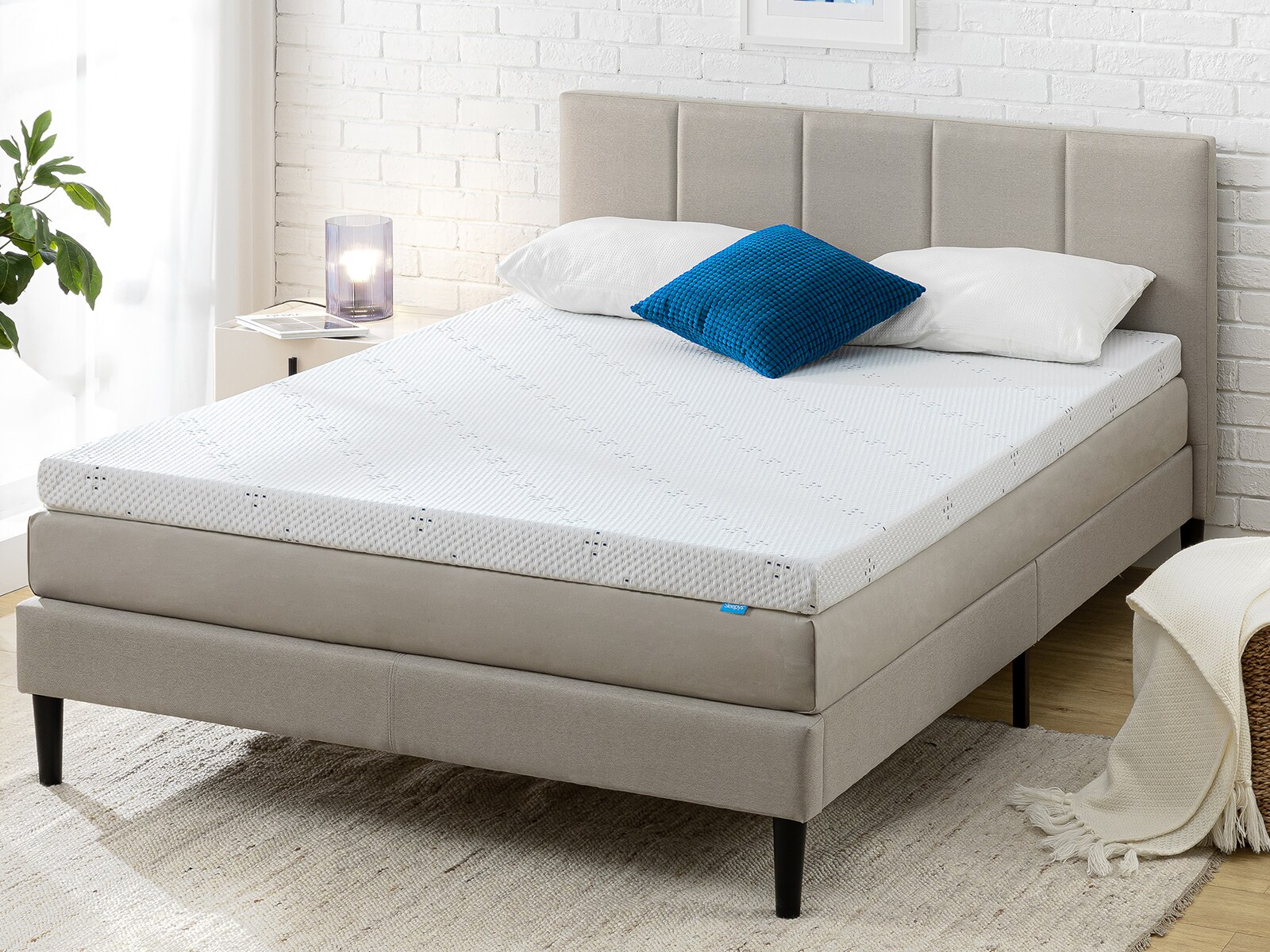
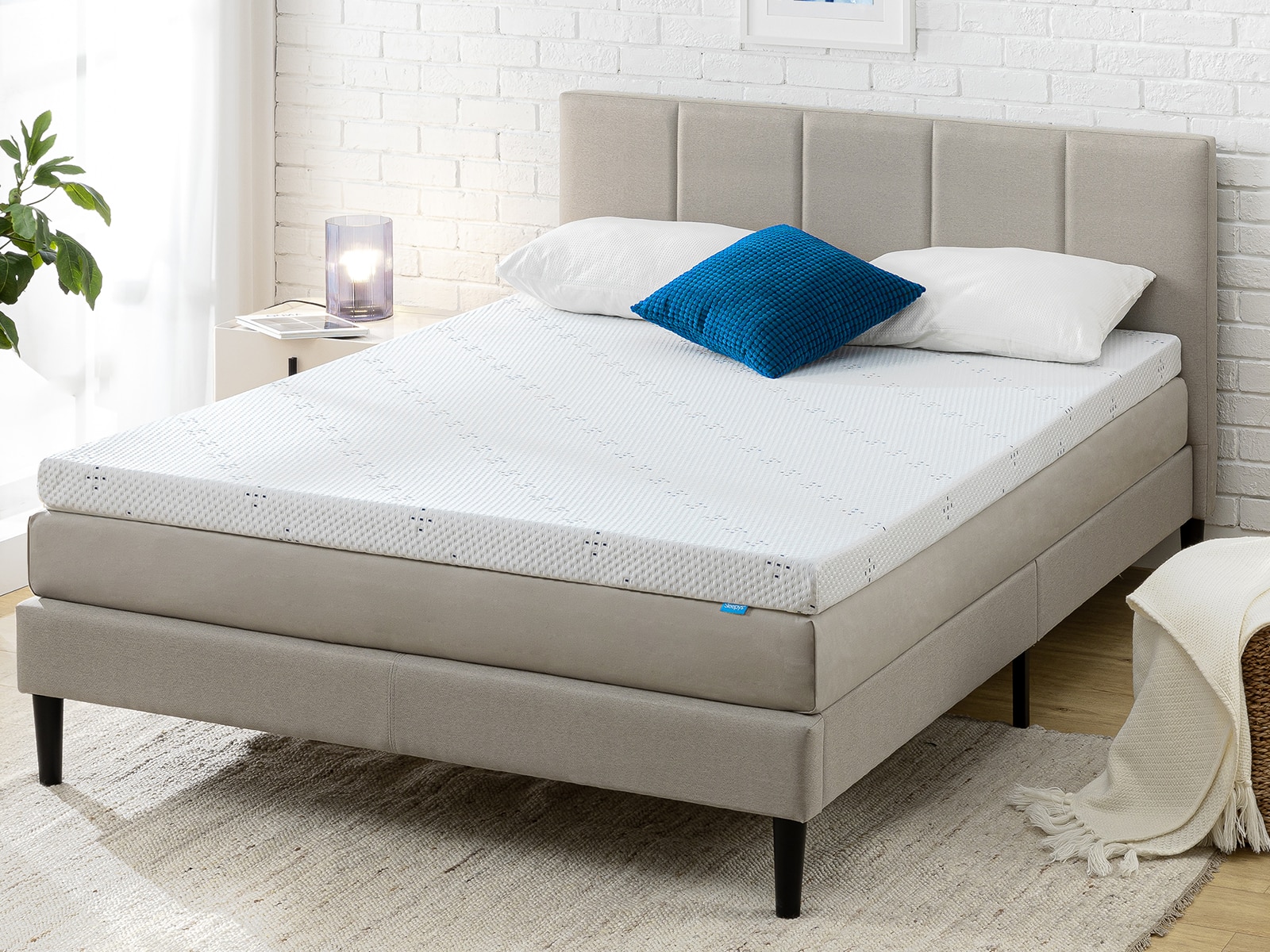
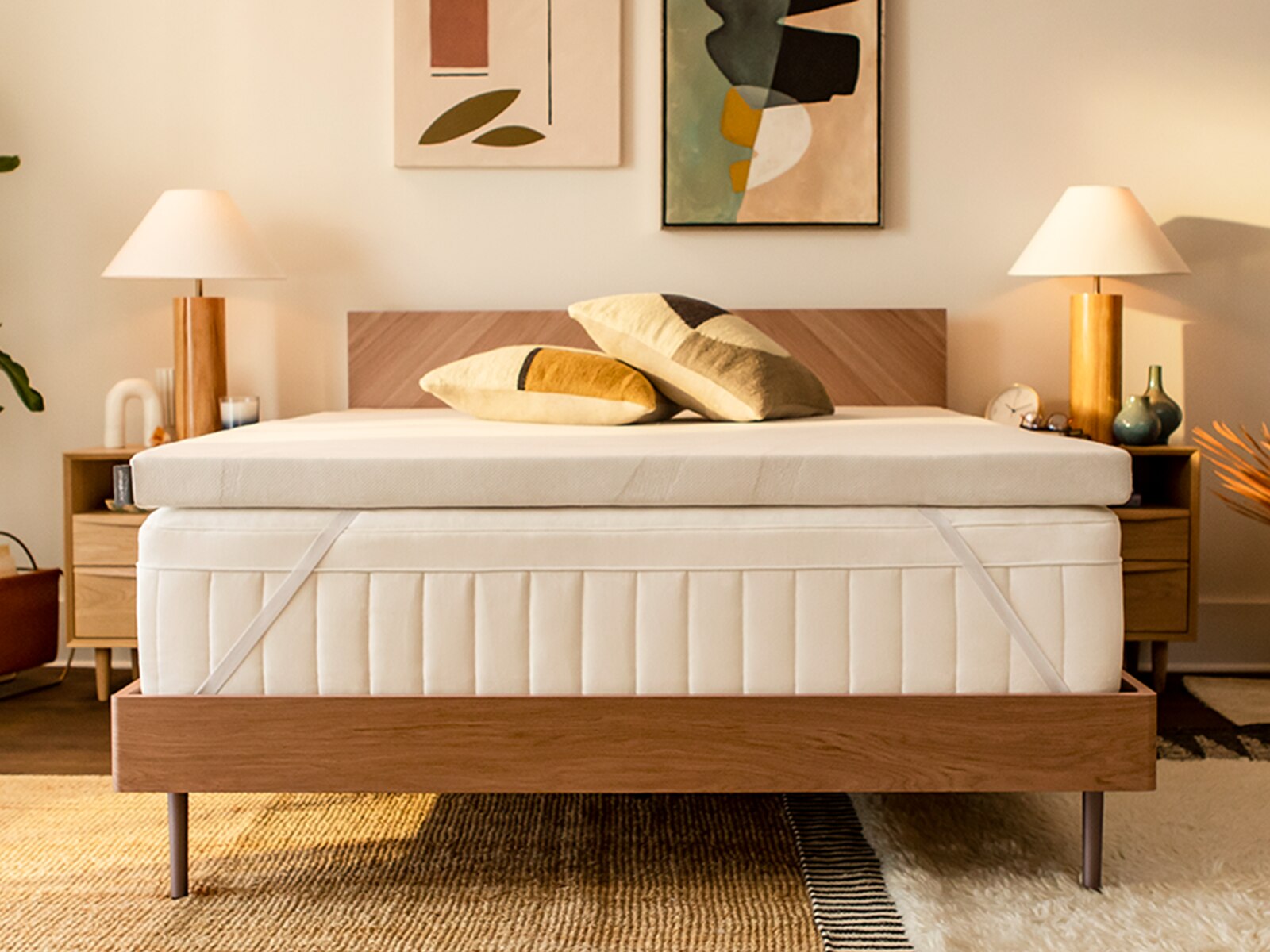
A king size foam mattress topper adds a separate layer of cushioning to an existing mattress, changing the feel of the sleep surface without replacing the bed underneath. A standard king topper measures 76 inches wide by 80 inches long, and foam toppers commonly range from two to four inches thick. That extra layer can soften a firm surface, add contouring around the shoulders and hips or create a more consistent feel across a mattress that is still in good condition. The result depends on both the topper and the mattress beneath it: a soft foam layer will feel different over a firm mattress than it will over an already plush bed. Memory foam typically responds to body weight with a close, gradual contour, while more responsive polyurethane foams tend to compress and recover more quickly. Some foam constructions incorporate ventilation channels, perforations or gel infusions intended to help manage heat buildup, though performance varies with the foam, cover and bedding used. Thickness also influences how noticeable the change feels. A two-inch topper generally makes a subtler adjustment, while a three- or four-inch layer creates more room to settle into the foam. Thickness alone does not determine firmness, quality or durability; foam composition and density matter, too. Side sleepers may appreciate cushioning that lets the shoulders and hips settle without feeling pressed against a hard surface. Back sleepers often prefer a balance of contouring and a steadier feel beneath the torso. Stomach sleepers may find that a thinner or firmer layer limits excessive sinking around the midsection. Body weight, sleeping position and personal preference all affect how the same foam feels. A topper is best suited to adjusting surface comfort on a supportive mattress, not correcting deep impressions, broken components or a sagging foundation. It can make a sound mattress feel more inviting, but it cannot restore the structure of a worn-out bed.
Fit makes a noticeable difference on a large sleep surface. Standard king and California King dimensions are not interchangeable: a California King measures 72 inches wide by 84 inches long, making it narrower and longer than a standard king. Checking the mattress label and measuring the actual surface helps prevent exposed edges or excess foam extending beyond the bed. Published topper measurements may vary slightly, so the listed dimensions are more useful than the size name alone. For another bedroom with a smaller mattress, a
queen mattress foam topper fits a different footprint, typically 60 inches wide by 80 inches long. On a king bed, the added height deserves just as much attention as width and length. A thick topper can push an existing fitted sheet beyond its pocket depth, causing corners to pull loose or the fabric to feel tight across the surface. The combined height of the mattress and topper helps determine whether deeper-pocket sheets or a larger-capacity mattress protector are needed. A stretchable protector can help keep the layers together without drawing tightly across the foam and changing its feel. Some toppers also have straps or a textured underside to reduce shifting, which can be useful for sleepers who turn frequently. For couples, a continuous king topper creates one uninterrupted surface, and some foams can absorb movement so a partner’s position changes feel less noticeable. It does not necessarily resolve different firmness preferences, however. A split king arrangement uses two Twin XL mattresses, and one king topper across both sides may interfere with independent movement on an adjustable base. Compatibility matters when either side raises or lowers. Beyond the main bedroom, a king foam topper can make a supportive guest bed feel more cushioned for overnight visitors. As a gift, it works best when the recipient’s mattress size, preferred feel and ability to handle a large foam layer are already known.
Everyday care helps preserve both the comfort and condition of a foam topper. A washable cover, when included, can simplify cleanup, but the cover and foam often have different care requirements. Most foam cores should not go in a washing machine or dryer. Following the care label is important because soaking, vigorous scrubbing or high heat can damage the material or leave moisture trapped inside. For a small spill, gentle blotting and spot cleaning with an approved method are generally more appropriate than saturating the foam. Letting the topper dry completely before replacing the bedding helps keep moisture from lingering between layers. A mattress protector adds a useful barrier against perspiration and accidental spills, particularly on a bed shared with children or pets. Routine bedding changes also provide an opportunity to check that the topper lies flat and that its corners remain aligned with the mattress. A king size foam mattress topper can be bulky even when it feels soft, so moving it with another person may make setup and repositioning easier. Supporting the foam rather than pulling hard on one corner helps avoid unnecessary strain on the material. Compressed foam may need time to expand and air out after unpacking; the manufacturer’s instructions provide the appropriate timeline before use. For longer-term storage, keeping the topper clean, fully dry and protected from moisture is important, and folding or rolling should follow the care directions rather than forcing the foam into a tight shape. Durability depends on foam quality, construction, body weight, frequency of use and the condition of the underlying mattress. Temporary impressions that recover after getting out of bed are different from persistent flattening, cracking or uneven areas. Those lasting changes can signal that the topper is no longer providing the same cushioning. With the right fit and realistic expectations, a king foam topper offers a practical way to fine-tune a spacious bed while keeping familiar bedding and a supportive mattress in place.