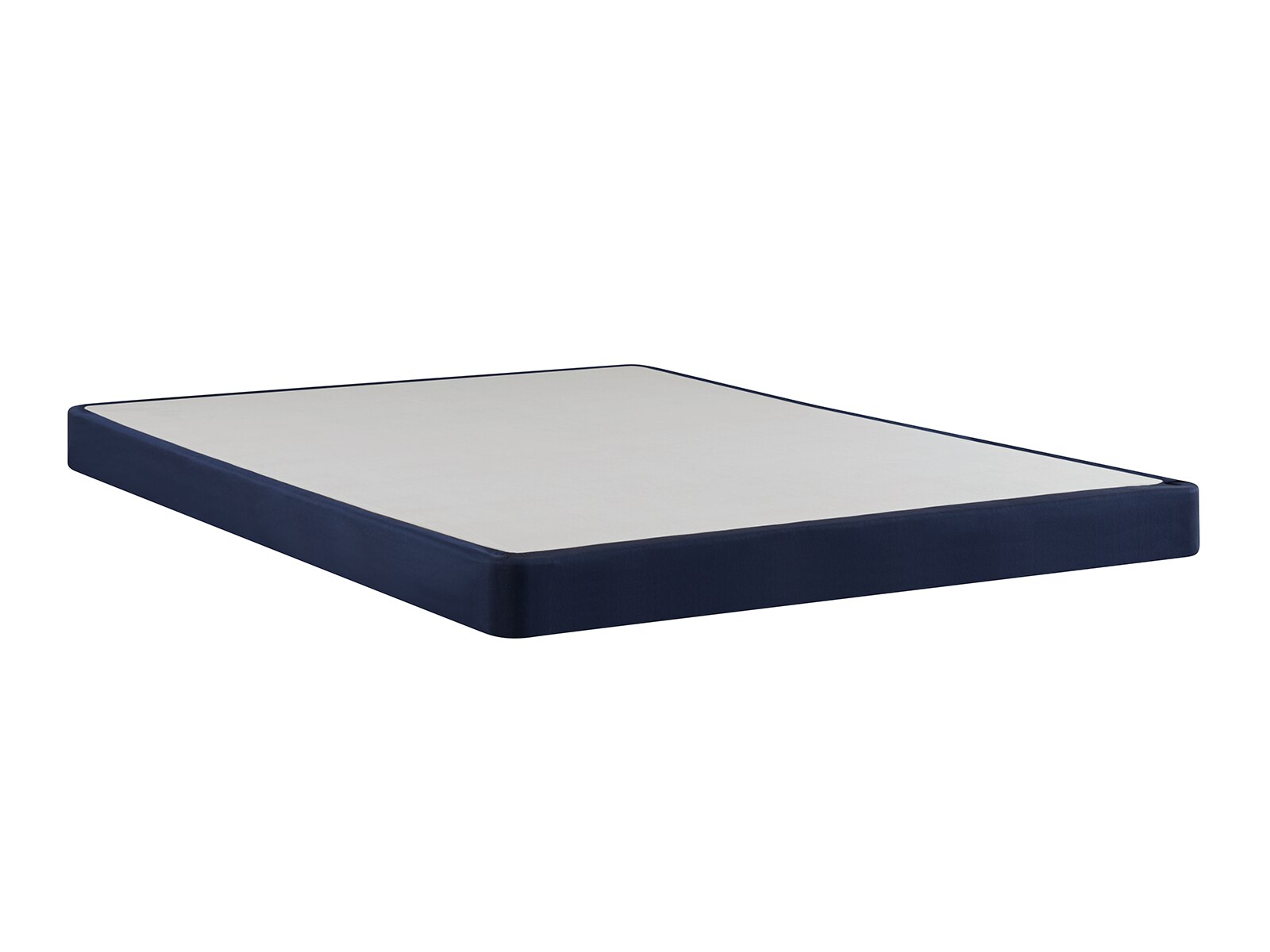
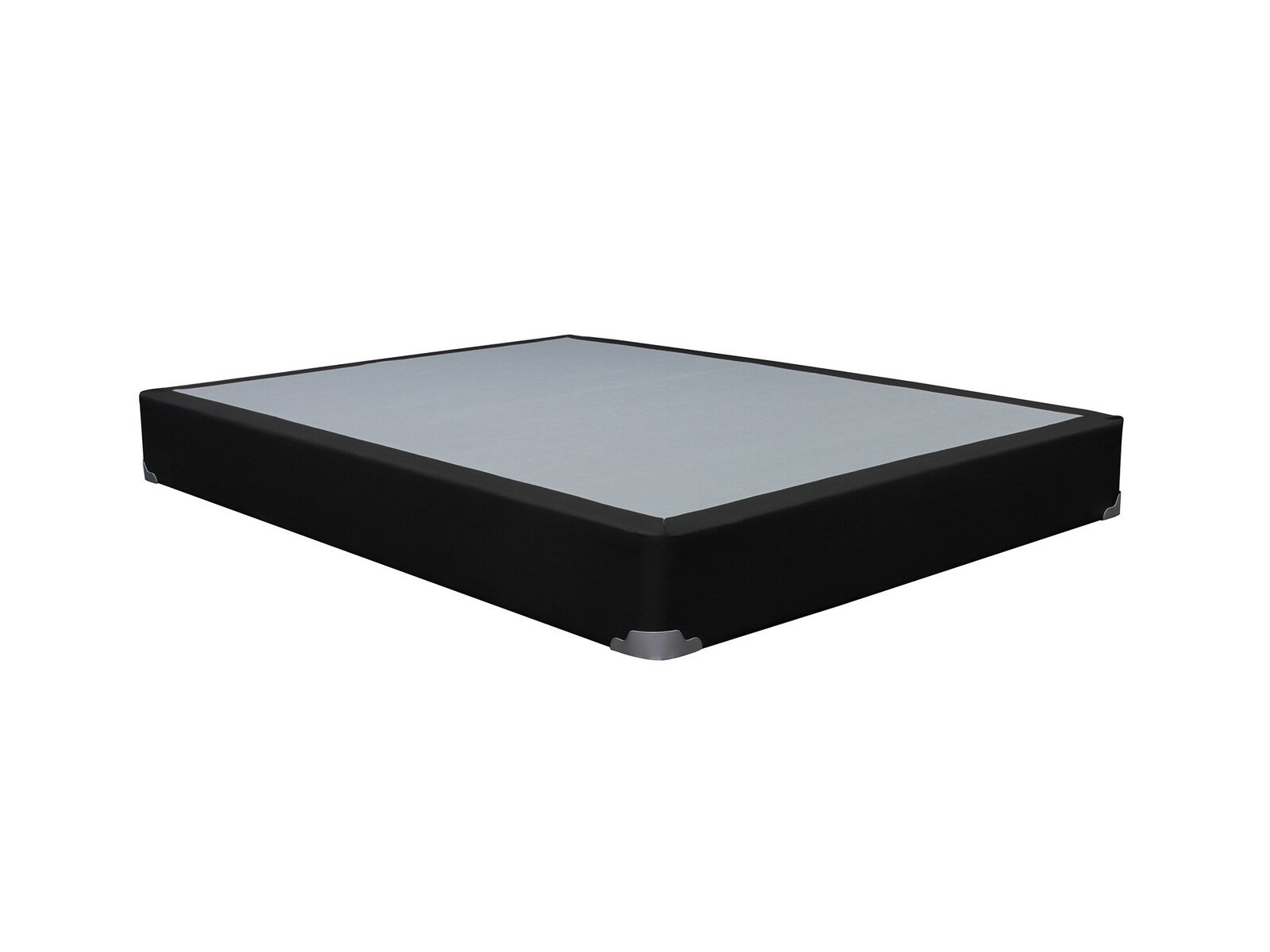
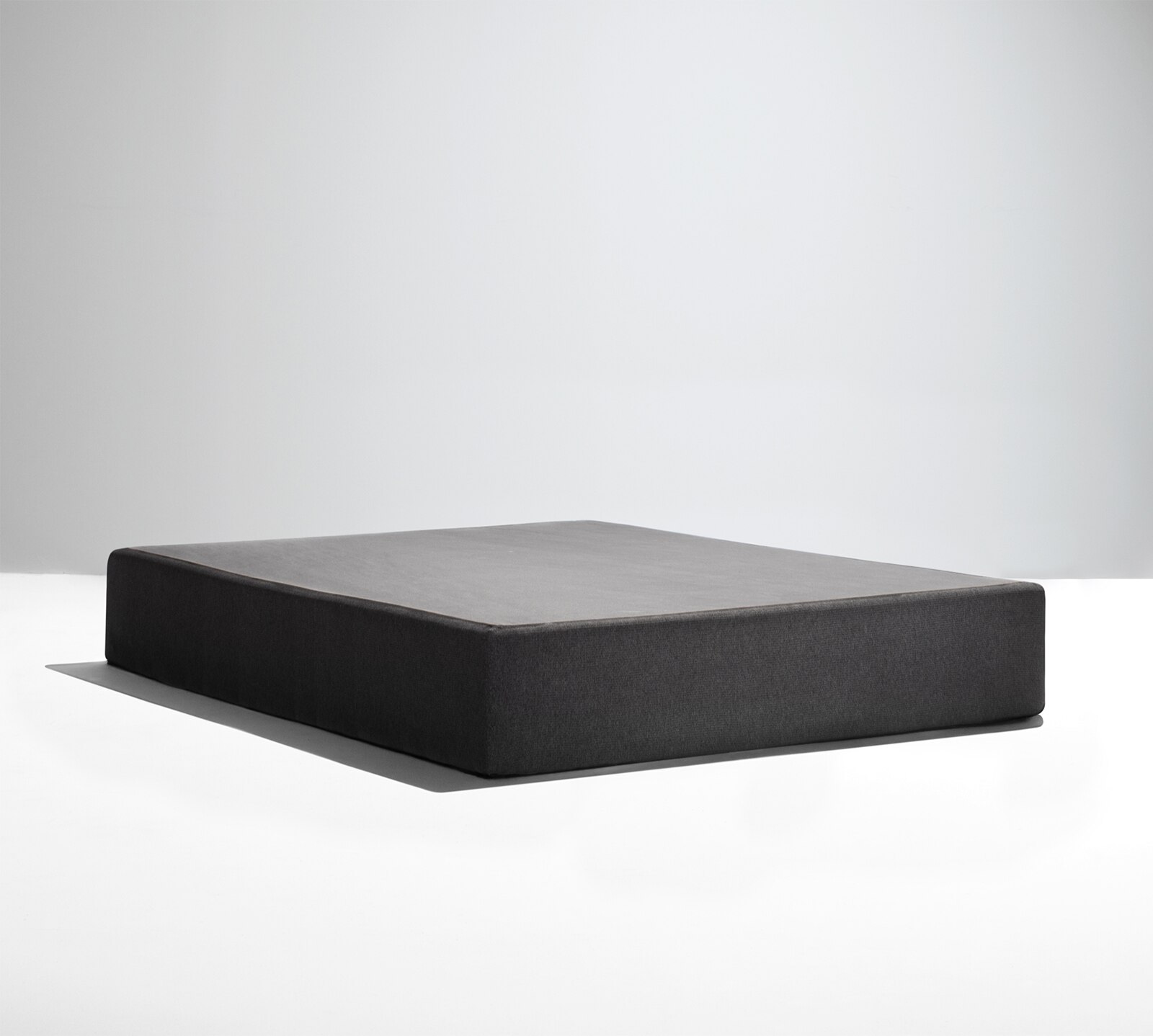
Low-profile mattress foundations provide a supportive base without adding the height of a traditional foundation or box spring. Typically about two to five inches thick, they help keep the finished bed lower than a standard foundation, which is often about nine inches tall. That difference can be especially useful beneath a thick mattress: a slimmer base preserves the mattress’s height while reducing the distance between the floor and the sleeping surface. For someone whose feet hover above the floor when sitting on the edge of the bed, reducing foundation height may make getting in and out feel more manageable. The right height still depends on the sleeper, the mattress and the frame; a bed that sits too low can be just as inconvenient as one that sits too high. Visually, a low-profile foundation can leave more of an upholstered headboard exposed, keep bedding from overwhelming a modest frame and create a balanced look beside a nightstand. It is a practical choice for primary bedrooms, guest rooms and other spaces where mattress support matters but extra height does not. The foundation’s profile refers to its thickness, not its width or length, so a low-profile base should still match the mattress size and fit the intended bed frame. Twin XL and twin foundations are not interchangeable, and a California King foundation has different dimensions from a king foundation. Measuring the frame’s interior and checking the mattress dimensions helps prevent overhang, gaps or a base that will not settle properly onto its supports. Total bed height includes the frame, foundation and mattress together, making all three measurements relevant. A foundation described as slim may still produce a tall bed when paired with a raised frame and a deep mattress, while the same foundation on a lower frame can create a much more accessible sleeping surface.
Construction determines how a low-profile foundation supports the mattress, and a shorter profile does not necessarily mean less support. Common designs use wood framing, steel framing or a combination of materials, often finished with a fabric cover that gives the base a clean, upholstered appearance. Wood components can form a sturdy perimeter and cross-support structure, while steel designs may use closely spaced bars or a grid to distribute weight. The fabric covering provides a finished surface but is not a substitute for the structure underneath. Although the terms foundation and box spring are sometimes used interchangeably, many modern foundations contain no working springs; their purpose is to provide relatively firm, stable support. Traditional box springs use a spring system, and whether that design is appropriate depends on the mattress manufacturer’s requirements. Memory foam, latex and hybrid mattresses often require a firm support surface with specified limits on the gaps between slats or bars. Innerspring mattresses also have support requirements, so mattress construction alone is not enough to establish compatibility. For a closer look at this category,
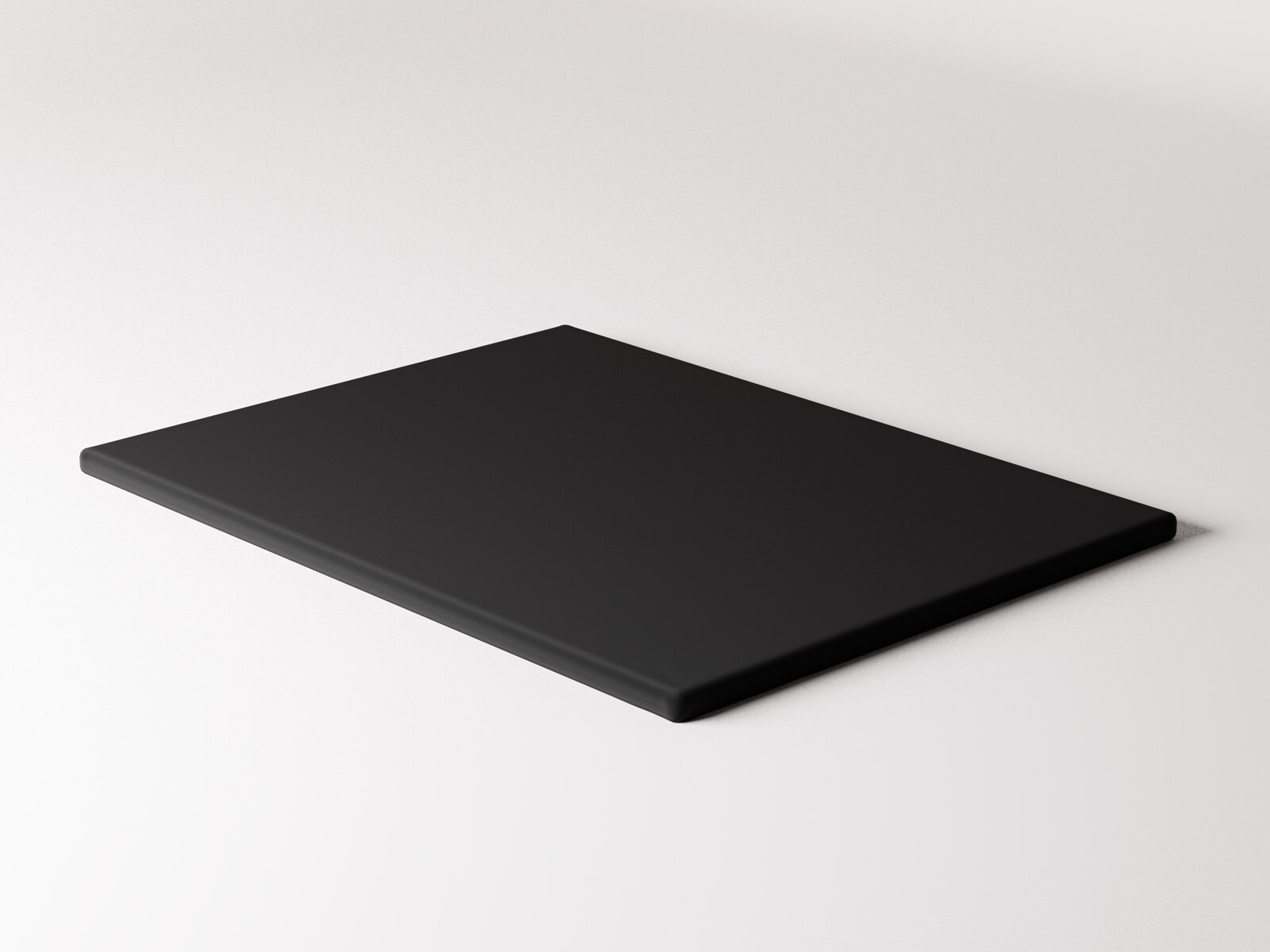
box spring foundations for low-profile beds offer a related way to explore supportive bases with a slimmer silhouette. Ultra-low support options, often called bunkie boards, may measure roughly one and a half to two inches thick and can provide an additional support layer over suitable slats or a platform. Their construction varies, however, and not every board provides a continuous solid surface. A platform bed with adequate built-in support may not need an added foundation at all. Traditional bed rails may require a foundation that spans the frame correctly, along with center support where specified. Larger beds commonly need additional support through the middle to prevent excessive flexing. Slat spacing, center legs and the foundation’s stated weight capacity all matter, including the combined weight of the mattress and sleepers. A fixed foundation generally is not a substitute for an adjustable base, which needs a compatible mattress that can move with its articulated surface.
Fit and construction also influence how well a low-profile mattress foundation holds up to everyday use. A properly supported frame, secure connections and evenly distributed weight help the base remain stable over time. Loose hardware, a missing center leg or a foundation resting unevenly on the bed rails can contribute to movement and noise, even when the foundation itself is sound. Assembly requirements vary, so checking whether a base arrives assembled or needs to be put together can make bedroom setup more predictable. A thinner profile can make some foundations easier to maneuver, but width, length and packaging still determine whether they will clear a narrow stairwell or turn through a doorway. For larger mattress sizes, a compatible split foundation can simplify moving through tight spaces, provided both sections are designed for the mattress and supported correctly by the frame. Once the bed is assembled, routine care is usually straightforward: remove surface dust with a vacuum attachment appropriate for the covering, address marks according to the manufacturer’s care directions and avoid saturating fabric or wood components. Allow any cleaned area to dry fully before replacing bedding. Air circulation also deserves attention, particularly when a mattress rests on a solid surface; the mattress and foundation manufacturers’ guidance can help clarify suitable support and ventilation. Periodically checking connections and looking for bent supports, cracked components or persistent movement can reveal problems before they place uneven pressure on the mattress. Low-profile foundations are useful when updating an existing bedroom, preparing a guest room or furnishing a new home, especially when the mattress is comfortable but the overall bed feels too tall. They can also be part of a practical furnishing gift when the recipient’s mattress size, frame requirements and preferred bed height are already known. The best fit brings those details together: enough structural support for the mattress, an appropriate height for the person using it and proportions that work comfortably within the room.