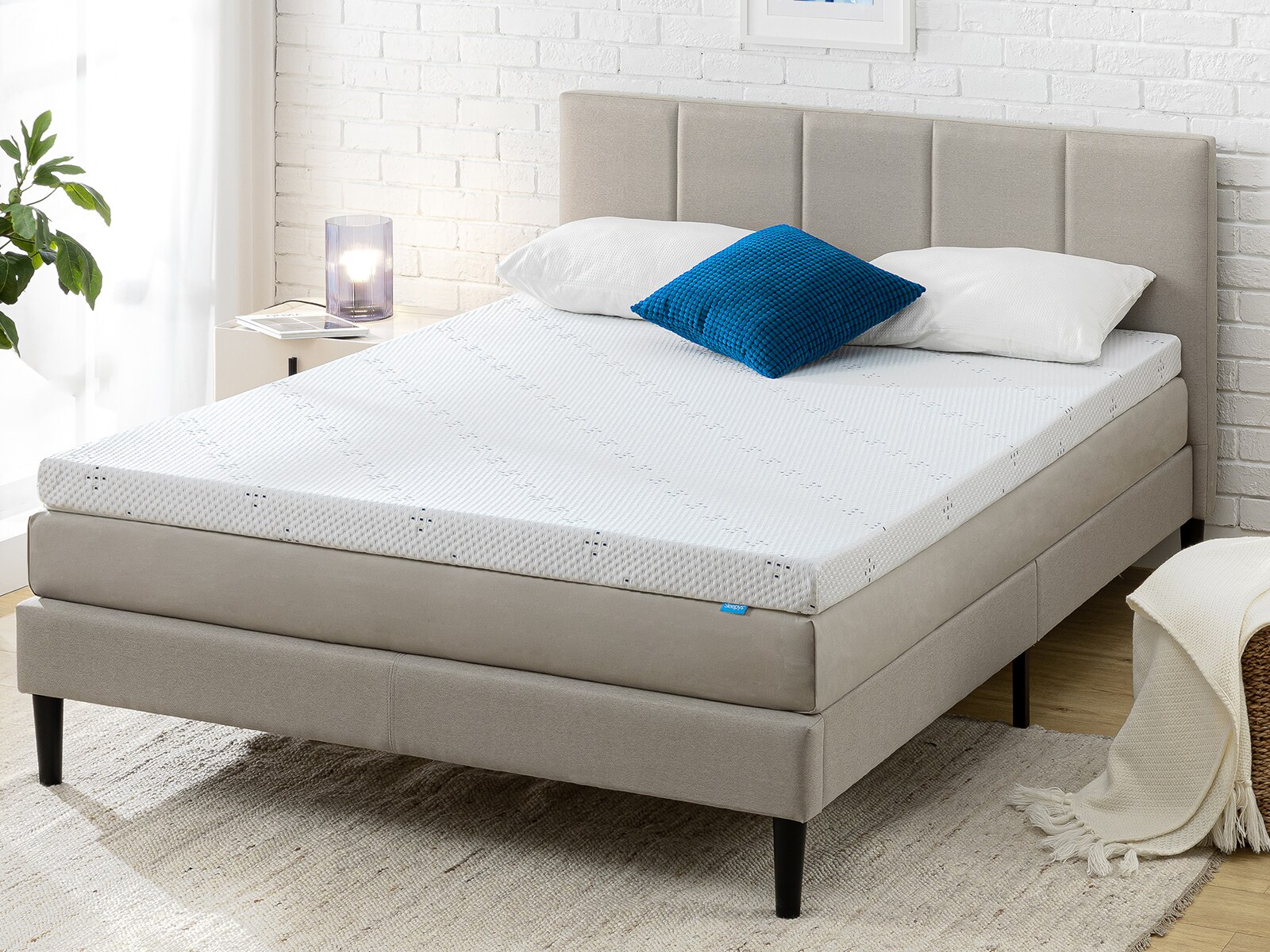
Mattress toppers under $200

Mattress toppers under $200 can help you adjust how your bed feels without replacing your mattress. Compare options by size, thickness and care instructions to find a topper that fits your bed, suits your comfort preferences and stays within your budget.

Mattress toppers add a separate comfort layer above a mattress, changing how the sleep surface feels without changing the entire bed. They can soften a mattress that feels too firm, add cushioning around shoulders and hips or create a more responsive surface for someone who dislikes sinking deeply into bed. Unlike a mattress pad, which generally adds a lighter layer of cushioning, a topper typically has enough depth to make a noticeable difference in feel. Materials play a large role in that difference. Memory foam contours around the body and often has a slower response, creating a close, cradling sensation as weight settles into the surface. Other cushioning foams may respond more quickly, making it easier to shift from one position to another. Latex tends to feel springier, with cushioning that compresses under weight and rebounds as a sleeper moves. Fiber-filled toppers provide a loftier, pillowlike surface, although the filling may flatten with use and need regular fluffing. Wool, down and feather constructions have their own textures and care requirements, and their softness depends on the fill and design. For someone who wakes with a shoulder pressed into an unyielding mattress, contouring cushioning may feel more comfortable. Someone who wants a plush surface without a deep hug may prefer a more buoyant or fiber-filled construction. Material names alone do not tell the whole story: thickness, foam density, fill distribution and cover construction all influence the finished feel. Breathability matters, too, particularly for sleepers who tend to feel warm beneath the covers. Open-cell foam, perforations and breathable fabrics may help air move through the topper, but no single feature guarantees a cooler night. Sheets, mattress protectors, bedding and the mattress underneath also affect that experience. The most useful comparison is how the complete construction suits a sleeper’s preferences, rather than whether one material sounds softer or more advanced than another.

Fit deserves as much attention as cushioning because a topper becomes part of the bed’s overall height and shape. A queen topper should match a queen mattress, but checking the listed measurements is still worthwhile, especially for an older mattress or a bed with unusual dimensions. Twin XL and twin are different lengths, and king and California King have different proportions. An otherwise comfortable topper can be frustrating if its edges overhang the mattress or leave a noticeable strip uncovered. Thickness also changes how the bed works in daily use. A topper measuring two inches creates a different surface profile than one measuring four inches, although thickness alone does not determine softness or support. The added height can affect whether a fitted sheet stays tucked around the corners, whether an existing protector reaches beneath the mattress and how easily someone gets into bed. Deep-pocket sheets may be necessary when a substantial topper sits on an already tall mattress. Elastic corner straps or a grippy underside can help limit movement, but a close size match remains important, particularly for sleepers who turn frequently. Sleeping position offers another useful point of comparison. Side sleepers often appreciate cushioning that allows shoulders and hips to settle without feeling pressed against a hard surface. Back sleepers may prefer a balance of contouring and steadiness, while stomach sleepers often need to avoid excessive sinking around the middle. Body weight and personal preference affect each of those experiences, so the same topper can feel different to two people. A shared bed adds another consideration: responsive cushioning may make turning easier, while slower-moving foam may help absorb some movement. A topper can also make a sound but overly firm guest-room mattress more welcoming or personalize a dorm-room sleep surface. For a gift, confirming mattress size, preferred feel and care expectations helps make the gesture useful rather than leaving the recipient with bedding that does not fit.

Everyday care helps preserve the comfort of mattress toppers, and the right routine depends on the materials inside as well as the cover. A removable cover is not necessarily machine washable, so its care label should determine washing and drying methods. Foam cores generally should not be submerged or put in a washing machine; spot cleaning may be appropriate when permitted by the manufacturer, with thorough air drying before bedding goes back on. Fiber-filled constructions may have different cleaning instructions, and some larger toppers require equipment with more capacity than a household washer provides. A compatible mattress protector can help shield the sleep surface from spills and everyday moisture, though a thick or tightly fitted protector may slightly change the topper’s feel. Keeping sheets clean and allowing any damp areas to dry fully can help prevent lingering odors. For toppers with loose filling, gentle fluffing or redistribution may restore a more even surface when the care instructions recommend it. Rotation can help distribute wear on some designs, but flipping is not suitable for every construction, especially when the top and bottom have distinct functions. Durability depends on material quality, construction, frequency of use and the amount of weight placed on the surface. A topper used nightly will experience different demands from one used occasionally in a guest room. Persistent flattening, crumbling foam, uneven cushioning or a lasting change in feel can indicate that the comfort layer is wearing out. Just as important, a topper cannot repair a sagging mattress, stabilize a damaged foundation or restore worn internal support. It works best over a mattress that remains level and structurally sound but needs a different surface feel. The Best Mattress Toppers collection offers another starting point for exploring comfort preferences. Whether the goal is gentler cushioning at the shoulder, a springier surface for changing positions or a softer guest bed, material, fit and manageable care requirements matter more than thickness alone. Those practical details help a topper feel like a natural part of the bed.
Tap into more savings! Text MATTRESS to 766693 to get text alerts for online exclusives & more. Text STOP to cancel. Msg & data rates may apply.
View our privacy policy