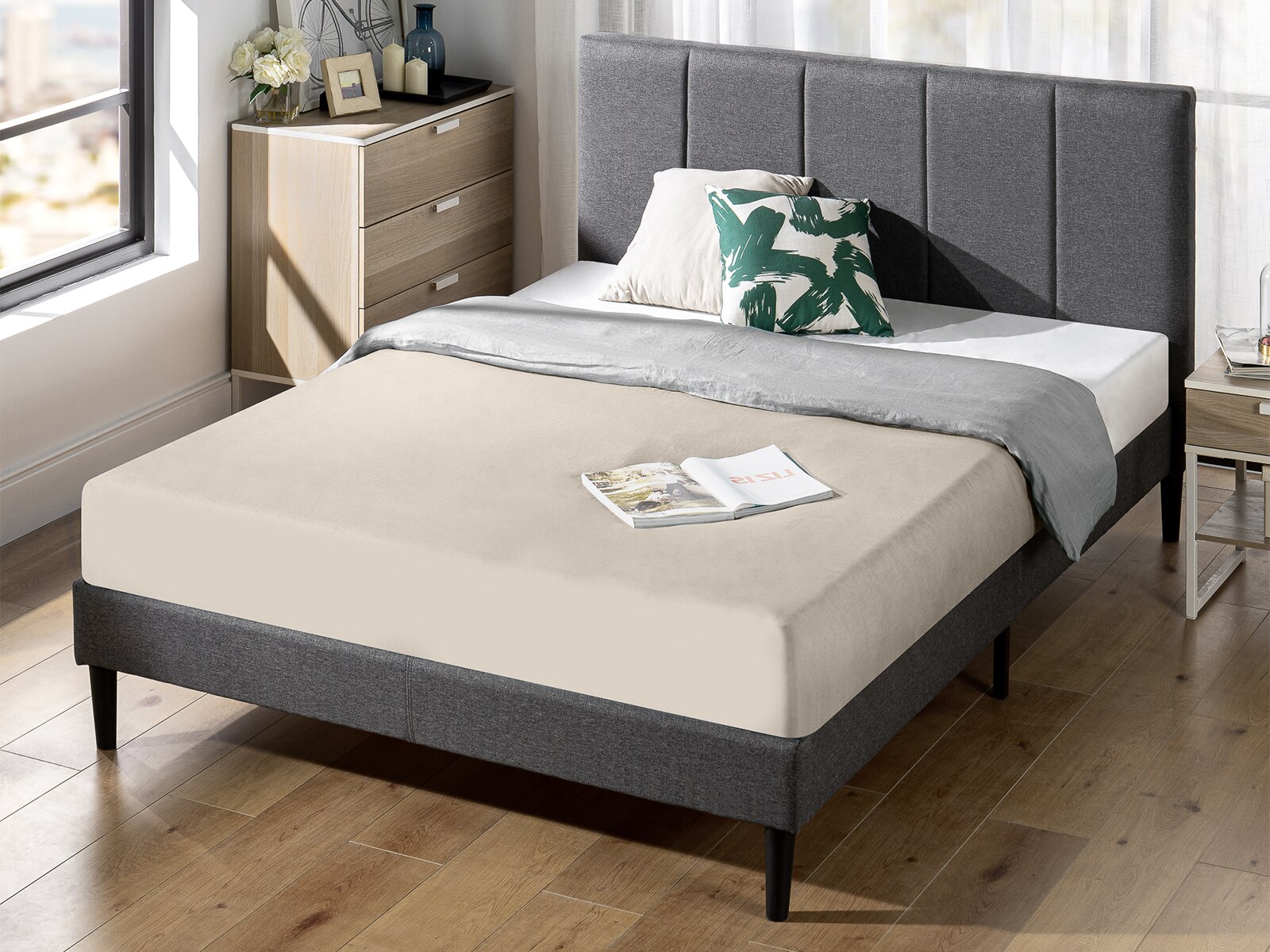
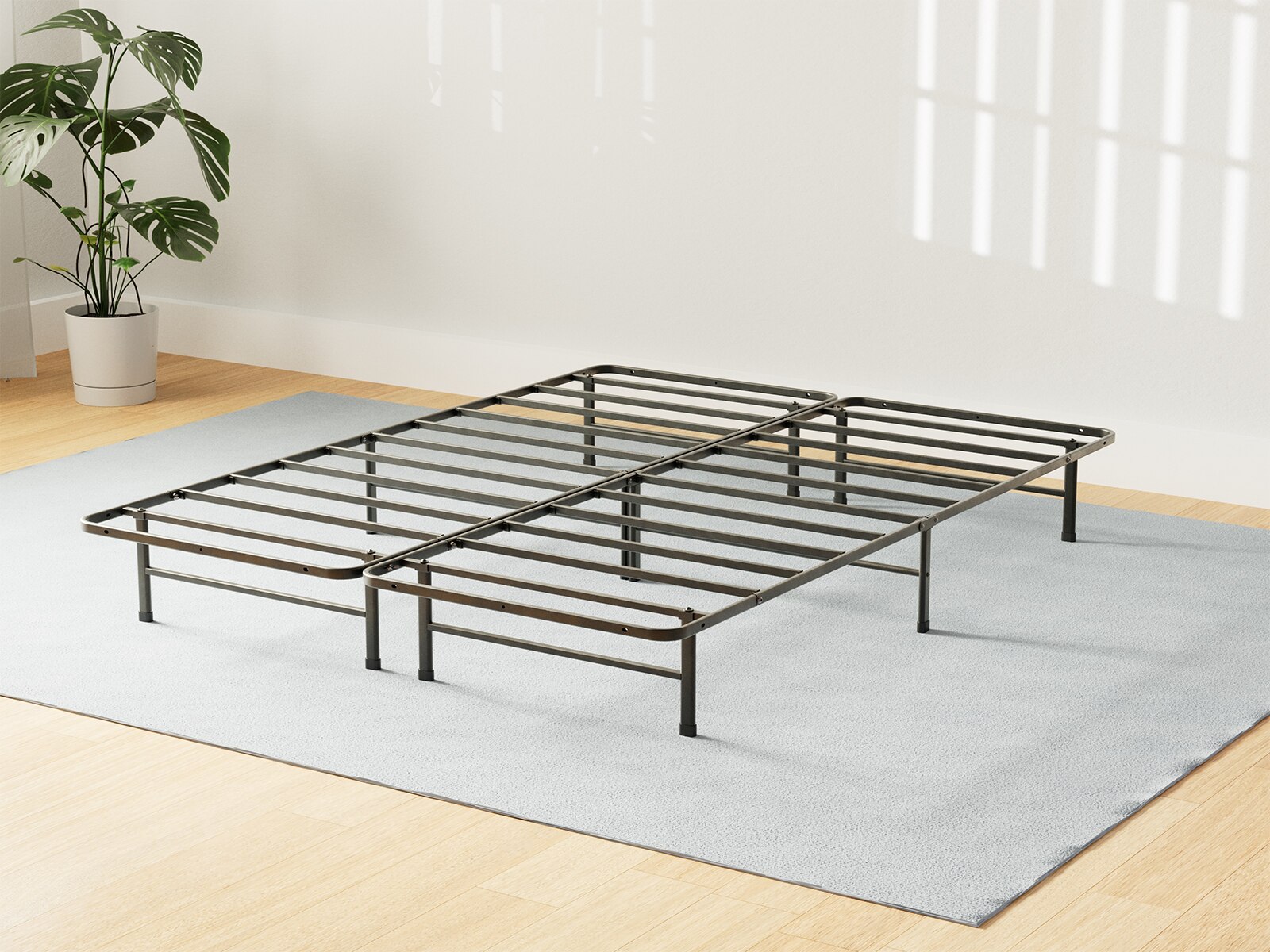
Metal beds for compact spaces can provide sturdy mattress support with a slim, open profile that helps a small bedroom feel less crowded. Narrow rails, raised legs and an open headboard allow more of the wall and floor to remain visible, giving the bed a lighter visual presence than a frame with broad sides or a heavily padded surround. That can make a difference in a studio apartment, a shared bedroom or a guest room that also holds a desk. The bed still anchors the room, but it does not have to dominate every sightline. Its actual footprint matters just as much as its appearance. A frame may extend beyond the mattress at the head, foot or sides, so mattress size alone does not describe how much space the assembled bed will occupy. Protruding finials, curved rails and an angled headboard can also affect placement against a wall. A twin frame may leave space for a study area, while a Twin XL can offer additional sleeping length without the width of a larger mattress. A full or queen frame may suit someone who wants more room to stretch out, provided there is still a usable path around the bed. In a narrow room, a low footboard or a design without a footboard can keep the end of the bed from becoming a visual barrier. An open headboard can bring definition to a sleeping area without creating the same enclosed feeling as a solid panel. Picture the everyday movements that happen around it: opening a dresser drawer, carrying a laundry basket past the corner or reaching the far side to change the sheets. A well-proportioned metal bed leaves room for those routines, not just enough space to fit between the walls. Window placement, closet doors and nearby outlets also influence whether a frame feels comfortably integrated or awkwardly squeezed into place.
Materials and construction determine how a metal bed performs beyond its streamlined appearance. Steel is commonly used for rails, legs and mattress supports, while tubular construction can create a substantial-looking frame without the weight of solid metal throughout. Decorative curves, straight spindles and squared corners offer different styles, but the support system deserves equal attention. Secure connections, appropriately spaced slats and center support where required all contribute to a stable foundation. The published weight capacity should account for the mattress and everyone using the bed, and any additional requirements should come from the frame’s specifications. Metal construction alone does not guarantee that every frame can support the same load or work with every mattress. Foam, latex and innerspring mattresses can have different foundation requirements, including limits on the gaps between supports. Some metal beds are designed to hold a mattress directly, while others require a separate foundation. That distinction affects both compatibility and the finished height of the sleeping surface. In a compact bedroom, overall height can change how prominent the bed feels and how easily someone can sit down, stand up or tuck in bedding. A taller frame may create useful storage space below, but adding a thick foundation and mattress can put the surface higher than expected. A lower setup may feel visually quieter, though it can be less convenient for someone who prefers a higher seat. Metal frames also need correctly fitted hardware and secure joints to stay steady; a frame that shifts or makes noise may need attention to its assembly rather than simply a different mattress. For a primary bedroom, repeated daily use makes those structural details especially important. In a multipurpose guest room, a dependable frame can provide a dedicated sleeping space without requiring a bulky bedroom suite. The most suitable design balances support, accessibility and room proportions rather than relying on a slim silhouette alone.
Underbed space can make a metal frame especially practical when closets are small or a bedroom has no room for another dresser. Raised legs may leave space for shallow bins holding spare sheets, folded blankets or clothing, although usable storage depends on the distance from the floor to the lowest rail or support. Center legs and crossbars can divide that space, so a large container may not slide through even when its height appears suitable. Storage also needs room to move outward; a bin that fits beneath the bed is less useful if a nearby wall prevents it from opening. In a studio, matching containers can keep necessary belongings close without adding a separate cabinet. In a guest room that doubles as a home office, the same space can hold bedding between visits and keep the desk area clear. Explore
Bed Solutions For Small Spaces to consider other ways to balance sleeping space, storage and everyday movement. Care for a metal bed is generally straightforward, with the manufacturer’s instructions guiding which cleaners are appropriate for its finish. A soft cloth can remove dust from rails and decorative details, while prompt drying after cleaning helps prevent moisture from lingering around joints or damaged coatings. Abrasive pads and harsh cleaners may scratch or dull the surface. Periodic hardware checks can help identify loose connections before they become a persistent wobble, especially after the bed has been moved. Lifting rather than dragging the assembled frame helps protect its joints and the floor beneath it. Visually, metal works with many bedding textures, from crisp cotton sheets to a softly quilted coverlet. A simple frame can sit comfortably beside an existing wood dresser, reducing the need for a fully matched set in a room where each piece must earn its place. Keeping bedding clear of walkways and leaving useful floor space around the frame lets the room remain comfortable, practical and easy to move through.