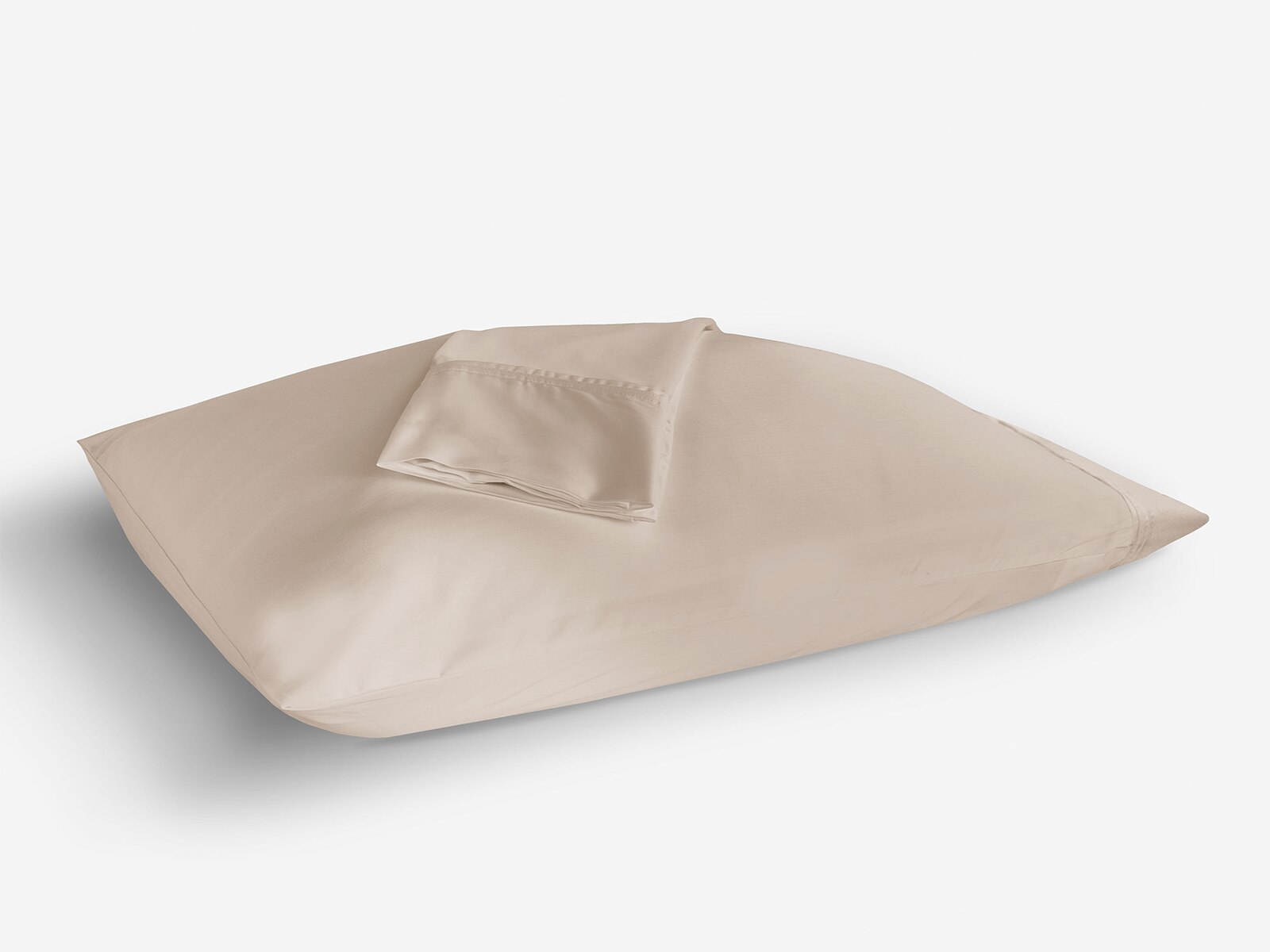
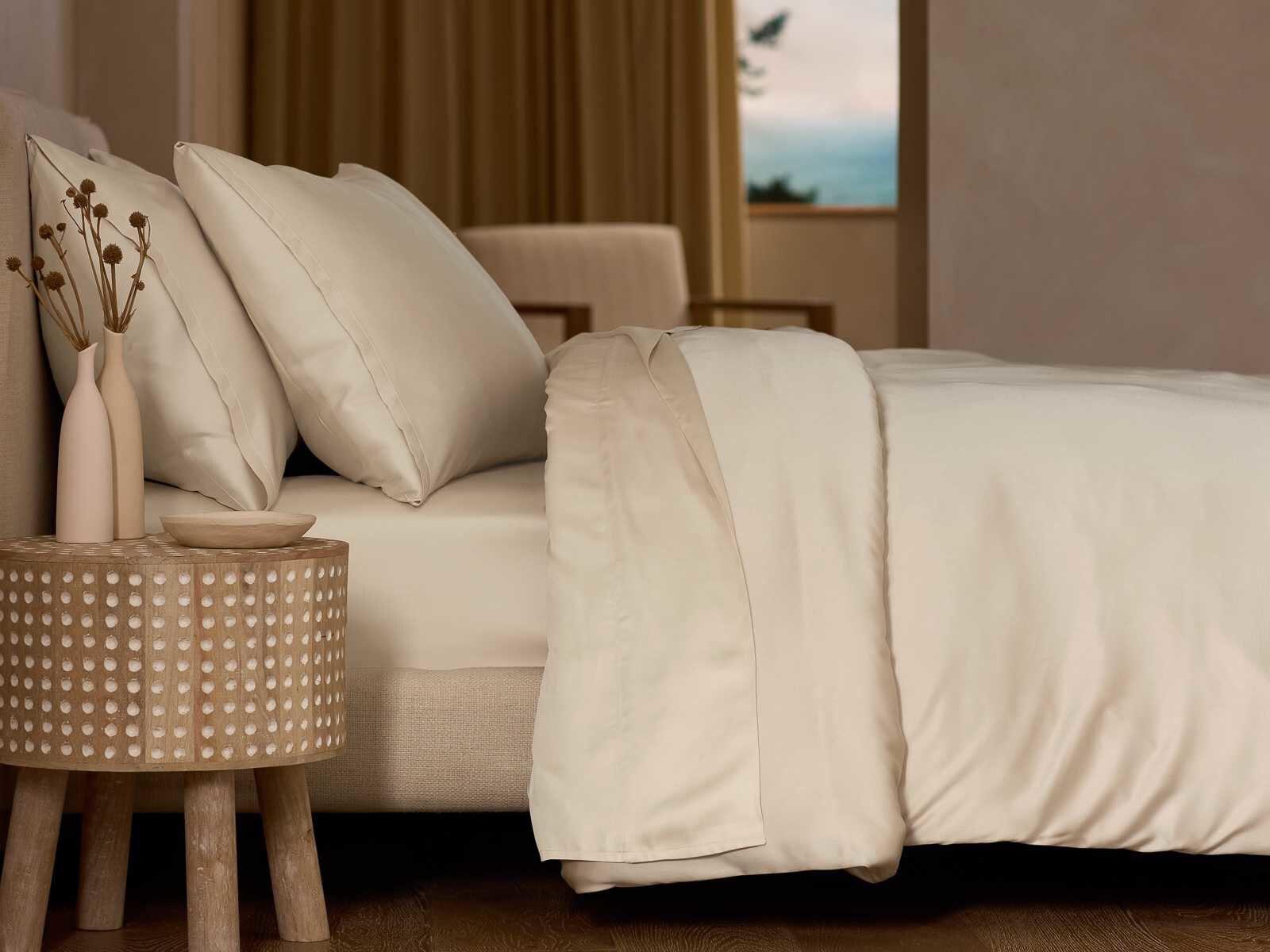
King pillowcases in neutral colors combine an elongated fit with understated shades such as ivory, cream, beige, taupe and gray. Common fabric choices include cotton, cotton and lyocell blends, polyester microfiber and cotton jersey, while percale and sateen describe fabric weaves rather than fibers. These differences matter because two pillowcases in the same shade can feel quite different against the face. Cotton percale typically has a crisp, matte finish and a lightweight feel, making it a natural match for sleepers who prefer bedding with a little structure. Cotton sateen generally feels smoother and more drapey, with a subtle sheen that gives a plain pillowcase visual depth without adding a pattern. Cotton and lyocell blends can offer a soft, fluid hand, though the balance of fibers and the weave affect the finished texture. Jersey is a knit fabric with gentle stretch and the familiar softness of a well-loved T-shirt. Polyester microfiber often has a finely brushed surface and resists wrinkling, appealing to anyone who prefers a softly finished bed without much ironing. Linen has a more textured feel and a relaxed appearance, while silk provides a distinctly smooth surface and requires closer attention to care instructions. Thread count alone does not capture these differences; fiber quality, yarn construction and finishing also influence comfort and durability. Color adds another layer of choice. Cream and ivory bring a softer contrast to dark wood furniture, beige complements woven textures, and taupe bridges brown and gray accents. Gray can look understated beside white sheets or create a layered effect with charcoal bedding. A neutral shade does not have to disappear into the room: a matte pillowcase beside a subtly lustrous duvet can create contrast through texture instead of color. Undertones are worth noticing, too. A yellow-leaning ivory and a pink-leaning beige may look different together even though both belong to a neutral palette. For a bed with a patterned comforter, a solid pillowcase can echo one quiet background shade, giving the eye a resting place without requiring every piece of bedding to match exactly.
Fit is especially important with king pillowcases because the pillow and its cover are not necessarily the same length. A typical king pillow measures about 20 by 36 inches, while many king pillowcases measure approximately 20 by 40 inches to provide extra fabric at the opening. Dimensions vary by manufacturer and design, so the stated measurements offer a more reliable comparison than the size name alone. Pillow loft also affects how a case sits. A full, high-loft pillow takes up more of the cover’s interior space, while a flatter pillow may leave the fabric looking looser along the edges. A properly proportioned case should cover the pillow without compressing it excessively or leaving the seams under constant tension. Standard and queen pillowcases are generally shorter and may not fully cover a king pillow, even when the widths seem similar. Closure style changes both appearance and everyday use. An open-ended pillowcase leaves extra fabric beyond the pillow, creating a familiar, easygoing finish. An envelope closure uses an overlapping flap to help conceal the pillow and keep it contained. A zippered closure offers a more enclosed fit, although the zipper’s placement and construction matter for comfort. Pillowcases also differ from decorative shams, which may have borders, embellishments or fabrics better suited to display than nightly contact. King pillowcases are intended for elongated pillows, not exclusively for king mattresses; the right arrangement depends on the bed’s width and how much space the pillows occupy. Two king pillows can create a broad backdrop on a spacious bed, while one may suit someone who likes an extended pillow for reading or resting. Neutral colors make these larger shapes easier to integrate with existing bedding. A pair of taupe cases can anchor a pale duvet, while ivory cases can lighten the appearance of a dark upholstered headboard. Subtle details such as even stitching, secure hems and smoothly finished seams contribute to a tidy appearance and help the cases hold up to repeated handling.
Care requirements can make one fabric a better everyday match than another, particularly when pillowcases are washed frequently. The care label should determine the washing method, drying settings and whether ironing is appropriate, since blends, finishes and closures can change what a fabric tolerates. Many cotton and polyester microfiber pillowcases are machine washable, while silk and some specialty fabrics may require a gentler routine. Cotton can shrink, especially when exposed to excessive heat, so maintaining the recommended care settings helps preserve the intended fit. Overdrying can also contribute to wear, and detergent residue may leave fabric feeling less soft than expected. Separating light neutrals from dark laundry helps reduce the risk of color transfer, but a pale shade is not a reason to assume that bleach is suitable. Beige, ivory and gray are dyed colors, and whitening treatments can alter their appearance or damage certain fibers. Facial products, hair treatments and makeup may leave marks on pillowcases, making fabric-specific stain care useful even when the overall shade is forgiving. An extra pair allows used cases to move into the laundry without interrupting a coordinated bedding arrangement. For households that prefer a brighter foundation,
White King Pillowcases provide a related color option that can sit alongside cream, taupe or gray bedding. Neutral king pillowcases also work well in guest bedrooms, where a restrained palette can complement different duvet covers and quilts over time. As a housewarming or wedding gift, they are most useful when the recipient’s pillow size, preferred fabric feel and laundry habits are known. Someone who enjoys crisp sheets may appreciate percale, while someone drawn to relaxed textures may prefer jersey or linen. Whether used in a primary bedroom or kept as a fresh change for visitors, the strongest match brings together the right dimensions, a comfortable surface and care requirements that fit everyday life. That combination gives a simple bedding layer a practical role beyond its color.