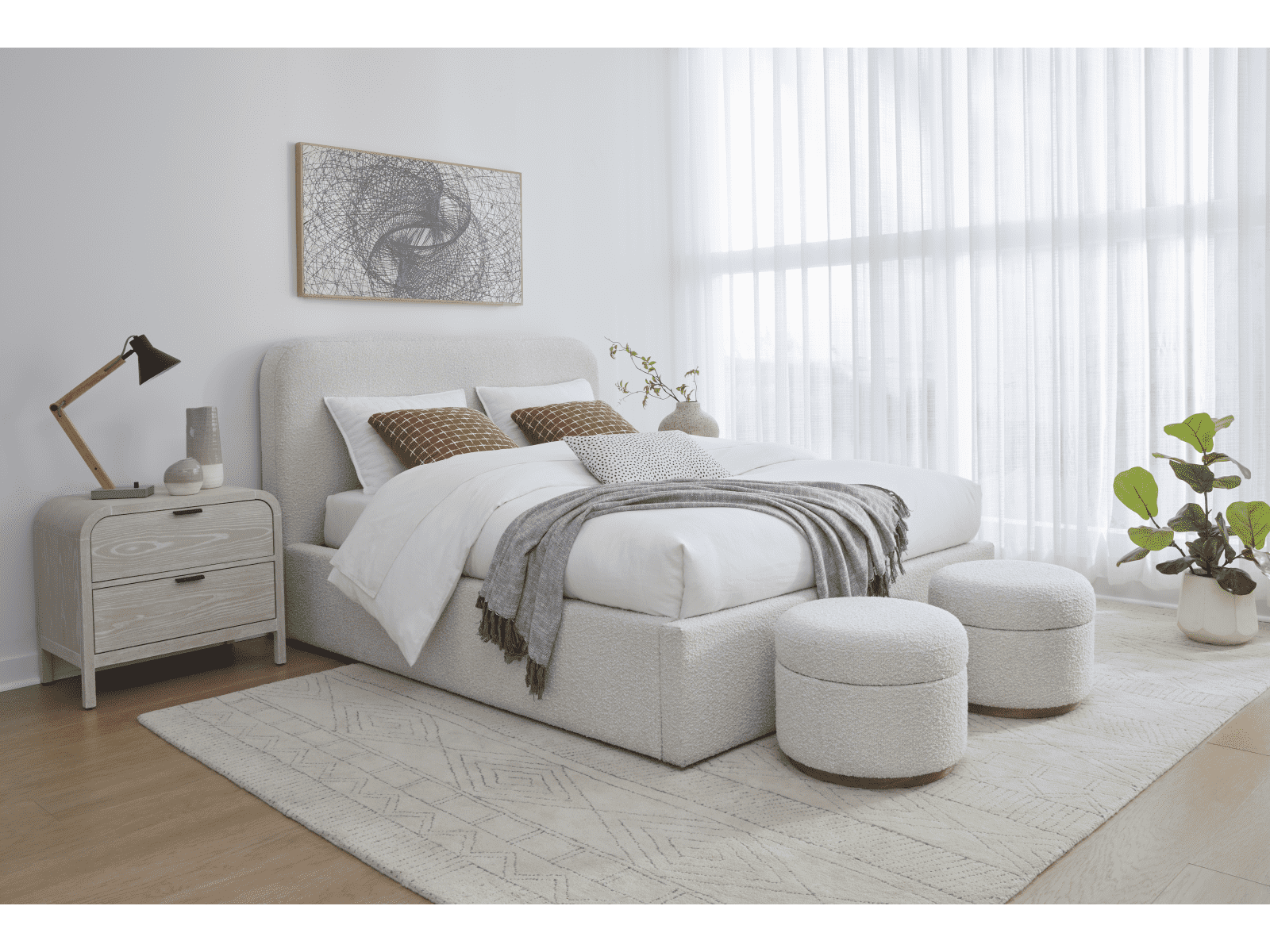
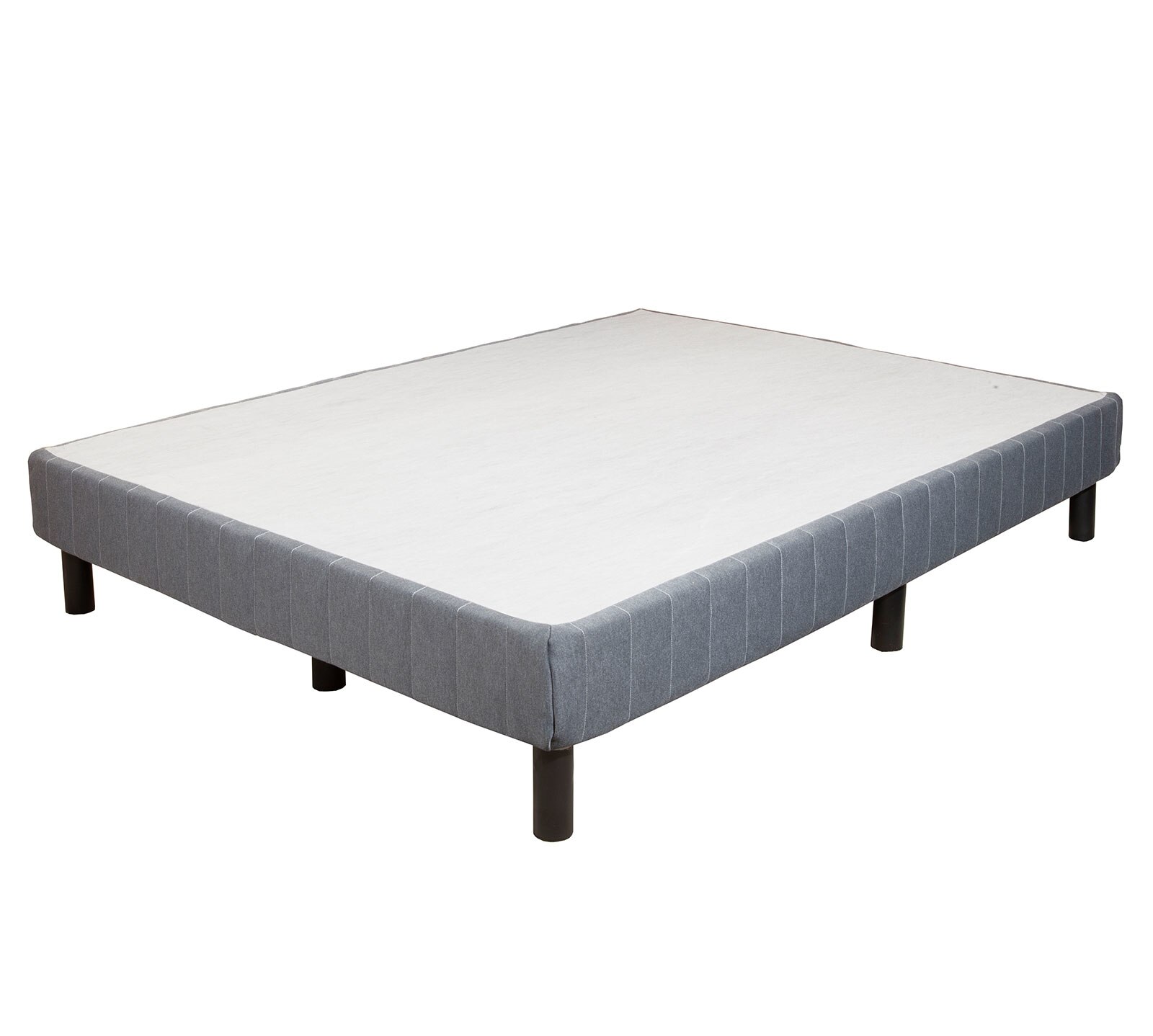
Platform beds with brown accents combine a mattress-supporting base with brown details such as wood rails, stained legs, upholstered panels or a contrasting headboard. The brown may appear throughout the frame or in smaller touches against cream fabric, black metal or another finish. That flexibility makes the look at home in bedrooms ranging from clean-lined and contemporary to relaxed and traditional. A walnut-toned border can give a light upholstered bed a defined outline, while espresso-colored legs add contrast without making the entire frame visually dark. Lighter brown finishes tend to highlight grain patterns and subtle variations; deeper brown finishes create a more substantial visual presence. The finish name describes color rather than construction, so a walnut-colored surface is not necessarily made from walnut wood. Solid wood, wood veneer and engineered wood can all contribute to the appearance, with different construction details and care needs. Solid wood may show natural differences in grain and color, while veneer places a thin layer of real wood over a supporting core. Engineered wood can provide a consistent surface beneath a decorative finish, though durability depends on the complete construction rather than the material name alone. Upholstered sections introduce another texture, whether the effect is a woven fabric panel, smooth leather or leather-look upholstery. These combinations can help a bed connect with furniture that does not match exactly. Brown legs might echo a dresser’s handles, for example, while a brown headboard border picks up the tone of a nearby bookshelf. Matching every wood finish is not necessary; repeating a similar undertone can make the room feel considered without looking overly coordinated. Against ivory bedding, brown trim creates definition. Alongside charcoal textiles, it feels quieter and more understated. The size and placement of the accents matter, too: a narrow rail keeps the effect subtle, while a broad wood headboard becomes a stronger focal point behind pillows. Brown accents can anchor a room visually while leaving plenty of room for personal touches, from patterned bedding to a favorite reading lamp.
The defining feature of a platform bed is its built-in mattress support, typically a slatted system or solid deck designed to hold a compatible mattress without a separate box spring. Exact requirements vary, so the bed’s support specifications and the mattress manufacturer’s instructions should align. Slat spacing, center support and weight capacity are more important to everyday performance than the color of the frame. Some mattresses require closely spaced slats or a particular support surface, and larger bed sizes may need a center rail with legs that reach the floor. A solid deck and an open slat system also allow different amounts of airflow beneath the mattress. Checking those details helps protect both comfort and the mattress’s intended performance. Fit involves more than selecting a twin, full, queen or king size. A headboard, projecting side rails or an upholstered footboard can make the frame noticeably larger than the mattress itself. The overall dimensions need to work with the room’s door swing, dresser drawers and walking space on either side. In a narrow bedroom, a frame with legs set close to its outer edges may feel different to move around than one with recessed supports. Mattress thickness also changes the finished proportions. A tall mattress can hide much of a low headboard, while a thinner mattress may leave more of the brown-accented panel visible. Together, mattress thickness and platform height determine how high the sleeping surface sits. A lower profile can create an open, grounded appearance, but a higher surface may be more practical for someone who finds standing from a low seat difficult. Underbed clearance deserves attention as well. An open space beneath the rails can accommodate suitable storage containers and make floor cleaning easier, provided the center supports do not block access. Where a design includes drawers, those drawers need room to extend without hitting a nightstand or wall. These practical dimensions help a bed serve the bedroom comfortably, whether it supports nightly rest in a primary bedroom or occasional stays in a guest room.
Everyday durability comes from the frame’s joints, hardware, support system and surface treatment working together. Brown accents can make grain and texture especially noticeable, so the way a finish responds to regular contact matters. A frequently handled footboard, for instance, has different demands than a decorative panel behind the pillows. Smooth, sealed surfaces are often straightforward to dust, while textured upholstery and deeply recessed details may need more careful attention. Routine care should follow the manufacturer’s directions: a soft cloth can remove surface dust from many finished wood areas, and an appropriate upholstery attachment can help lift debris from fabric. Cleaning products should be approved for the particular surface, since wood finishes, leather and leather-look materials do not all respond the same way. Excess moisture can affect wood-based components, and strong cleaners may change the appearance of a finish. Moving the bed by lifting rather than dragging helps limit strain on joints and legs. Hardware may also need occasional inspection and tightening as directed, especially after a move or reassembly. For a shared bedroom, the frame’s stated capacity should account for the mattress and everyone using the bed, not just the mattress alone. In a guest room, a familiar mattress height and unobstructed paths beside the bed can make the space easier to use. Brown accents offer plenty of styling flexibility in either setting. A rectangular wood border can echo straight-edged nightstands, while rounded edges create a gentler contrast with square furniture. For another expression of that softer outline,
Platform Beds With Elegant Curves offers a related design direction. Whether the brown appears in a slim pair of legs or a prominent headboard, its strongest contribution is often the connection it creates between the bed and the rest of the room. Paired with suitable mattress support, comfortable proportions and manageable care needs, that visual detail becomes part of a bedroom designed for daily use.