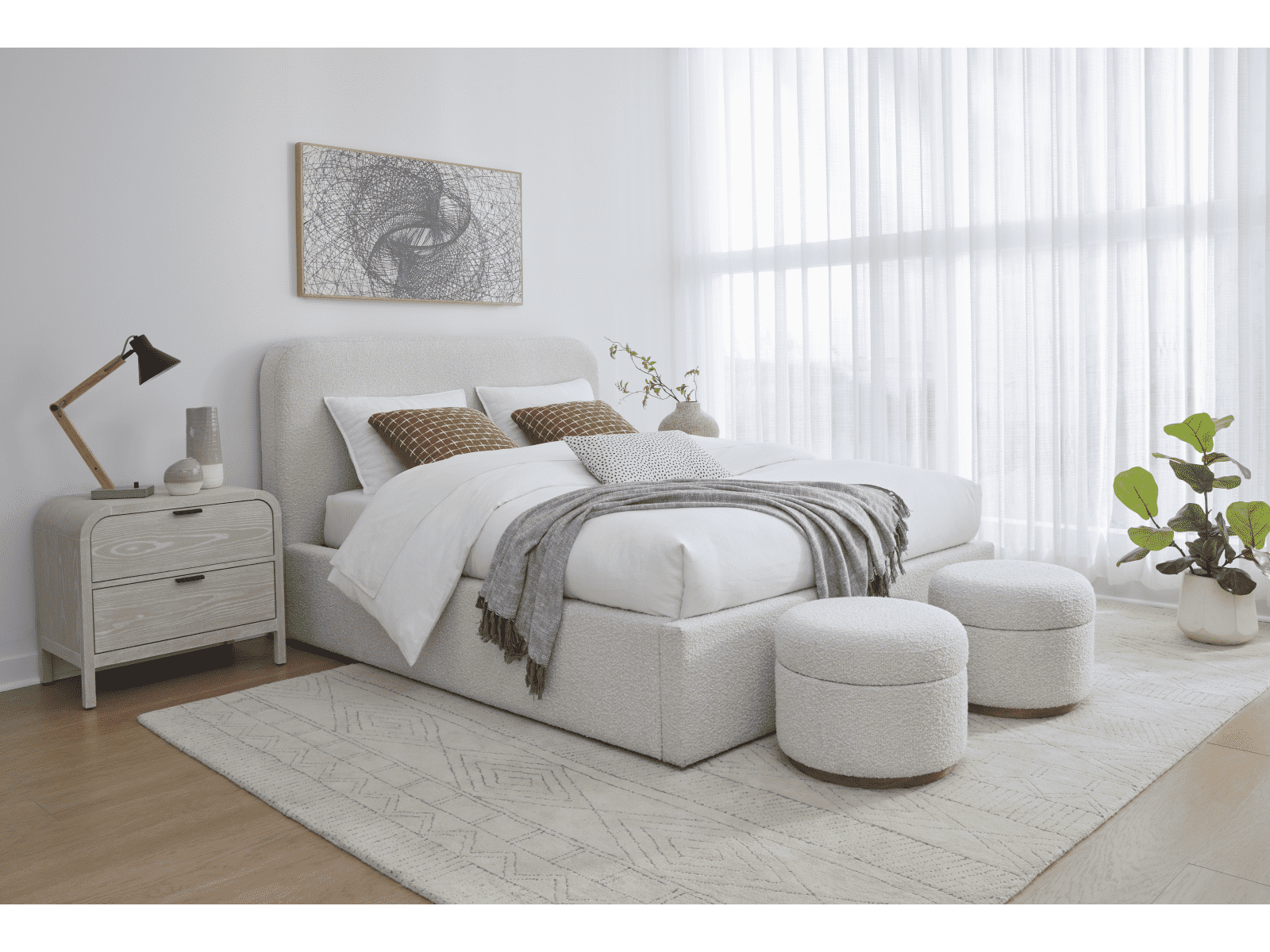
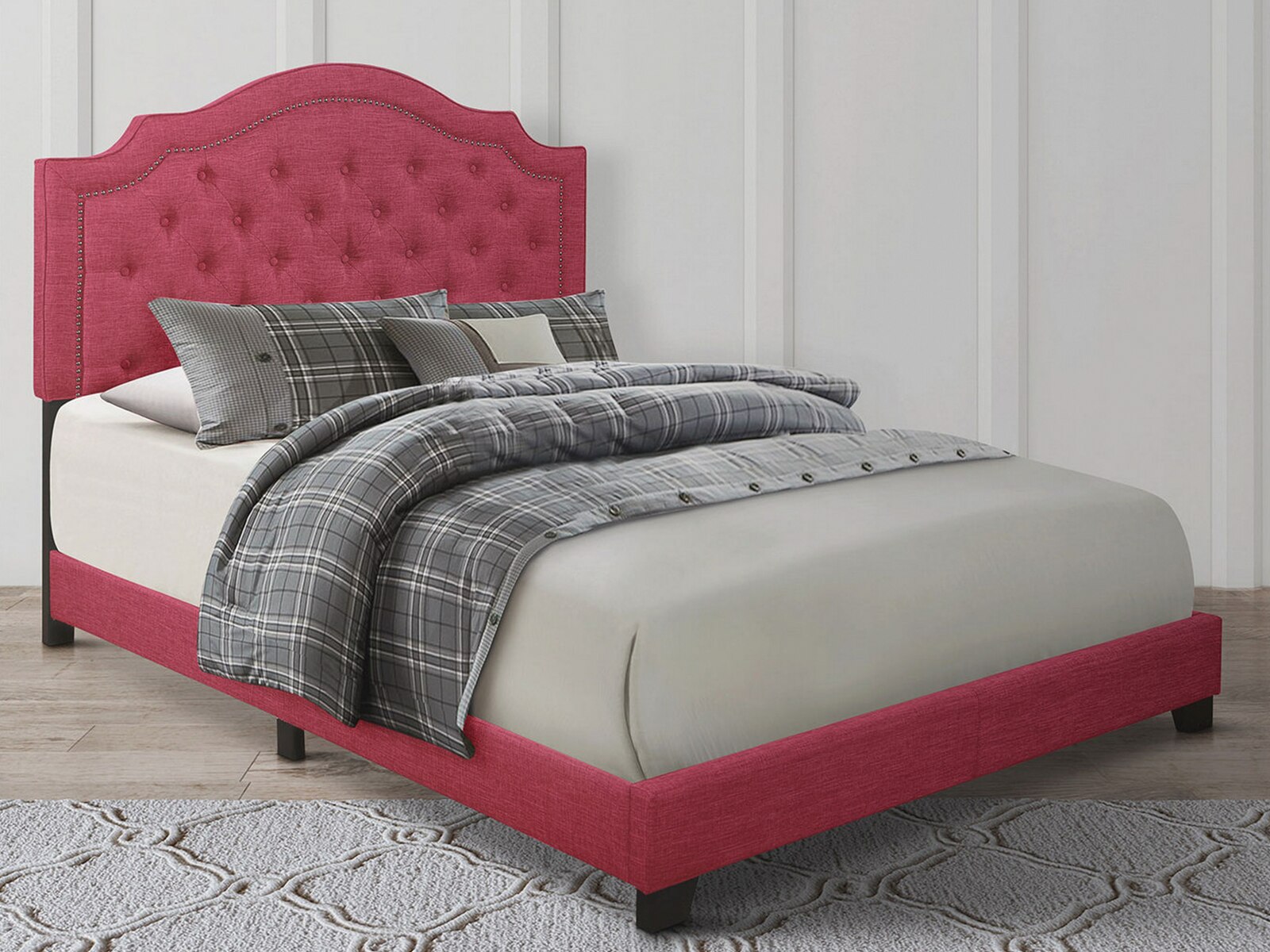
Queen bed frames with soft headboards combine a mattress-supporting frame with a padded, upholstered backrest, creating a cushioned surface for sitting up in bed and a finished focal point for the bedroom. The headboard typically has a rigid inner structure covered with padding and fabric, while the frame supports the mattress through slats, a platform or a compatible foundation. A soft headboard does not change mattress firmness; its comfort comes from the cushioning between the upholstery and the structure beneath it. For someone who reads before bed or watches a favorite show from beneath the covers, that padding can make leaning back more comfortable than resting against an exposed wood or metal surface. A pillow can add support during longer stretches of sitting. Upholstered designs bring a softer finish to
queen size bed frames with a headboard, with details that range from simple, smooth panels to tufting, vertical channels and gently curved edges. Those differences affect more than appearance. A flat padded panel provides a relatively even surface behind pillows, while deep tufting creates texture and small recesses that need attention during cleaning. Winged edges can give the bed a more enclosed appearance, though their projection should be included when checking the frame’s overall width. Woven fabrics offer visible texture, velvet has a distinctive nap and sheen, and smoother upholstery creates a more tailored look. Fabric color also changes how much the bed stands out: a shade close to the wall color can make a substantial headboard feel quieter, while a contrasting tone gives it more visual presence. These frames suit shared bedrooms, spacious solo sleeping arrangements and guest rooms where a queen mattress fits comfortably. Their appeal is practical as well as decorative: the padded headboard provides a welcoming place to settle in, while the upholstered frame can help connect bedding, rugs and other furniture into a cohesive room.
Fit starts with the mattress, but the mattress dimensions are only part of the picture. A standard queen mattress measures approximately 60 inches wide by 80 inches long, and the frame’s exterior is generally larger because of its rails, upholstery and headboard. Thick side panels, a projecting footboard or broad headboard wings can add meaningful inches to the footprint. In a bedroom with a dresser opposite the bed, that extra depth can determine whether drawers open fully and whether there is a comfortable path around the foot of the mattress. Headboard height matters, too. A taller mattress and foundation may cover much of a shorter padded panel, while a lower mattress may reveal more upholstery than expected. The useful measurement is how much headboard remains visible above the assembled sleep surface, not simply its height from the floor. Support requirements deserve equal attention. Some queen frames are designed to hold a mattress directly on slats or a solid platform; others require a separate foundation. Slat spacing, center supports, weight limits and mattress requirements should align with the manufacturer’s specifications. An upholstered appearance alone does not establish compatibility with an adjustable base, and a frame that surrounds one may have different installation requirements from a conventional platform. Underneath the fabric, structural materials may include solid wood, engineered wood, metal or a combination of these. Durability depends on the complete construction rather than the upholstery alone: secure joints, suitable center support and properly installed hardware all contribute to stability. Padding density and fabric construction influence how the headboard holds its shape with repeated contact. For everyday use, the most useful combination is a supportive frame, upholstery suited to household habits and a headboard positioned where its cushioning can be enjoyed. Rounded padding may soften an edge, but it does not eliminate the need for clear walking space around the bed.
Care is part of living with an upholstered bed, especially when the headboard becomes a regular resting place for pillows, hair and hands. Dust can collect along seams, buttons and channels, so gentle cleaning with an upholstery attachment, when permitted by the care instructions, helps keep those details tidy. Different fabrics respond differently to moisture and cleaning solutions; the attached care label should determine whether spot cleaning is appropriate and which method to use. Testing an approved cleaner in an inconspicuous area can help reveal color transfer or changes in texture before treating a visible mark. Saturating the upholstery can affect the padding beneath it, making a light, controlled approach important. Velvet and other fabrics with a visible nap may show shading where they are brushed or leaned against, while loosely textured weaves can catch on jewelry or pet claws. Households with pets may prefer a tightly woven surface with fewer deep creases, although no upholstery should be assumed to resist scratching or staining without supporting material specifications. Keeping pillows between the sleeper and the headboard can reduce direct contact with hair and skin products. Secure connections matter over time as well: movement or new noise may signal that hardware needs checking according to the assembly instructions. Everyday details help shape the choice beyond fabric care. A low-profile frame may suit someone who prefers a streamlined bedroom, while a higher sleep surface may be more comfortable for another person to get into and out of. A guest room benefits from an arrangement that leaves space for bedside essentials and a clear route to the door. In a shared room, the headboard’s width and padding should work for both sleepers rather than looking balanced only when the bed is made. A frame can also be a thoughtful household gift for a move or bedroom refresh when the recipient’s mattress size, room measurements and style preferences are known. With the structure, proportions and upholstery considered together, a queen bed frame with a soft headboard can serve as both dependable bedroom furniture and a comfortable backdrop for everyday routines.