Soft polyester comforter sets bring a smooth, inviting feel to the bed while making it easier to coordinate the main layers of bedding. A set typically includes a comforter and matching pillow shams, though the number and type of pieces vary, so the contents deserve a closer look before choosing. Polyester can be used in both the outer shell and the fill, with each contributing something different to the finished feel. The shell is the fabric that touches the skin; the fill provides loft and cushioning. Microfiber describes fabric made with very fine fibers, often polyester, rather than a separate type of fill. A brushed microfiber shell has a gently softened surface that can feel almost peach-like against the hand, while a smooth woven polyester shell may have a sleeker finish. Neither texture tells the whole story about weight or thickness. A comforter with a thin layer of fill can drape closely around the body, while a more generously filled design creates a fuller outline across the bed. Quilting helps hold that fill in place, whether the stitching forms small squares, broad channels or a subtle geometric pattern. Secure stitching and evenly distributed fill are worth noticing because they help the comforter maintain a consistent feel instead of collecting most of its cushioning at one end. Polyester is generally less absorbent than cotton, but breathability and moisture comfort also depend on the weave, fabric finish and amount of fill. Someone who perspires during sleep may prefer a lighter construction paired with breathable sheets rather than assuming that every soft comforter will feel alike. For a main bedroom, a teen’s room or a guest space, the most useful choice balances a pleasant surface with the weight, drape and maintenance routine that suit the person sleeping beneath it.
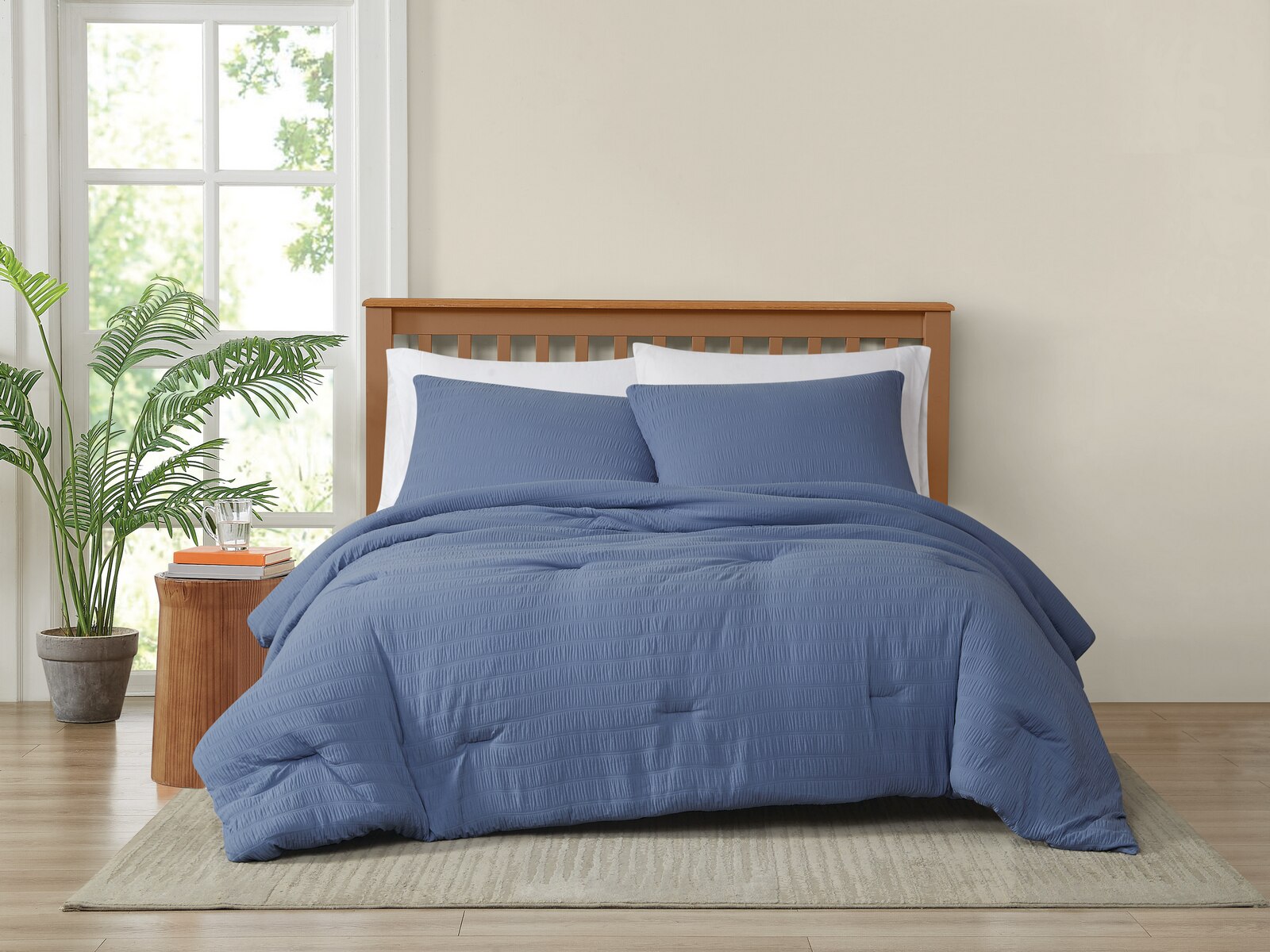
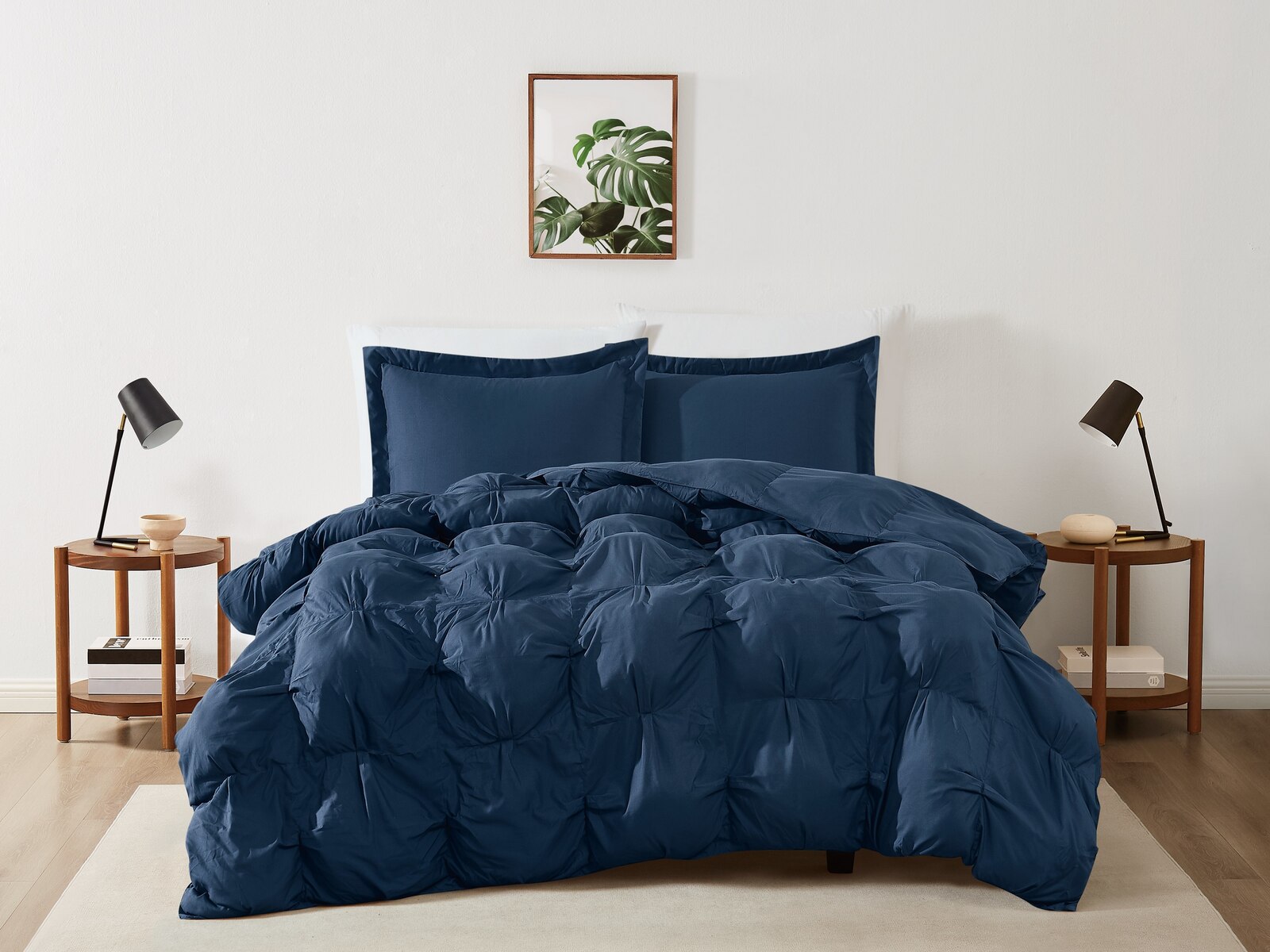
Fit makes a noticeable difference in how a soft polyester comforter set looks and functions, especially when the mattress is deep or the bed sits high above the floor. Size names provide a starting point, but the comforter’s actual width and length are more helpful for judging coverage. Measure the mattress and consider how far the fabric should fall on each side, allowing for a topper if one is used. A comforter that barely reaches the mattress edges can leave the bed looking unfinished, while an especially generous overhang may bunch against a low frame or touch the floor. On a shared bed, enough width can also help each sleeper keep a comfortable amount of coverage. Twin XL mattresses need particular attention because their extra length is not reflected in every twin-size comforter’s dimensions. Similarly, combined full and queen sizing can produce a different drape on each mattress. Pillow shams deserve the same dimensional check: standard and king shams are designed for different pillow sizes, and decorative shams do not always replace the pillowcases used for sleeping. If sheets are included, check their dimensions and fitted-sheet pocket depth separately from the comforter measurements. Once the fit is right, color and surface detail can shape the room without requiring an entirely new arrangement. A solid comforter creates a calm backdrop for patterned sheets, while stitched textures add definition to a bed dressed in one color. Pleats offer a more tailored appearance, though raised details may need gentler handling than a flat surface. A reversible design can provide two coordinated looks when both sides are intended for use. Shoppers drawn to a more pronounced plush texture can also explore
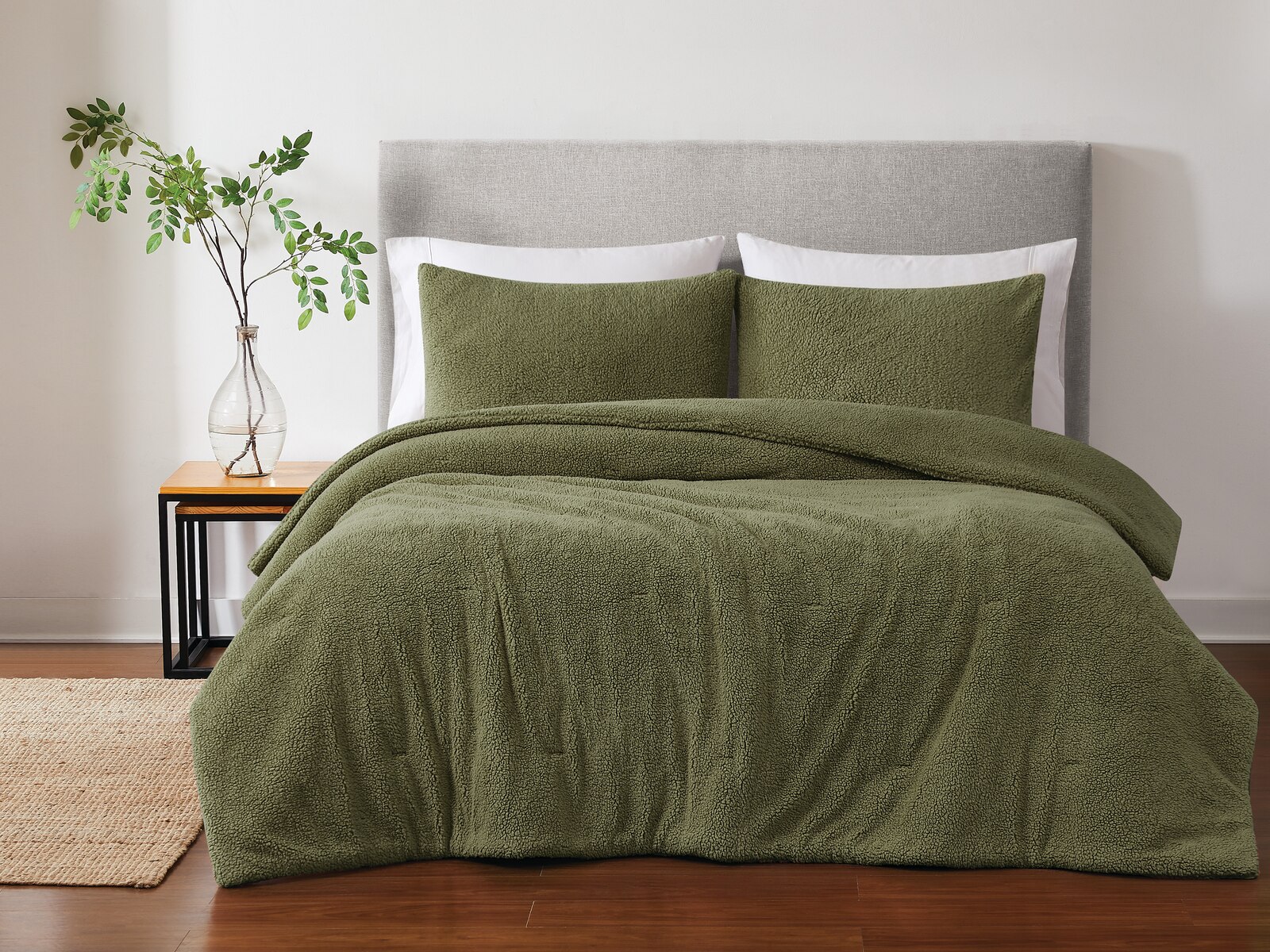
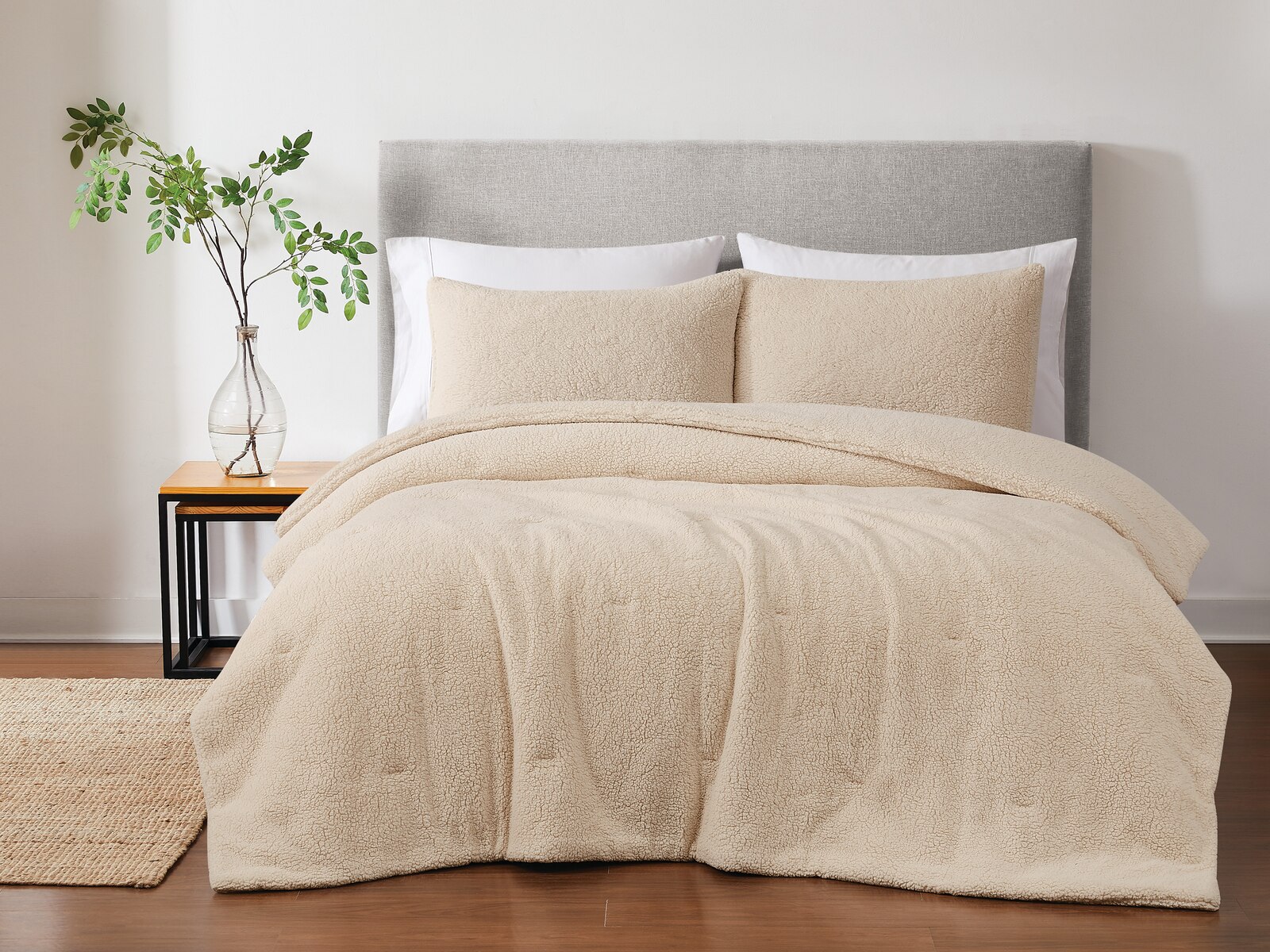
Soft Plush Comforter Sets to compare that surface feel with smoother polyester finishes. For gifting, knowing the recipient’s mattress size, pillow size and preferred fabric texture is more useful than choosing by color alone.
Everyday care is another reason to consider polyester bedding, but easy upkeep should be confirmed on the care label rather than assumed from the fiber name. Many polyester comforters and shams are machine-washable, and the fabric often resists wrinkling and dries relatively quickly. Decorative trims, special finishes or a particularly substantial fill can change those care requirements. A comforter needs enough room to move freely in the washer; pressing it tightly into a small drum can prevent thorough cleaning and rinsing. Larger bedding may require a larger-capacity machine even when it is labeled machine-washable. Follow the recommended cycle and detergent guidance, treat marks according to the fabric instructions and avoid bleach unless the label specifically permits it. If machine drying is allowed, use the recommended setting and pause as needed to gently redistribute the fill. The shell may feel dry before the thicker stitched sections do, so check the comforter throughout before returning it to the bed or putting it away. Storing bedding while it is still damp can lead to odors and mildew. Between washes, smoothing the comforter and gently shaking it out can help restore its shape and reveal small problems before they become larger ones. Check for loose seams, snagged threads or areas where the fill has shifted, particularly on bedding that gets frequent use. Polyester is a durable fiber, but the finished fabric can still pill from friction or catch on rough surfaces, jewelry and pet claws. A tighter, smoother construction may be more practical for a frequently used bed than delicate raised embellishments. For anyone with skin sensitivities, review the stated materials and any independent textile testing rather than treating softness or down-alternative fill as proof that a set will prevent irritation. A washable polyester set can be a practical fit for a first apartment, a college bedroom or a guest bed where straightforward maintenance matters. Choosing with the sleeper’s habits in mind helps make the set comfortable to use, manageable to care for and easy to work into an established bedding routine.