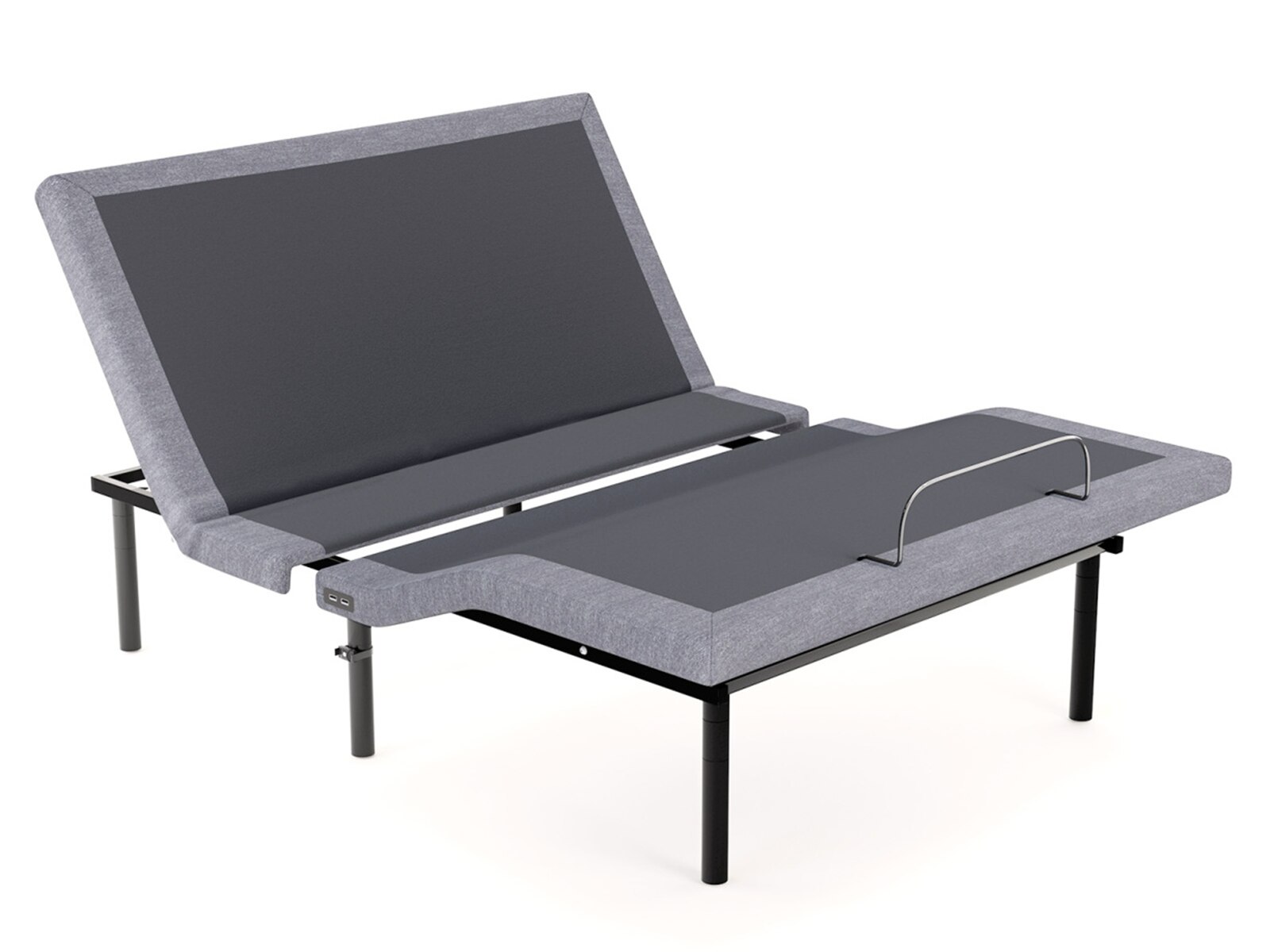
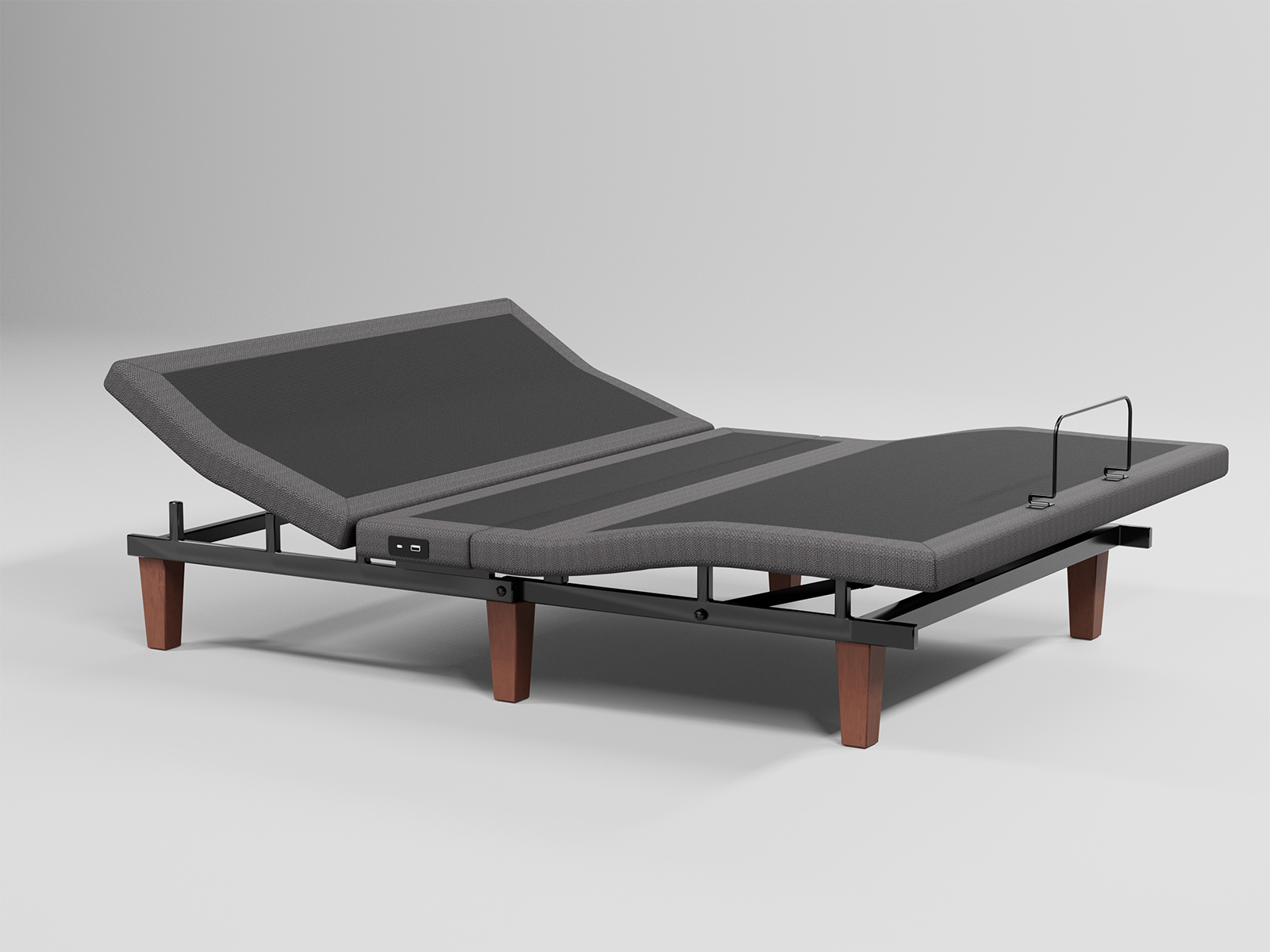
A split adjustable bed frame combines two motorized bases that let each sleeper raise or lower their side of the bed independently. Most commonly used in a split king arrangement, this setup gives partners separate control over head and foot positions while keeping their sleeping spaces side by side. One person can sit up with a book while the other stretches out flat, or both can settle into slightly different angles without having to agree on a single position. That flexibility makes a split adjustable base especially useful for couples with different bedtime routines, preferred resting positions or comfort needs. Unlike a standard bed frame, which holds a mattress in one fixed position, an adjustable base has an articulated platform that moves beneath a compatible mattress. Depending on the design, controls may include a handheld remote, wireless remote or app, with separate buttons for the head and foot sections. Some bases also offer saved positions, allowing a sleeper to return to a favorite setting without adjusting each section again. A preset commonly called zero gravity raises the upper body and legs into a supported resting position; the exact angles and available adjustments vary by model. This setting is intended for comfort rather than as a medical treatment, and individual preferences still matter. For someone who likes to unwind with a show before sleep, gentle head elevation may provide a more comfortable alternative to stacking pillows behind the shoulders. For someone who prefers to rest with their legs raised, an adjustable foot section offers that option without rearranging cushions. Certain split bases can also be synchronized so both sides move together, although that capability should be confirmed rather than assumed. Independent movement is the defining benefit: each partner can make small changes to their own position, whether settling in for the night or spending a quiet morning reading, while the other side remains at its chosen angle.
Fit involves the mattress, the base and the furniture around them. A typical split king configuration uses two Twin XL mattresses, each measuring 38 by 80 inches, for a combined sleeping surface of 76 by 80 inches—the same standard dimensions as a king mattress. The two mattresses remain separate, which allows each side to bend independently and can also accommodate different mattress feels. A California King has different proportions, so its mattresses and bedding are not interchangeable with a standard split king setup. Manufacturer measurements remain important because the base footprint, leg placement and surrounding furniture can affect how the entire bed fits in the room. Mattress compatibility matters just as much as size. Many memory foam, latex and hybrid mattresses are designed to flex with an adjustable platform, but construction varies, and compatibility should be verified for the exact mattress. A mattress that is too rigid may not follow the base properly, while one that is not approved for adjustable use may have warranty restrictions. For shoppers comparing a fully divided sleeping surface with one that separates primarily at the upper portion,
Split Head Adjustable Bed Frames represent a distinct configuration with different mattress and bedding requirements. Head and foot movement depend on the particular design, so the shape of the mattress alone does not establish how every section operates. With a full split setup, separate Twin XL fitted sheets allow each mattress to move on its own, while a shared king top sheet or comforter can preserve the familiar appearance of one bed. Deep-pocket sheets may be helpful for thicker mattresses, provided their pocket depth matches the mattress height. The meeting point between mattresses is another practical consideration. Retainer bars or approved attachment systems can help keep mattresses positioned on their bases, but accessories that bridge the center may affect independent movement. An existing decorative bed frame may surround an adjustable base, though interior clearance, support slats and headboard attachment requirements need to match the base design.
Construction and everyday usability help determine how well a split adjustable bed frame suits a bedroom over time. Steel support structures, reinforced platforms and upholstered deck surfaces are common, with durability influenced by the quality of the joints, moving components and motors as well as proper use. Upholstery can soften the appearance of the base beneath the mattress, while the supporting structure does the work of holding and repositioning the sleeping surface. Stated weight capacity should account for the mattress and sleeper on each side, along with any additional load allowed by the manufacturer; capacity may be listed per base rather than for the combined bed. Adjustable legs can change the overall height, which affects how comfortably someone gets into bed and how easily bedside essentials can be reached. A design described as zero clearance may be suitable for an approved platform surface without its legs, but not every base supports that arrangement. Bases that shift the platform back as the head rises may help keep the sleeper closer to the nightstand, a useful detail for reaching a lamp or setting down a book. Other features, such as underbed lighting, charging ports or massage functions, are conveniences rather than requirements for independent adjustment. A well-suited setup leaves room for the platform to move without contacting a headboard, wall or nearby furniture, and keeps power cords clear of moving parts. Routine care is usually straightforward: follow the upholstery cleaning instructions, avoid soaking electrical components and inspect accessible hardware as directed by the manufacturer. Bedding should remain clear of the mechanisms, and children and pets should be kept away from moving sections during adjustment. Assembly requirements, motor coverage and access to replacement controls are worth considering alongside the frame itself. The most useful split adjustable bed frame is one whose dimensions, mattress compatibility and controls fit daily habits, making separate comfort preferences easier to accommodate within a shared bed.