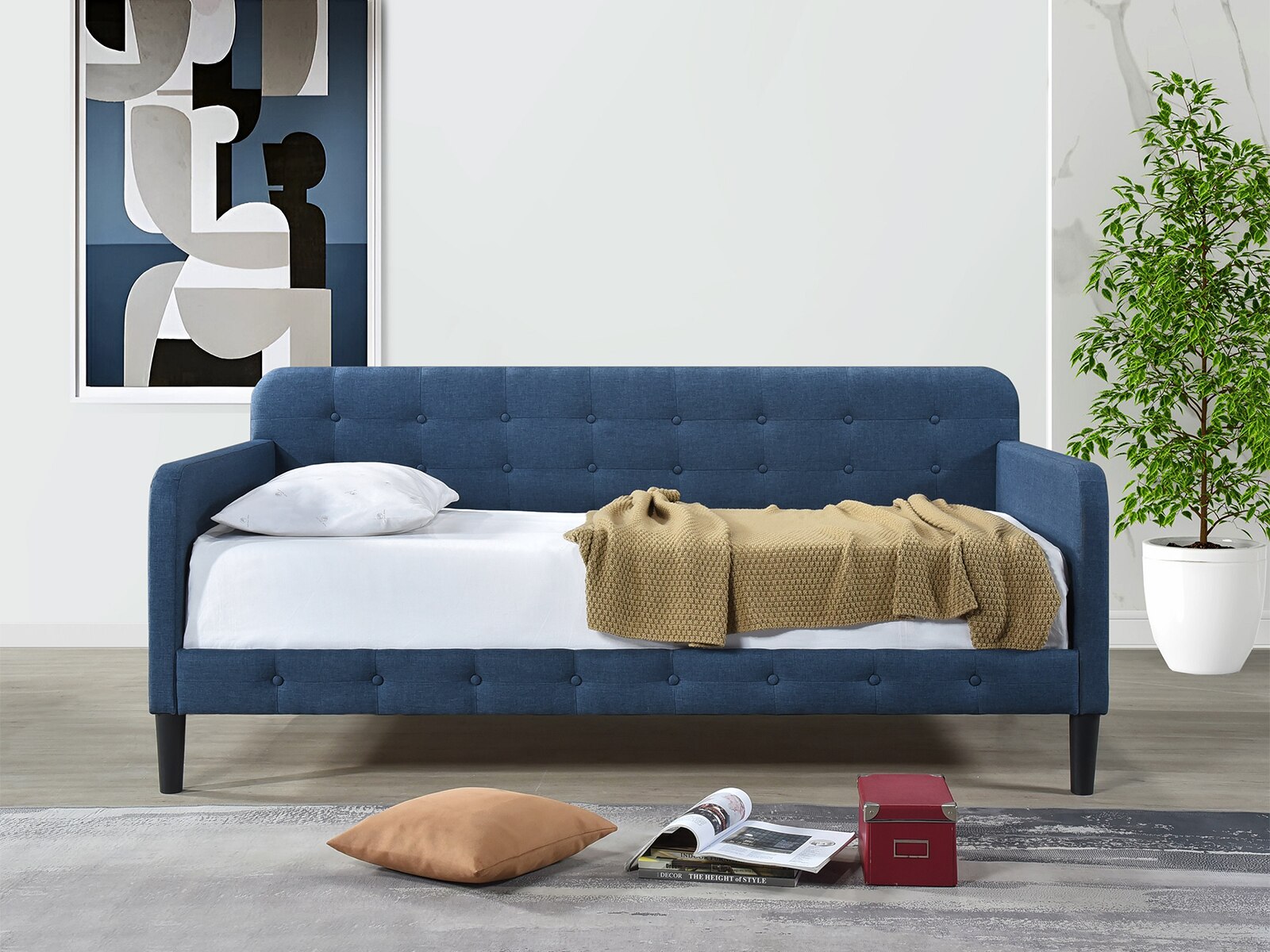
Twin size daybeds are space-conscious bed frames designed for a standard twin mattress, combining a place to sleep with sofa-like seating. A standard twin mattress typically measures 38 inches wide by 75 inches long, but the daybed’s overall dimensions are larger because of its frame, back and arms. That distinction matters in a home office that doubles as a guest room, a child’s bedroom with limited floor space or a reading nook that needs to accommodate overnight visitors. Many daybeds have a back and two sides, creating an enclosed profile that works naturally against a wall. With supportive cushions arranged along the back, the sleeping surface becomes a comfortable spot for reading or conversation; removing those cushions makes room for a fitted sheet and sleeping pillow. Because a twin mattress is generally deeper than a sofa seat, the size and placement of back cushions influence how comfortably someone can sit upright. A daybed can serve as an everyday bed or an occasional guest bed, provided its frame, mattress support and weight capacity suit the intended sleeper. For children, age recommendations and safe placement deserve particular attention, including keeping the bed away from window cords and following the manufacturer’s assembly instructions. Adults benefit from checking both mattress length and usable sleeping space, especially when raised ends surround the mattress. For sleepers who need more legroom,
Twin XL Daybeds typically accommodate a mattress measuring 38 inches wide by 80 inches long, adding five inches of length without increasing the standard mattress width. In either size, a room feels more functional when there is space to walk alongside the bed, open nearby drawers and reach a nightstand without squeezing past the frame. Measuring doorways, hallways and the intended wall also helps account for delivery access and assembly space rather than relying on mattress dimensions alone.
Materials shape both the appearance of a twin daybed and the care it needs over time. Solid wood frames can bring visible grain and a substantial presence to a bedroom, while painted wood offers a smoother, more uniform look. Frames made with wood veneers or engineered wood vary in construction, so joint quality, support design and the manufacturer’s care directions matter alongside the surface finish. Metal daybeds often have slim rails or open backs that leave more of the wall visible, which can help a compact room feel less crowded. Their finish should be protected from scratches, and hardware may need periodic checking as directed by the manufacturer. Upholstered daybeds introduce fabric-covered surfaces around the mattress, softening the frame’s appearance and providing a backdrop for pillows. In a room used for crafts, snacks or visiting pets, the fabric’s cleaning instructions are especially relevant. Removable cushion covers, when included, may have different care requirements from the upholstery attached to the frame. Regular vacuuming with an appropriate attachment helps remove dust from seams, while prompt spot cleaning should follow the fabric label rather than a general household cleaning routine. Durability depends on more than the outer material: secure connections, properly installed center supports and a foundation matched to the mattress all contribute to a stable sleeping surface. Many daybeds support the mattress with slats or a metal deck, but a box spring is not automatically needed or appropriate. The frame and mattress requirements determine the correct foundation and slat spacing. Mattress height matters, too. A thicker mattress can leave less of the back and arms exposed and raise the sitting surface, while a thinner mattress changes the seat height and cushioning. For nightly use, mattress comfort should reflect the sleeper’s preferred position and support needs rather than simply matching the frame’s appearance.
Twin daybed configurations can make a meaningful difference in how a shared room functions. A daybed with a trundle has a separate lower sleeping platform that pulls out from beneath the main bed, creating another place for an overnight guest without keeping a second bed open all day. The lower platform generally requires its own mattress, and its permitted mattress thickness may be more restrictive than the main bed’s. Clearance beneath the frame, bedding bulk and floor coverings can all affect whether the trundle moves freely and closes properly. There also needs to be enough open floor space to extend it fully without blocking a doorway or the route through the room. Some trundles remain near floor level, while others have a lifting mechanism; those differences affect setup and should be understood before use. Storage daybeds use the space beneath the mattress differently, with drawers or compartments for spare sheets, pajamas or extra blankets. Drawer fronts need room to open, and stored bedding should not interfere with moving parts or mattress supports. Expandable daybeds offer another approach, but their extended dimensions and mattress arrangements vary, so an expanded surface should not be assumed to match a standard king mattress. For a guest room that also serves as a workspace, the most useful configuration is often the one that leaves daily activities undisturbed: storage for linens, an accessible sleeping surface and enough room beside the desk. In a child’s room, accessible drawers can keep bedding close at hand, while a trundle may support occasional overnight visits when used within its stated limits. Everyday care helps preserve that flexibility. A properly fitted mattress protector helps shield the mattress from spills, fitted sheets should match its depth and decorative cushions need a separate resting place overnight. Checking connections according to the frame instructions, cleaning beneath the bed and keeping moving components unobstructed can support reliable use. With the right proportions and construction, a twin size daybed gives a room a defined place to rest without requiring it to serve only as a bedroom.