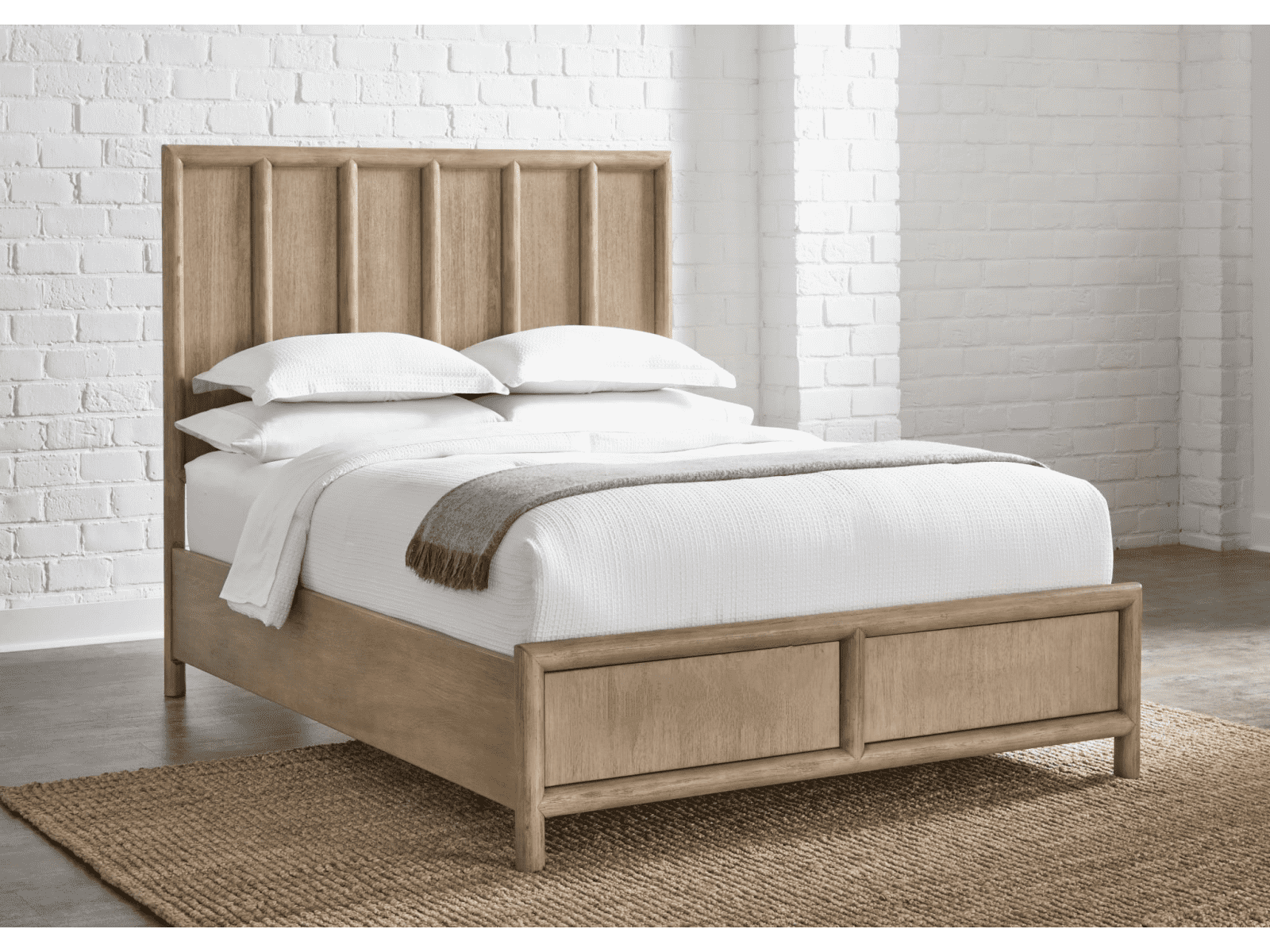
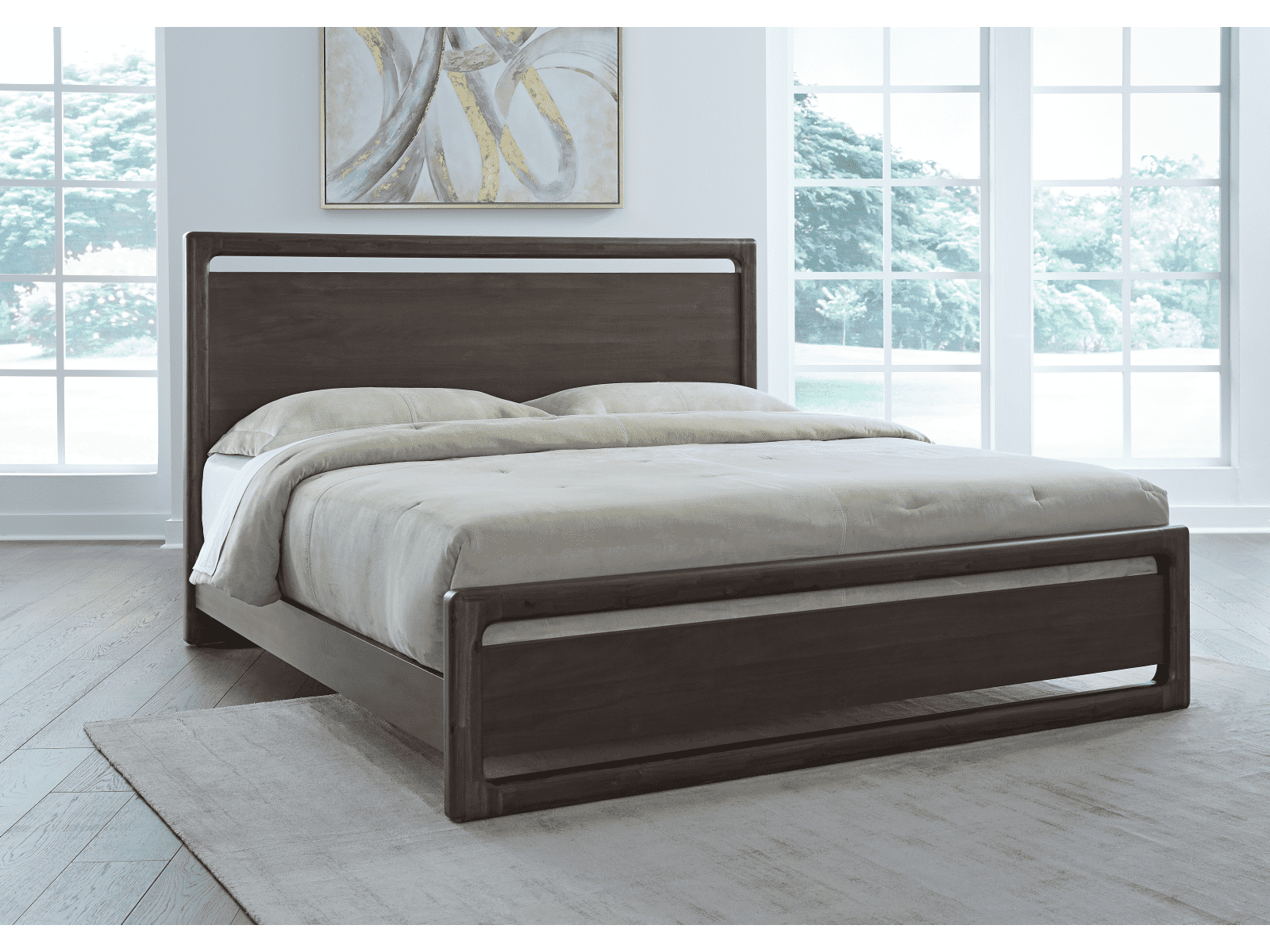
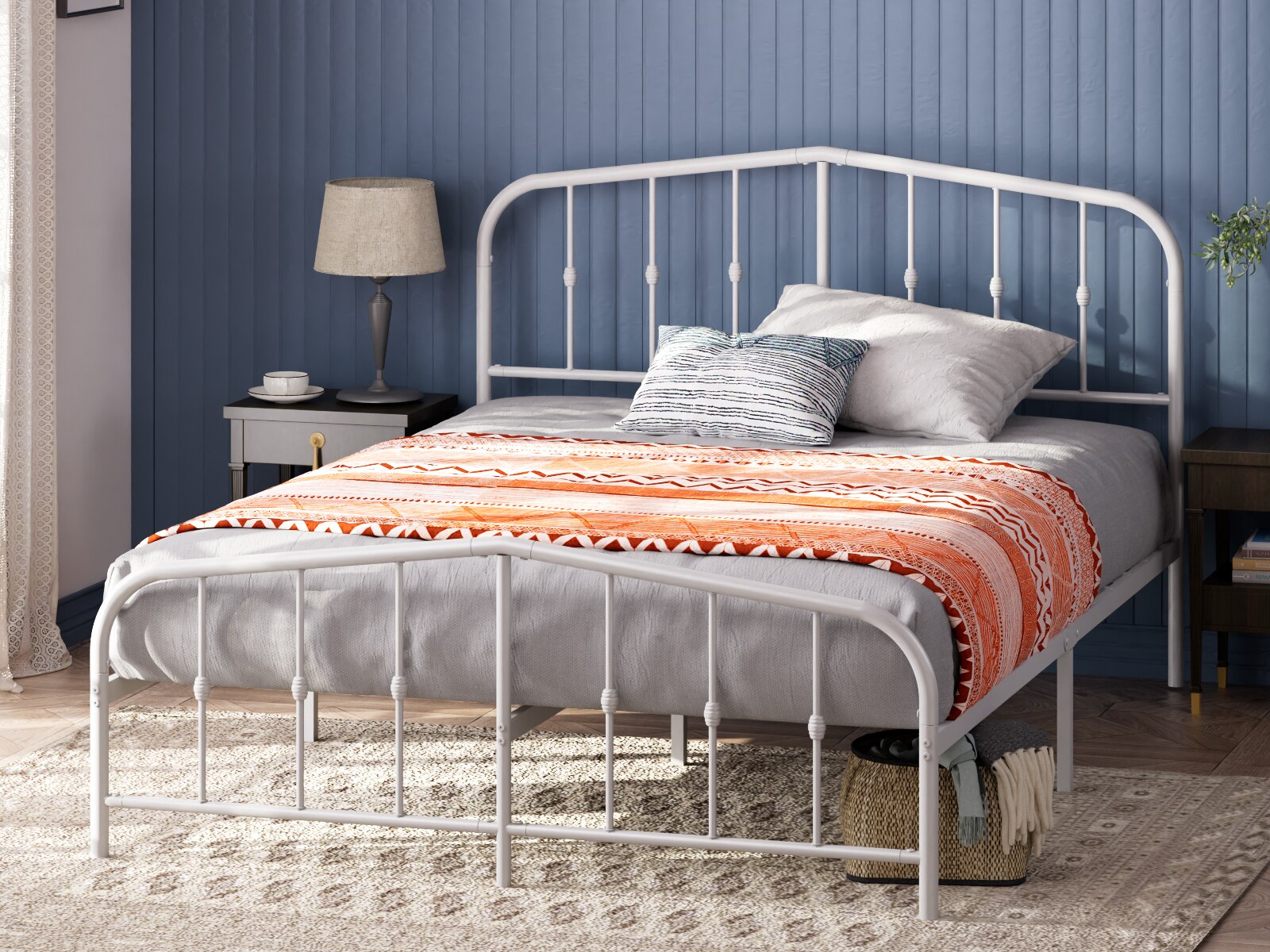
Wood bedroom furniture gives a sleep space a sense of character that comes from more than color alone. Visible grain, subtle variations in tone and the shape of an edge can make a room feel crisp and tailored or relaxed and lived-in. A low-profile wood bed can leave more wall space open, while a substantial headboard creates a stronger focal point behind pillows and bedding. Dressers, chests and nightstands bring that same material character to everyday storage, giving folded clothes, reading glasses and bedside essentials a place to land. The look can range from pale, lightly finished wood with clean lines to deep brown finishes with pronounced grain and traditional detailing. Material construction matters just as much as appearance. Solid wood has grain running through the material, and some solid wood surfaces can be refinished, depending on their finish and construction. Wood veneer is a thin layer of real wood applied over a supporting core; it can offer distinctive grain patterns and a consistent surface without requiring every component to be solid lumber. Engineered wood includes several types of manufactured wood panels, with performance depending on the material, thickness, construction and intended use. Furniture may combine these materials, using different components where their properties make sense. Hardwood and softwood names describe categories of trees, not a guarantee that one finished piece will resist every scratch better than another. The wood species, protective finish, quality of the joints and way the furniture is used all contribute to durability. For a bedroom with daily activity, smooth edges, secure hardware and well-supported drawers can matter more than decorative details alone. A close-grained finish may create a quiet backdrop for patterned bedding, while a more expressive grain can become part of the room’s visual texture. Neither approach requires every surface to match exactly; a shared undertone or repeated shape can connect wood furniture with upholstered accents, woven baskets and soft bedside lighting.
The right fit depends on both the room’s dimensions and the routines that happen inside it. A bed frame needs to suit the mattress size, but its overall footprint can extend beyond the sleeping surface, especially when the design includes a thick headboard, wide side rails or a projecting footboard. In a compact bedroom, those extra inches can affect the path between the bed and dresser or the space needed to open a closet door. Storage drawers beneath a bed also need clear floor space to extend fully, making their placement important beside walls and other furniture. Coordinated
Wood Bed Sets can create a consistent foundation, while separately chosen wood furniture allows more flexibility when the room has an unusual layout or serves several purposes. A tall chest uses vertical space for clothing storage; a wider dresser offers a longer top surface but takes up more wall space. Nightstand height deserves attention alongside the height of the mattress and foundation. A surface within comfortable reach makes it easier to set down a book or reach a lamp without stretching awkwardly from bed. For someone who keeps several essentials nearby, a drawer can reduce visible clutter, while an open shelf leaves reading material easy to reach. Bed construction should also match the mattress manufacturer’s support requirements. Slat spacing, center supports, weight limits and whether a foundation is required vary by frame, so appearance alone cannot establish compatibility. This is especially relevant when pairing a new frame with an existing mattress or an adjustable base. Delivery access matters, too: narrow stairways, tight landings and door openings can affect whether large furniture components will reach the bedroom. In shared rooms, each person may need accessible storage and a clear route around the bed. In a guest room, a simple arrangement with useful bedside surfaces and space for a travel bag can feel more welcoming than a crowded collection of furniture. These practical details help wood bedroom furniture support the way a space is actually lived in, rather than simply filling an empty corner.
Careful construction and everyday care help preserve the qualities that make wood furniture appealing. Stable joints, properly fitted components and drawers that move smoothly are useful signs to consider, although the manufacturer’s care and assembly information remains the best reference for a particular design. Handles and drawer pulls should feel secure, and assembled furniture should sit level without rocking. Dressers and chests should be anchored as directed by the manufacturer, with suitable hardware for the wall, to help reduce tip-over risk. That precaution matters in any home, including rooms where children may visit. For routine cleaning, a soft cloth and the recommended cleaning method are generally a better starting point than an all-purpose spray. Some surfaces tolerate a lightly damp cloth followed by drying, while others require different treatment; excess moisture, abrasive pads and unapproved cleaners can damage finishes or edges. A coaster beneath a bedside glass and a protective pad under frequently moved objects can help prevent rings and surface wear. Spills are best addressed promptly, and furniture should be lifted rather than dragged when repositioning it. Direct sunlight can gradually alter the appearance of wood and finishes, so placement and window coverings may help limit uneven fading. The finish also influences how everyday marks appear. A very dark, smooth surface may make dust more noticeable, while prominent grain or a textured finish can make small variations less conspicuous. Beyond maintenance, wood furniture offers room for personal expression without requiring a complete redesign whenever bedding changes. A simple frame can sit comfortably beside a patterned quilt, a textured coverlet or an upholstered bench. Matching every wood tone is not essential, but repeating a finish in a few places can keep the room feeling intentional. For a first apartment, a shared bedroom or a long-used primary bedroom, the most useful combination balances storage, comfortable movement and a look that feels familiar at the end of the day.