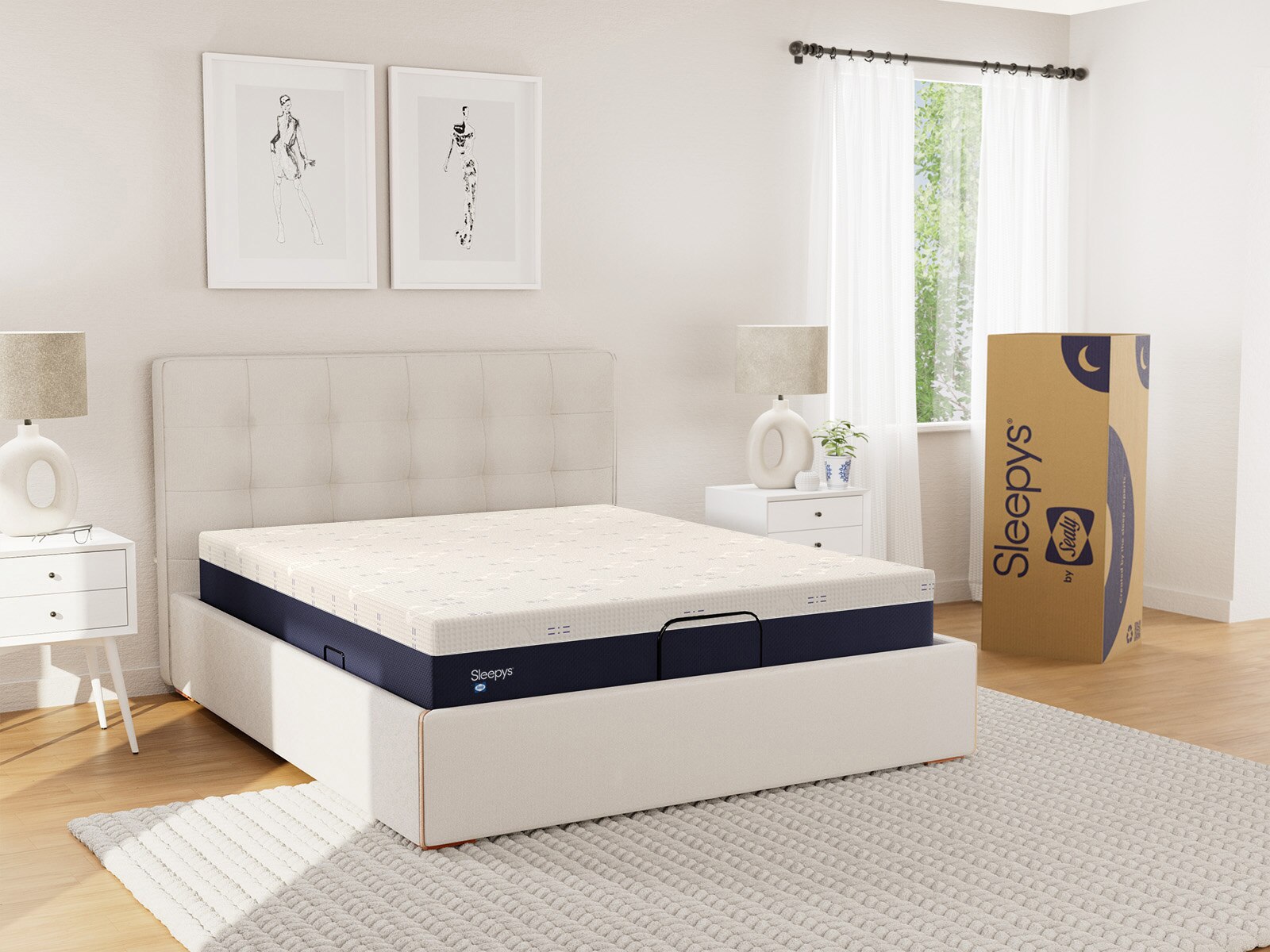
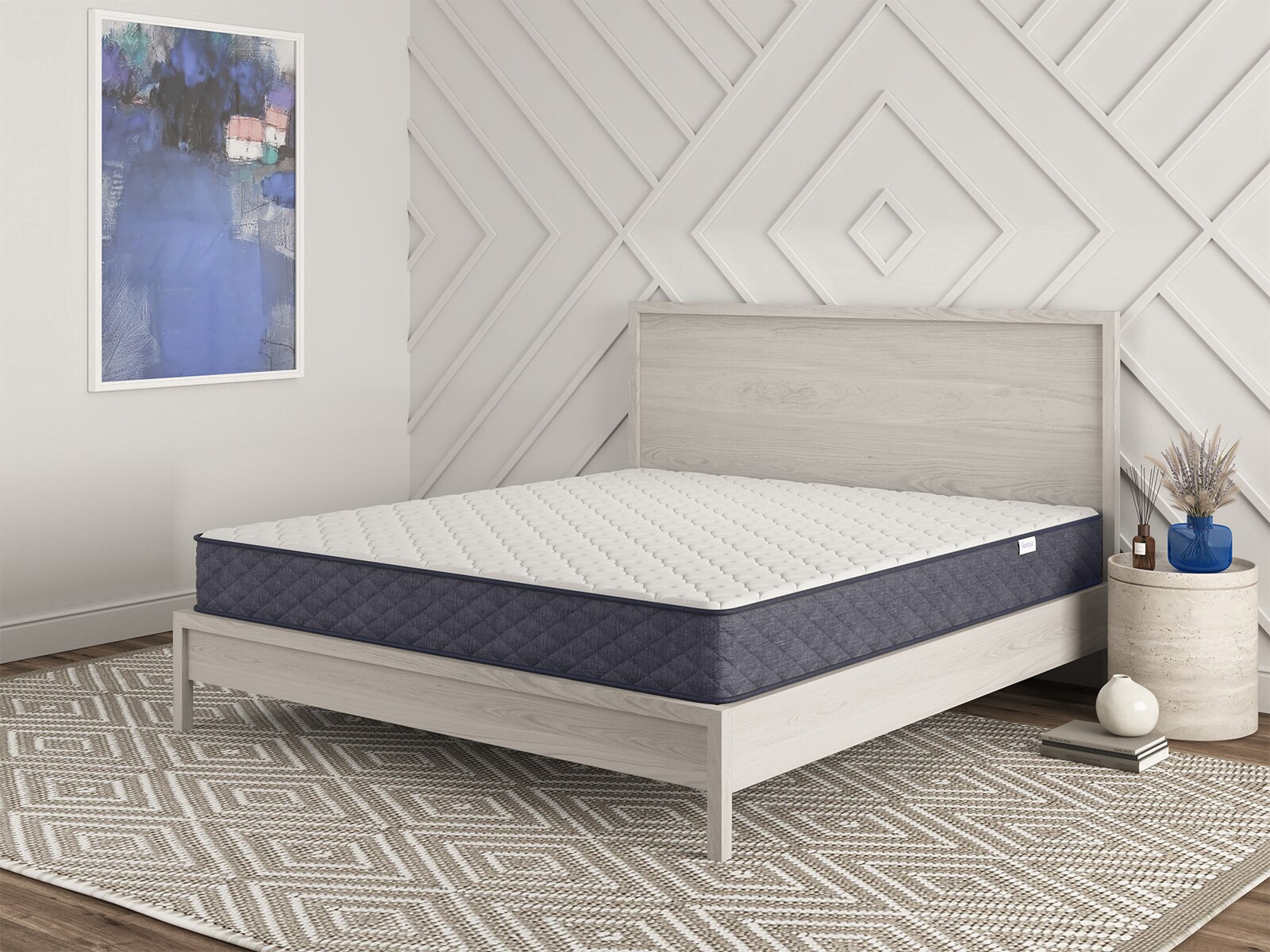
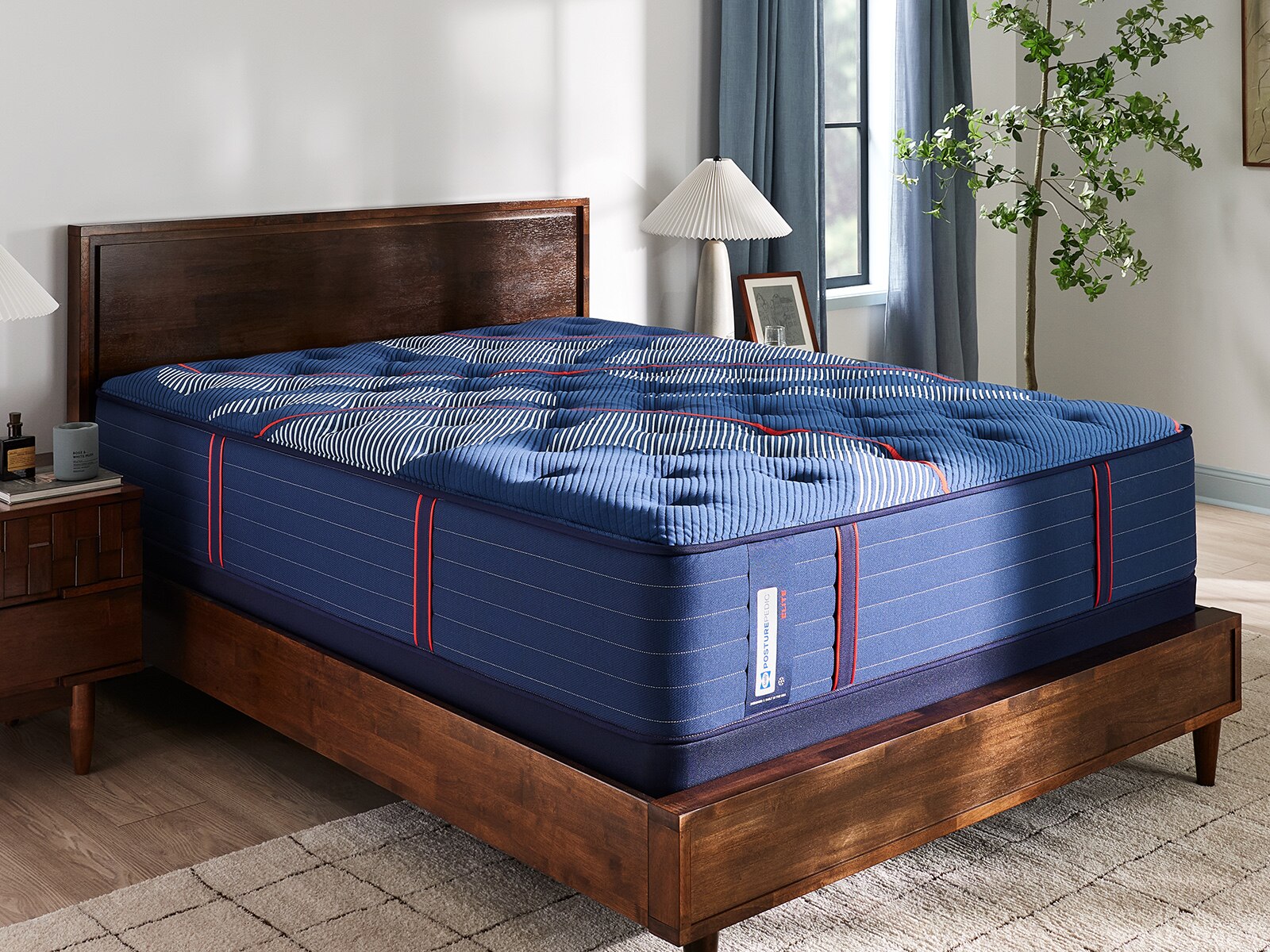
Coil support king mattresses pair a steel spring support system with cushioning layers to create a spacious sleep surface with responsive support. A standard king mattress measures approximately 76 inches wide by 80 inches long, giving sleepers room to stretch out while the coils underneath help distribute body weight. The feel depends on the entire construction, not just the springs: the coil design, padding, comfort materials and cover all contribute to how a mattress responds when someone settles in or changes position. Traditional innerspring designs often use interconnected coils that respond together, while pocketed coil systems wrap individual springs in fabric so they can compress more independently. Depending on the overall construction, individually wrapped coils can help reduce the movement felt across the bed when a partner rolls over. Hybrid mattresses combine a coil support core with substantial comfort layers, which may include memory foam, latex or other cushioning foams. Memory foam typically offers a more contouring sensation, while latex often has a buoyant feel that responds quickly to movement. Neither material alone determines firmness. A mattress can have sturdy coil support and a plush surface, or a more immediately firm feel with less cushioning above the springs. Support describes how the mattress holds the body; firmness describes how the surface feels. That distinction matters when comparing king mattresses, especially for sleepers who want pressure relief without feeling deeply nestled into the bed. Some constructions also use zoned coils, with different resistance levels across the surface, or reinforced edges designed to provide more stability near the perimeter. These features can influence how evenly supported the mattress feels from the center to the sides. For someone who changes positions frequently, a responsive coil system may make turning feel easier, while a thoughtfully matched comfort layer can cushion the shoulders and hips without making the surface feel difficult to move across.
The right king coil mattress should suit both the people sleeping on it and the room around it. Couples often appreciate the extra width, particularly when one person stretches diagonally or shifts between side and back sleeping. The additional space can also appeal to a solo sleeper who likes a generous surface, though a larger mattress is only useful when the bedroom can accommodate it comfortably. Measure the bed frame’s full footprint rather than relying on mattress dimensions alone, and leave practical room for nightstands, drawers and a clear path around the bed. Check doorways, stair turns and elevator dimensions before bringing a large mattress into the home; some coil constructions are not intended to be sharply folded. A California King is a different shape, measuring approximately 72 inches wide by 84 inches long, so it offers additional length rather than additional width. Standard king and California King mattresses need appropriately matched frames, protectors and fitted sheets. For a smaller bedroom or a separate sleeping space,
Coil Support Twin Mattresses offer another size within the same broad support category. Within a king mattress, comfort preferences still deserve individual attention. Side sleepers often benefit from enough cushioning to let the shoulders and hips settle without leaving the waist unsupported. Back sleepers may prefer a balance of contouring and resistance, while stomach sleepers often need a surface that limits excessive sinking through the middle. Body weight, proportions and personal preference affect each of those experiences, so a firmness label is a starting point rather than a guarantee. When evaluating a mattress, spend time in familiar sleeping positions instead of judging only by a brief sit on the edge. Shared sleepers can also pay attention to how the surface responds when one person turns, gets up or settles near the side. Edge stability may be especially noticeable when sitting to put on socks or using the full width of the bed.
Long-term comfort depends on construction quality, a compatible base and consistent care. Coil count can provide some context, but a higher number does not automatically mean better support or a longer-lasting mattress. Coil shape, wire thickness, arrangement and the materials surrounding the springs all influence performance. Within comparable designs, a lower coil gauge generally indicates thicker wire, though gauge alone cannot predict how firm the finished mattress will feel. The cushioning above the support core matters just as much: foams and fibers experience repeated compression, and their quality helps determine how well the surface maintains its feel. A substantial king mattress also needs the right foundation. Follow the manufacturer’s requirements for slat spacing, center support and frame construction, since an inadequately supported base can allow sagging even when the mattress itself is well made. For an adjustable base, confirm that the mattress is specifically designed to flex with it rather than assuming every coil model is compatible. A properly fitted mattress protector helps shield the surface from spills and everyday moisture, while sheets with suitable pocket depth can stay secure without pulling tightly across the corners. Clean marks according to the care label, avoid saturating the padding and let any cleaned area dry fully before replacing bedding. Rotate the mattress only as recommended, and do not flip a one-sided design unless its instructions explicitly allow it. Using handles only as directed can help prevent damage when repositioning a heavy king mattress. Over time, distinguish ordinary surface settling from changes that affect sleep, such as a persistent low spot or a noticeable loss of support. There is no single replacement schedule that fits every construction or household. Matching the mattress to its sleepers, supporting it correctly and caring for its materials are practical ways to help preserve the combination that makes this category appealing: room to spread out, cushioning where it is needed and a responsive foundation beneath it.