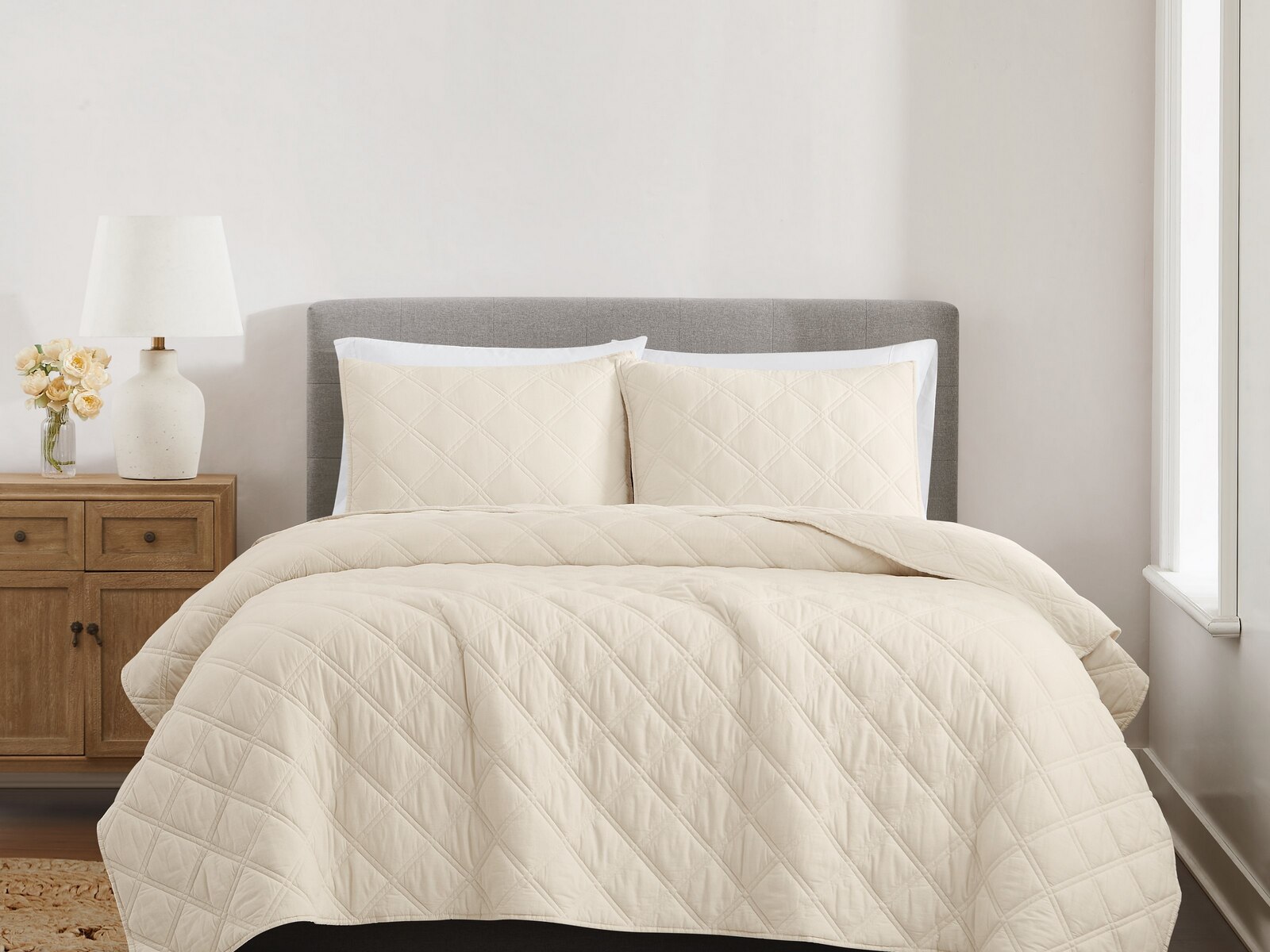
Cotton percale sheets are cotton bed linens made with a one-over, one-under weave that creates a matte finish and a crisp, lightweight feel. Percale describes the weave, while cotton describes the fiber, so both details matter when comparing bedding. The evenly interlaced threads give percale its clean, structured character: smooth against the skin without the glossy appearance or fluid drape often associated with sateen. Think of the familiar feel of a freshly pressed cotton shirt, with enough body to lie neatly across the mattress and enough flexibility to move comfortably throughout the night. Within the broader family of
cotton sheets, percale suits people who prefer a breathable fabric that feels light rather than silky or closely draped. Airflow depends on the yarns, fabric density and finishing as well as the weave, so the word percale alone does not describe every aspect of comfort. Cotton quality also influences the texture. Longer cotton fibers can be spun into smoother yarns with fewer exposed ends, while combing removes some shorter fibers before weaving. These details can contribute to a smoother surface and help limit fuzz, although construction and care still affect how the fabric wears. Thread count offers another point of comparison, but it is not a complete measure of quality. Many cotton percale fabrics fall within the 200–400 thread-count range; a higher number does not automatically mean a softer, stronger or more breathable sheet. Fiber quality, yarn construction and the finished feel deserve equal attention. A crisp hand can soften with repeated washing while retaining the recognizable percale structure, making this weave appealing to sleepers who enjoy bedding that feels fresh and substantial without being heavy. The result is a familiar, understated texture that works just as naturally on a neatly tucked bed as it does beneath a casually folded quilt.
The right fit helps cotton percale sheets stay smooth across the sleeping surface instead of pulling at the corners or collecting in loose folds. Mattress size is the starting point, but mattress depth matters just as much. A fitted sheet needs to accommodate the full height of the mattress, including any topper or substantial mattress pad that sits beneath it. Measuring that combined height and comparing it with the stated pocket depth or fit range gives a clearer picture than relying on a description such as deep pocket. A pocket that is too shallow can work its way loose, while excess fabric may bunch beneath the body. Elastic placement and corner construction also influence how securely a fitted sheet stays in place, especially for someone who changes positions frequently. Adjustable bases add another consideration because the fabric needs enough room to follow the mattress as its position changes without pulling excessively at the seams. Bed configuration matters, too: a split king arrangement may need two Twin XL fitted sheets rather than one king fitted sheet. Pillowcase dimensions deserve the same attention, since standard and king pillows need different amounts of fabric, and a thicker pillow can affect how an envelope closure sits. Sheet set contents vary, so checking whether pillowcases and a flat sheet are included helps match the bedding to an established routine. Someone who prefers a duvet without a top sheet may focus on the fitted sheet and pillowcases, while another sleeper may appreciate a generous flat sheet for a comfortable tuck at the foot of the bed. Cotton percale works well for everyday bedrooms, guest rooms and shared spaces where washable, breathable bedding is a practical priority. Its lightly structured feel may also appeal to people who dislike fabric clinging closely around their legs. Comfort remains personal, however, and sleepers who favor a distinctly silky surface may find percale more textured than expected, particularly before its first few washes.
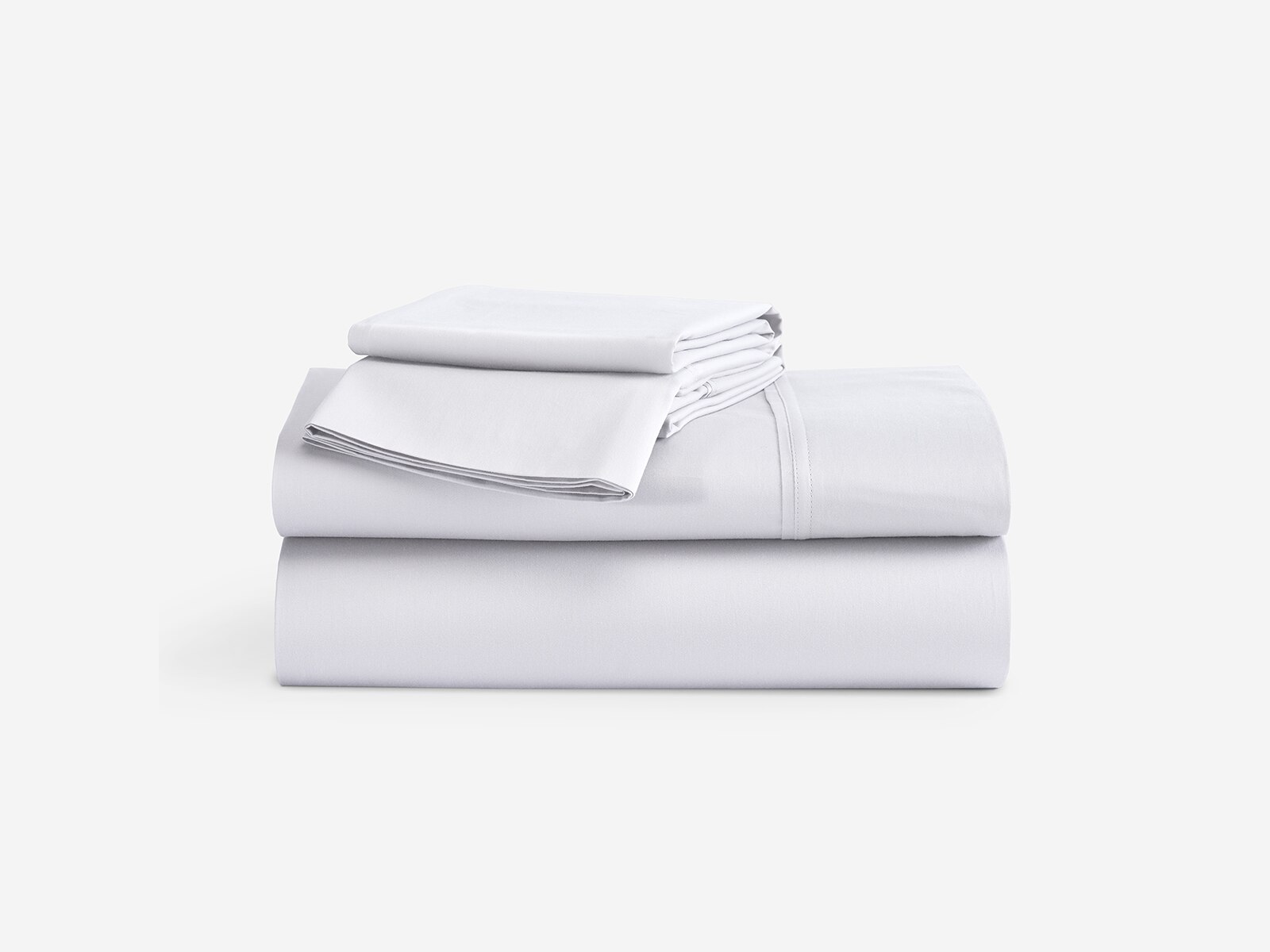
Everyday care plays a meaningful role in how cotton percale sheets feel and hold their shape over time. Cotton can wrinkle and may shrink, so the care label should guide washing and drying rather than a single routine applied to every sheet. Washing before the first use can remove residual finishing agents and give a better sense of the fabric’s everyday texture. A mild detergent used in the recommended amount helps avoid residue, and leaving room in the washer allows the fabric to move freely instead of twisting into a tightly packed bundle. Keeping bedding separate from rough fabrics, exposed zippers and hook-and-loop fasteners can reduce unnecessary abrasion. When machine drying is permitted, the recommended heat setting and prompt removal help limit overdrying and deep creases. Smoothing the fabric by hand while folding, or putting it back on the bed promptly, can create a tidy appearance without the expectation of a perfectly pressed finish. A few natural wrinkles are part of cotton percale’s relaxed character, not necessarily a sign of poor quality. For households that change bedding frequently, rotating between sheet sets spreads out wear and leaves time for thorough washing and drying. Storing sheets only when fully dry, in a clean space with some air circulation, helps keep them ready for the next bed change. Durability also depends on details that are easy to overlook, including even stitching, secure hems and well-finished corners. Over time, those construction features help bedding withstand repeated handling alongside the fabric itself. Visually, percale’s matte surface pairs easily with textured blankets, quilted coverlets and patterned duvet covers without adding shine. White and soft neutral shades can create a simple foundation, while deeper colors or subtle patterns bring definition to the bed. Cotton percale sheets can also make a thoughtful housewarming or wedding gift when the recipient’s mattress dimensions and fabric preferences are known. For a first apartment, a refreshed guest room or a well-used primary bedroom, their appeal rests in the same practical combination: a crisp cotton feel, straightforward care and a clean look that fits comfortably into daily life.