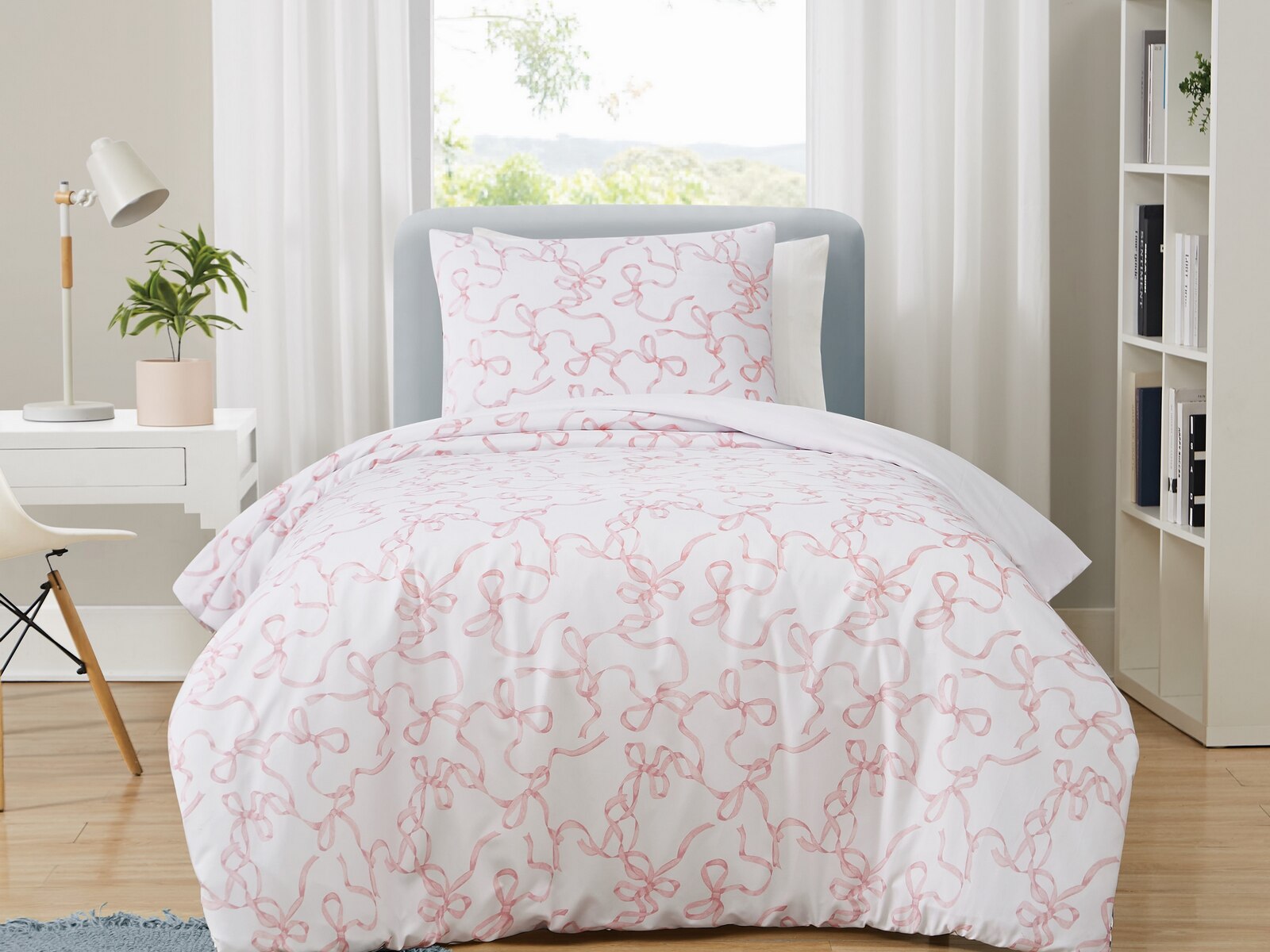
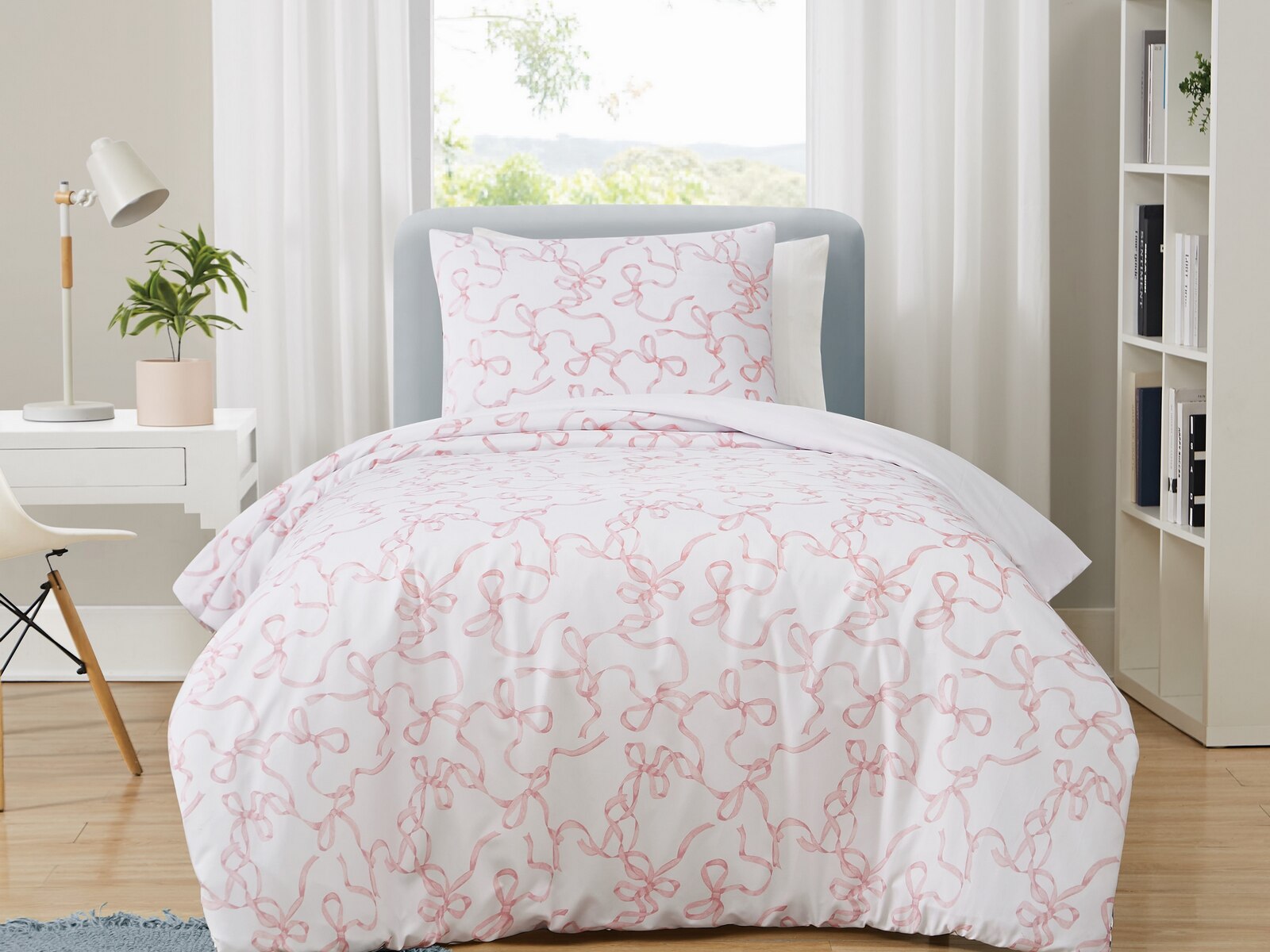
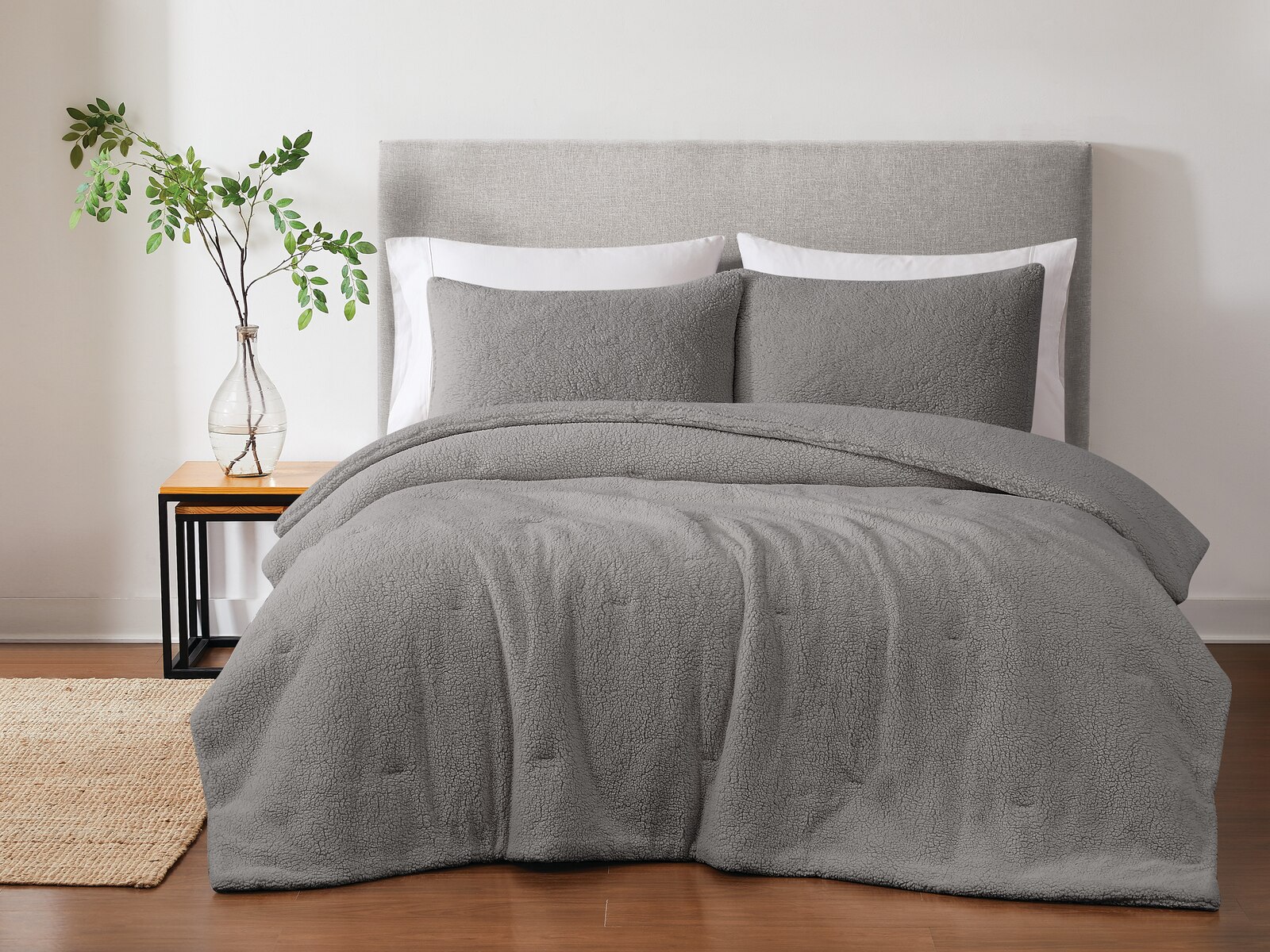
Dorm room style brings personality to a space that has to work hard, often serving as a bedroom, study area and place to unwind between classes. Because the bed takes up much of the room, bedding has an especially noticeable influence on the overall look. A coordinated color palette, comfortable textures and a few thoughtful accents can make a standard campus room feel more personal without overwhelming its limited footprint. Different dorm room styles balance those elements in different ways. A cozy bohemian look draws on earthy shades, woven textures and relaxed patterns, with cream, terracotta or muted gold creating a welcoming foundation. Minimalist dorm decor favors simple bedding, restrained patterns and clear surfaces, allowing subtle texture to add interest without visual clutter. Preppy style often pairs crisp stripes or gingham with brighter accents, while a coastal-inspired room can feel cohesive through blue-and-white combinations and softly textured fabrics. Cottagecore and vintage-inspired spaces lean toward small floral prints, quilted surfaces and gentle color contrasts that give everyday bedding a familiar, collected feel. These looks do not need to extend to every corner of the room to make an impression. A patterned bed covering can become the focal point against plain walls, while solid bedding can provide balance when artwork and personal keepsakes carry more color. For a student whose bed doubles as a reading spot, soft layers and supportive pillows also contribute to how the room feels during daily use. Coordinating shades across
Stylish Dorm Bedding helps connect the bed to the rest of the space, whether the preference is understated, playful or rich in texture. In a shared room, separate color palettes can still look harmonious when they share a neutral background or similar pattern scale. The result is a space that reflects individual taste while leaving room for the routines, belongings and preferences of a roommate.
Comfort and fit give dorm bedding its practical foundation, especially when students are working with a mattress supplied by their residence hall. Many college beds use a Twin XL mattress, but dimensions vary by campus and housing arrangement. A standard twin mattress typically measures 38 inches by 75 inches, while a Twin XL typically measures 38 inches by 80 inches; that additional length matters when selecting fitted bedding. Mattress depth matters, too, particularly when a comfort layer increases the height of the sleep surface. Fitted sheets need enough pocket depth to reach around the full mattress without pulling loose at the corners, and bed coverings need a length and width suited to the desired coverage. A mattress topper can adjust the feel of an existing bed, while a protector helps create a barrier against everyday spills and wear. Those layers serve different purposes, so their materials, thickness and care requirements deserve separate consideration. Memory foam tends to contour around the body, latex generally has a more responsive feel and fiber-filled layers can add cushioning with less of a conforming sensation. Pillow support is similarly personal: sleep position, shoulder width and the feel of the mattress all influence a comfortable pillow height. Fabric choices affect both the look of the room and the experience of settling into bed. Cotton is valued for its familiar feel and ability to absorb moisture, while cotton percale has a crisp finish and cotton sateen typically feels smoother with a subtle sheen. Microfiber can offer a soft surface and resistance to wrinkling, though performance varies with construction. Linen has a visibly relaxed texture that suits an informal room style, but its care requirements and feel differ from smoother fabrics. Fill materials also influence the weight and loft of comforters and pillows. For students with sensitivities, clearly stated material information is more useful than assuming that every soft or natural-feeling fabric will suit their needs.
Daily routines help determine which dorm room textiles will remain comfortable and look cared for throughout college life. Bedding may move from the bed to a study chair, get folded back for an afternoon reading session or travel home during a campus break, so durability involves more than appearance alone. Secure stitching, finished edges and fabric that tolerates the intended washing routine can make everyday upkeep easier. A machine-washable covering may be convenient in a shared laundry room, but the care label still determines the appropriate wash cycle, drying method and whether a bulky layer will fit the equipment. Cotton can shrink if treated contrary to its care instructions, textured fabrics may need gentler handling and some pillows or filled bedding require thorough drying to prevent lingering moisture. An extra sheet set can help keep the bed usable while another set is being washed, especially when laundry facilities are several floors away. Easy-to-remove covers are practical for cushions used against a wall while studying, and washable layers can be useful where snacks, notebooks and charging cords often share the same small space. Storage also affects how well dorm room style holds together. Bedding that folds neatly is easier to tuck into limited closet space, while an oversized pile of decorative layers can become inconvenient when the bed needs to be ready for sleep. In shared rooms, a quieter visual foundation can make personal accents stand out without competing with everything nearby. Color coordination does not require an exact match; a cream sheet, a blue patterned covering and a textured neutral accent can feel connected through their proportions and finish. Campus move-in, graduation celebrations and a first college bedroom are meaningful occasions for bedding gifts, particularly when the recipient’s mattress size, preferred colors and care needs are known. Residence hall rules also shape what belongs in the room, especially around furnishings, wall attachments and electrical accessories. Thoughtful dorm room style works within those limits, bringing together personal expression, dependable comfort and materials that fit the realities of student life.