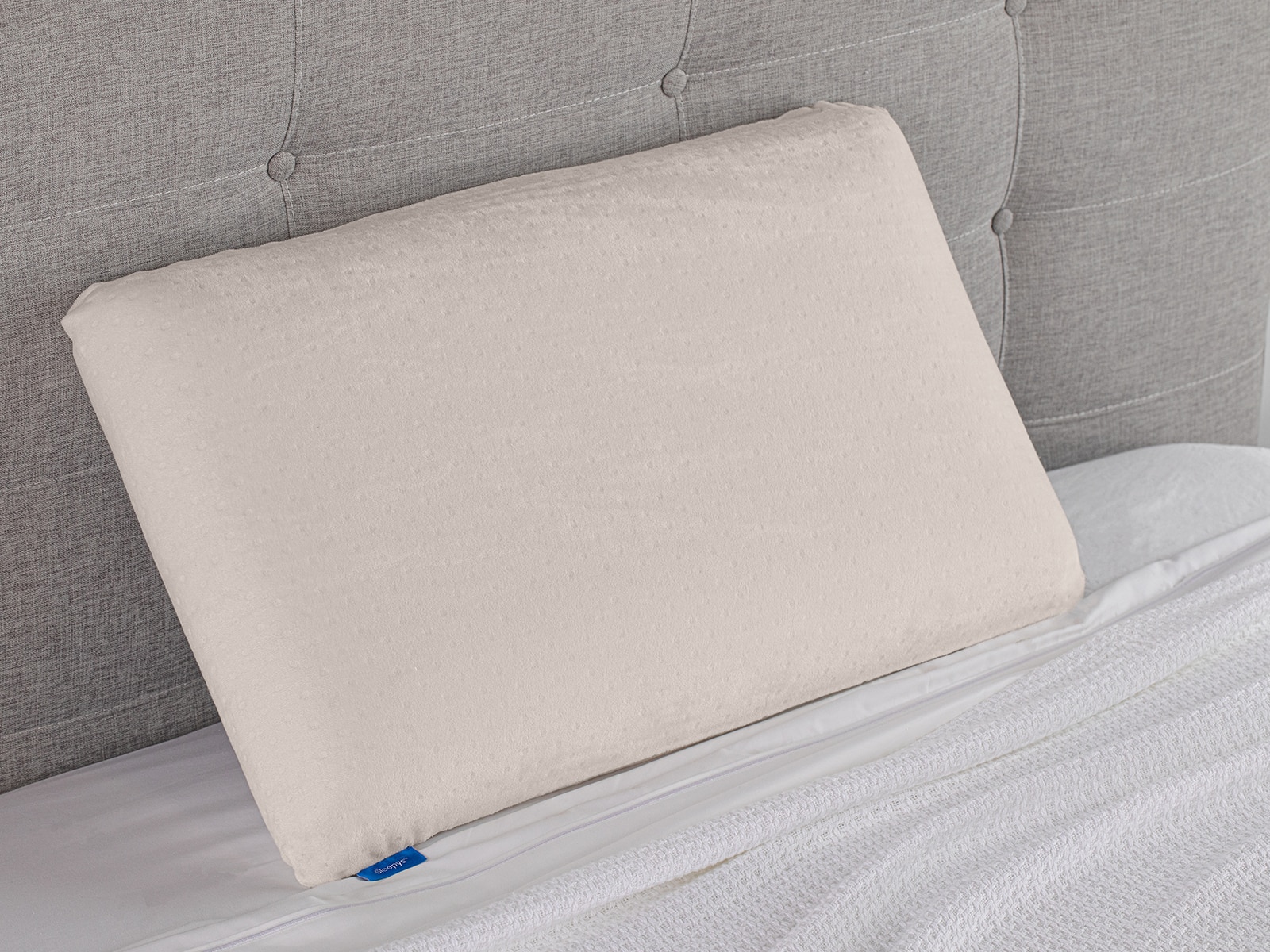
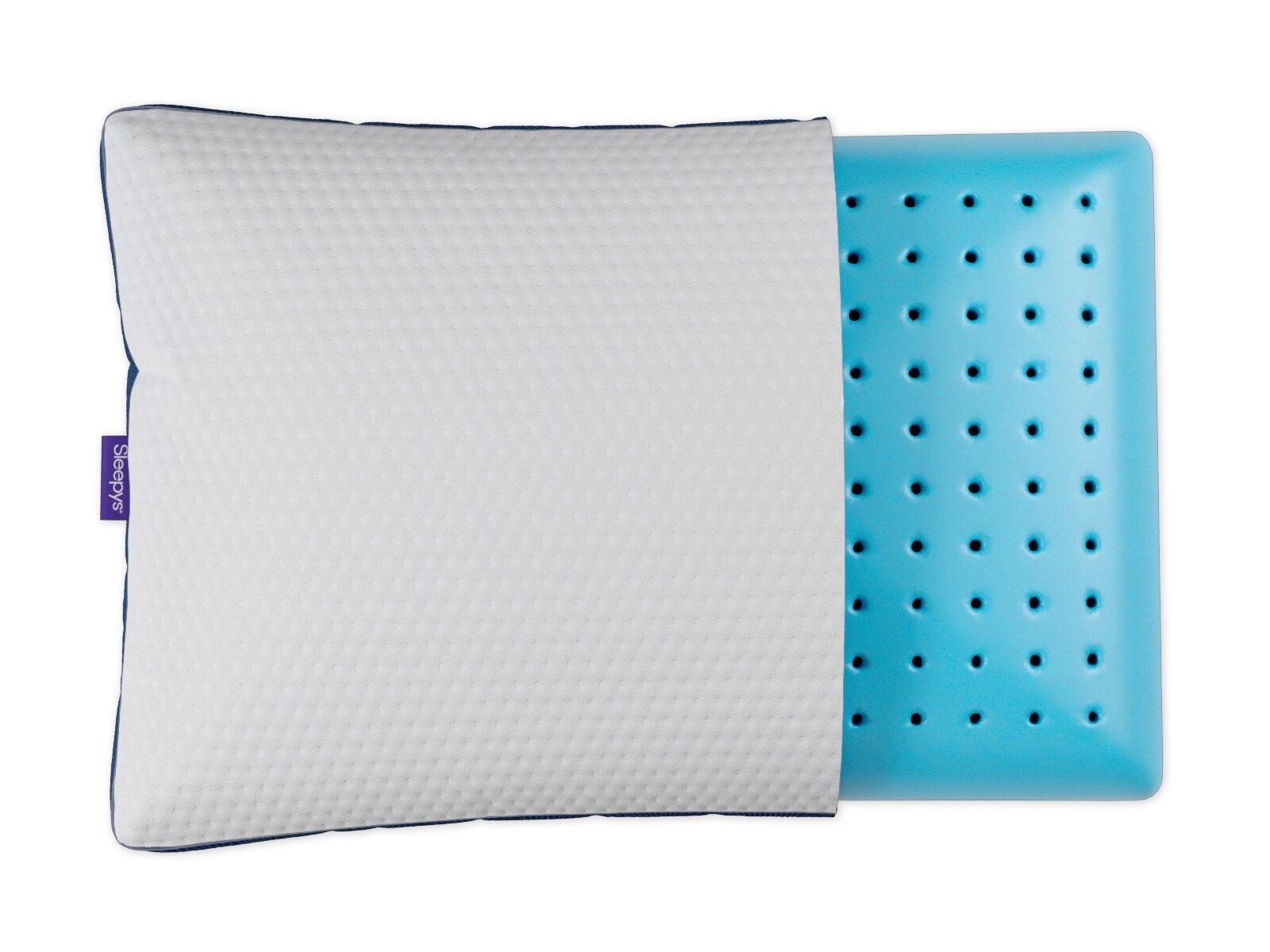
Resilient memory foam pillows combine contouring comfort with the ability to recover their shape after pressure is removed. As the foam responds to the weight of your head, it compresses around its contours while supporting the neck, creating a more settled feel than a loosely filled pillow. Resilience refers to that recovery, not necessarily a quick, springy bounce: memory foam often returns to its original shape gradually. A pillow that feels soft at first touch may still provide substantial support once your head settles into it, while a firmer design may allow less sink. Construction makes a meaningful difference. A solid memory foam pillow uses a continuous piece of foam for a consistent surface, with either a traditional profile or a contoured shape. Contoured versions typically have raised edges and a lower center that accommodate the curve between the neck and head. Shredded memory foam pillows contain smaller pieces that shift within the cover, offering a more moldable feel. Some have removable fill so the height can be adjusted, though not every shredded design includes this feature. Blended fills may combine foam with fibers to soften the surface and change how readily the pillow compresses. Neither construction is automatically more durable or supportive; foam quality, fill quantity, cover construction and everyday care all contribute to performance. Foam density also differs from firmness, so a denser pillow is not necessarily the firmer choice. Airflow is another consideration, especially when your face rests close against the surface. Designs with ventilation channels, spaces between fill pieces or breathable covers may feel less enclosed. For that preference,
Breathable Memory Foam Pillows offer a related category to consider. Gel or graphite infusions may influence how foam manages warmth, but an infusion alone does not guarantee a consistently cool surface. The complete construction, including the cover and pillowcase, matters more than a single feature named on a label.
The most useful pillow height is the one that suits your sleeping position, body proportions and mattress rather than simply looking full on the bed. Loft describes a pillow’s height, but the height remaining under your head matters more than its uncompressed appearance. A tall, soft pillow may flatten considerably, while a lower, firmer pillow may hold your head higher than expected. Side sleepers generally need enough support to fill the space between the head and mattress without tipping the neck upward. Someone with broader shoulders resting on a firm mattress may need more loft than a smaller-framed sleeper whose shoulder sinks farther into a softer surface. Back sleepers often feel more comfortable with moderate loft that supports the neck without pushing the chin toward the chest. A contoured shape may suit this position, provided the raised section fits the neck comfortably rather than forcing it into place. Stomach sleepers typically need a much lower profile to avoid lifting the head too far, and a thick memory foam pillow may not suit that position. For combination sleepers, the ease of moving across the surface deserves attention. Deep contouring can feel reassuring when staying in one position, but a shallower contour or adjustable fill may make repositioning easier. Picture turning from your back onto your side: the pillow should accommodate that change without requiring repeated folding or bunching to find support. A comfortable fit generally lets the head rest in line with the upper body rather than leaning noticeably in either direction. Standard, queen and king dimensions affect how much room there is to move, but length and width do not determine loft or firmness. A longer pillow can provide extra surface for someone who shifts across the bed, while a smaller size may be easier to reposition. Check pillowcase dimensions as well, since a tightly stretched case can compress the fill and alter its feel. For a gift, knowing the recipient’s usual sleep position and preference for soft or firm support is more helpful than choosing by appearance alone.
Lasting comfort depends on both the pillow’s construction and the way it is cared for. Resilient foam is intended to recover after compression, but that does not mean it will remain unchanged indefinitely. Repeated use, moisture exposure and handling can affect its feel and shape. Solid foam generally needs little reshaping, while shredded fill may benefit from occasional redistribution if pieces collect toward the edges or leave a shallow area beneath the head. Follow the care label before washing any part of a memory foam pillow. A removable cover may be machine washable even when the foam inside is not, and immersing foam can damage its structure or leave moisture trapped within it. When spot cleaning is permitted, use only the recommended method and allow the pillow to dry completely before replacing its cover. High heat, forceful wringing and a dryer cycle can be unsuitable unless the manufacturer specifically allows them. A washable pillow protector can help limit contact with perspiration and everyday spills, although a thick or tightly woven layer may change the surface feel and airflow. New foam may have an initial odor; airing it in a well-ventilated space according to the care instructions can help it dissipate before use. For adjustable designs, keep removed fill clean and dry in a secure container so it can be added back if your preferences change. Durability is best judged through performance rather than a universal replacement schedule. Persistent indentations, clumps that no longer redistribute, crumbling foam or a noticeable loss of support suggest that a pillow may no longer be doing its job. A mattress change can also make an otherwise intact pillow feel unsuitable because the shoulders and upper body settle differently. The right resilient memory foam pillow brings together shape recovery, a comfortable surface and enough support for the way you actually sleep, without relying on constant folding or stacking to feel comfortable.