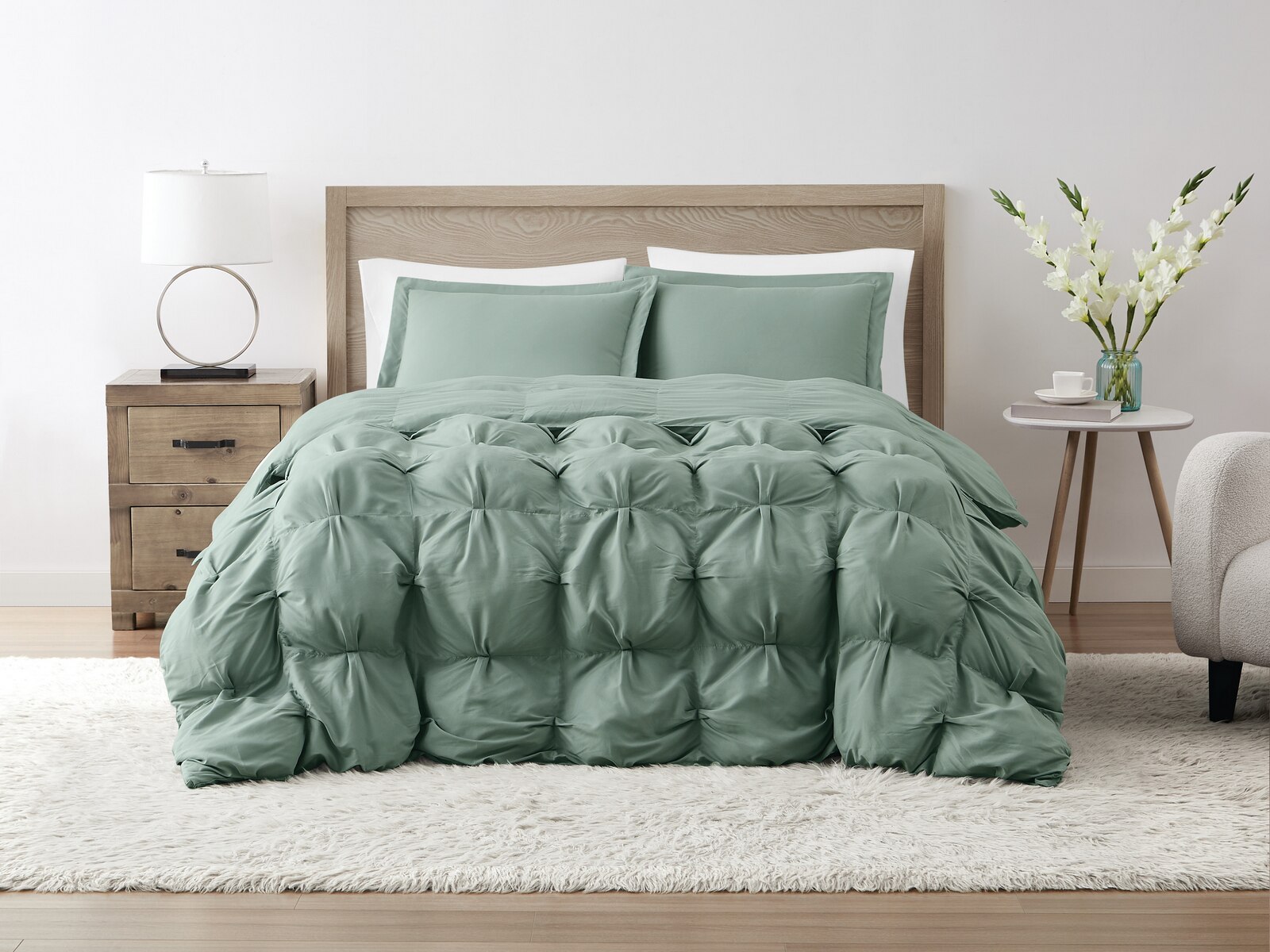
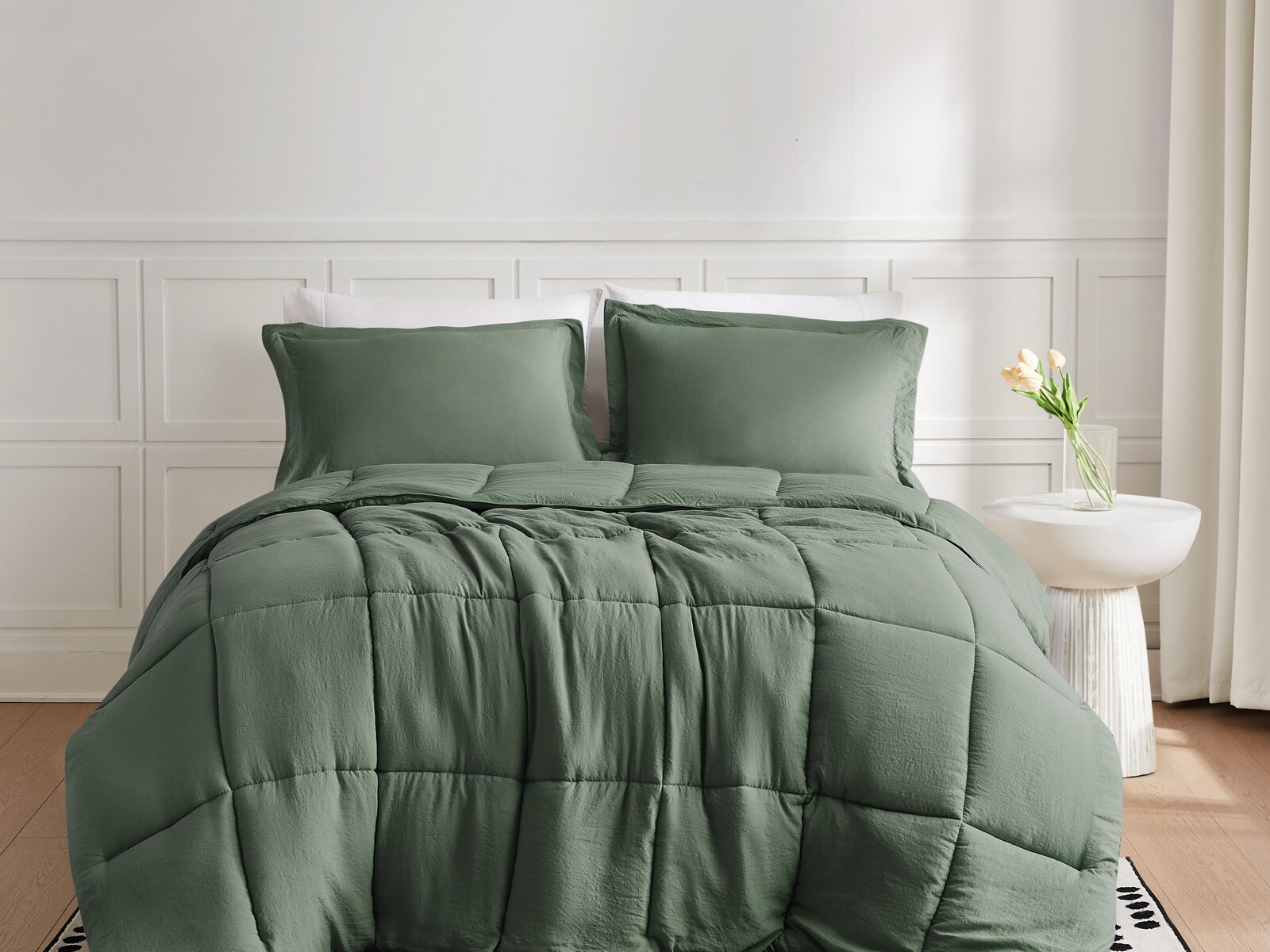
Summer comforter sets in sage, olive and soft eucalyptus shades bring a relaxed, nature-inspired look to the bed without relying on bold patterns or heavy layers. These muted tones sit comfortably beside white sheets, pale wood furniture and woven bedside accents, while deeper moss shades add contrast to a room with light walls. A coordinated comforter and pillow shams can give the bed a finished appearance with relatively few pieces, leaving room for a favorite reading pillow or a lightweight throw at the foot. For summer use, the comforter’s warmth matters just as much as its appearance. Fabric, fill weight and construction all contribute to how a comforter feels through the night; a thin profile alone does not guarantee breathable comfort. Cotton shells can offer a familiar, breathable feel, with percale tending toward a crisp finish and sateen providing a smoother surface. Linen brings visible texture and a relaxed drape, although its initial feel and care requirements vary. Microfiber shells often feel soft and smooth, but their airflow and moisture performance depend on the fabric’s construction rather than the fiber name alone. Seersucker and other textured weaves add dimension without requiring extra decorative layers. Inside the shell, down or down-alternative fill supplies loft and insulation, with the amount and arrangement of fill helping determine overall warmth. A generously filled comforter may feel too insulating for someone who sleeps warm, even when the outside fabric feels cool at first touch. Lightweight fill can be more comfortable for sleepers who want coverage without substantial warmth, while someone sleeping beneath strong air conditioning may prefer a little more insulation. The most useful description of a summer comforter set includes both shell composition and fill information, along with any stated warmth rating. Cooling claims deserve a closer look, since a cool initial touch is not the same as maintaining a comfortable sleeping temperature throughout the night.
Fit gives a summer bedding set much of its everyday comfort and visual balance. Mattress size is the starting point, but the comforter’s actual width and length determine how far it reaches over the sides and foot of the bed. A deep mattress, a substantial topper or a tall bed frame can make a standard comforter appear shorter than expected. On a queen mattress shared by two sleepers, additional side coverage may also reduce the tugging that happens when someone turns over. An oversized comforter provides more drape, but extra fabric may brush the floor on a lower platform bed, so generous sizing is not automatically the better fit. Full/queen and king/California King labels can cover different dimensions across bedding collections; measurements are more useful than the size name alone. Pillow shams deserve the same attention, particularly when a set includes king shams and the bed has standard pillows. Set contents also vary: some include a comforter and matching shams, while others contain sheets, pillowcases or decorative accessories. Knowing what is included helps keep the finished bed comfortable rather than crowded. For a summer setup, a fitted sheet, a light top sheet if preferred and a comforter may provide all the layers needed. Quilted stitching, channel construction or box-style sections help manage fill placement, though each creates a different surface texture and distribution of loft. Consistent stitching and neatly finished edges are useful details for bedding that will be pulled into place every morning. Reversible designs offer another way to change the room’s appearance without adding more layers. These practical considerations matter in a primary bedroom, a guest room or a college room with limited storage. A guest bed benefits from bedding that is straightforward to arrange and care for, while someone who reads in bed may especially appreciate a shell that feels pleasant against bare arms. For partners with different warmth preferences, a lighter shared comforter can leave room for an additional individual blanket.
Care requirements play an important part in how well summer comforter sets fit into daily life. Machine-washable bedding can simplify upkeep, but the care label determines the appropriate water temperature, cycle and drying method. A comforter needs enough room to move freely during washing; crowding it into a small drum can make thorough cleaning and rinsing difficult. Its filled dimensions also matter in the dryer, where restricted movement may leave damp sections inside an otherwise dry-feeling shell. Complete drying is important before the comforter returns to the bed or goes into storage. Some fabrics and fills require professional cleaning, so washable and easy-care should not be treated as interchangeable descriptions. Regularly washing sheets and pillowcases helps keep the bedding comfortable between comforter cleanings, while prompt attention to spills can prevent a small mark from becoming harder to remove. Following the recommended detergent and heat settings helps protect fabric texture, stitching and color. In homes with pets, a smooth surface without loose decorative threads may be more practical than prominent loops or delicate embroidery, although no fabric is immune to claws or repeated scratching. Durability also depends on secure seams, sound quilting and care that suits the materials. Visually, sage works well with ivory and sandy neutrals, olive complements warm wood and terracotta accents, and a pale eucalyptus shade can soften a room furnished in charcoal or white. For a quieter look,
simple comforter sets offer an understated foundation that leaves texture and subtle tonal variation to carry the design. A coordinated set can also make a thoughtful housewarming or graduation gift when the recipient’s mattress dimensions, preferred colors and laundry setup are known. For storage between uses, clean, fully dry bedding belongs in a dry space, protected from dust without being compressed more than necessary. Whether intended for a frequently used bedroom or a thoughtfully prepared guest bed, a summer comforter set feels most at home when its weight, dimensions and upkeep match the way the bed is actually used.