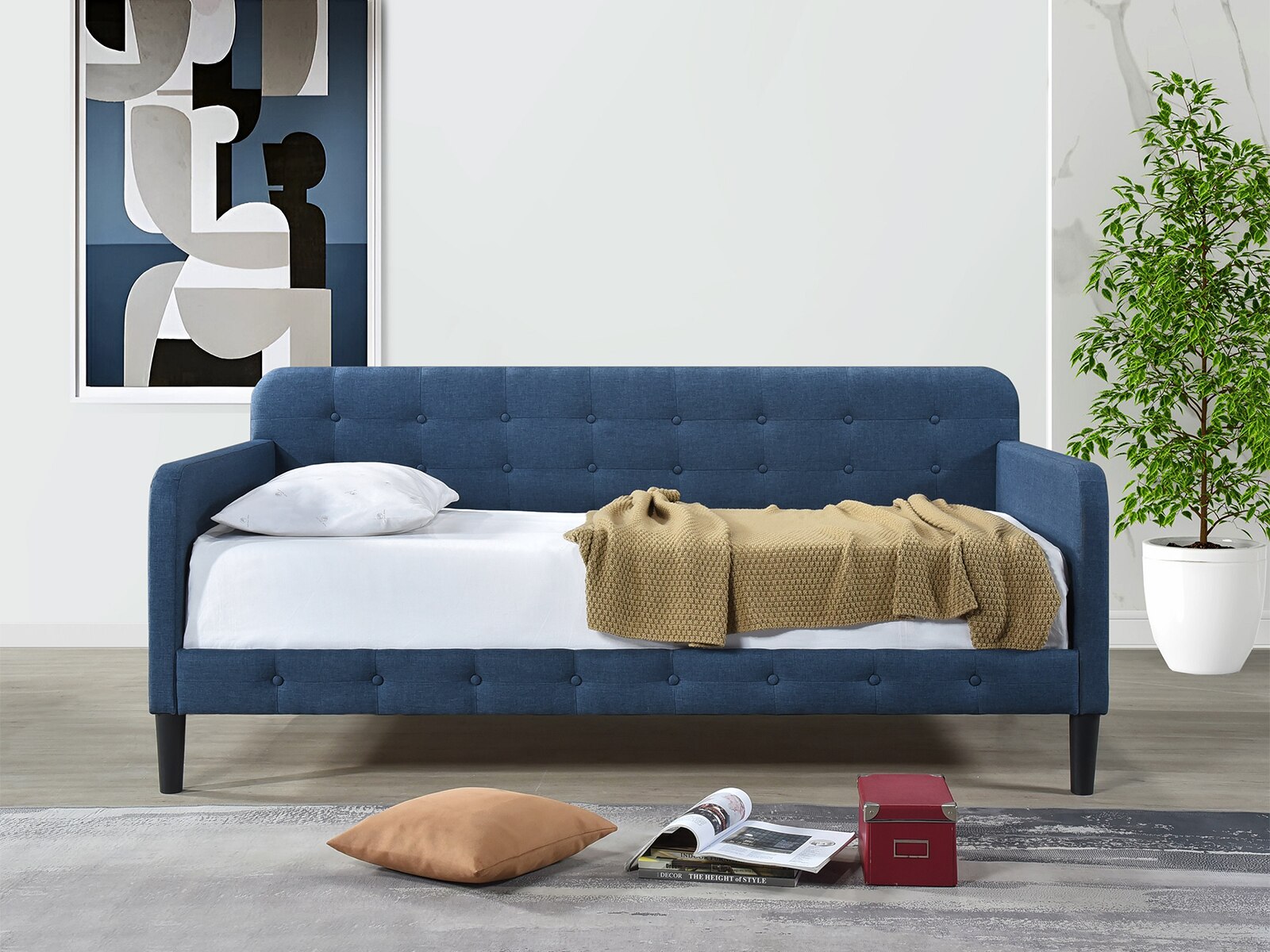
Bedroom twin beds create a comfortable place to sleep without taking over the room. A standard twin mattress measures 38 inches wide by 75 inches long, making it a practical size for children’s bedrooms, guest rooms and small apartments. Those measurements describe the mattress, not the entire bed: a frame, headboard or footboard can add several inches to the overall footprint. That distinction matters in a bedroom where the bed needs to fit between a closet door and a desk, or where two sleepers share the space. Measuring the complete frame helps preserve room for walking, opening dresser drawers and changing the sheets. In a shared bedroom, two twin beds give each person a separate sleep surface while allowing different layouts, from matching beds along opposite walls to an arrangement with a nightstand between them. In a guest room, a twin bed can leave space for a reading chair or a work area without making overnight visitors feel like an afterthought. Twin beds also work for many teens and adults, although mattress length deserves attention. Someone whose feet reach the end of a standard twin may be more comfortable on a Twin XL mattress, which measures 38 inches wide by 80 inches long. A Twin XL mattress needs a frame designed for its longer dimensions; the two sizes are not automatically interchangeable. Bed height is another part of fit that is easy to overlook. The combined height of the frame, any required foundation and the mattress determines how high the finished sleep surface sits. A lower setup may make getting into bed easier for some sleepers, while a taller frame can provide useful space underneath. For a child moving into a larger bed or an adult furnishing a compact bedroom, the most useful dimensions are the ones that match both the sleeper and the room. Checking the delivery path, including narrow doorways, stair turns and hallways, can also prevent a well-proportioned bed from becoming difficult to bring into place.
Materials and construction shape how a twin bed looks, feels and holds up to everyday use. Wood frames bring visible grain and a substantial appearance, with finishes that can complement anything from painted bedroom furniture to a simple bedside table. Solid wood and engineered wood have different characteristics, and long-term performance depends on the quality of the components, joints and finish rather than the material name alone. Metal frames often have slimmer profiles, which can help a small bedroom feel less crowded. Their durability also depends on secure connections, adequate support and assembly that follows the manufacturer’s directions. Upholstered frames introduce a softer texture around the bed, and a padded headboard can provide a comfortable surface behind pillows when someone sits up to read. Fabric texture, seam placement and cleaning requirements deserve attention, especially in rooms used by children or frequent overnight guests. The familiar shapes of
Classic Twin Beds can provide a straightforward starting point for a bedroom that needs to accommodate changing bedding, wall colors and furniture over time. Beyond appearance, the support beneath the mattress is essential. Some twin bed frames use a platform or closely spaced slats, while others require a separate foundation. Mattress manufacturers specify acceptable support systems, including slat spacing when applicable, so matching the frame to those requirements helps the mattress perform as intended. Weight capacity also varies by frame and should account for the mattress and sleeper according to the manufacturer’s stated limits. Storage features can make the same footprint work harder, but drawers need enough clearance to open fully. An open space beneath the bed may be more flexible for storage bins, provided the bins fit without touching support components. A footboard can give the bed a finished appearance, though a low or open end may feel less restrictive to a sleeper who stretches out. These small construction choices often matter more in daily use than decorative details viewed on their own.
A well-matched mattress and bedding help a twin bed feel complete, whether it belongs to a child who reads before lights-out or a guest who stays for several nights. Mattress comfort is personal, and a smaller size does not remove the need to consider sleep position, cushioning and support. Side sleepers may prefer enough cushioning around the shoulders and hips, while back and stomach sleepers often need a surface that keeps the body from sinking excessively. Foam, innerspring and hybrid constructions offer different combinations of contouring and responsiveness; the right feel depends on the sleeper rather than bedroom size. Mattress thickness also affects the finished bed height and whether fitted sheets stay securely in place. Twin and Twin XL bedding should match the mattress length, and fitted-sheet pocket depth should accommodate the mattress plus any topper. In a child’s room, washable bedding and a properly fitted mattress protector can simplify everyday care. In a guest room, a supportive pillow and an extra blanket within reach make the space more welcoming without requiring a larger bed. Routine care helps protect both the frame and the mattress. Dust can collect along slats, behind a headboard and beneath the bed, so access for cleaning is worth considering when positioning the frame. Wood finishes generally benefit from gentle cleaning with products approved for the surface, while upholstery should be treated according to its care label rather than with a one-method-fits-all approach. Connections may need periodic checks and tightening as directed by the manufacturer, particularly after a move. Mattress rotation should follow the mattress maker’s recommendations, since not every construction is designed to be flipped. When furnishing a bedroom for someone else, comfort preferences, usable floor space and ease of getting into bed are more useful starting points than appearance alone. A thoughtfully chosen twin bed leaves room for everyday life around it while giving its sleeper a dedicated, comfortable place to rest.