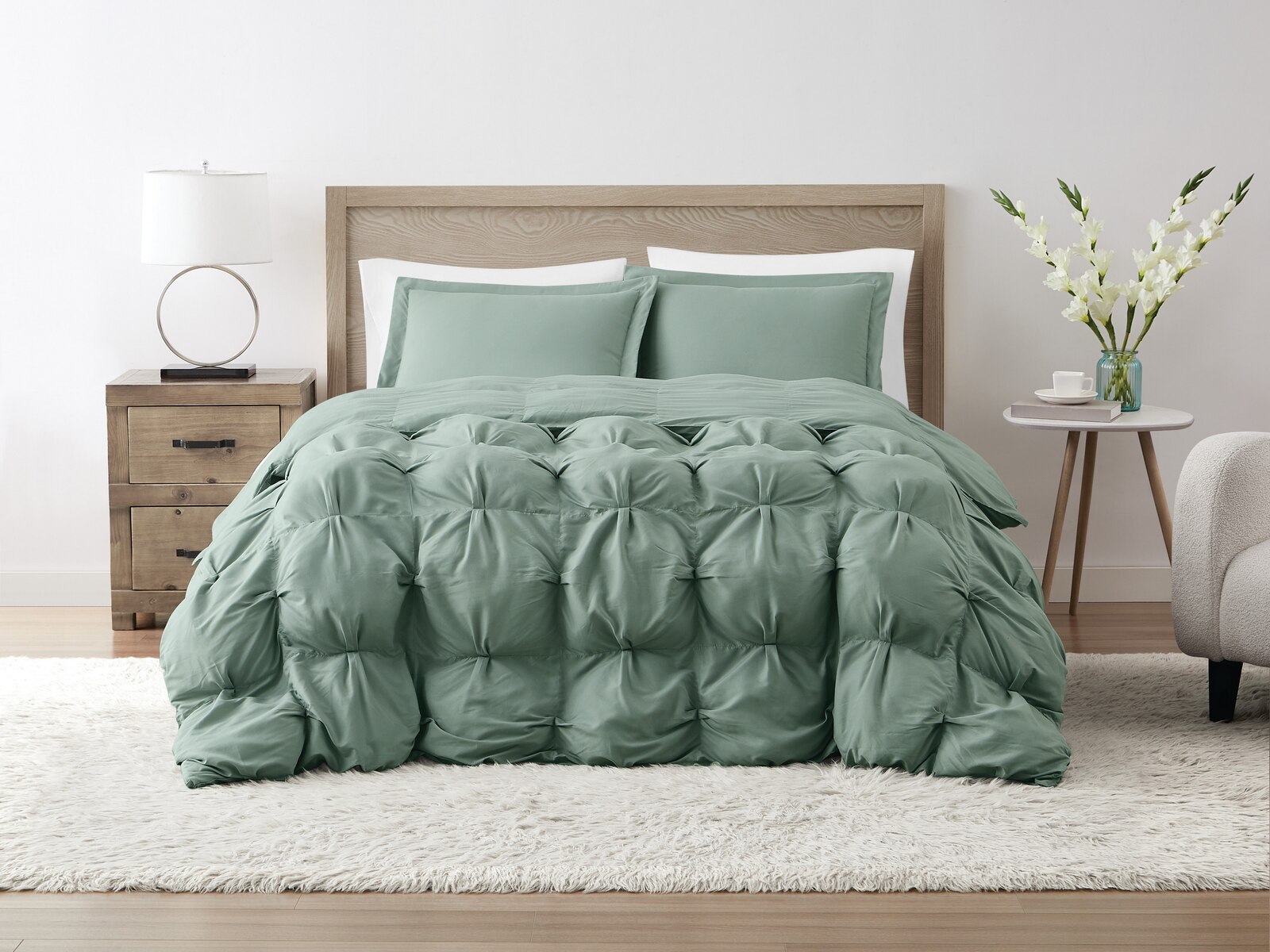
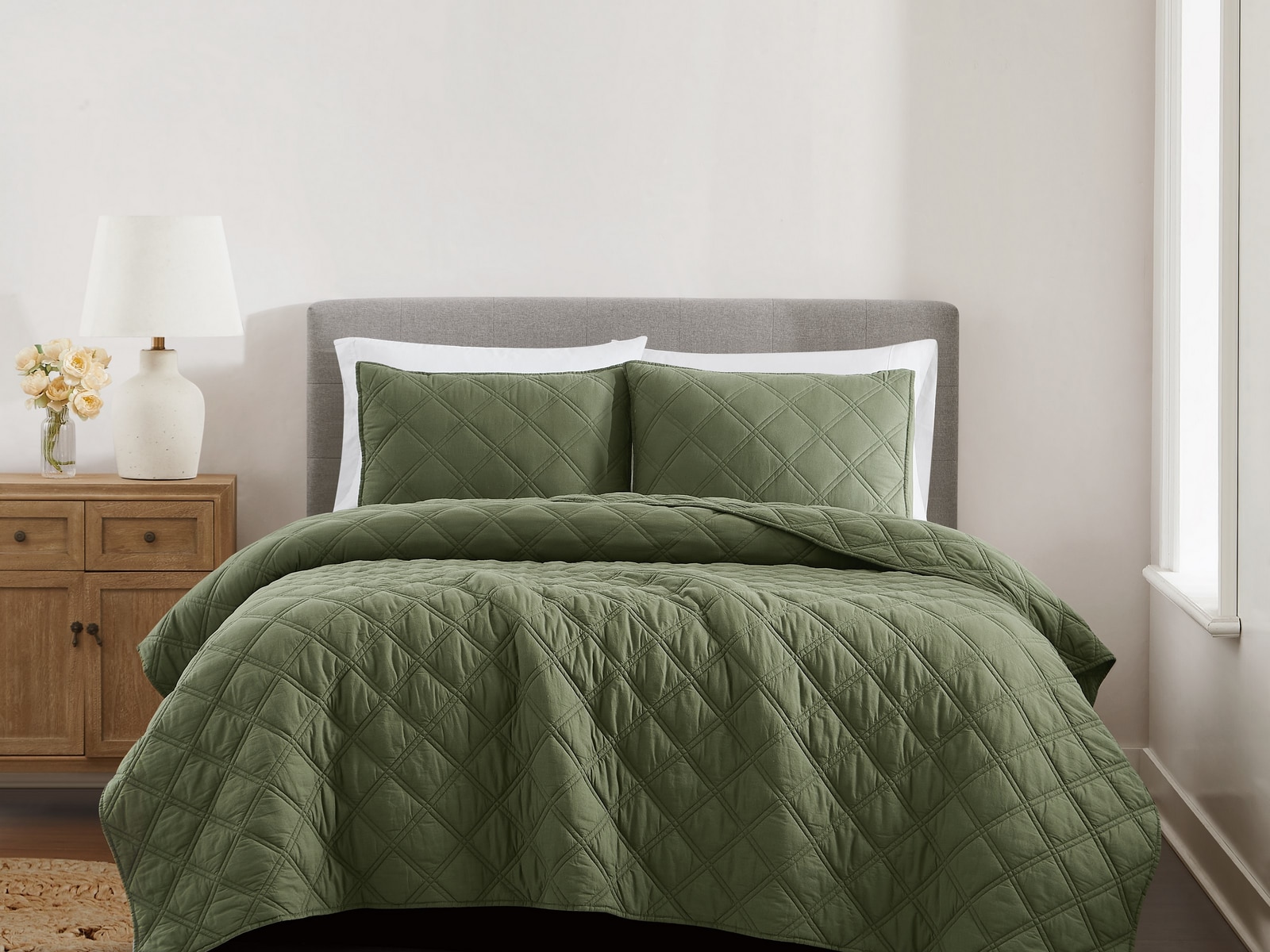
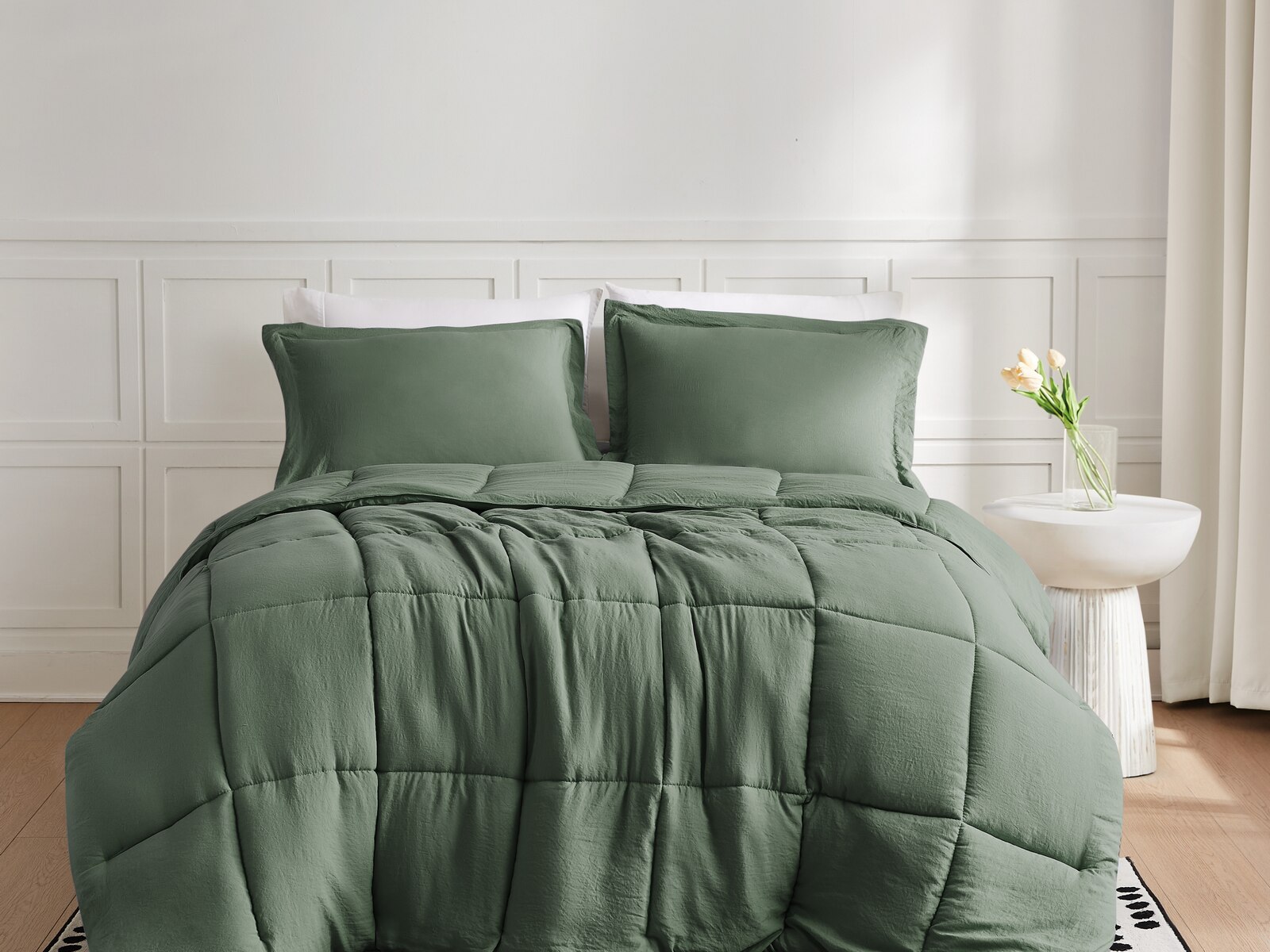
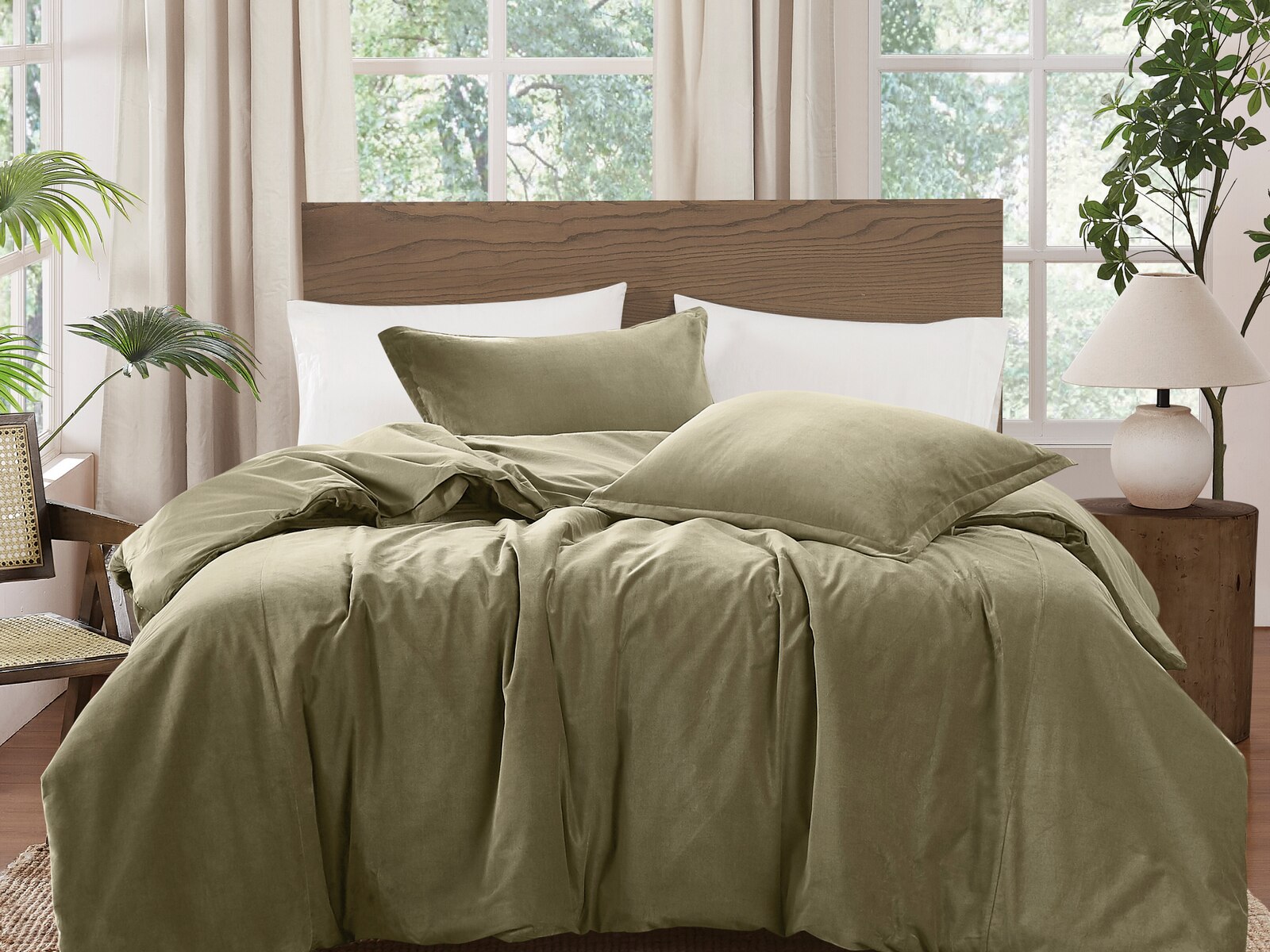
Luxury bedding sets in sage, olive and deep forest tones combine a distinctive color palette with fabrics that make an everyday bed feel thoughtfully finished. These shades can be soft and understated or rich and enveloping, depending on the fabric, depth of color and surrounding furnishings. Pale sage works naturally with ivory upholstery, light wood and woven accents, while olive adds warmth beside walnut furniture, cream walls and brushed brass. Deep forest shades create a more dramatic focal point, especially against crisp white sheets or a softly textured headboard. Fabric gives each shade another dimension: cotton sateen has a smooth surface and subtle sheen, linen brings a relaxed texture and velvet adds plushness with a finish that catches the light. A matte weave can make a muted shade feel quiet and grounded, while a lustrous finish gives a similar color a more polished appearance. For anyone drawn to a coordinated bedroom without a perfectly matched look, small differences in texture can provide enough variation. A smooth duvet cover paired with textured pillow shams, for example, creates depth without introducing another pattern. The character of luxury bedding comes from more than its appearance. Fabric composition, finishing, seam quality and the way the pieces feel against the skin all contribute to everyday comfort. Cotton percale typically has a crisp, matte hand, while cotton sateen generally feels silkier and drapes more fluidly. Linen has a more textured feel that often softens with repeated laundering. Velvet can provide a decorative surface for a bed covering or accent layer, although its fiber content and care requirements vary. Long-staple cotton, including Egyptian cotton when identified on the label, can offer a smooth feel, but fiber quality and construction matter alongside thread count. A higher number alone does not establish softness or durability. The most satisfying choice brings the desired look together with a fabric texture that feels comfortable night after night.
The contents and dimensions of a bedding set are just as important as its color. A duvet cover set generally includes a removable cover and coordinating pillow shams, while a comforter set centers on a filled bed covering. A sheet set serves a different purpose, providing the fitted sheet, flat sheet and pillowcases that sit closest to the sleeper. Included pieces vary, so the listed contents clarify whether a set creates a decorative top layer, supplies everyday sleeping essentials or combines several elements. For a queen or king bed, the size label is a starting point rather than a substitute for measurements. Mattress depth, a mattress topper and the desired amount of fabric hanging over each side can all affect the fit. A fitted sheet needs enough pocket depth to accommodate the full mattress profile without pulling tightly at the corners. A duvet cover should correspond closely to the insert’s dimensions, since excess space can leave empty edges and a cover that is too small can make the filling bunch. Corner ties or other internal fasteners can help keep a compatible insert positioned, while secure closures help maintain a tidy finish. Pillow sizing deserves the same attention: standard and king pillows need appropriately sized cases or shams, and decorative shams are not always intended to replace sleeping pillowcases. Thoughtful proportions can make a bed look inviting without requiring a stack of extra layers. In a room with patterned curtains or a detailed rug, solid bedding lets those features remain visible. In a simpler room, a subtle woven pattern, stitched detail or tonal stripe can add interest without overwhelming the space. For additional ways to carry the palette through a bedroom,
stylish bedding sets offer a useful point of comparison for coordinated looks. Whether the bed is in a primary bedroom, a guest room or a newly furnished apartment, the combination should suit both the room’s proportions and the way the bed is used.
Care requirements help determine how comfortably luxury bedding fits into a household’s routine. A beautiful finish is more enjoyable when its upkeep feels manageable, particularly on a bed used every night. The care label takes priority over general fabric advice because dyes, trims, backing materials and fill can change the recommended washing method. Some bedding can be machine washed, while other pieces need professional cleaning or more specific handling. Checking those details before choosing a set helps avoid a mismatch between the desired appearance and the effort required to maintain it. For washable pieces, following the recommended cycle, detergent guidance and drying instructions helps preserve the fabric’s feel and shape. Overloading the washer can limit movement and rinsing, especially with substantial bed coverings. Thorough drying before storage helps keep bedding fresh, and a clean, dry storage space protects pieces between uses. Rich olive and forest shades may also benefit from care practices intended to preserve color, as directed by the manufacturer. Durability shows up in practical details: even stitching, securely attached closures and well-finished edges help bedding stand up to regular handling. A smooth fabric may appeal to someone who prefers a neatly finished bed, while linen’s natural creasing suits a more relaxed look. Households with pets may place extra value on washable fabrics and a surface that is straightforward to keep tidy. For a guest bedroom, an uncomplicated combination of coordinating pieces can make preparing the bed easier while still creating a welcoming impression. Luxury bedding can also make a thoughtful housewarming or wedding gift when the recipient’s mattress size, preferred textures and care preferences are known. Muted sage can feel understated, olive can complement an earthy interior and a deep forest shade can suit someone who enjoys a bolder bedroom. The lasting appeal lies in that balance of appearance and everyday use: a color that belongs in the room, a fabric that feels right to the sleeper and construction that supports regular care. Together, those details give the bed a finished look that remains personal rather than overly formal.