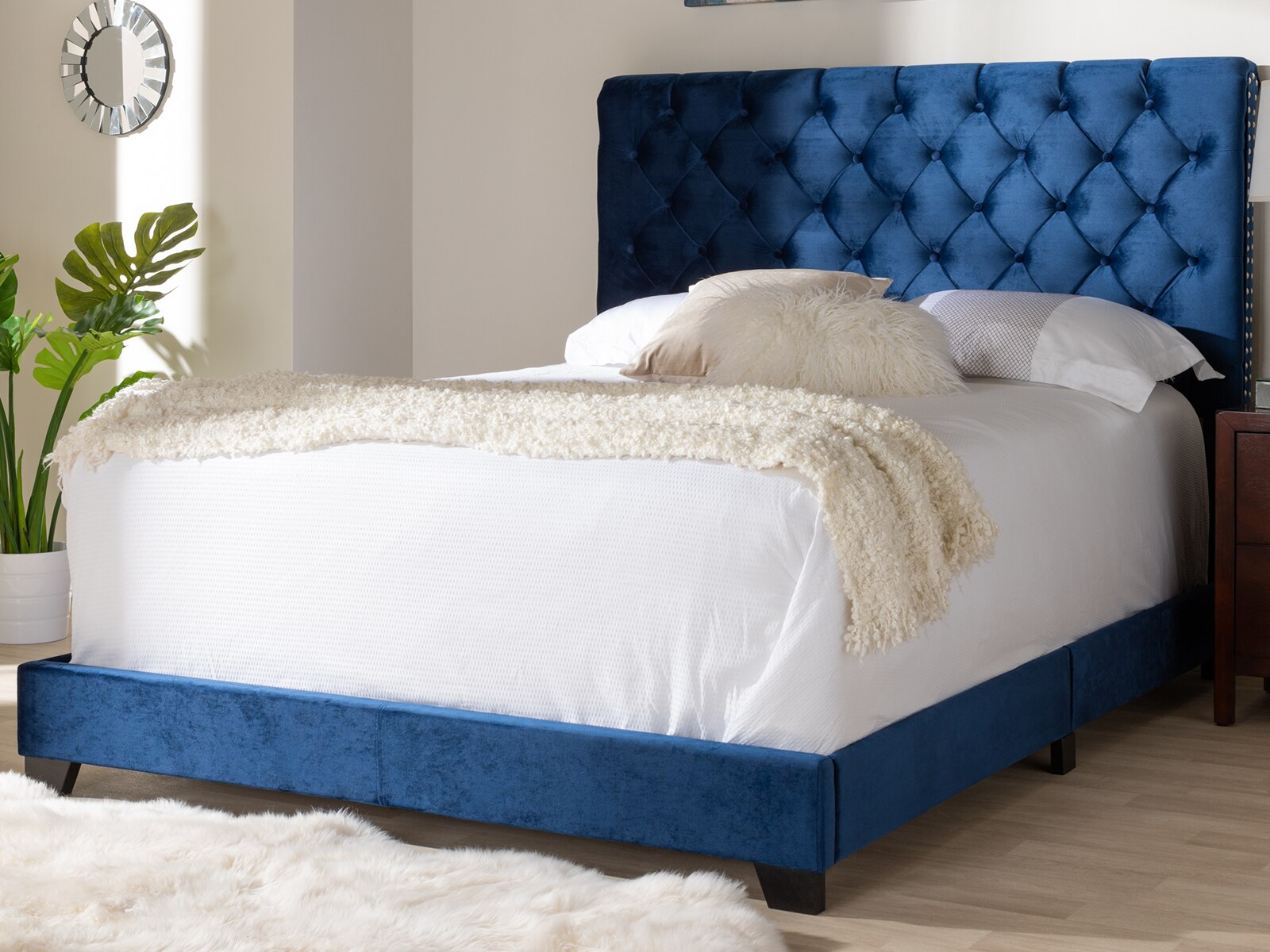
Upholstered beds for home staging create a soft, defined focal point that helps a bedroom feel complete without filling it with furniture. A fabric-covered headboard introduces texture behind the pillows, while an upholstered frame can give the mattress a finished outline that looks intentional from the doorway and in listing photos. These beds suit homeowners preparing a property for viewings, professional stagers furnishing several spaces and real estate professionals helping a bedroom communicate its intended use. The strongest choice usually supports the room’s architecture rather than competing with it. In a compact bedroom with simple trim, a streamlined headboard can establish the sleeping area without overwhelming the wall. In a larger primary bedroom, a taller headboard or subtle wingback shape can give an otherwise open space a sense of proportion. Cream, oatmeal, taupe and light gray upholstery provide a flexible foundation for bedding, wood finishes and wall colors, though the fabric should still have enough contrast to remain distinct from its surroundings. A pale headboard against a similarly pale wall may need a slightly deeper pillow color to keep the bed from disappearing in photographs. Smooth panels tend to look understated, vertical channels introduce a tailored rhythm and tufting adds dimension that becomes more noticeable under directional light. Velvet offers a richer surface with a visible nap, while a woven fabric often creates a quieter, more casual effect. Neither appearance is automatically better for staging; the right texture depends on the room and the amount of detail already present. Where patterned wallpaper or decorative molding draws attention, simpler upholstery can provide balance. Where the room has plain walls and little architectural detail, a gently curved or textured headboard can supply character. A restrained arrangement of pillows and a neatly folded coverlet lets the shape remain visible, helping visitors picture a comfortable bedroom rather than a display built around accessories.
Proportion matters as much as upholstery when choosing a bed for a staged space. The frame’s outside dimensions, not just the mattress size, determine how much floor area it occupies. Upholstered side rails, broad headboards and projecting wings can extend beyond the sleeping surface, so measurements should account for the entire bed as well as baseboards, nearby outlets and door swings. A queen bed may communicate the function of a primary bedroom while leaving useful walking space, but a larger frame can make that same room feel cramped if it crowds the dresser or blocks access to a closet. In a smaller secondary bedroom, a twin or full bed can leave room for a bedside table and show how the space might function for a child, overnight guest or household member. Keeping a clear route from the doorway to the bed helps the layout feel practical during an open house. Headboard height also deserves attention: a low profile can sit comfortably beneath artwork, while a taller silhouette needs enough uninterrupted wall space to avoid looking squeezed beneath a window. Consider the mattress and foundation together, because their combined height affects how much upholstery remains visible and how easily someone can sit on the edge. Deep mattresses can cover decorative details, while a low mattress may expose more of the headboard than expected. Support requirements vary by frame, so confirm whether the construction calls for a foundation or supports the mattress directly, along with any specifications for slat spacing and center support. Compatibility with an adjustable base should be verified rather than assumed. If the bed will be used for sleeping after the staging period, mattress fit and dependable support remain essential. A bed that looks balanced in a photograph should also make sense in daily life, with accessible bedside surfaces, usable storage and enough clearance to make the bedding without struggling against a wall.
Materials and construction influence how well an upholstered bed handles setup, viewings and continued use. Linen-look upholstery can bring visible texture to a simple room, while polyester blends may offer a consistent surface that coordinates easily with different bedding combinations. Fiber content alone does not establish durability; weave, backing, seam quality and the manufacturer’s care directions all matter. A tightly woven fabric generally has a different feel and maintenance routine from a napped velvet, which can show changes in shade as its fibers move. For a bed that will travel between properties, secure connections, clearly labeled hardware and manageable components can make repeated assembly less cumbersome. Follow the assembly instructions each time, keep hardware organized and check that joints are properly tightened before placing the mattress. Lifting upholstered pieces rather than dragging them helps protect the covering and frame, while clean moving blankets can reduce rubbing against doorframes or other furniture. During everyday care, use the recommended upholstery attachment to remove surface dust, paying attention to seams and tufted areas where particles collect. Spills should be addressed promptly according to the fabric’s cleaning instructions; avoid assuming that every upholstery material tolerates water or the same cleaning solution. Test any permitted cleaner in an inconspicuous area before treating a visible surface. For households with pets or young children, consider how easily the fabric can be maintained and whether its texture is likely to catch claws or collect hair. Beyond preparing a property for viewings, an upholstered bed can transition naturally into a primary bedroom or a welcoming guest room, making lasting suitability worth considering alongside presentation. The styles featured in
Upholstered Beds For Cozy Spaces offer another way to explore a softer bedroom aesthetic. For staging, the most useful balance is a bed that feels inviting, fits the room honestly and remains straightforward to care for once the photographs are taken.