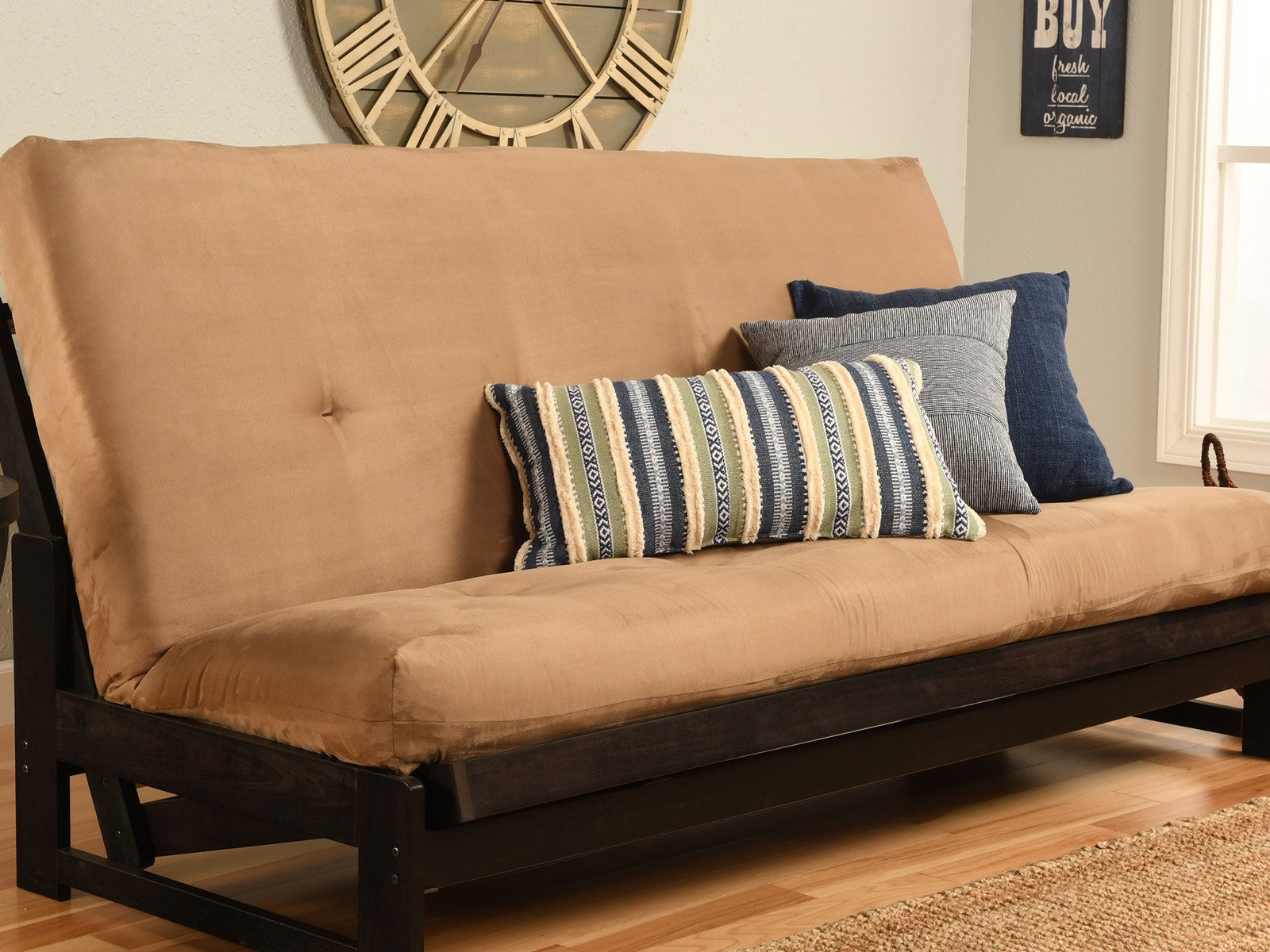
Convertible sofas for small spaces bring everyday seating and an extra sleep surface into the same footprint, making them a practical fit for studio apartments, compact living rooms and home offices that double as guest rooms. A loveseat beside a bookcase can become a place for an overnight visitor without permanently giving up the room to a bed. Compact designs can measure less than 72 inches wide, although overall width alone does not determine how well a sofa fits. Arm thickness, seat depth and the space needed for conversion all affect how much room it occupies. Slim arms leave more of the frame available for seating, while a shallow profile can help preserve the path between a sofa and a nearby desk. Convertible designs also open in several ways. A pull-out sleeper typically stores a separate mattress beneath the cushions, while a fold-flat sofa uses its seat and back to create the sleeping surface. Fold-out foam designs unfold into a longer resting area, sometimes close to the floor. Each arrangement changes the room differently: a pull-out extends forward, while some folding backs need space behind the frame. The most useful dimensions are the sofa’s closed measurements, its fully extended footprint and the actual sleeping surface, which may be smaller than the outer frame suggests. Painter’s tape on the floor can make those dimensions easier to picture, including the spot where a coffee table would need to move. Where the layout permits, roughly 24–30 inches of open passage can provide a useful planning allowance, though some households need wider routes for comfortable access. Doors, drawers and closet panels still need room to open. Delivery access matters, too, particularly in buildings with tight stair turns or narrow elevator openings. Checking the packaged dimensions against those spaces helps distinguish a sofa that fits the room from one that can actually reach it. A clear conversion area also means an overnight guest can settle in without rearranging every piece of furniture.
Comfort depends on both how a convertible sofa sits and how it supports a person when open. For reading or conversation, seat depth, cushion firmness and back height influence whether the sofa feels upright and supportive or relaxed and lounge-like. For sleeping, usable length, surface consistency and support beneath the hips and shoulders become more important. A tall guest may need more length than a compact fold-flat design provides, even when the sofa seats two people comfortably. Likewise, an adult staying for several nights may have different needs from someone taking an occasional afternoon nap. Separate sleeper mattresses can contain foam, springs or a combination of materials; fold-flat designs generally rely on the upholstered cushions themselves. Neither mechanism alone guarantees a particular comfort level. Cushion seams, the gap between sections and the position of supporting bars are worth considering alongside mattress thickness. A topper may soften some surface transitions, but it cannot correct a weak frame or make a short sleeping area longer. For frequent overnight use, the manufacturer’s intended-use guidance, weight limits and construction details deserve close attention. Hardwood, plywood and metal can all appear in supportive frames, with durability also depending on joint construction, hardware and the design of the conversion mechanism. A mechanism that opens smoothly and locks securely is especially useful when one person will be setting up the bed. Upholstery brings another layer of practicality. Tightly woven fabrics may suit regular use, while textured weaves can make small marks less noticeable. Raised textures can also collect crumbs or pet hair, so cleaning needs matter as much as appearance. Removable cushion covers are not necessarily machine washable; the care label remains the best reference. Households drawn to a folding seat-and-back design can also explore
Convertible Futon Beds For Guest Rooms for a related approach to seating and sleeping in a shared-use room.
The most useful convertible sofa is one that suits the room’s daily routine, not just the occasional overnight visit. In a studio, that may mean choosing a design intended for regular sleeping and leaving enough space to convert it without moving a dining table. In an office, it may mean keeping the sofa compact enough that a desk chair can roll back comfortably during the day. A guest room used for hobbies may benefit from an open floor area when the bed is closed. Low-profile frames can help a small room feel less visually crowded, while raised legs leave more floor visible and may make cleaning underneath easier. Neither feature reduces the sofa’s actual dimensions, so appearance should complement careful measuring rather than replace it. Built-in storage, when part of the design, can keep sheets and a light blanket close by, but the compartment’s dimensions and access point determine how convenient it will be. Bedding also needs to match the sleeping surface rather than the sofa’s outside width. Some convertible sofas have nonstandard sleep dimensions, making mattress depth and fitted-sheet measurements particularly important. A protector can help keep a separate sleeper mattress clean, provided it is compatible with the mattress and folding mechanism. Bedding should be removed before closing unless the manufacturer specifically allows it to remain in place. Regular care is generally straightforward: vacuum upholstery with an appropriate attachment, address spills according to the fabric’s cleaning code and check accessible hardware as directed. Keeping small objects clear of hinges and moving parts helps prevent interference during conversion, and children and pets should stay clear while the frame is opening or closing. For a friend visiting after a long drive or a family member staying overnight, thoughtful details make the space more welcoming: somewhere to place a phone, an accessible lamp and a clear route through the room. Those everyday considerations help a compact sofa serve comfortably as both a familiar seat and a place to rest.