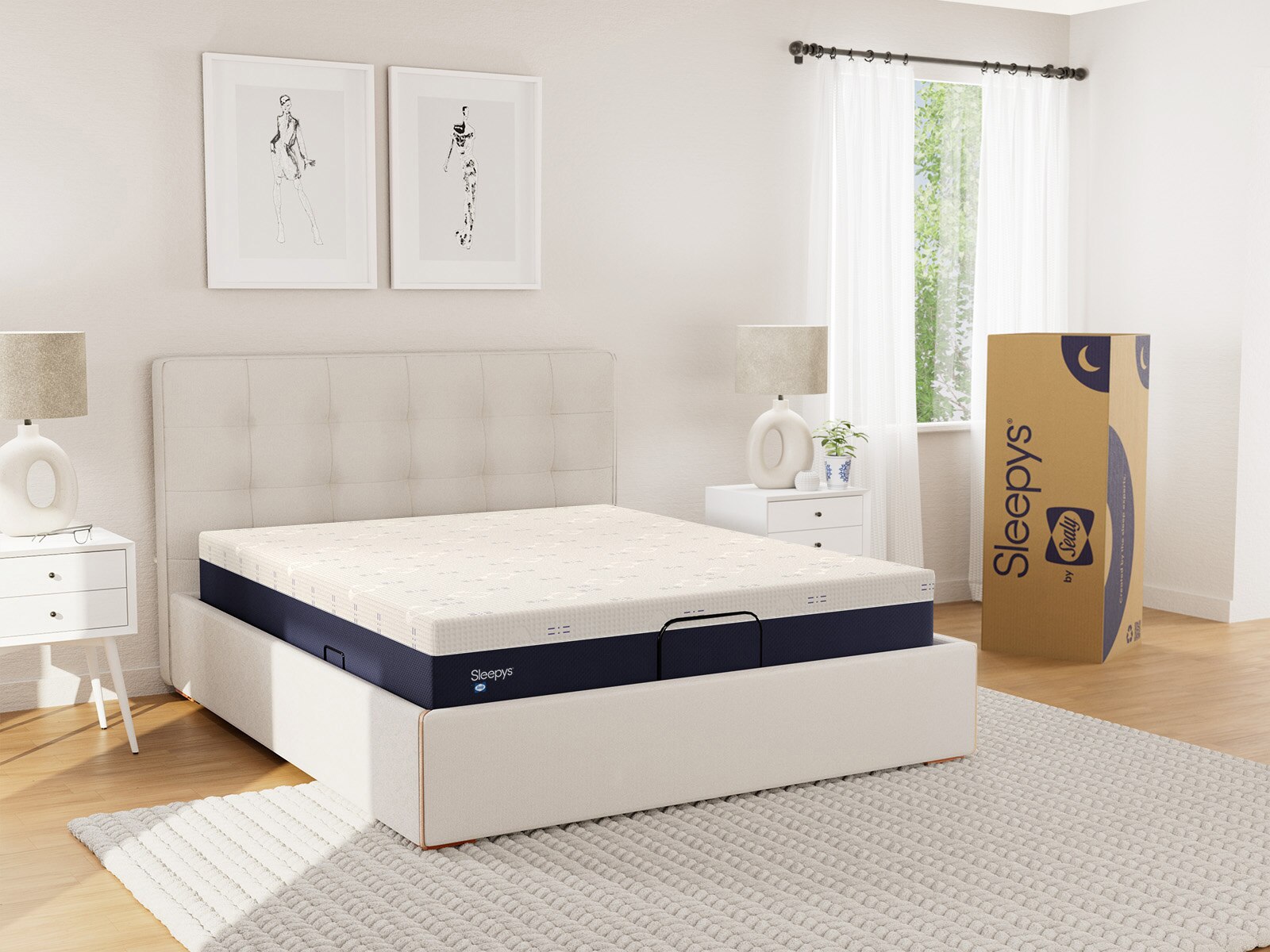
An RV king mattress typically measures 72 inches wide by 80 inches long, giving sleepers a spacious surface within the narrower bedroom layout of a recreational vehicle. Dimensions are not universal, however: depending on the manufacturer and floor plan, an RV king may measure about 70 to 76 inches wide and 74 to 80 inches long. A standard residential king usually measures 76 inches wide by 80 inches long, so the two labels do not necessarily describe an interchangeable fit. That distinction matters in a bedroom where a few inches can determine whether a cabinet opens fully or someone can comfortably walk beside the bed. Choosing
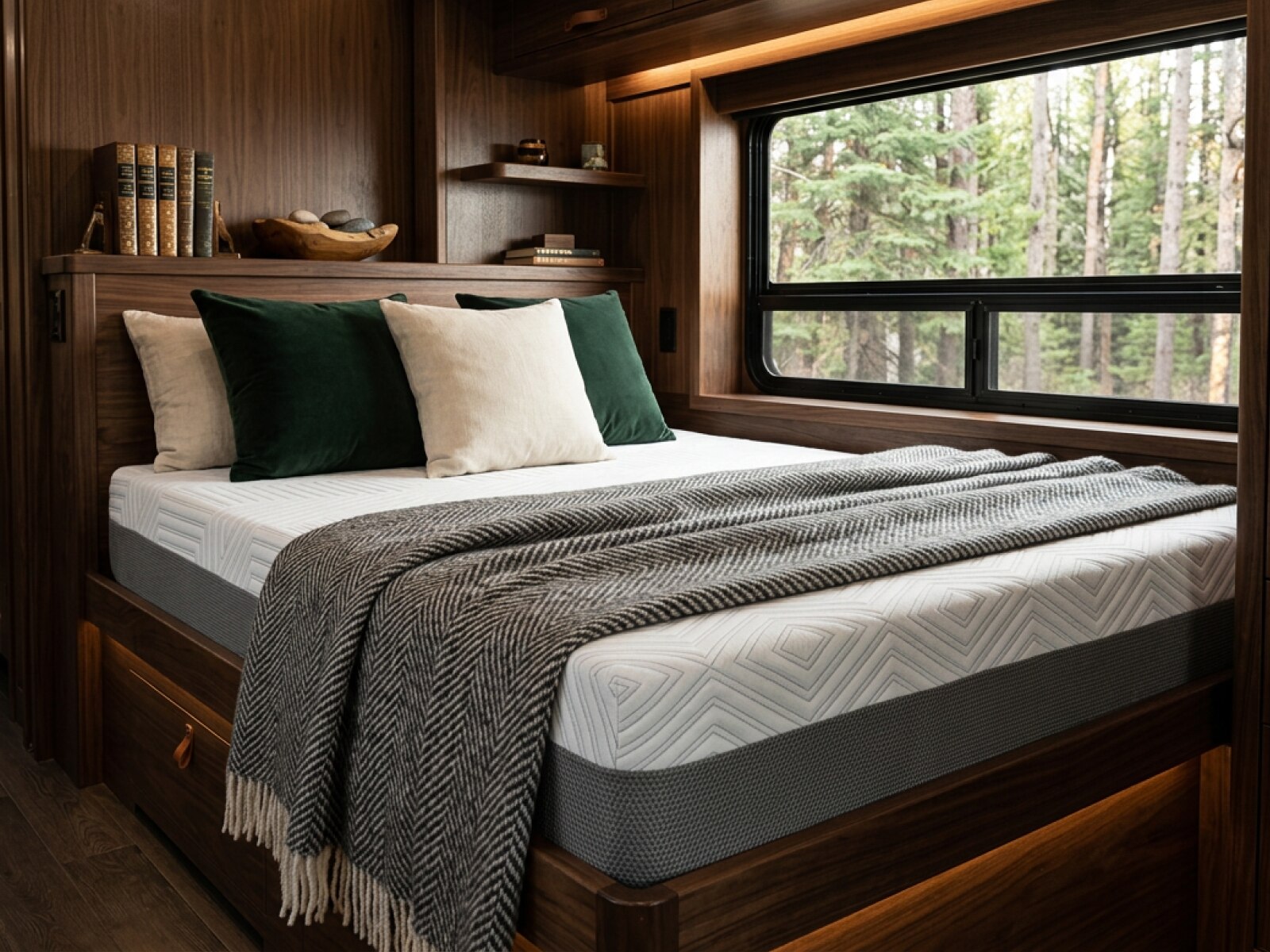
RV king mattresses for restful sleep starts with matching the mattress to the actual sleeping platform rather than relying on the size printed on an existing cover. The platform’s width and length, any rounded or angled corners and the space around nearby walls all affect how the mattress sits. Thickness matters, too. A taller mattress changes the distance to overhead cabinets, raises the sleeping surface and may interfere with a folding bed or slide-out mechanism. In a bedroom with storage beneath the bed, mattress weight can also affect how easily the platform lifts. The vehicle and bed-system specifications are useful references for weight limits, required clearances and restrictions on mattress construction. Even the route into the bedroom deserves attention, especially when a narrow doorway or tight turn separates the entrance from the sleeping area. An RV king can suit couples who want room to change positions, taller sleepers who need sufficient length or anyone furnishing a vehicle for extended trips. For a good fit, the mattress should rest securely on its intended base without being compressed against surrounding cabinetry or extending into a walkway. The goal is a comfortable sleeping space that works with the vehicle’s layout, not simply the largest mattress that can be squeezed into the room.
Materials and construction shape how an RV king mattress feels night after night. Memory foam generally responds closely to body contours, creating a cushioned surface around the shoulders and hips while helping reduce the transfer of movement between sleepers. Other cushioning foams can feel more responsive, allowing easier position changes without as much of a slow-settling sensation. Latex often has a buoyant feel, while hybrid construction combines cushioning layers with a coil support system. Neither a material name nor mattress height alone tells the whole comfort story; the arrangement, thickness and quality of the layers all contribute to support and durability. A substantial support core helps the mattress maintain its shape, while the comfort layers influence pressure relief and surface feel. Side sleepers often appreciate enough cushioning for their shoulders and hips, whereas back and stomach sleepers may prefer a surface that limits excessive sinking around the middle. Body weight and personal preference can change how the same firmness feels, so descriptions such as plush, medium and firm are useful starting points rather than universal measurements. For couples, motion isolation can make one person’s repositioning less noticeable to the other. Edge support also deserves consideration when the mattress doubles as a place to sit while putting on shoes or when one side is close to a wall. A stable edge can make the usable sleeping surface feel more consistent, although no mattress should be expected to compensate for an undersized or damaged platform. The base itself needs to meet the mattress manufacturer’s support requirements, including any specifications for slat spacing or a solid foundation. In an RV, where bed systems may differ from those in a house, checking that compatibility is especially important. A mattress intended for frequent overnight use benefits from durable construction, while one used mainly for occasional trips still needs the right dimensions and dependable support. The most useful choice balances comfort with the practical demands of the space.
Bedding and routine care help an RV king sleeping area stay comfortable and easier to maintain. Because RV dimensions vary, fitted sheets should match both the mattress footprint and its depth. A sheet designed for a wider residential king can bunch beneath the sleeper, while a pocket that is too shallow may pull loose at the corners. A washable mattress protector adds a practical barrier against spills and everyday moisture without replacing the need to follow the mattress care label. Its fit matters as much as the sheets: a protector pulled too tightly across the surface can change how the cushioning feels. In a compact bedroom, bedding that is manageable to remove and wash can make a noticeable difference between trips. Air circulation around the mattress is another important consideration, particularly where it rests on a solid platform or against an exterior wall. Keeping bedding dry, checking beneath the mattress periodically and following the vehicle manufacturer’s ventilation recommendations can help address moisture before it becomes a persistent problem. Cleaning methods should follow the mattress manufacturer’s instructions; soaking the surface or returning damp bedding to the bed can leave moisture trapped in the layers. Rotation may help distribute wear when the construction allows it, but a mattress should only be flipped if it is specifically designed for use on both sides. Handles, when present, may be intended for positioning rather than carrying the full weight, so moving instructions are worth checking before bringing a mattress through a tight doorway. For people who spend weeks traveling, these details support a bed that remains comfortable through repeated use. For occasional travelers, a clean, dry sleeping area makes returning to the RV more welcoming. Whether the vehicle serves as a weekend retreat or a home base for longer journeys, the right RV king mattress brings together room to stretch out, compatible support and care requirements that fit life on the road.